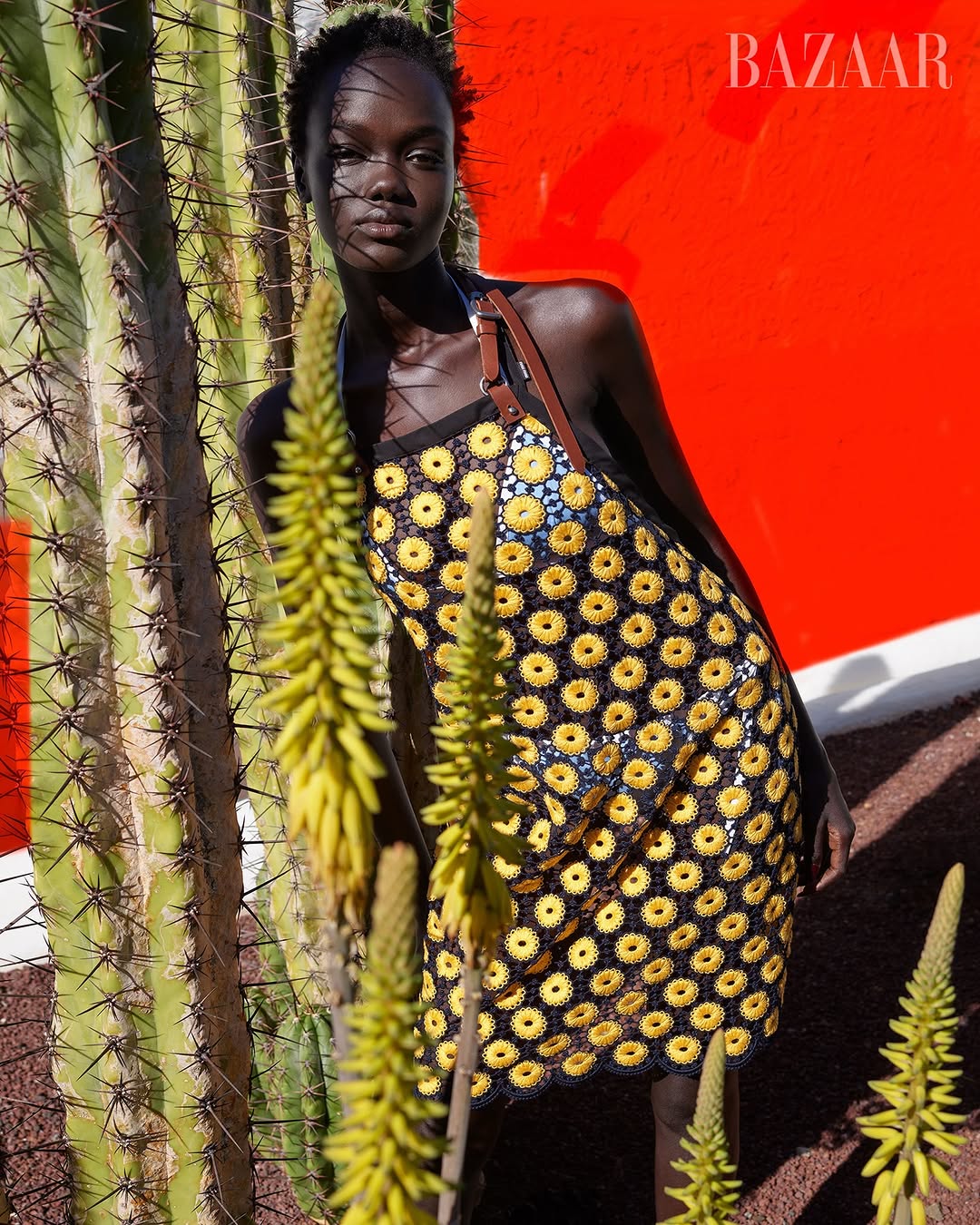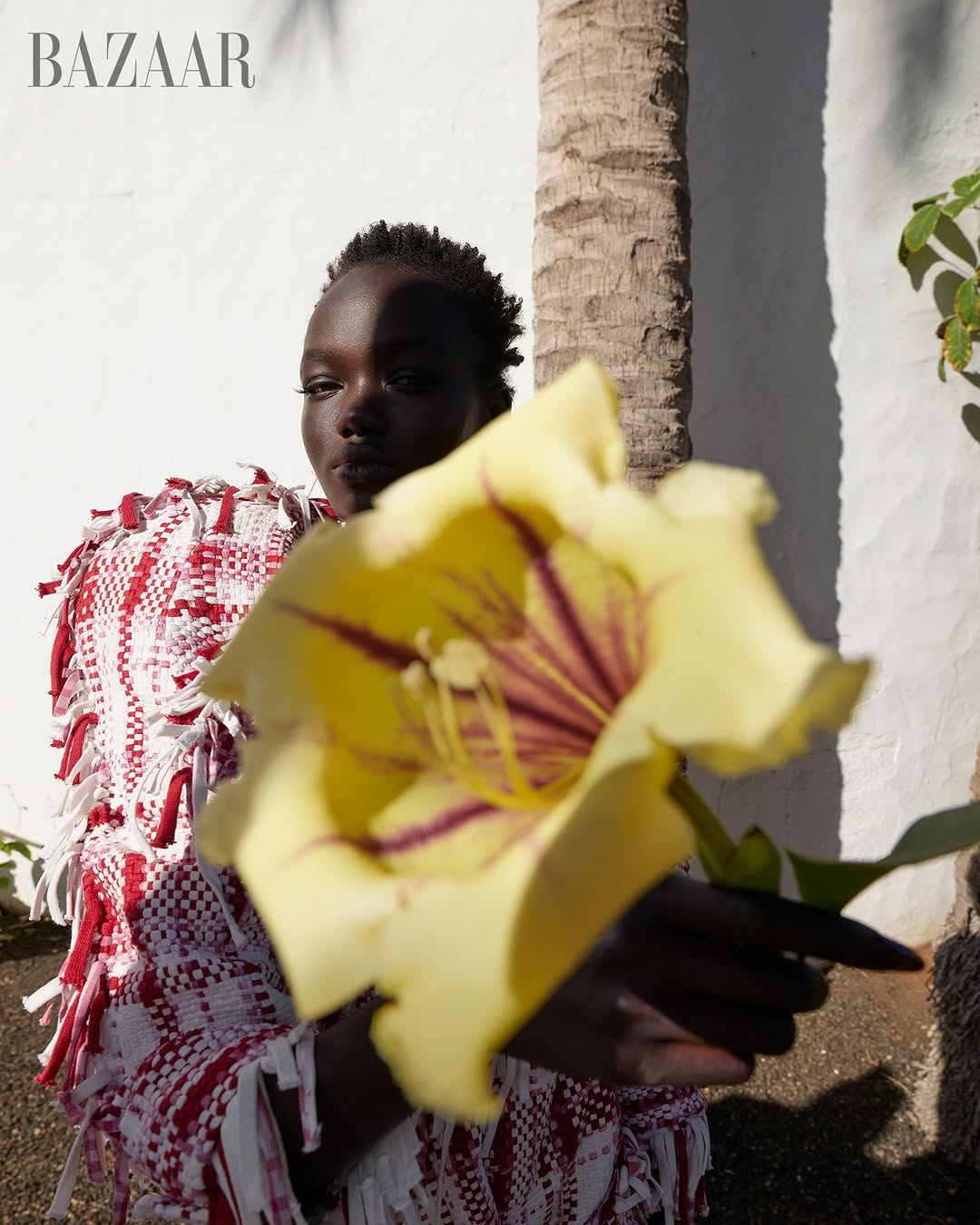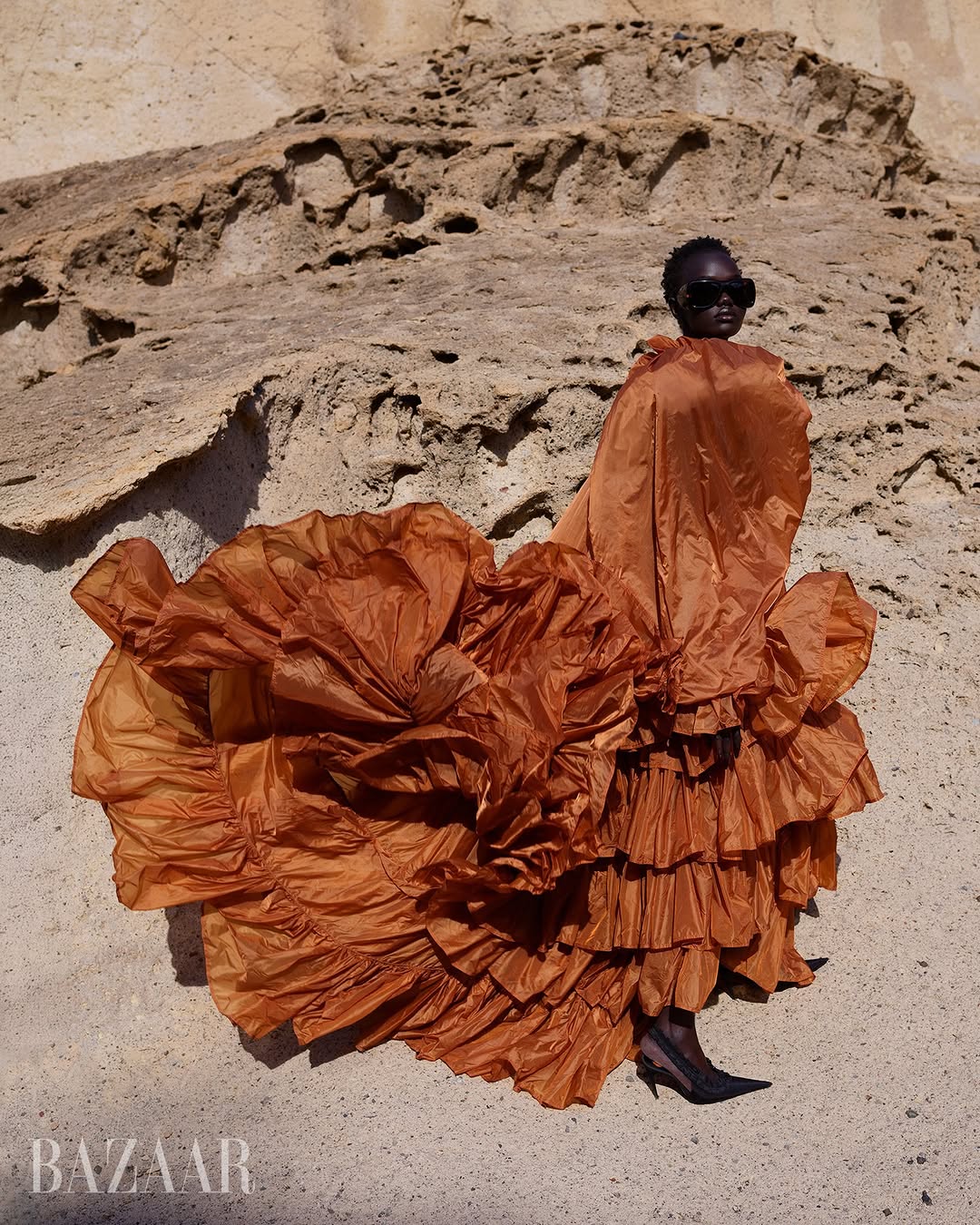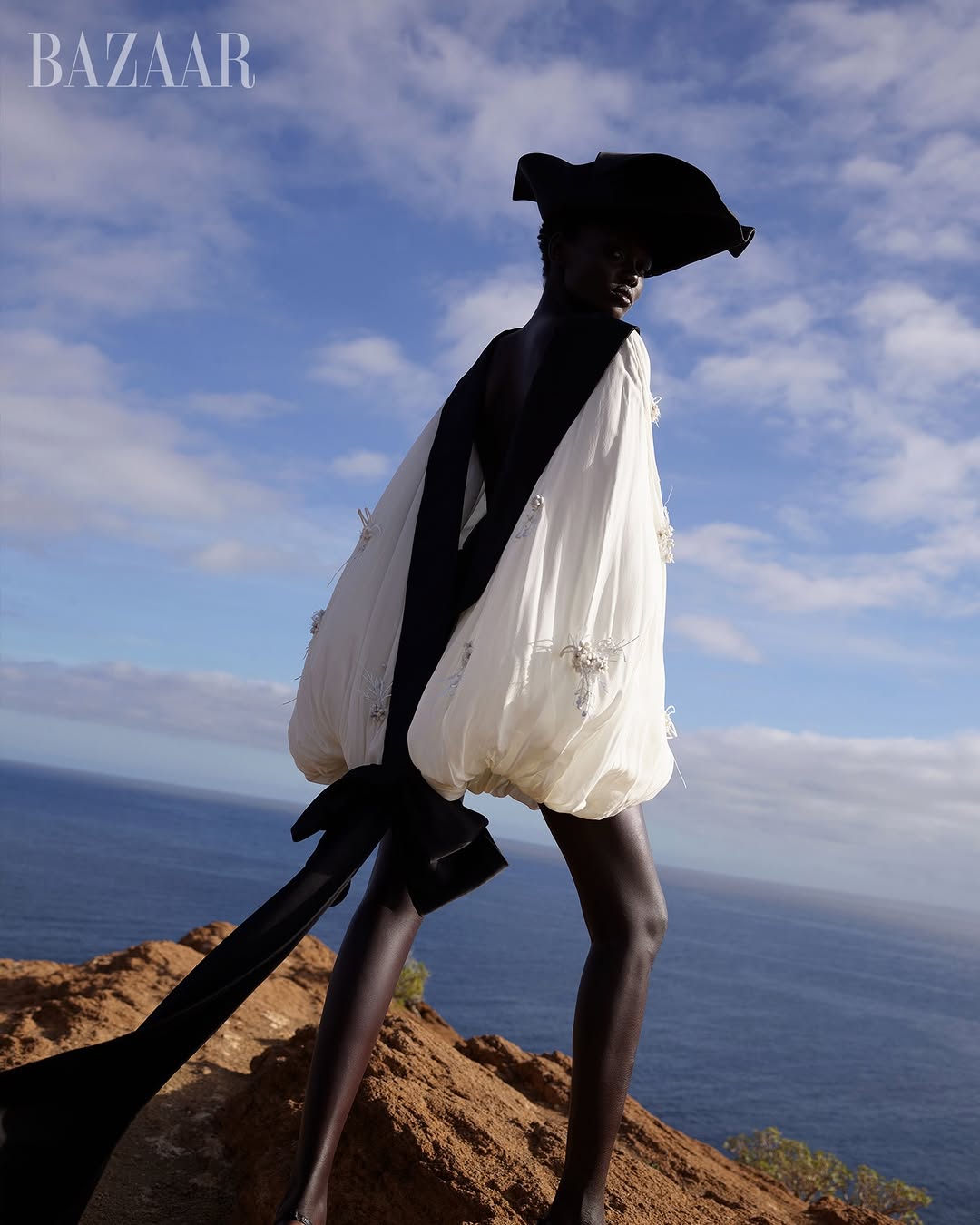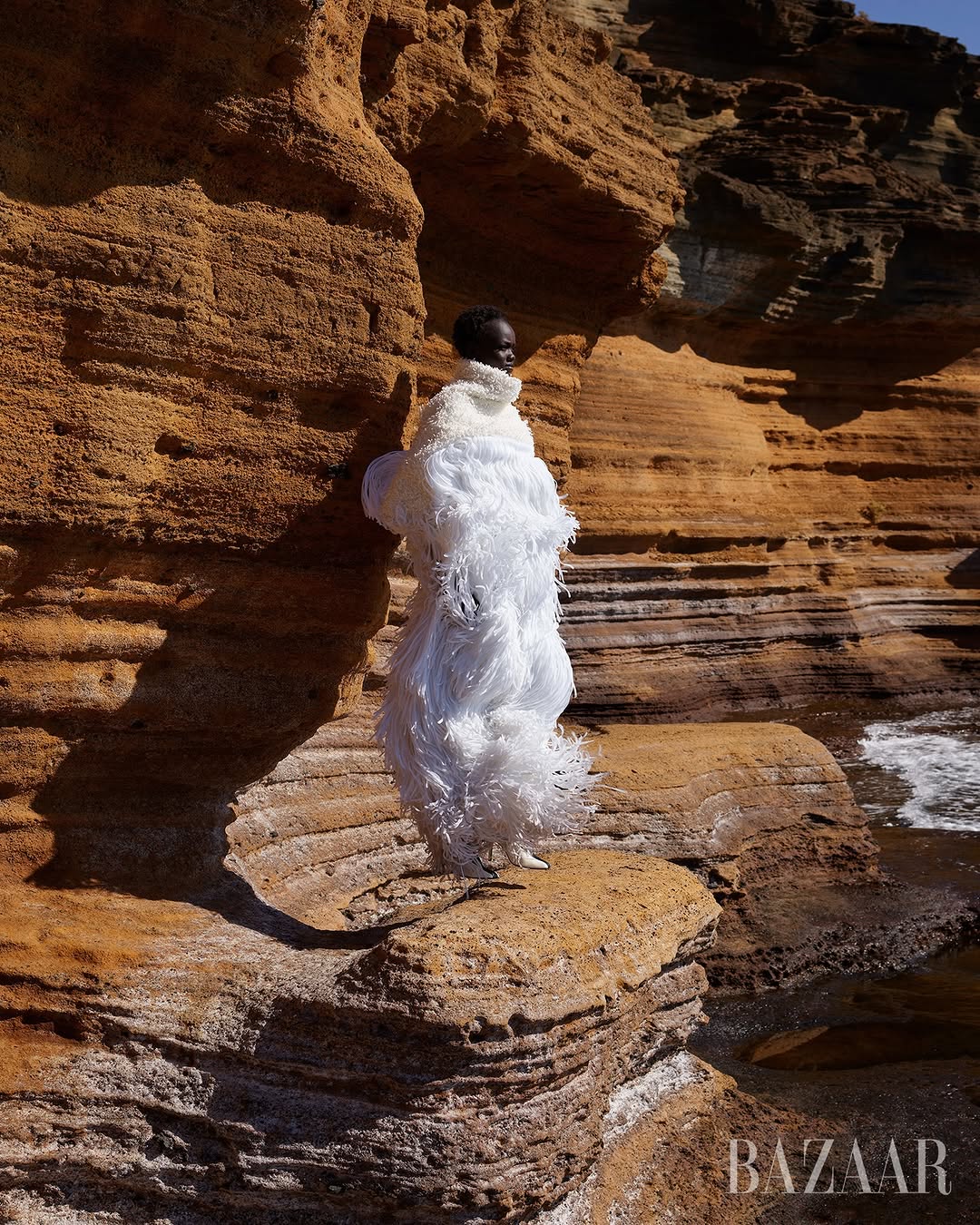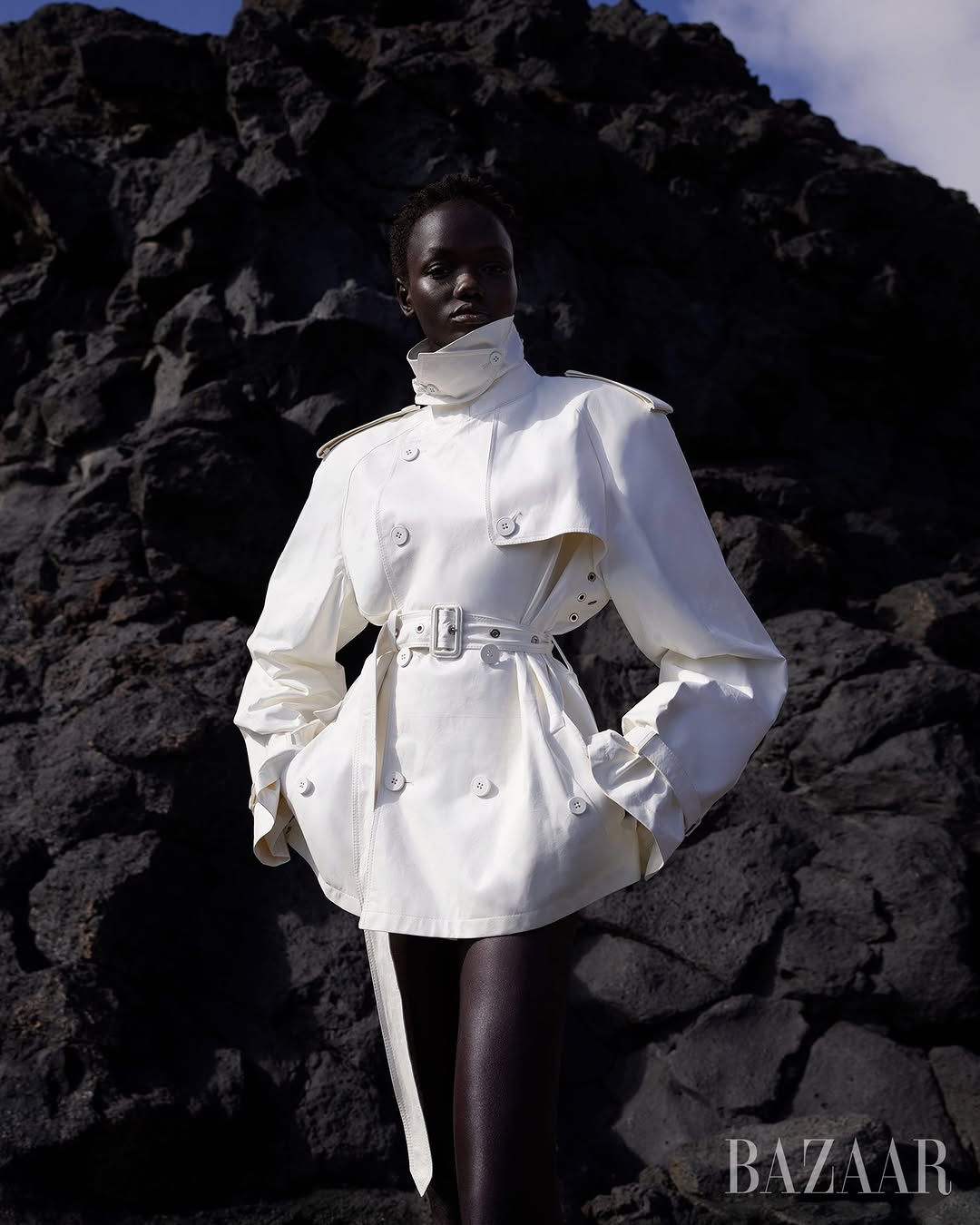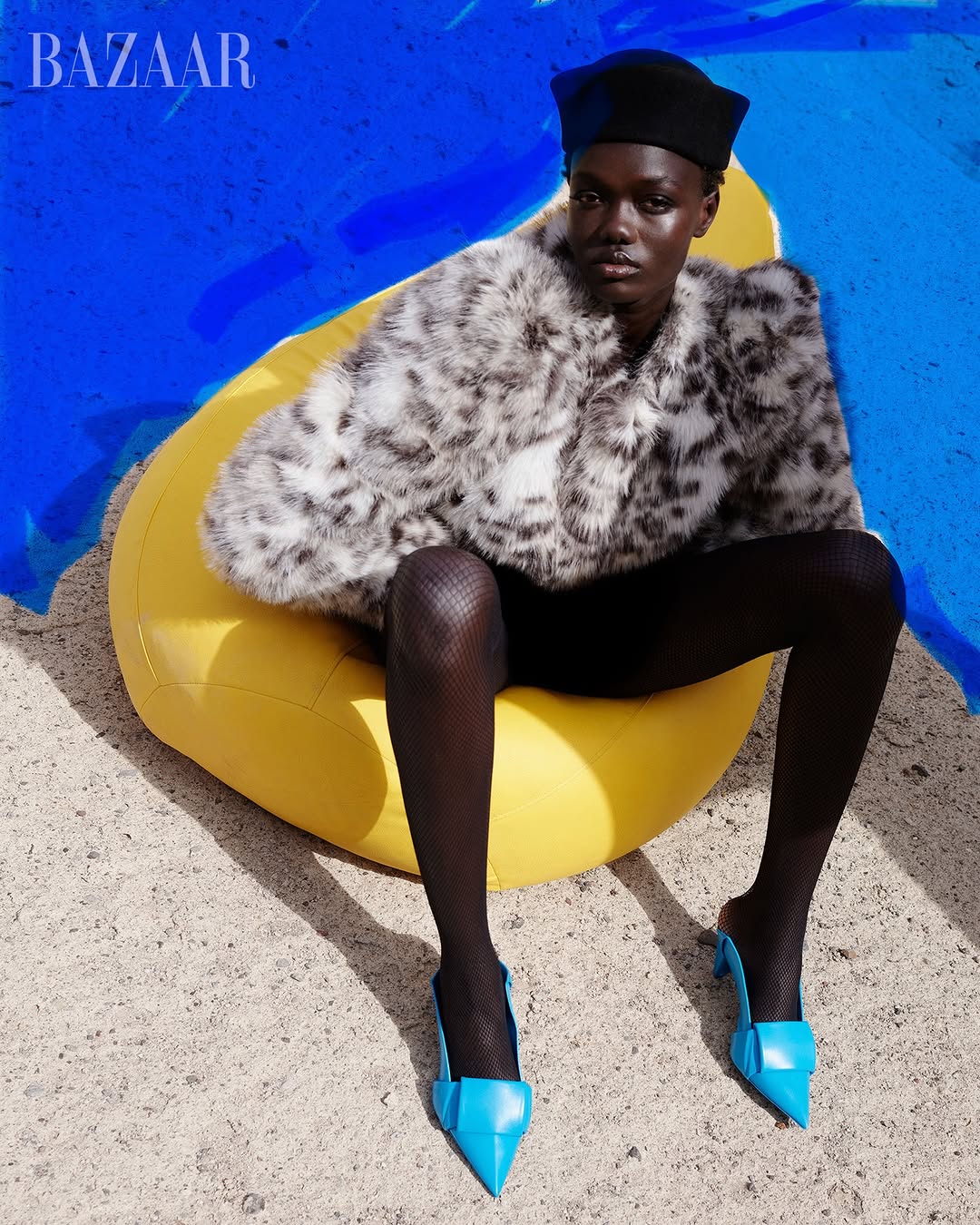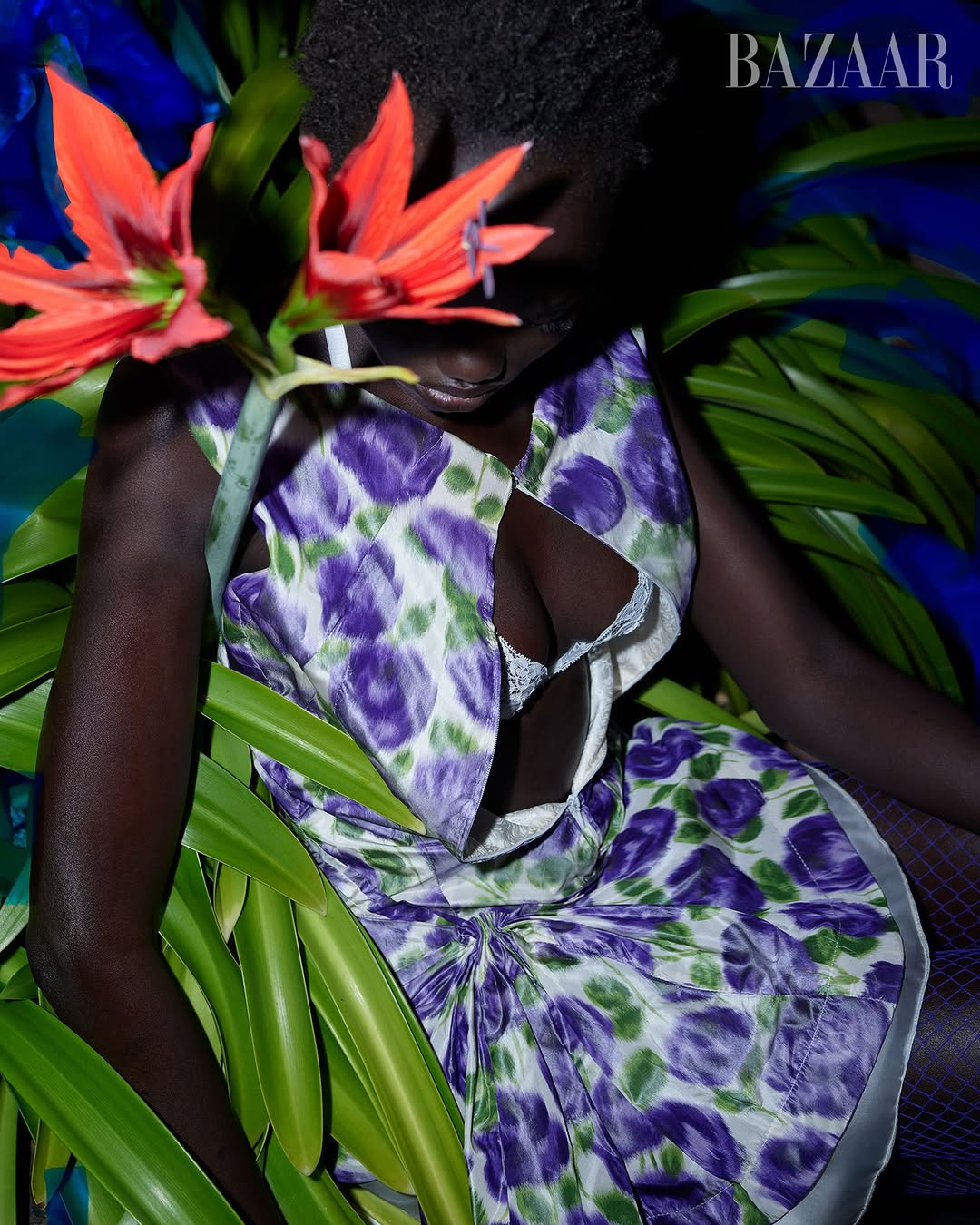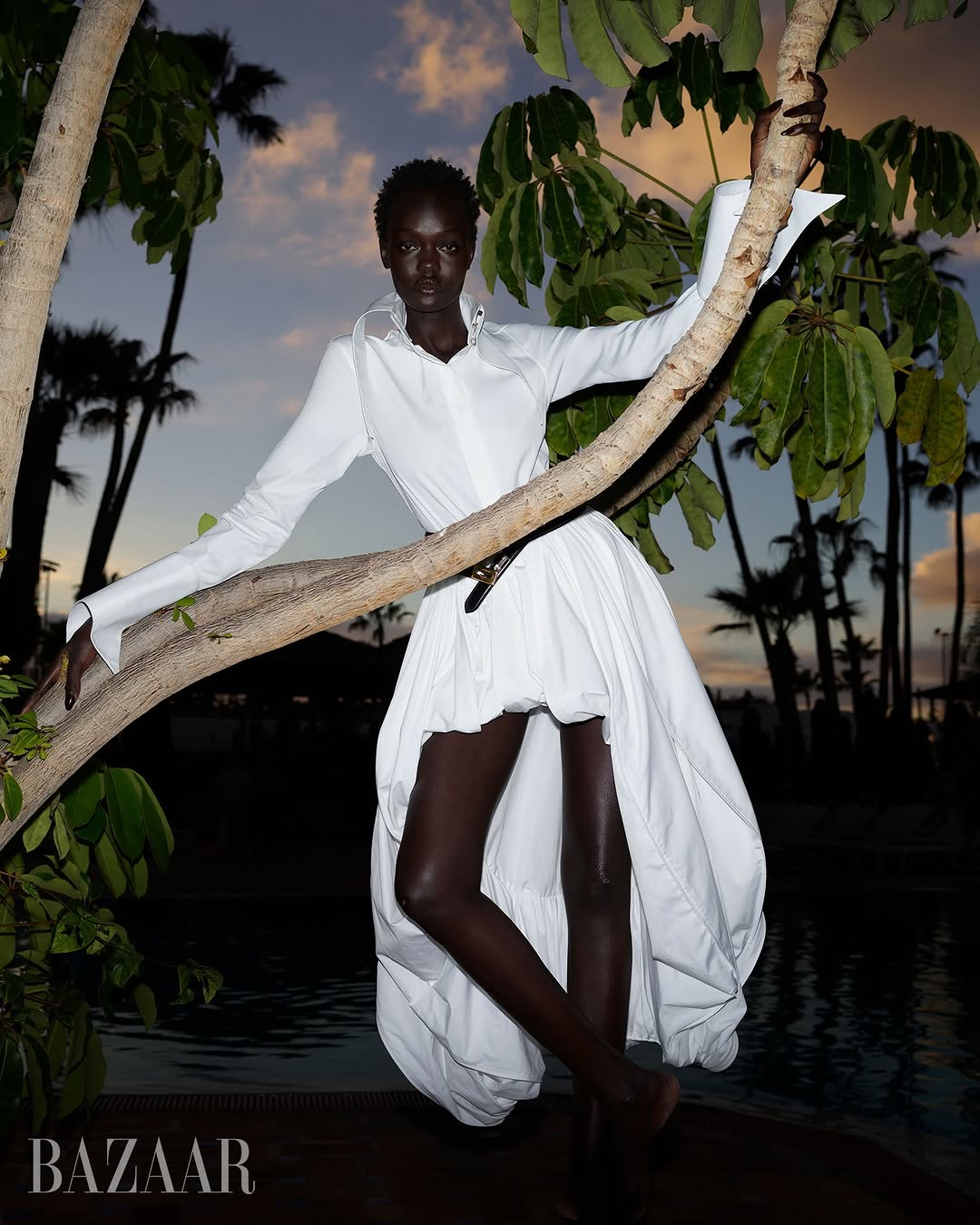
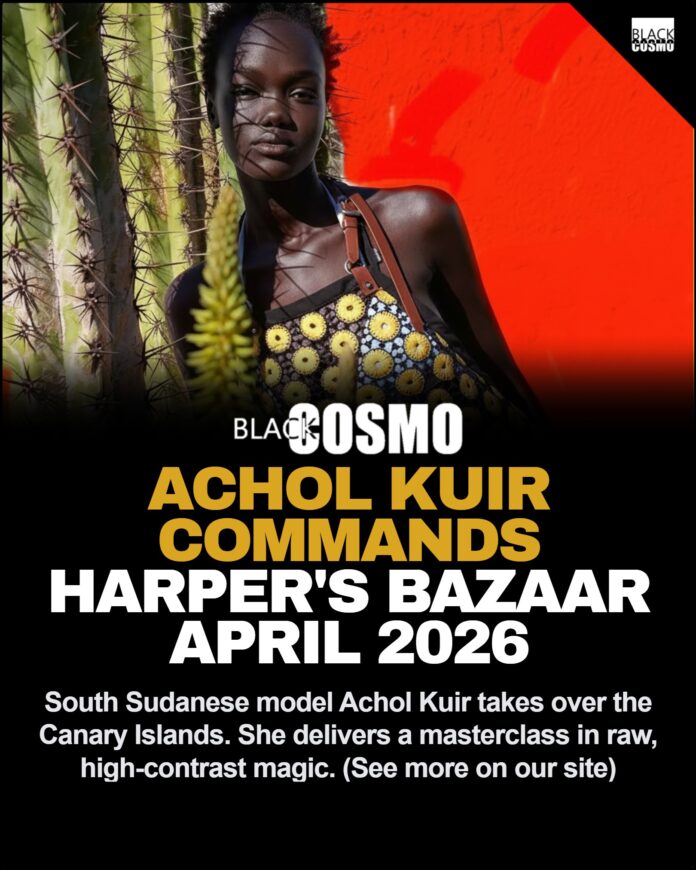
South Sudanese supermodel Achol Kuir doesn’t just pose. She possesses a location. Drop her onto the jagged, ink-black volcanic cliffs of the Canary Islands, and she immediately becomes the undisputed focal point, rendering the sprawling seascapes almost secondary. Harper’s Bazaar knew exactly what they were doing for their April 2026 issue. They didn’t put her in a sterile studio. They threw her to the elements.
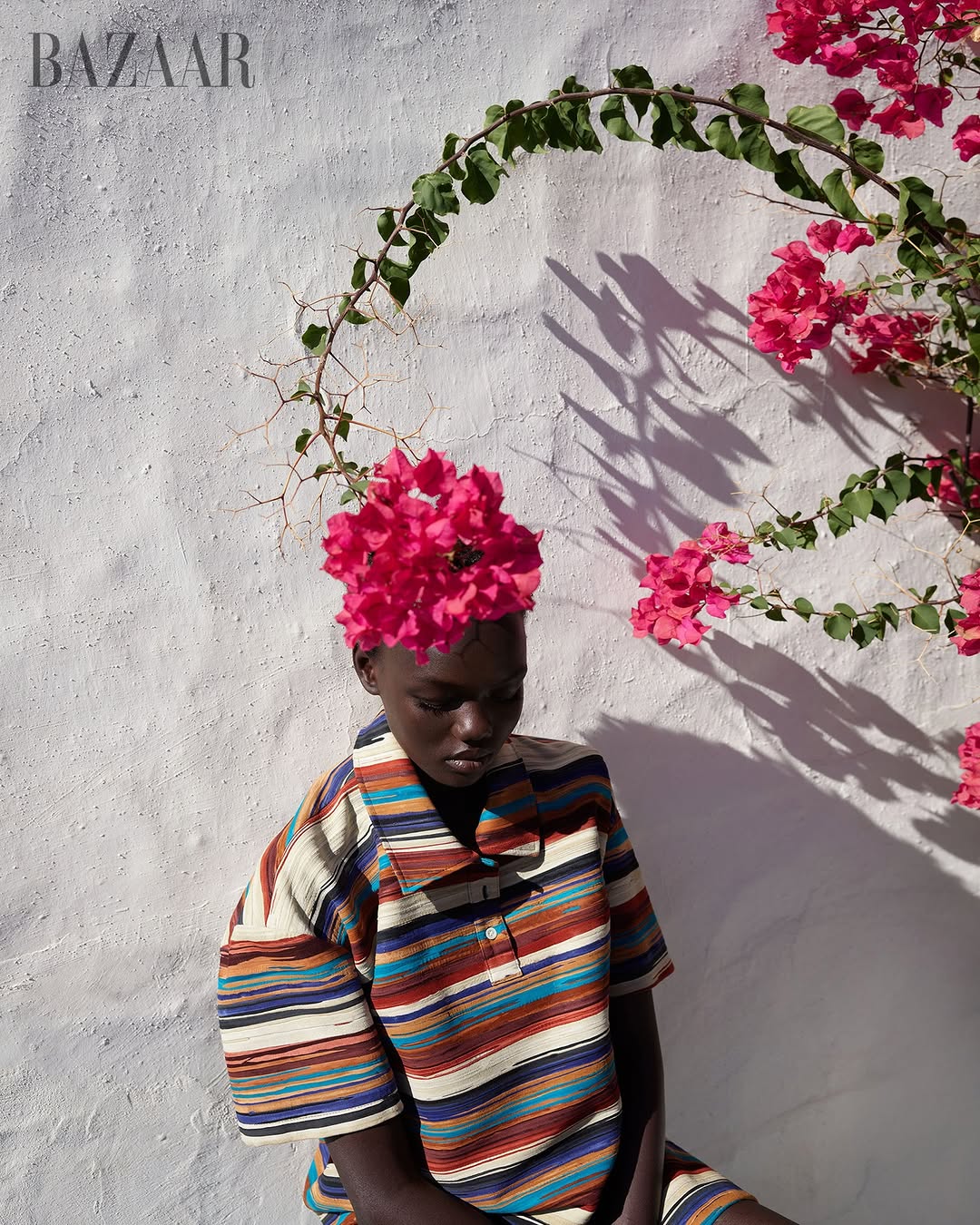
This eleven-image spread is a masterclass in harsh contrasts and unapologetic glamour. Photographed by the always-unpredictable Viviane Sassen, Achol Kuir is captured in a way that feels almost extraterrestrial yet deeply grounded in the earth. Sassen’s signature play with shadows and limbs finds its perfect muse. Kuir bends, angles, and commands the rocky terrain, wearing the kind of graphic prints and exaggerated silhouettes that would swallow a lesser model whole.
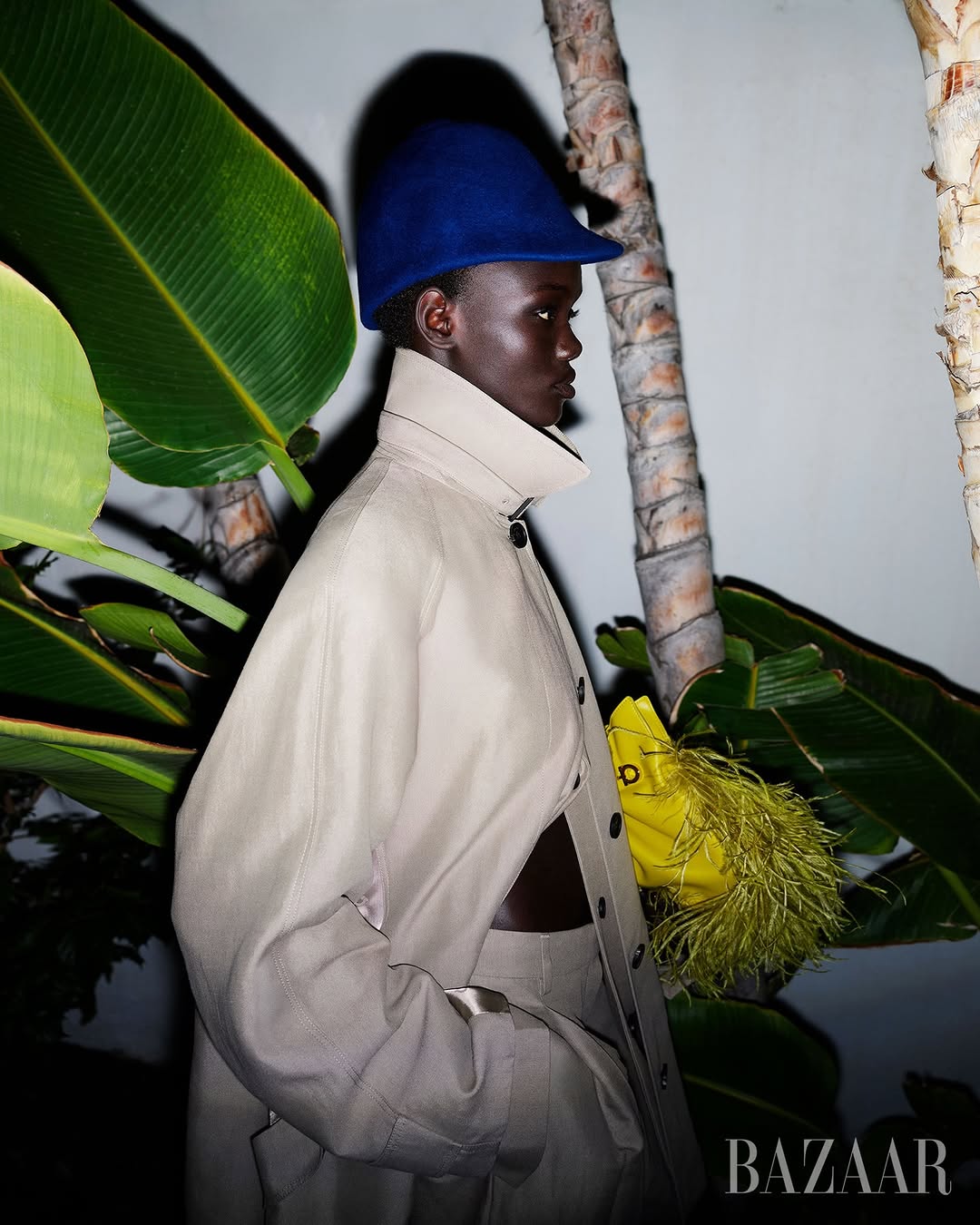
Let’s talk about the styling. Laetitia Gimenez pulled shapes that defy the standard spring editorial predictability. We are looking at sharp geometries, oversized proportions, and color stories that clash violently against the muted grays and deep blues of the Atlantic ocean. The caption teases these looks as made for moments in the sun or adventures after dark, but that almost undersells the drama. These are garments meant for an entrance. They demand attention. They catch the harsh island wind and turn into architectural sculptures.
Fans and fashion purists are already tearing through the digital pages, dissecting the raw edge of the shoot. It feels like a deliberate pivot from the overly airbrushed, heavily filtered aesthetic that has suffocated digital grids for the last few years. People want to see texture. They want to see the grain of the film, the sweat on the skin, the actual physical tension between a model and her environment. Kuir delivers that friction. Black Cosmopolitan readers know the history of Black models being marginalized in these sprawling destination shoots. For decades, the industry excuse was that darker skin was too hard to light against harsh, bright backgrounds. This spread obliterates that lazy narrative. The interplay of the sun against her rich, deep skin tone is the most compelling aspect of the entire production. It is a visual feast that proves exactly why inclusive casting at the highest level of editorial work is non-negotiable.
Irena Ruben’s work with Chanel Beauté on hair and makeup plays a crucial supporting role. Instead of fighting the elements, Ruben leans into them. Kuir’s skin catches the golden hour light with a rich, impossible gleam, while the hair feels wind-swept, lived-in, and authentic to a woman actually standing on a coastal cliffside. Anita Bitton’s casting choice here is impeccable. Kuir’s specific brand of beauty—regal, elongated, intensely expressive—anchors the surrealism of Sassen’s lens.
Flipping through the full gallery of eleven images feels like watching a private, high-budget film. In one shot, she might be stretched across the porous volcanic rock, wrapped in a chaotic geometric print that somehow makes perfect sense. In the next, she is upright, defiant against the horizon, wearing a silhouette so unexpected it forces you to stop scrolling and actually study the construction of the garment. It is rare for an editorial to maintain this level of visual tension across so many frames, but the production team at We Folk Agency and Canary Productions kept the rhythm tight.
This is what peak editorial work looks like when the team completely trusts the subject. There is no over-directing visible here. The chemistry between Kuir and Sassen translates through the screen. Harper’s Bazaar’s Visual Director Natasha Lunn Watkins pushed for an aesthetic that feels simultaneously nostalgic and unapologetically forward-looking. You can trace the lineage of this shoot back to the legendary supermodel eras of the late nineties, yet it belongs entirely to 2026.
What sets this particular feature apart is the sheer level of execution. High-fashion magazines often rely heavily on the fame of the cover star to sell the issue, sometimes letting the actual photography and styling get lazy. But this team worked for it. They traveled to an unforgiving terrain, hauled Chanel Beauté kits up rocky inclines, and let Kuir do what she does best. The result is a defining moment for the spring season. It reminds us why we still care about fashion editorials. When the right casting, the right location, and the right eye collide, the images stop being just marketing material. They become cultural artifacts.
Kuir is having a defining year. Her trajectory over the past few seasons has moved from an industry favorite to an absolute anchor for major luxury houses. Seeing her dominate an editorial of this scale, commanding the Canary Islands with this level of casual authority, solidifies her status. The April 2026 issue of Harper’s Bazaar is a keeper, purely for these eleven frames.