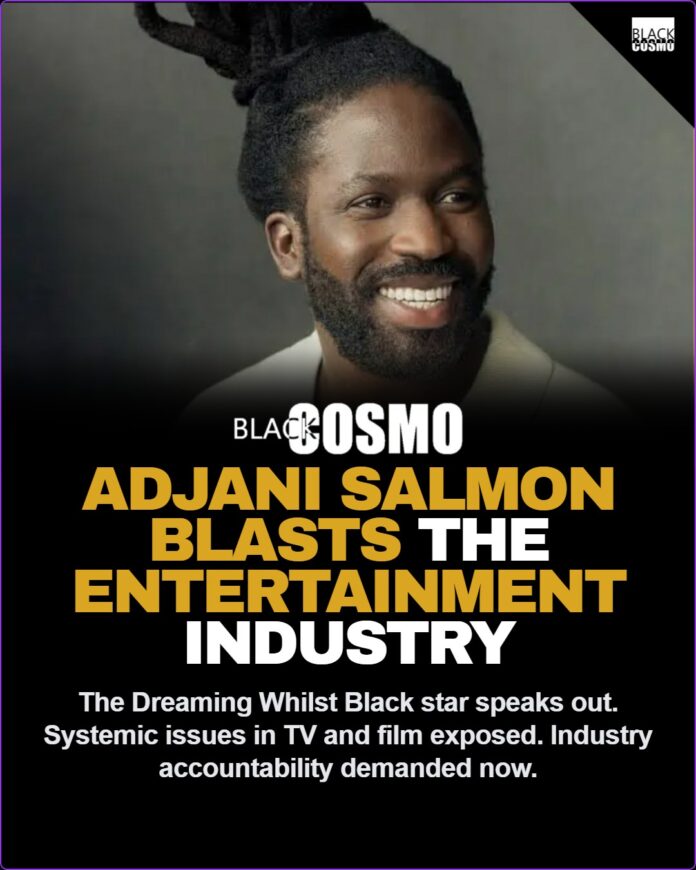
In a powerful and unapologetic stance, Adjani Salmon is officially calling out the entertainment industry and sending shockwaves through Hollywood and the U.K. film scenes alike. As of late February 2026, the critically acclaimed creator, writer, and star of the hit series Dreaming Whilst Black is pulling no punches when discussing the systemic hurdles Black creatives face. He has always used his art to mirror his reality, but with the highly anticipated second season of his show officially premiering on Paramount+ on February 20, 2026, he is stepping fully into the spotlight to expose the hypocrisies of a supposedly progressive business.
The journey to mainstream success has been anything but conventional for Adjani Salmon. Starting as a scrappy, self-funded YouTube web series in 2018, Dreaming Whilst Black eventually gained the backing of the BBC, A24, and Showtime, earning him a prestigious BAFTA along the way. Yet, despite the awards and the critical acclaim, he is quick to point out that the grind rarely stops, and the systemic roadblocks remain firmly in place. His recent press run has become a masterclass in transparency, revealing the uncomfortable truths about power, authorship, and true representation in modern television.
Season two of Dreaming Whilst Black perfectly encapsulates these themes. The story continues to follow Kwabena, a driven Black British filmmaker who finally lands his first major directing job on a radical, “color-blind” historical drama. However, what initially seems like a dream come true quickly devolves into a nightmare of creative compromises and cultural insensitivity. Salmon explicitly noted in recent interviews that while season one was about the struggle to get a foot in the door, season two explores the chaotic, often toxic reality of what actually sits behind that door. It’s a bold narrative choice that directly mirrors his own experiences navigating boardrooms filled with executives who often don’t understand the stories they are greenlighting.
During a recent sit-down with reporters, the visionary creator shed light on the opportunistic nature of the industry’s recent diversity push. Following the cultural shifts of 2020, studios scrambled to platform marginalized voices, but often did so in ways that felt disingenuous or surface-level. Salmon openly mocks this scramble in his series, where executives pitch caricatured, stereotypical Black shows like a “gritty sci-fi drug saga” or a “reggae choir” drama. By weaving these exaggerated but highly accurate microaggressions into his script, he exposes the fine line between true representation and performative tokenism.
When analyzing his strategy for calling out the entertainment industry, it becomes clear that his approach is uniquely effective because it relies on dry, biting satire rather than sheer anger. He disarms the audience with sharp British humor, making the harsh realities of “Black tax,” microaggressions, and unrealistic budget constraints digestible yet deeply impactful. He isn’t just complaining about the system; he is actively dismantling its facade on a global streaming platform. Fans are drawn to this unfiltered honesty, often describing the series as a documentary wrapped in the guise of a comedy.
Moreover, Salmon is putting his money where his mouth is. Beyond his on-screen critiques, he has spoken candidly about the importance of changing the industry from the inside out. He actively exhausts network internship funds to ensure young Black trainees and runners are brought onto his sets, getting them paid and in the room where decisions are made. He preaches the philosophy of “networking across” with peers rather than desperately “networking up” to out-of-touch gatekeepers—a strategy that clearly paid off in his own transition from YouTube creator to premium cable showrunner.
As the conversation continues to unfold throughout 2026, his voice remains a crucial anchor for aspiring creatives of color. He acknowledges the financial perks of his recent success—like finally being able to comfortably pay rent and hire an assistant—but remains fiercely critical of the fact that he still has to scrap just as hard as everyone else for creative autonomy. He refuses to sell out his “full-body Blackness” for the sake of an easy paycheck, a sentiment that resonates deeply with audiences who have historically been sidelined or stereotyped by mainstream media.
The entertainment industry is currently facing a period of austerity, with budgets tightening and marginalized stories often being the first to end up on the cutting room floor. In this climate, Salmon’s bold declarations are more vital than ever. He is challenging studios to move past their performative equity initiatives and to start trusting Black creators with the authority to tell their own stories without interference. By boldly stepping forward and turning the camera back on the executives, he is proving that true success isn’t just about making it to the top—it’s about changing the rules of the game once you get there.