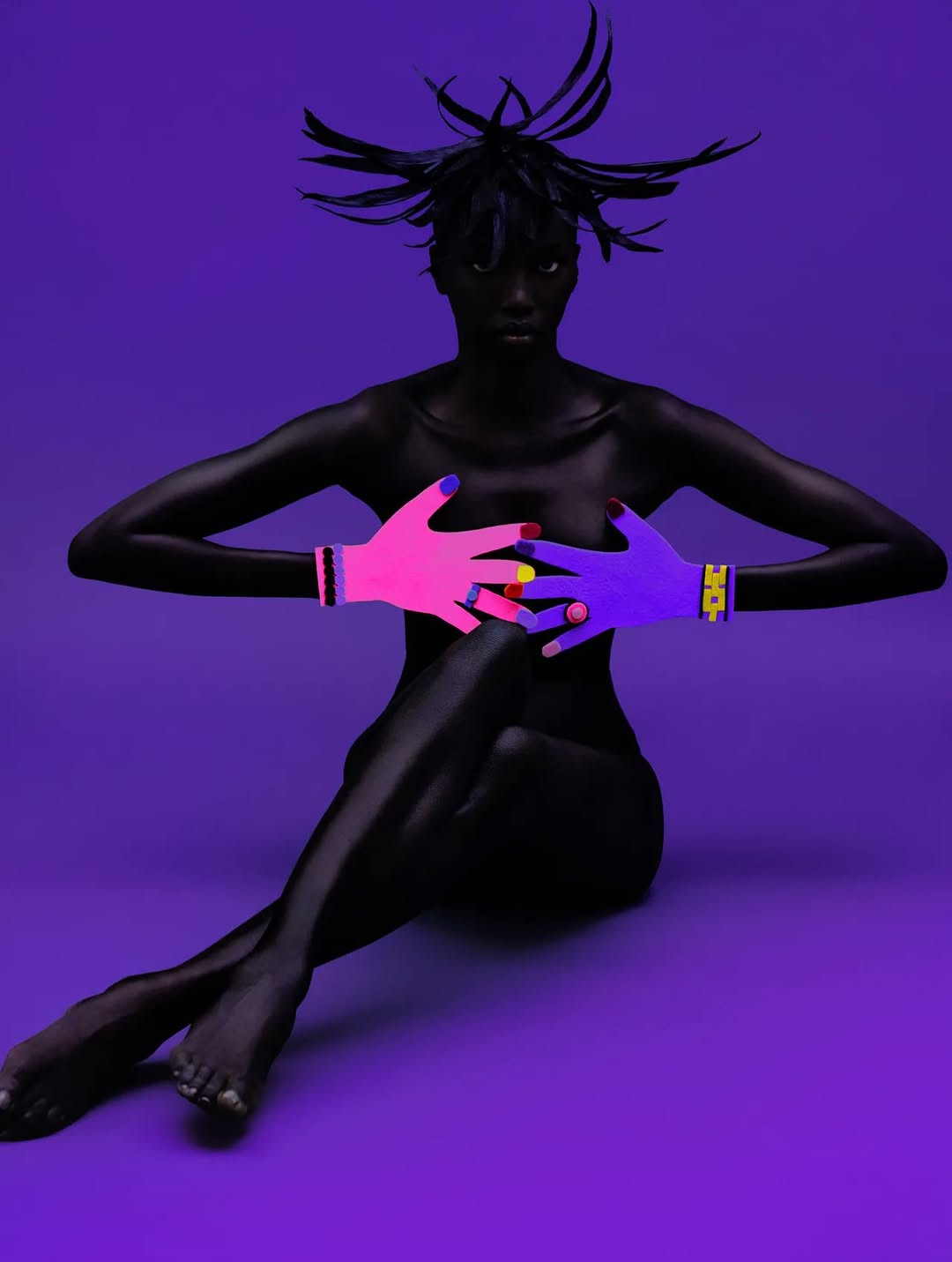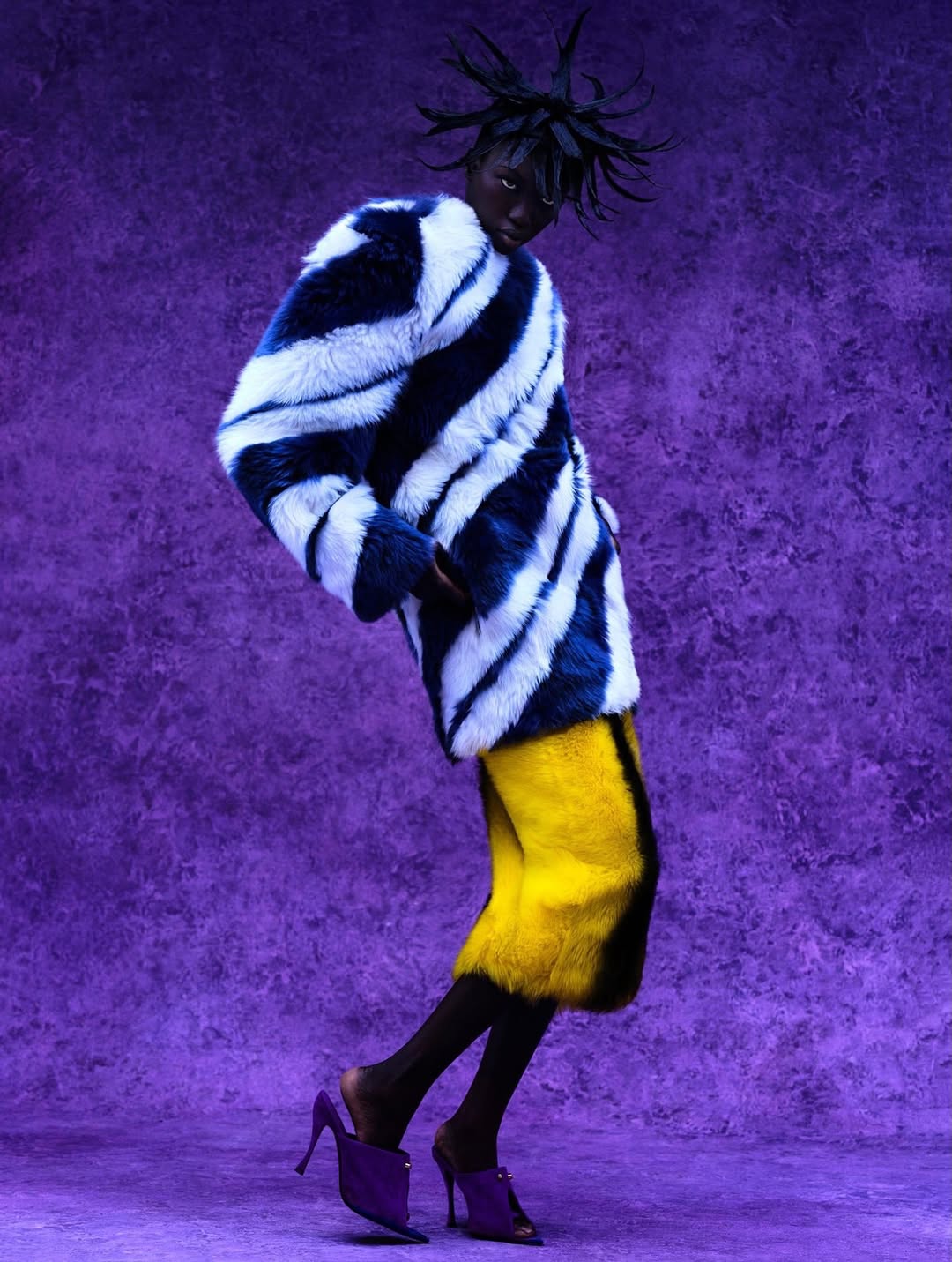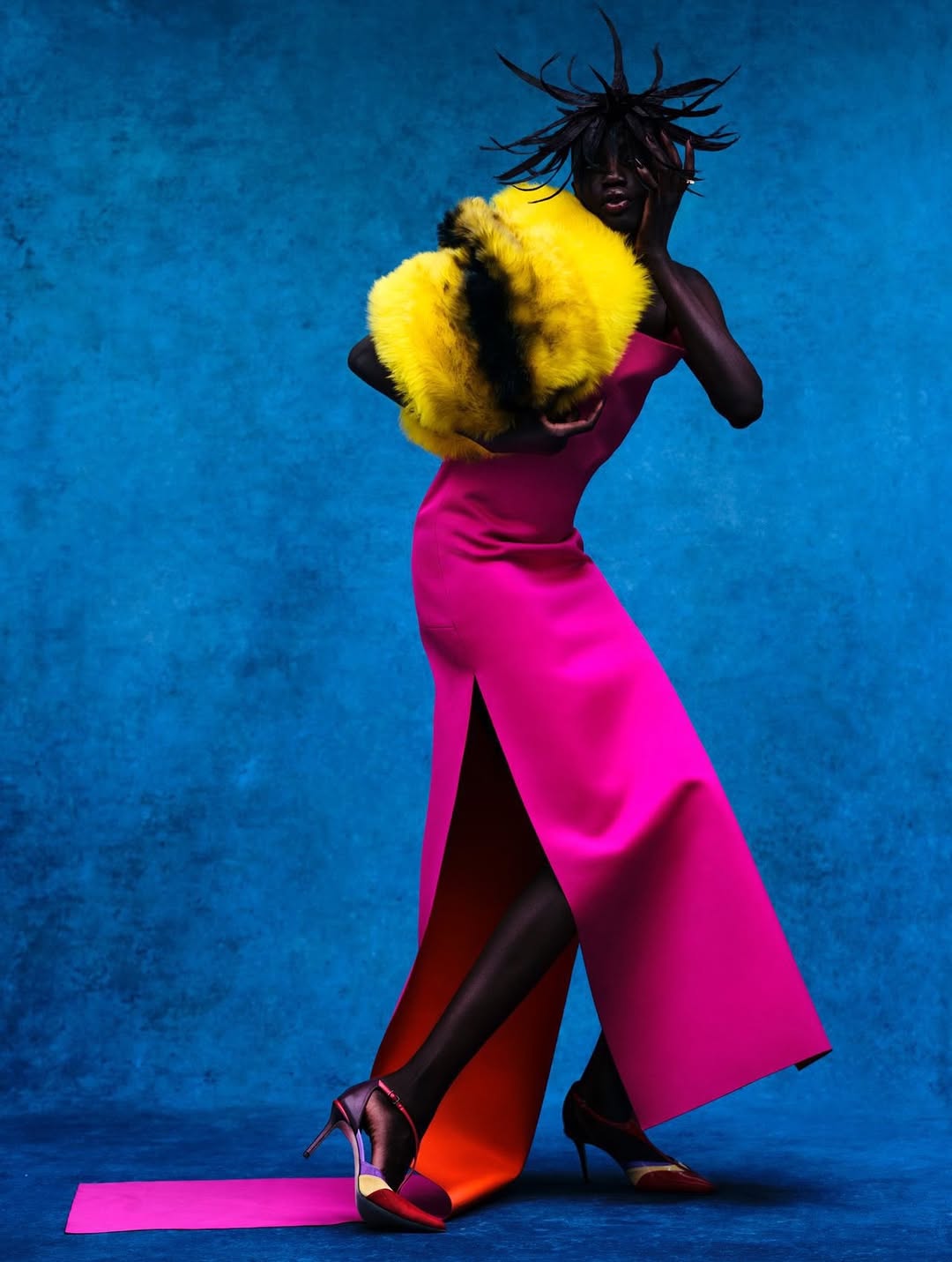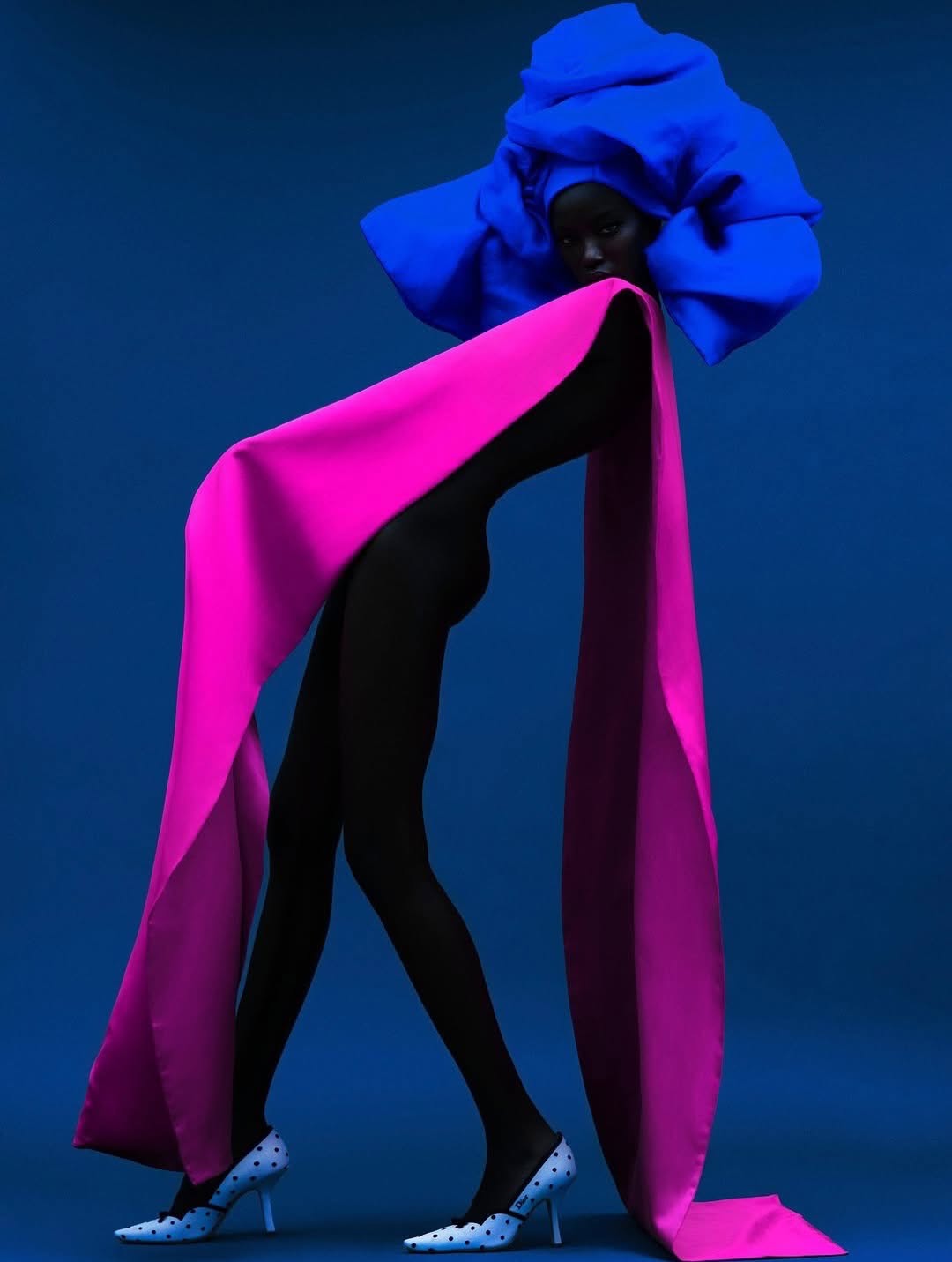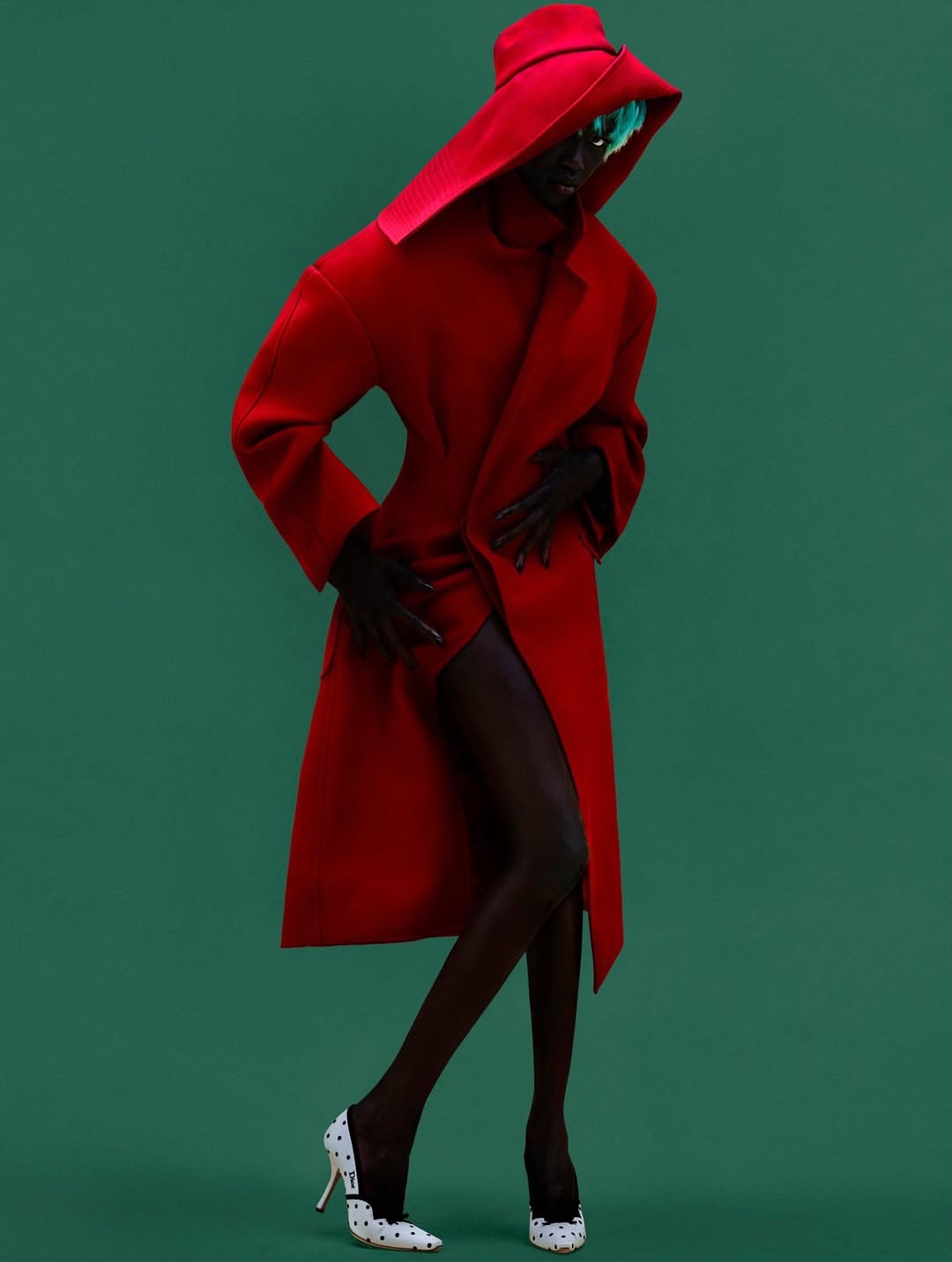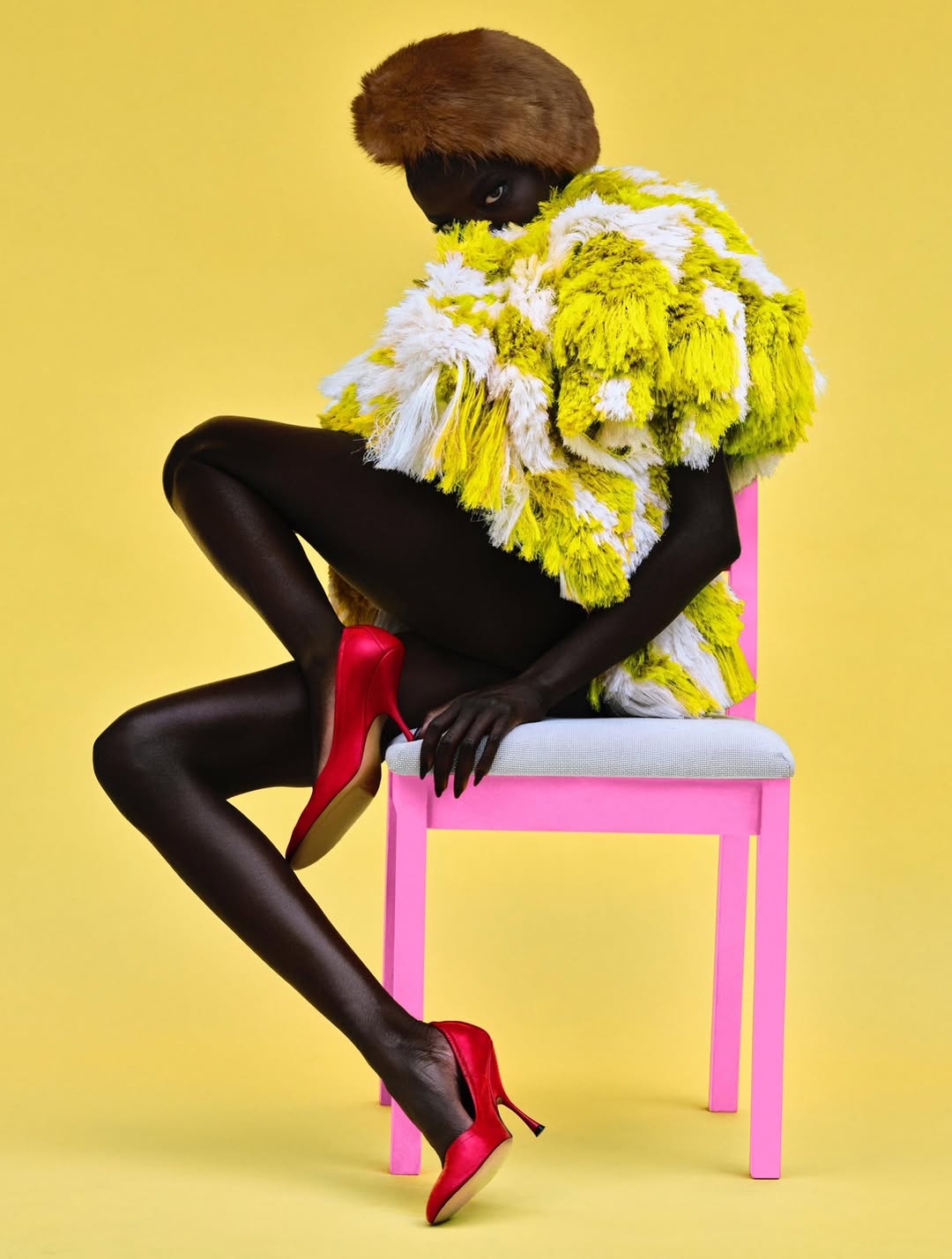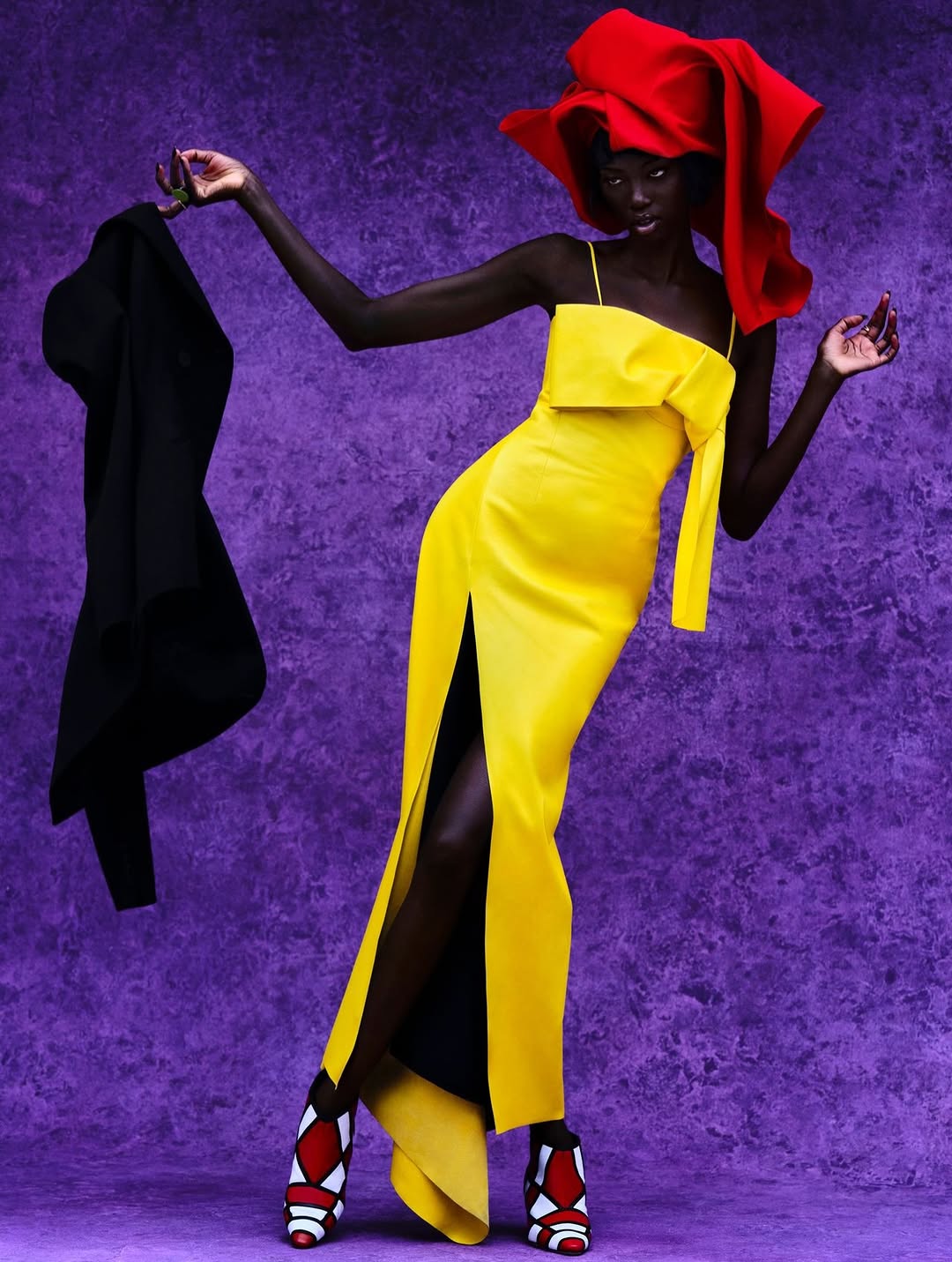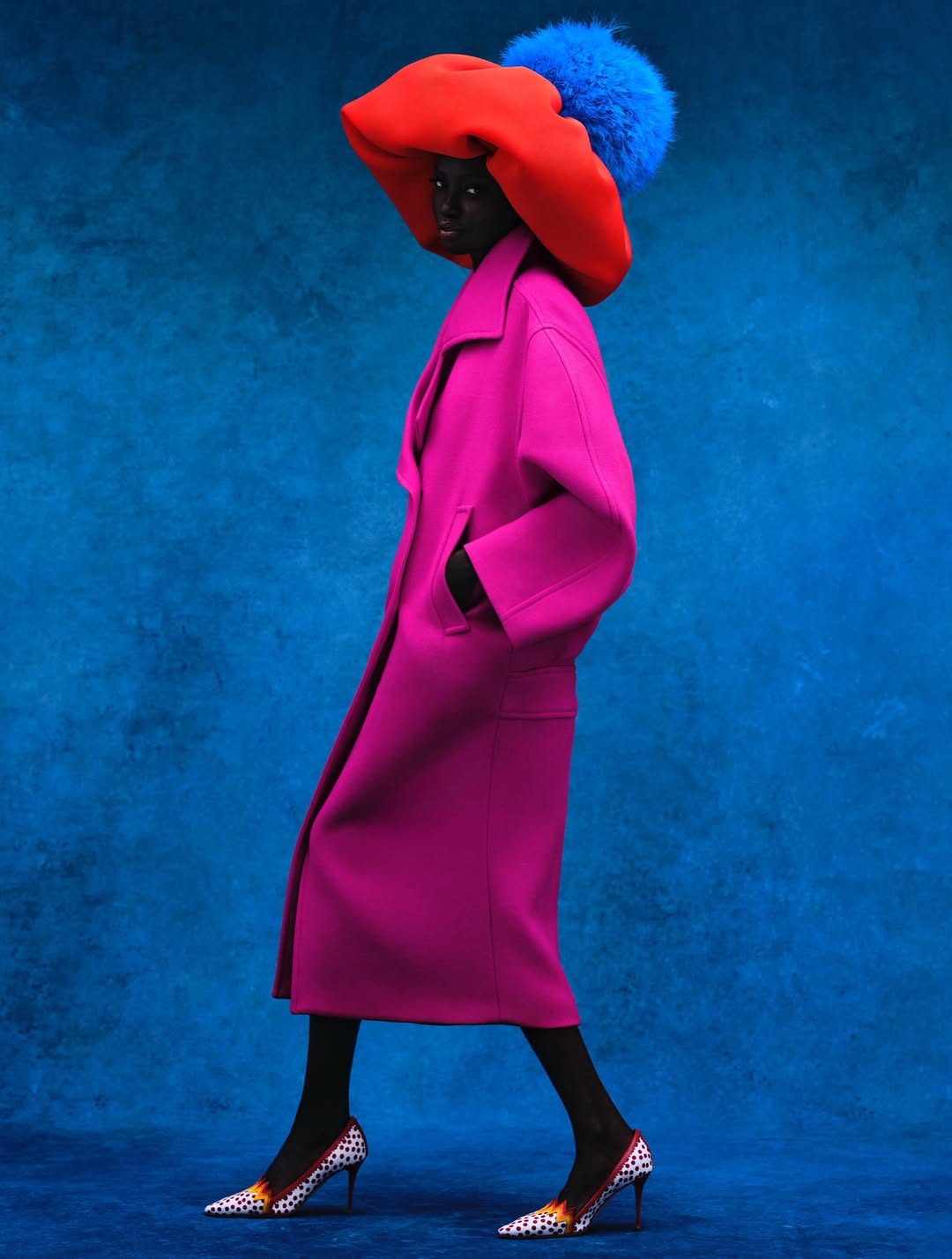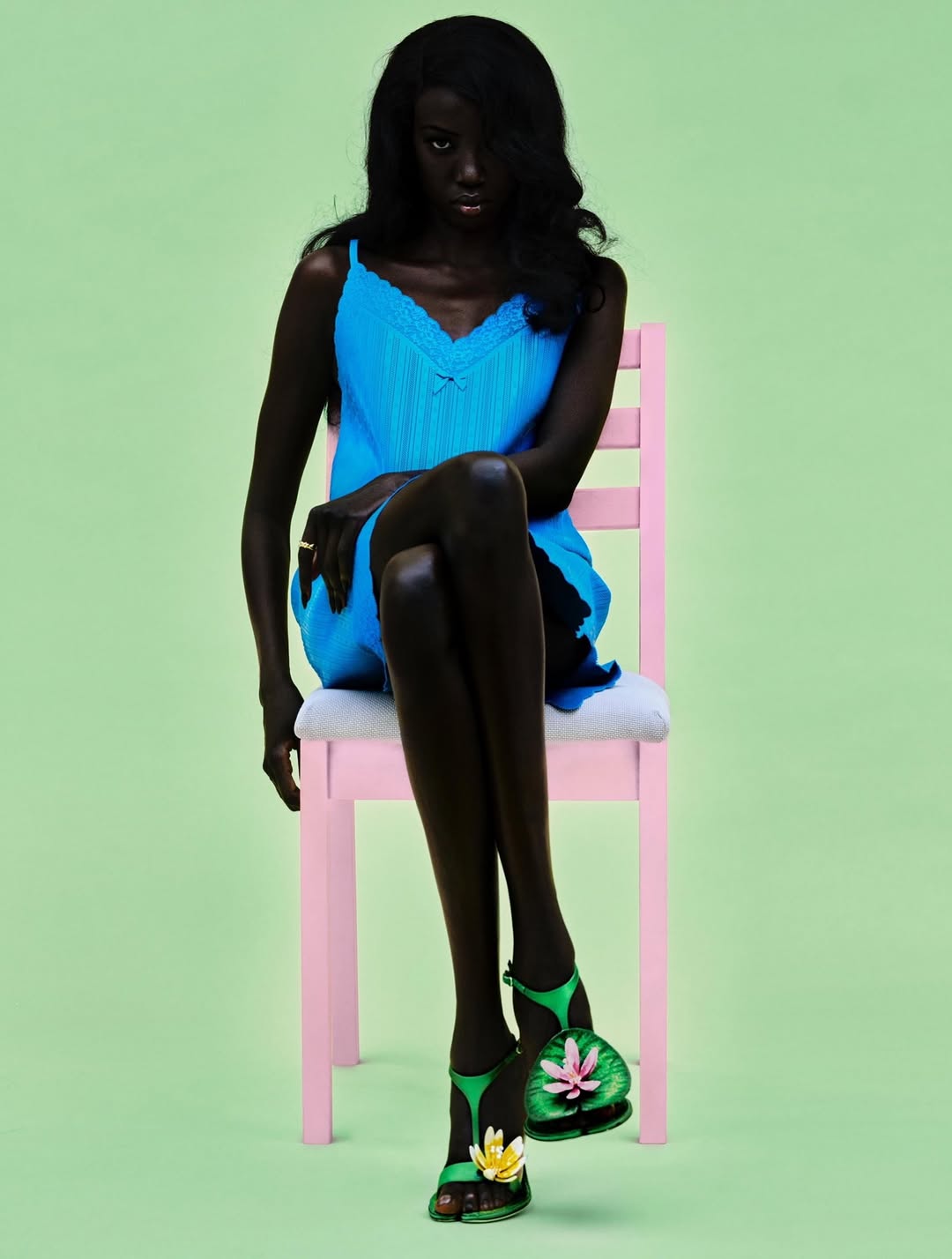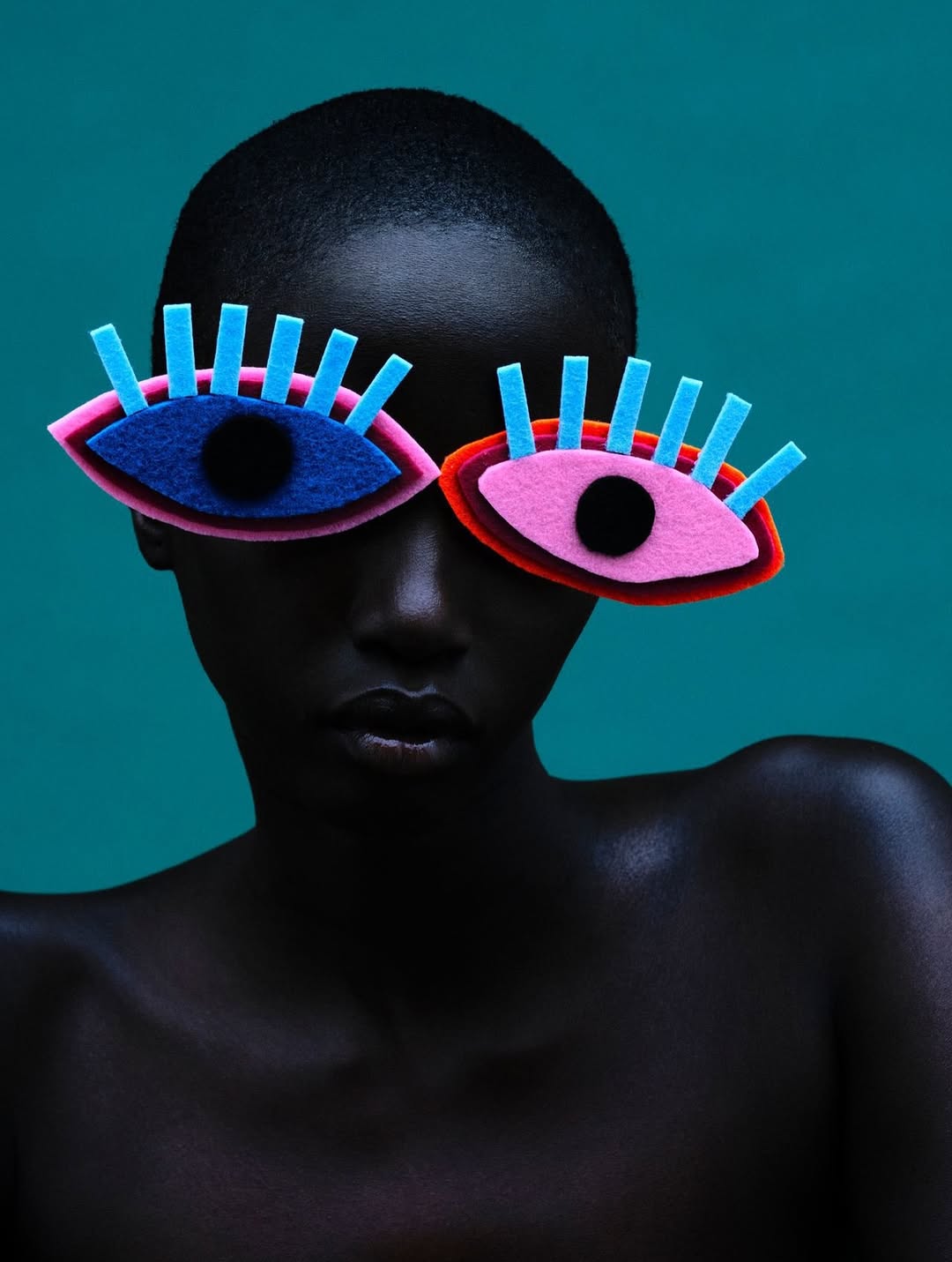
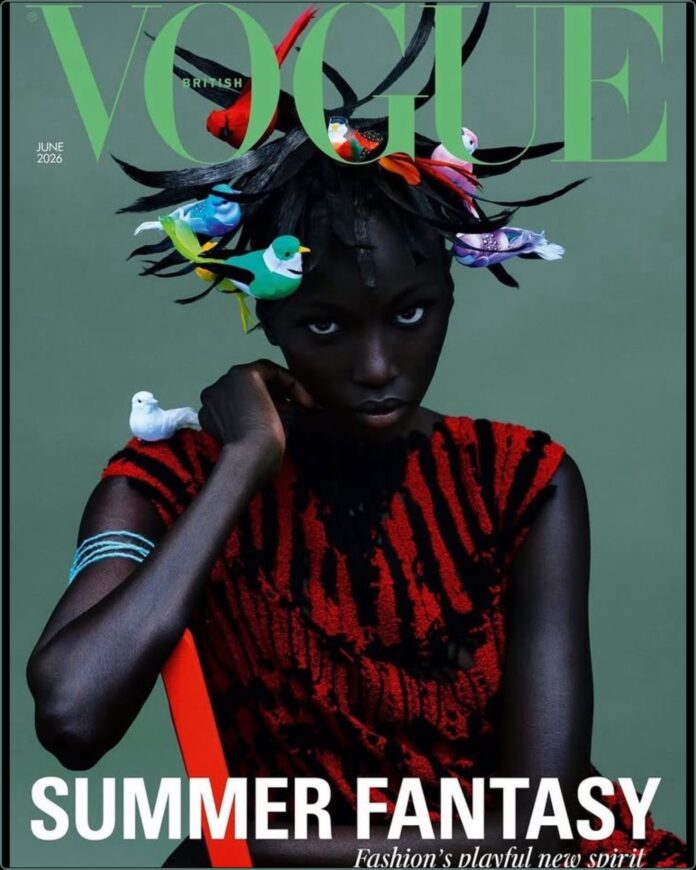
When you assemble a heavy-hitting team to capture one of the most definitive faces of this era, the result is bound to shift the room. The May 2026 spread for British Vogue does exactly that. The publication tapped Anok Yai to front a visual spread that feels less like a monthly editorial and more like a permanent installation. She does not just wear the garments. She consumes them. She owns the space. She directs the eye exactly where she wants it to go.
Behind the camera is Rafael Pavarotti. If you follow fashion, you know his name. Pavarotti approaches dark skin with a reverence that borders on the spiritual. He understands how to pull rich, saturated tones out of a shot without washing out the subject. In an industry that spent decades pretending it did not know how to light Black women, Pavarotti’s work is a direct counter-response. His lens treats his subject with absolute authority.
Then there is the hair. Jawara is not just a stylist. He is an architect. His approach to Black hair constantly pushes the boundaries of gravity and texture. For this British Vogue spread, the hair styling acts as a crown. It shapes the silhouette and demands attention. You can see the meticulous care in every coil and structured lift. It speaks to a deep, grounded understanding of our aesthetic history, remixed for the present moment.
Anok Yai has never been the type of model to fade into the background. From her viral discovery at a college homecoming to closing runways for the biggest luxury houses on the planet, she demands a specific type of respect. She understands the angles, the negative space, and the subtle shifts in posture that turn a standard garment into a piece of art. Her gaze pierces right through the lens. It is an assertive, knowing look. She is fully aware of the space she occupies and the history of women who looked just like her being historically sidelined in these very same European publications.
Beautiful images require context, and that is where Funmi Fetto steps in. Bringing Fetto in to write the story anchors the entire feature. Fetto has spent her career documenting Black beauty and culture with a sharp, uncompromising pen. She does not write fluff. When Fetto profiles a subject, she digs into the meat of who they are and what they represent to the culture at large. Her involvement guarantees that the narrative matches the heavy visual impact of Pavarotti’s photography.
Think about the alignment here. A South Sudanese supermodel, an Afro-Brazilian photographer, a Jamaican-born hair visionary, and a Nigerian-British journalist converging at a heritage British fashion title. This is not just a routine booking. It is a takeover of a traditional space, done with absolute precision. They are not asking for a seat at the table. They bought the building and rearranged the furniture.
The industry loves a quick aesthetic bite, something easily digestible for the timeline. But this British Vogue feature refuses to be scrolled past casually. It demands a pause. When you flip through the pages or swipe across the digital carousel, there is a tangible weight to the images. The styling choices, the set design, the lighting all coalesce into a singular vision of Black excellence that does not pander to a white gaze.
For the culture, seeing this level of execution provides a roadmap. It signals to young Black creatives sitting in Chicago, Houston, or London that there is a lane for unapologetic, hyper-specific artistry. It tells them that they do not need to dilute their vision to secure the bag. The bag will come when the work is undeniable. This editorial is completely undeniable.