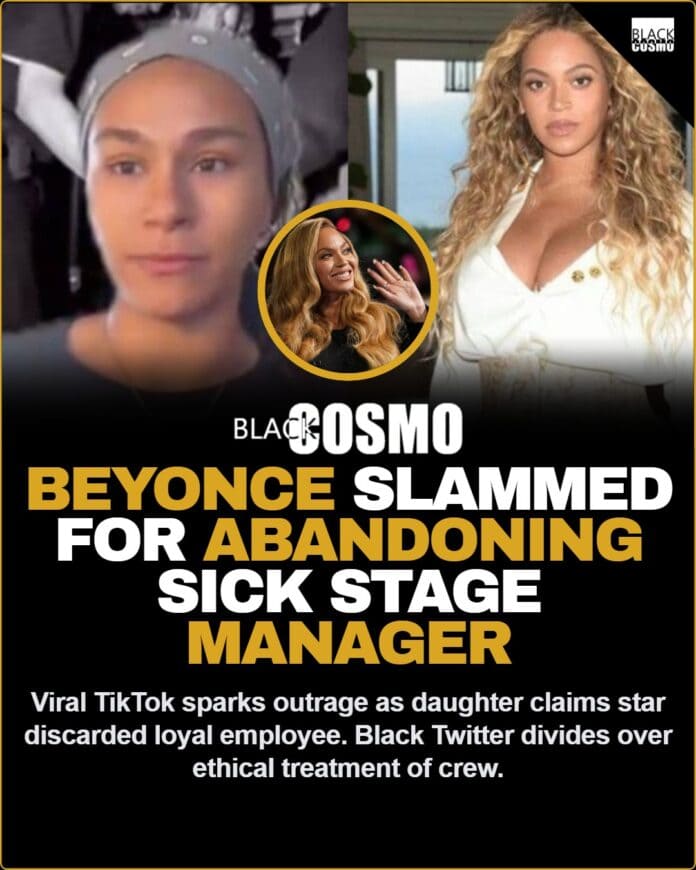
The internet is currently ablaze with Beyoncé sick stage manager allegations following a heartbreaking viral TikTok that has divided the Hive and Black Twitter alike. The drama ignited late this week when a young woman identified as Makai (Mairi Cooley) took to social media to accuse Beyoncé and her company, Parkwood Entertainment, of “discarding” her father after he fell ill.
According to the viral posts, Terry Cooley served as a loyal stage manager for Beyoncé for over two decades, dating back to the Destiny’s Child era. However, the narrative took a dark turn when Mairi alleged that once her father’s health declined due to the grueling physical demands of touring, he was quietly let go without severance pay. The claims have sparked a fierce debate about labor ethics in the music industry, with the Beyoncé sick stage manager allegations trending across multiple platforms as fans demand answers.
The “Go for Terry” Clip Resurfaces
To prove her father’s deep ties to the superstar, Mairi shared archival footage from the Mrs. Carter Show World Tour where Queen Bey herself can be heard shouting, “Go for Terry!” over the comms system. For many fans, this specific clip was the smoking gun that transformed Terry from an anonymous crew member into a tangible figure of loyalty. The emotional weight of seeing a man who dedicated 20 years to building the Beyoncé empire allegedly left to struggle with medical bills has struck a nerve.
“He gave his body to this job,” Mairi stated in her tearful plea, describing how her family has been forced to sell their home to cover debts. She alleges that when Terry could no longer keep up with the frantic pace required for productions like the Renaissance tour, the team cut ties rather than offering him a desk role or financial cushion.
Black Twitter Divides: Business vs. Ethics
The reaction on Black Twitter has been swift and polarized. On one side, critics are pointing out the hypocrisy of a brand built on “Black excellence” and family values allegedly treating a Day 1 Black employee as disposable. Users are drawing uncomfortable parallels to how corporate America often treats Black labor—extracting value until the worker is broken, then replacing them.
On the other side of the timeline, defenders note that touring personnel are often independent contractors (1099 workers), meaning they aren’t legally entitled to severance or benefits in the same way salaried employees are. “Legally, she might be in the clear,” one viral tweet read, “but ethically? It looks terrible.”
Silence from Parkwood Entertainment
As of February 25, 2026, neither Beyoncé nor a representative for Parkwood Entertainment has issued a public statement regarding the claims. The silence has only fueled the fire, with the hashtag #JusticeForTerry gaining momentum. Fans are flooding the comments of Parkwood’s official accounts, urging them to “cut the check” and honor the legacy of a man who helped make the magic happen for two decades.
While the legalities remain murky, the court of public opinion is in full session. As the Beyoncé sick stage manager allegations continue to dominate the news cycle, the situation serves as a grim reminder of the precarious nature of gig work in the entertainment industry—even when you’re working for the biggest artist in the world.