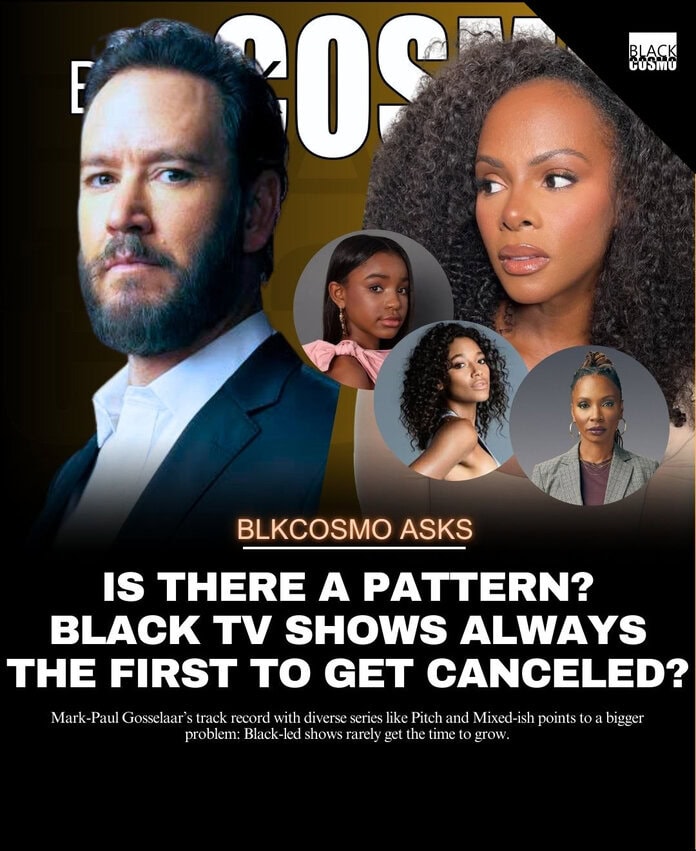
If you’ve ever felt like your favorite Black TV shows canceled before they had a chance, you’re not imagining it. The pattern has been happening for years—and it keeps repeating. When you look at actors like Mark-Paul Gosselaar, the issue becomes even more visible. He’s been involved in several shows with Black leads or themes of diversity, and almost every one of them has been shut down early.
 Shows like Pitch, Mixed-ish, and even projects where he co-starred with Black actors were praised but never given time to grow. It raises questions about how the industry treats Black-led stories and the people behind them.
Pitch and Mixed-ish Never Got a Real Chance
 Let’s start with Pitch. The show was historic. A Black woman, played by Kylie Bunbury, breaking into Major League Baseball was a powerful story. Gosselaar played her teammate and anchor. Critics liked it. Viewers liked it. And still, it was pulled after one season.
Then came Mixed-ish, the Black-ish prequel. Again, a bold show. Again, strong performances. And again, gone in under two seasons.
Meanwhile, shows like Seinfeld or Cheers were allowed to stumble before finding an audience. They were nurtured. They were seen as worth the investment.
So why are Black TV shows canceled so quickly?
The Lisa Turtle Situation Still Hurts
Lark Voorhies, who played Lisa Turtle on Saved by the Bell, made history herself. She was one of the only Black girls on a mainstream teen sitcom in the early ’90s. Her character even dated Zack Morris—played by Gosselaar—which was groundbreaking for its time.
But when the 2020 reboot aired, Lark Voorhies wasn’t there. She later explained on The Dr. Oz Show that she wasn’t invited. She shared that her mental health diagnosis—schizoaffective disorder—may have contributed to the decision to leave her out.
That decision stung. It’s one thing for networks to ignore the original characters. It’s another to exclude a Black woman while including others, especially if she’s been open about her mental health journey.
Even more disappointing? Mark-Paul Gosselaar and most of the cast stayed quiet. No support. No public words. Nothing.
Hollywood Still Doesn’t Prioritize Black Stories
 The problem goes beyond any one actor or show. It’s a system-wide issue. Many Black-led series have been removed from platforms or shut down after a single season—Rap Sh!t, The Wonder Years reboot, South Side.
Issa Rae summed it up best: “You’re seeing so many Black shows get canceled, you’re seeing so many executives—especially on the DEI side—get canned.”
It’s not just ratings. It’s about power, priority, and protection.
When Black shows are allowed to fail fast, but white-led shows are given time to recover, you see the difference in who the industry values.
Does Allyship End at the Screen?
 Mark-Paul Gosselaar’s presence in diverse casts hasn’t gone unnoticed. But allyship is more than standing next to Black actors on set. It’s about what you say when it’s hard. It’s about showing up when someone like Lark Voorhies is publicly excluded.
Many fans remember how he and Lark dated during Saved by the Bell. That relationship was historic. Yet when she was struggling, silence followed.
Appearing in shows about Black identity doesn’t mean someone advocates for Black people. The industry has often rewarded performers for stepping into “diverse” roles without expecting any real solidarity when it counts.
What Needs to Change
The trend of Black TV shows canceled early can’t just be blamed on the market. Two things must shift:
- Networks need to invest in Black-led stories long-term. A single season isn’t enough. Give these shows time like you would others.
- Audiences must support what they say they love. Watch. Stream. Share. Talk about it. Engagement drives decisions.
We also have to stop giving out credit so quickly. Standing next to a Black story isn’t the same as protecting it.