
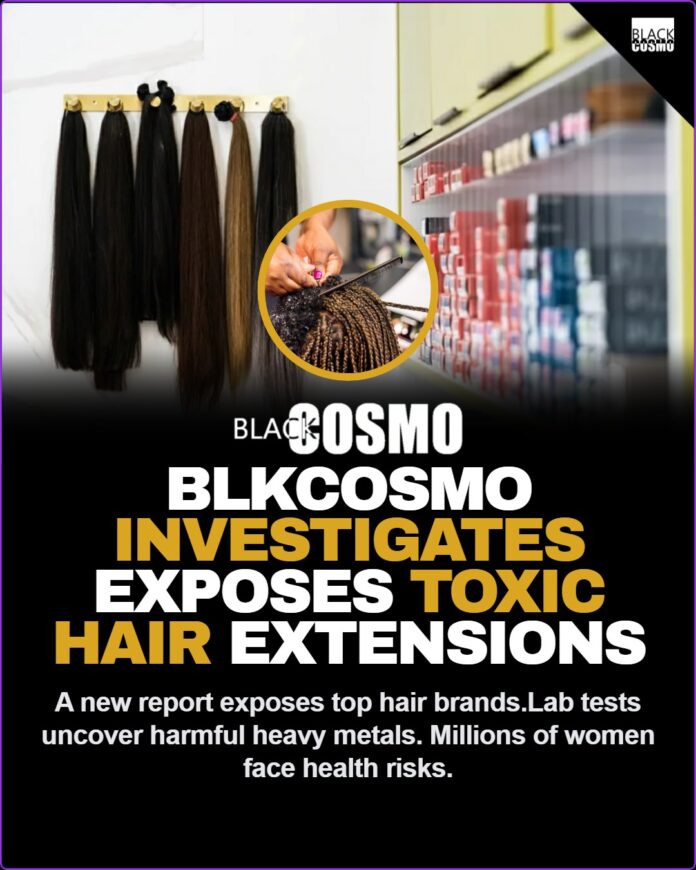
The beauty industry has just been hit with a massive controversy that has millions of women checking the labels on their favorite protective styles. A groundbreaking new report has revealed that there are nearly 900 toxic chemicals in human hair extensions currently sold by some of the most popular top-tier beauty brands on the market. This bombshell revelation was brought to light by BlkCosmo Investigates, sparking widespread outrage and concern across social media platforms as consumers realize their daily beauty routines could be putting their long-term health in serious jeopardy.
For decades, weaves, wigs, and extensions have been marketed as safe, protective styles, especially for Black women who utilize them to give their natural hair a break from daily manipulation. However, the latest findings presented by BlkCosmo Investigates indicate that the very products meant to protect hair are actually harboring dangerous substances. From heavy metals to volatile organic compounds (VOCs), the lack of regulatory oversight in the cosmetic and hair industry is now fully on display, leaving consumers scrambling for answers.
The Shocking Lab Results Explained
When researchers took a closer look at human, synthetic, and plant-based hair extensions from over thirty top-selling brands, the results were nothing short of horrifying. The clinical lab tests confirmed the presence of over 900 toxic chemicals in human hair extensions, proving that the issue is not just isolated to cheap, synthetic braiding hair. Among the most alarming discoveries was the staggering amount of lead and arsenic found in these bundles.
Lead exposure, even in minuscule amounts, is known to have devastating effects on the human body over time. In some of the samples tested, the levels of lead were exponentially higher than what is legally permissible in other consumer goods. Arsenic, another highly toxic heavy metal, was also detected in significant quantities. Alongside these metals, the tests identified various endocrine-disrupting chemicals and volatile organic compounds that can off-gas and be inhaled or absorbed directly through the scalp.
The Disproportionate Impact on Black Women
While hair extensions are worn by women of all demographics, the brunt of this health crisis falls disproportionately on Black women. Statistics show that upward of 70 percent of Black women utilize hair extensions, wigs, or weaves at least once a year. These styles are deeply embedded in the culture, functioning as a staple of beauty, convenience, and versatility. By marketing these chemically tainted products directly to Black consumers, the industry is essentially gambling with the health of a specific demographic.
Because the scalp is highly vascular and absorbent, wearing these toxic products close to the root for weeks or months at a time increases the likelihood of systemic absorption. Protective styling is supposed to shield natural hair from environmental damage, but if the extensions themselves are laced with harmful substances, the entire purpose is defeated. Many advocates are now calling this a severe public health blindspot that needs immediate legislative attention.
Severe Health Implications: What You Need to Know
The health risks associated with the chemicals found in these extensions cannot be overstated. Medical professionals and researchers have linked chronic exposure to these specific heavy metals and VOCs to a host of serious conditions. First and foremost is the increased risk of cancer. The prolonged absorption of carcinogens through the scalp is a major red flag for oncologists who study environmental exposures.
Furthermore, endocrine disruptors—which mimic or interfere with the body’s natural hormones—can lead to severe reproductive health issues. This includes conditions like fibroids, endometriosis, early-onset puberty, and fertility struggles, which already disproportionately affect Black women. Developmental issues, chronic fatigue, and neurological impairments are also tied to long-term heavy metal toxicity. The fact that consumers are paying premium prices for human hair that could silently be making them sick is a difficult reality many are now confronting.
The Urgent Need for Industry Regulation
How did we get here? The primary issue lies in the glaring loopholes within cosmetic regulations. Unlike food and pharmaceuticals, the beauty and hair industry is notoriously under-regulated by the FDA. Hair extensions, in particular, fall into a gray area where manufacturers are rarely required to disclose the chemical baths and processing treatments used to achieve those silky, tangle-free textures seen in beauty supply stores.
Advocates are pushing harder than ever for the Safer Beauty Bill Package to be prioritized by lawmakers. This legislation would require total transparency from beauty brands, forcing them to eliminate known toxic chemicals from their supply chains. Until strict regulations are enforced, companies will continue to prioritize profit margins over consumer safety, importing unregulated, chemically processed hair from overseas factories.
How Consumers Can Protect Themselves
In the wake of this exposure, many women are wondering what steps they can take to safeguard their health without entirely sacrificing their preferred aesthetics. Here are a few immediate actions you can take:
- Demand Transparency: Contact your favorite hair brands and ask for their chemical testing and safety reports. If they cannot provide proof that their extensions are heavy-metal-free, consider supporting more transparent alternatives.
- Detox the Hair: Some stylists recommend thoroughly washing and soaking new hair extensions in an apple cider vinegar (ACV) and baking soda bath before installation. While it may not remove all embedded heavy metals, it can help strip away surface-level chemical coatings and preservatives.
- Embrace the Natural Hair Movement: Many women are using this alarming news as a catalyst to return to their natural hair journey, avoiding extensions altogether until the industry improves safety standards.
- Support Clean Beauty Brands: A niche market of non-toxic, ethically sourced, and chemically transparent hair extension brands is beginning to emerge. Supporting these businesses helps shift the market demand toward safer practices.
The revelation that there are nearly 900 toxic chemicals in human hair extensions is a wake-up call that the beauty industry can no longer ignore. No one should have to sacrifice their health in the name of beauty. As awareness grows, consumers, advocates, and lawmakers alike are being pushed to demand accountability from manufacturers. Until stronger protections are implemented, staying informed and making mindful purchasing decisions remain the best defense against this hidden cosmetic hazard.