
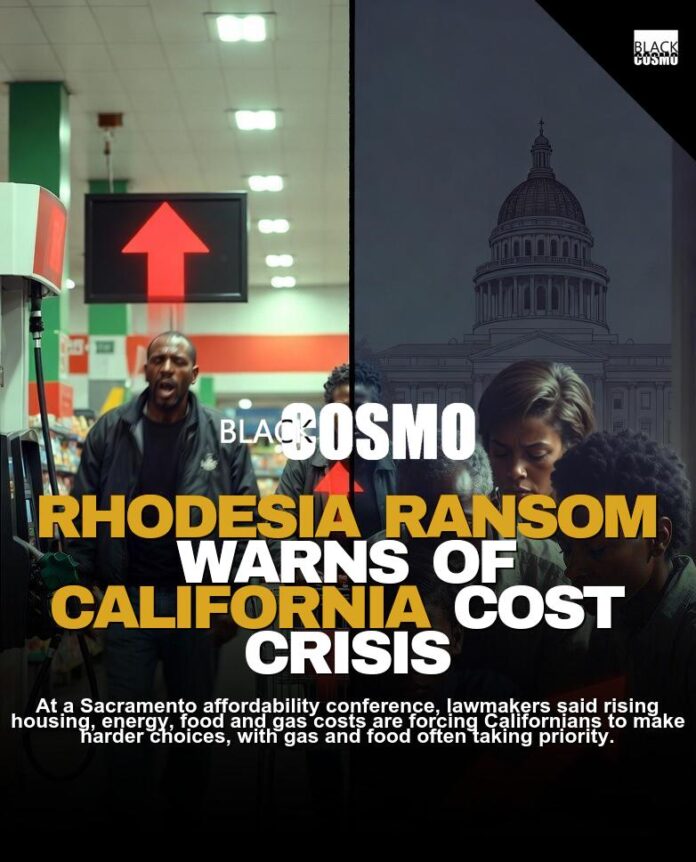
Rhodesia Ransom is putting plain language to what a lot of California families are already living through: the cost of surviving is forcing people to rank basic needs against each other. At a recent Sacramento conference focused on affordability, the Stockton lawmaker said constituents are no longer choosing between wants and needs. They’re deciding which essentials can’t wait, and right now gas and food are rising to the top.
That shift says a lot about the pressure households are under. Housing, energy, groceries, and transportation have all become heavier burdens, especially for working-class families and lower-income residents. Ransom’s comments landed in a broader conversation about what affordability really looks like in California, where even everyday routines like getting to work, keeping the lights on, and stocking the fridge can feel financially punishing.
The strain is especially sharp for Black Californians. Research from the Greenlining Institute has pointed to long-standing structural barriers that continue to shape who gets hit hardest. Black renters face some of the highest rent burdens in the state, and older, less efficient housing often means higher utility bills too. Food insecurity remains another major issue, particularly in neighborhoods that have dealt with years of disinvestment and limited access to affordable, healthy groceries.
Political leaders across party lines have been sounding the alarm, but the urgency is growing as state and federal decisions collide. Proposed cuts to nutrition support are adding another layer of instability, leaving California officials to figure out how much they can realistically backfill while balancing their own budget priorities. At the same time, gas prices in some areas have remained painfully high, making it even harder for families who rely on their cars for work, school, and caregiving.
State leaders have pointed to relief efforts like climate credit rebates on utility bills, but for many residents, a one-time credit doesn’t erase the day-to-day squeeze. That’s part of why Rhodesia Ransom’s remarks resonate beyond policy circles. For Black communities and other families already used to stretching every dollar, this isn’t just an economics story. It’s about dignity, stability, and what it means when even the basics start to feel out of reach.