
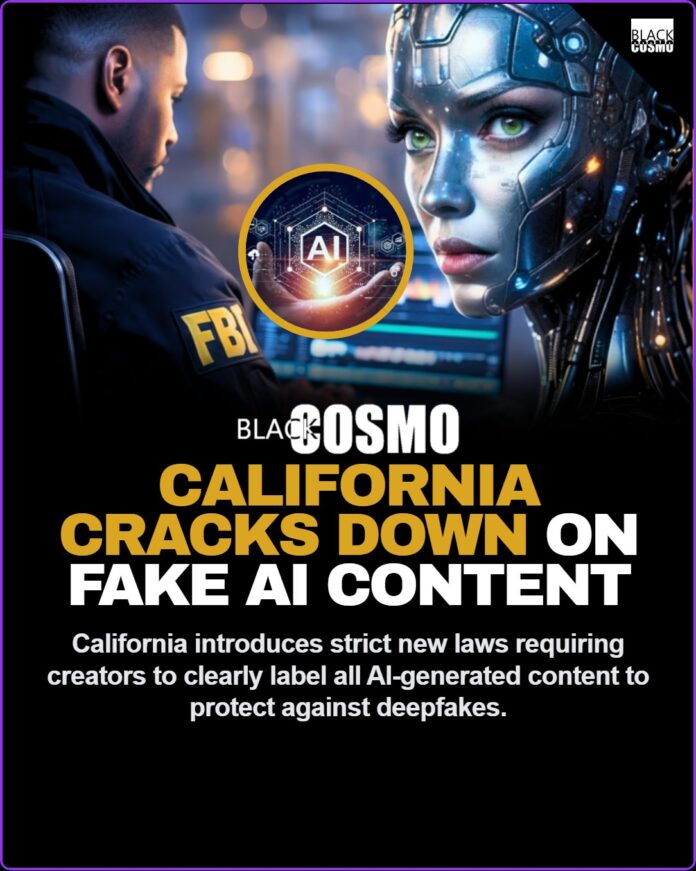
The golden state is drawing a massive line in the digital sand. As the boundary between reality and digital fabrication blurs, California is cracking down on AI-generated content with sweeping new legislation. This highly anticipated AI transparency law has officially hit the mainstream, creating massive waves for developers, influencers, and digital artists alike. The new regulations require creators and major tech platforms to clearly label anything made or heavily altered using artificial intelligence. This move is designed to restore trust on social media, combat the rise of malicious deepfakes, and ensure transparency in an era where seeing is no longer believing.
For content creators and everyday social media users, this crackdown means that hidden enhancements will no longer fly under the radar. Following fierce debates in California last year, these specific regulations demand both visible (manifest) labels and hidden (latent) watermarks on computer-generated images, videos, and audio. It is a defining moment for digital authenticity. Whether you are using a generative algorithm to create a stunning visual or relying on artificial intelligence to write a script, the state expects clear disclosure from everyone.
What the AI Transparency Law Actually Does
Under the umbrella of the California AI Transparency Act (SB 942) and its subsequent amendments rolling out through 2026, platforms with over one million monthly visitors—think Meta, OpenAI, TikTok, and X—must provide users with a free, widely accessible tool to detect AI content. But the burden doesn’t just fall on the tech giants. Everyday creators who utilize these platforms to generate or significantly alter content are now required to use these tools to embed disclosures in their work. The AI transparency law essentially mandates that any artificial manipulation must be accompanied by embedded metadata showing the time, date, and tools used for its creation. If it’s AI, everyone scrolling past it needs to know.
Protecting Black Creators and Cultural Authenticity
In the fast-paced world of digital media, Black creators and artists have historically been at the forefront of trends, only to have their work, likenesses, and voices replicated without credit or compensation. The new AI transparency law directly addresses these pressing concerns. With additional bills like AB 2602 and AB 1836 recently going into effect alongside it, the state is preventing studios and employers from creating digital replicas of a performer’s voice or likeness without explicit consent and fair compensation. This provides a crucial safeguard for the culture. Artists no longer have to fear that their unique vocal inflections or signature styles will be hijacked by generative algorithms to create a synthetic duplicate. The mandatory labeling ensures that audiences can spot the difference between an authentic human performance and a machine-generated imitation, preserving the cultural integrity of original art.
The End of Unchecked Deepfakes
Deepfakes have posed a massive threat not only to celebrities but also to everyday people. From deceptive political advertisements that sway public opinion to non-consensual altered images that cause profound emotional distress, the dark side of generative artificial intelligence has run rampant across the internet. The state is tackling this head-on by enforcing strict penalties for platforms and creators who fail to properly identify synthetic media. The crackdown extends to the hardware as well, with capture device manufacturers eventually needing to embed latent disclosures directly into digital recording tools. This comprehensive approach means that the entire lifecycle of a piece of content—from the moment an image is snapped or generated to the moment it is posted online—is tracked for authenticity. It is an aggressive, much-needed step to reclaim reality online.
What Digital Entrepreneurs Need to Do Right Now
As we navigate the highly regulated landscape of 2026, the environment for digital entrepreneurship has fundamentally changed. If you are producing content for public consumption, transparency is your new best friend. To stay compliant with the AI transparency law, creators must consistently utilize the detection and watermarking tools provided by their preferred tech platforms. Every time you generate an image, synthesize a voiceover, or heavily edit a video using automated features, you must check the box to include a manifest label.
Failing to label heavily altered content could result in severe consequences, ranging from content takedowns and algorithmic suppression to potential legal liability, especially if the post involves commercial branding or political messaging. Influencers should actively audit their content creation pipelines, ensuring that editors and social media managers are fully aware of these new state guidelines. Furthermore, transparency builds trust. Audiences in 2026 are highly skeptical; by openly embracing the AI transparency law and voluntarily disclosing your creative methods, you can foster a deeper, more authentic connection with your followers.
In a digital ecosystem saturated with synthetic perfection, true authenticity is becoming a premium commodity. The golden state’s aggressive push for accountability might just be the exact blueprint that the rest of the country—and the world—needs to follow. By cracking down on deceptive media, we are finally putting the power back into the hands of real, human creators.