Cancel culture used to be simple—or at least it felt that way. Someone crossed a line, and the public responded: we’re not supporting that. Clear cause, clear effect.
But somewhere along the way, the rules changed.
Now it’s not just about what you did—it’s about who you stand next to, who you follow, what you like, what you fund. Screenshots became receipts. Silence became complicity. And suddenly, being “cancelled” isn’t just about your actions—it’s about your associations.
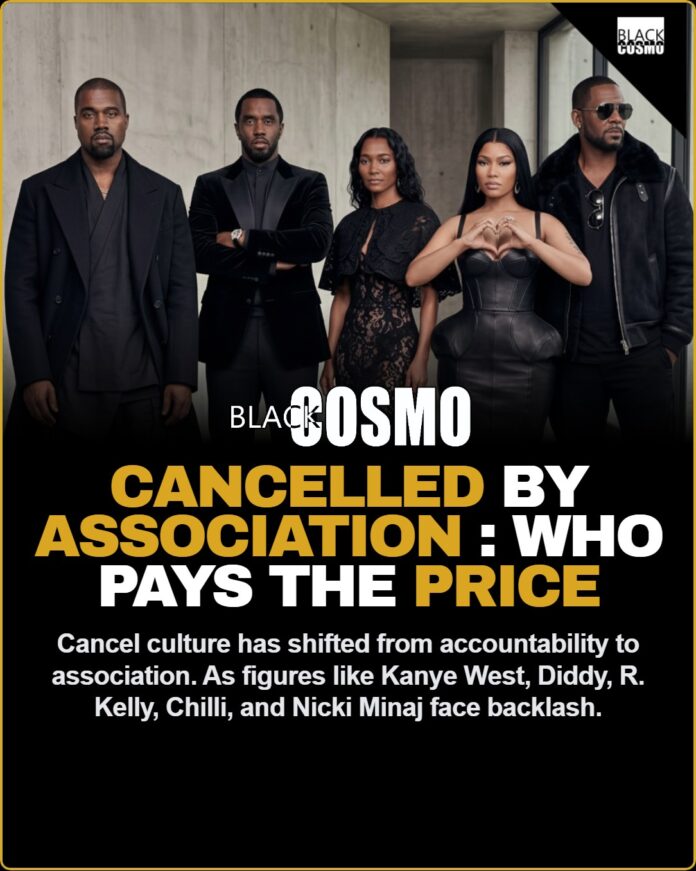
And when names like Kanye West, Sean “Diddy” Combs, R. Kelly, Rozonda “Chilli” Thomas, and Nicki Minaj enter the conversation, the lines blur fast.
When “cancelled” actually meant consequences
Let’s not flatten everything into the same conversation—because it’s not.
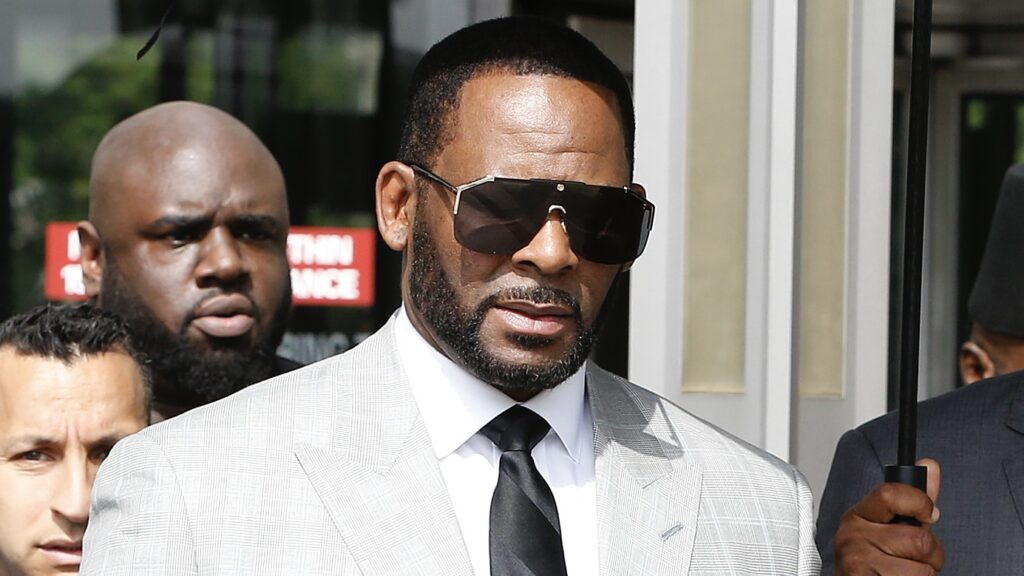 R. Kelly isn’t a debate. He’s serving decades in prison after federal convictions tied to systemic abuse, exploitation, and trafficking. That’s not “cancel culture”—that’s the legal system catching up after years of silence.
 Diddy’s situation is still unfolding, but the volume and severity of allegations—ranging from sexual assault to trafficking—have forced a reckoning. The kind that makes people revisit not just the man, but the machine around him that allowed it to continue.
That’s a different category entirely. That’s harm. Documented, alleged, and in some cases adjudicated.
And it forces a harder question than Twitter arguments ever will:
What does support mean when the art and the harm are financially and culturally intertwined?

 Kanye: genius, chaos, and consequence

Kanye’s fall isn’t about crime—it’s about influence.
This is someone who reshaped music, fashion, and Black cultural expression. And then—publicly, repeatedly—amplified antisemitic rhetoric, aligned himself with extremist figures, and reframed it all as “free thought.”
The backlash cost him billion-dollar deals. But the deeper damage? It normalized rhetoric that doesn’t stay online.
So now the question isn’t whether he was “cancelled.”
It’s whether accountability hits different when the harm is ideological instead of physical—and whether fans treat it that way.
Chilli & Nicki: when politics hits home
Here’s where things get uncomfortable.
 Rozonda “Chilli” Thomas—a figure tied to nostalgia, to “No Scrubs,” to a certain era of Black womanhood—found herself facing backlash over reported political donations and online associations tied to conservative figures. She’s attempted to clarify her stance, but in today’s climate, nuance rarely trends.
Then there’s Nicki Minaj.

Nicki hasn’t been subtle. Her public alignment with conservative talking points, her engagement with culture-war rhetoric, and her positioning against “cancel culture” have shifted how many fans see her—not just as an artist, but as a political actor.
And here’s the key difference:
Neither woman is accused of crimes like R. Kelly or the allegations surrounding Diddy.
But politics isn’t abstract anymore.
For many Black, queer, immigrant, and marginalized fans, it’s personal. Policies affect safety, rights, and survival. So when a celebrity co-signs a political movement, it doesn’t feel like “just opinion”—it feels like impact.
Cancelled by association: where is the line?
This is where the conversation stops being about them—and starts being about you.
- If you still play R. Kelly at the function, is that nostalgia—or dismissal of survivors?
- If you keep the Bad Boy era in rotation, are you separating art—or protecting legacy?
- If you defend Nicki, are you defending music—or ideology?
- If you shrug off Chilli’s affiliations, is that grace—or selective accountability?
There’s no universal answer. Just personal lines.
And everybody’s line is in a different place.
The emotional math nobody talks about
For Black audiences especially, this isn’t casual.
These aren’t just celebrities. They’re timestamps in our lives. First dances. Breakups. Road trips. Family cookouts. Cultural milestones.
So when accountability enters the chat, it clashes with memory.
Some people quietly step back.
Some compartmentalize.
Some double down and call it loyalty.
And some just…avoid the conversation entirely.
Because it’s easier than admitting that something—or someone—you loved doesn’t sit right anymore.
So what now?
This isn’t a list of who to cancel.
It’s a mirror.
- When do you really separate art from artist—and when is that just convenience?
- Does harm have to be criminal for you to care—or is influence enough?
- At what point does continued support feel like silent endorsement?
Because “cancelled by association” isn’t just about celebrities anymore.
It’s about proximity.
It’s about values.
It’s about what your support—streams, likes, dollars—actually sustains.
So let’s keep it real:
Who have you quietly stopped supporting?
And who are you still riding for… even though you know it’s complicated?
Because in 2026, support isn’t neutral.