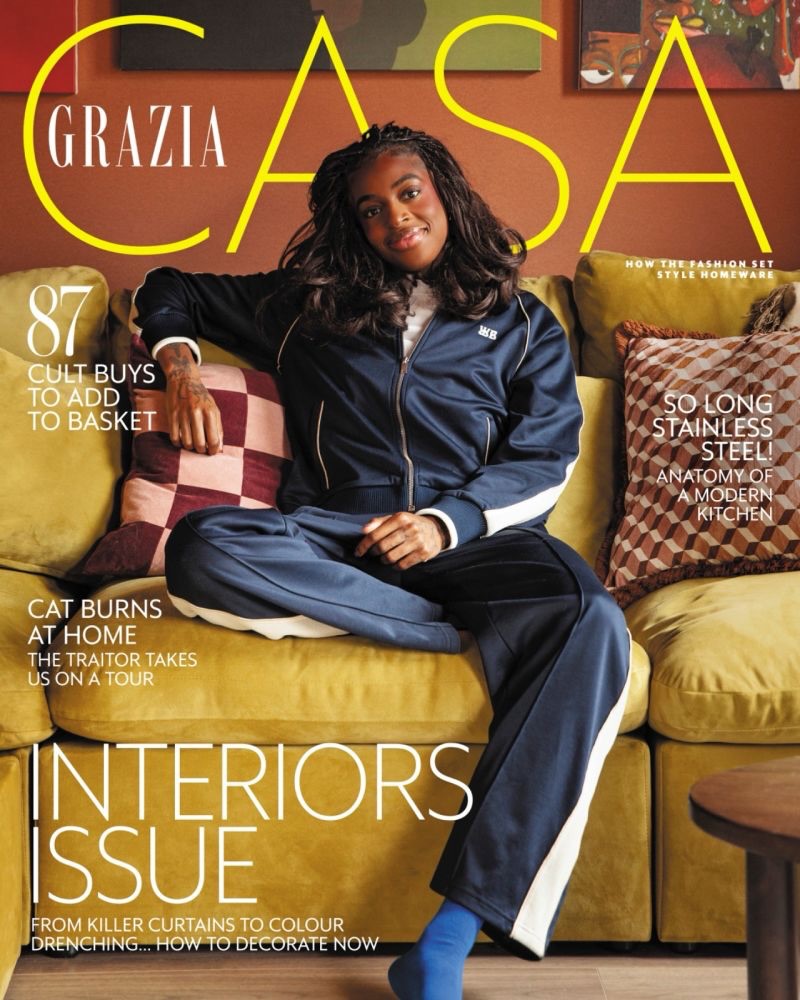
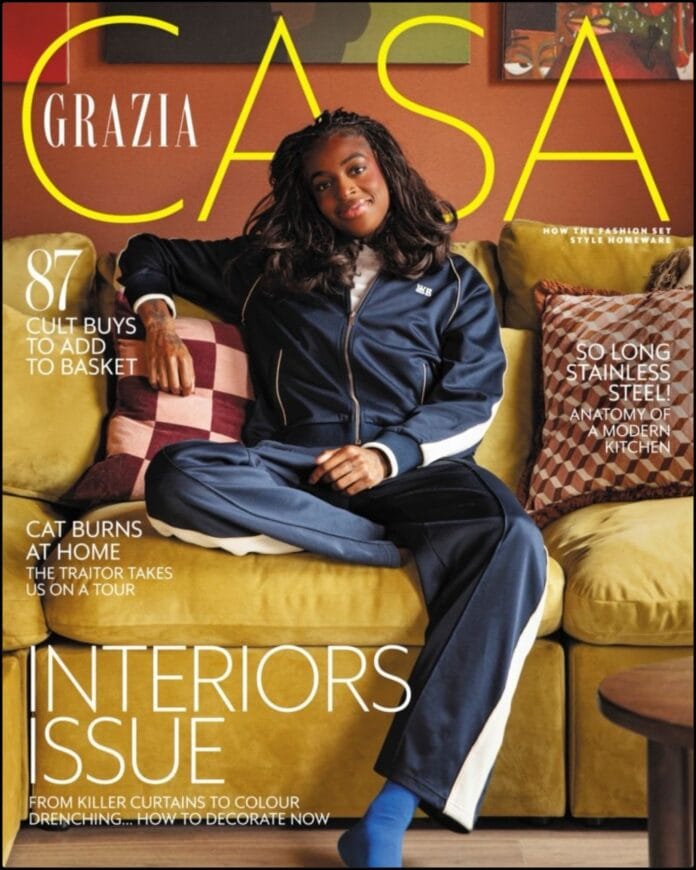
There is a distinct shift happening in how Black British women are documented in high fashion spaces. We are moving past the polite introductions. When Cat Burns appears on the April 2026 cover of Grazia UK, she does not look like someone asking for permission to be there. She looks like the owner of the house. The spread captures a young woman fully anchored in her own identity. She rejects the industry mandate to soften or dilute herself for mass consumption.
This specific cover spread demands our attention for several reasons. Grazia UK did not just throw her in a random designer piece and ask her standard PR questions. They paired her with Otegha Uwagba. If you know Uwagba’s work, you know she does not deal in fluff. The author of “Little Black Book” and “We Need to Talk About Money” dissects culture, labor, and the realities of moving through elite spaces as a Black woman. Putting her in conversation with Cat Burns is a deliberate choice. It tells the reader we are about to get actual substance instead of the usual glossy magazine platitudes.
Think about her trajectory. The singer blew up through the digital slipstream. She took a raw, acoustic breakup anthem and turned it into a platinum reality. But the music business has a brutal habit of chewing up viral stars. Executives try to package them, smooth out their edges, and sell them back to the public as something unrecognizable. She refused the packaging. She kept her guitar, her aesthetic, and her unapologetic truth. Now, a few years into her mainstream reign, she commands covers like this with quiet authority.
The styling in this spread reflects that exact grounded energy. We see a departure from the hyper-manufactured pop star look. The clothes frame her rather than overwhelming her. It feels like a genuine reflection of a young artist who understands her own visual language. Fans across social media immediately caught the vibe. They flooded the comments to point out how relaxed she looks. One user noted she looks like she actually wants to be there, not like she is enduring a grueling press run. That level of comfort is hard to fake on a national magazine cover.
Then there is the conversation itself. When two sharp Black British creatives sit down to talk, the resulting dialogue shifts the culture. Uwagba asks questions that get to the root of the artistic experience. They touch on the weight of visibility. They talk about setting boundaries in an industry that demands constant access. For Black women navigating public life, boundary-setting is not just self-care. It is absolute survival. Uwagba understands the specific toll of being highly visible and highly scrutinized. She gives the singer the space to speak about her journey without having to translate her experiences for a white gaze.
We also have to acknowledge the intersection of her identity. Being a queer Black woman in the UK music scene adds necessary layers to her artistry. She writes love songs that normalize her reality. Uwagba is the perfect person to unpack how that normalization impacts the broader culture. They bypass the generic “how does it feel to be a role model” questions and get straight to the mechanics of existing as a fully realized human being in a notoriously fickle business.
This Grazia UK feature represents a specific editorial win. We often see mainstream magazines struggle to capture the actual essence of Black alternative and indie artists. Editors try to force them into a hip-hop or R&B aesthetic out of sheer laziness. This spread does not make that mistake. It lets her exist exactly as she is. It is a brilliant moment of cultural alignment.
The presence of the Black Mag Covers platform highlighting this release speaks to a larger ecosystem. We rely on these digital archives to track our wins. Legacy media often buries these covers after a month, but digital curators ensure the history is preserved. They remind us that our visibility is not a fleeting trend. Our artists are maturing in real time. They are demanding better conversations and better representation. We are no longer settling for just being in the room. We want to choose who we speak to while we are there.