
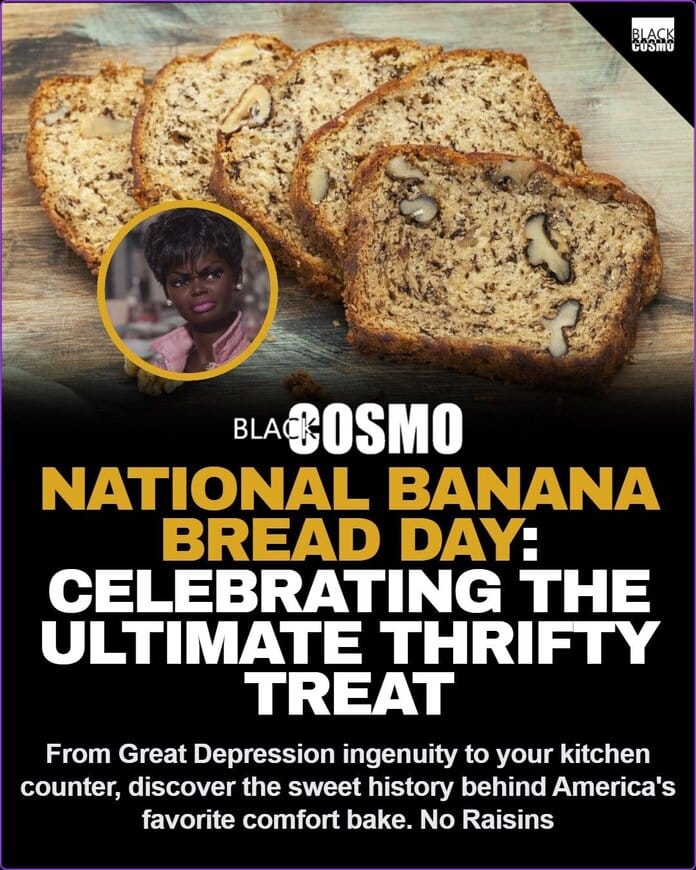
Today marks National Banana Bread Day, celebrating the ultimate comfort bake born from Great Depression ingenuity when thrifty American cooks mashed overripe bananas into quick bread using newfound baking powder—no waste, all sweet genius. First recipes hit 1933’s Pillsbury Balanced Recipes, skyrocketing via Chiquita’s 1950 cookbook as bananas flooded U.S. tables post-1870s imports.
To truly understand why we love this treat, we have to look back at its origins. The history of National Banana Bread Day is actually a history of American ingenuity. It wasn’t just a trend; it was a survival tactic born of necessity. In an era where wasting food was not an option, thrifty cooks found a way to turn the unappealing into the undeniable, creating a legacy that remains moist, dense, and delicious nearly a century later.
Born from the Great Depression
The 1930s were a difficult time for American families. The Great Depression forced households to stretch every penny, and the mantra “waste not, want not” became a way of life. Throwing away food—even a blackened, mushy banana—was considered a sin. However, eating an overripe banana raw wasn’t exactly an appealing prospect.
Simultaneously, the culinary world was experiencing a technological shift: the mass availability of commercial baking powder and baking soda. Before these chemical leavening agents became household staples, bakers relied heavily on yeast, which required time and temperature control to rise. The introduction of baking powder allowed for “quick breads”—loaves that could be mixed and baked immediately.
Enter the thrifty home cook. By mashing those overripe bananas (which, scientifically speaking, have converted most of their starches into sugars, making them incredibly sweet) and combining them with the newfound magic of baking powder, a star was born. It was sweet genius: a recipe that salvaged rotting fruit, required no yeast, provided high caloric energy, and tasted like a dessert despite being a budget meal.
The Evolution of a Classic
While the Depression cemented the recipe in cookbooks (the first popular recipes appeared in standard cookbooks around 1933), the banana bread phenomenon didn’t stop there. It saw a massive resurgence in the 1950s with the rise of home convenience foods, and again in the 1960s and 70s as simpler, wholesome baking came back into vogue.
More recently, we saw the banana bread renaissance during the global pandemic. Why? For the same reason it was popular in the 1930s: comfort and resourcefulness. When the world feels chaotic, the simple act of mashing bananas and flour offers a sense of control and nostalgia. It is the ultimate comfort bake because it is forgiving. You don’t need fancy equipment, you don’t need to knead, and it’s almost impossible to mess up.
The Science of the Spotty Banana
To celebrate National Banana Bread Day correctly, one must understand the main ingredient. You cannot make superior bread with a yellow banana. It simply won’t work. You need the brown spots—or better yet, a fully black peel.
As a banana ripens, it produces ethylene gas, which breaks down the fruit’s cell walls and converts starch into simple sugars. This breakdown is what gives the bread its signature moist texture and distinct sweetness. If you use a yellow banana, your bread will be dry and lack flavor. In this way, the “ruined” fruit is actually the superior ingredient, a poetic metaphor for finding value in things that seem past their prime.
How to Celebrate Today
The beauty of banana bread lies in its versatility. While the Depression-era original was likely a simple affair of flour, sugar, butter, leavening, and fruit, today’s bakers have endless options. Here are a few ways to upgrade your loaf for the holiday:
The Nutty Professor: Add toasted walnuts or pecans for a textural contrast that cuts through the soft crumb.
Chocolate Decadence: Fold in dark chocolate chips. The bitterness of the cocoa balances the extreme sweetness of the overripe fruit.
The Elvis: Swirl in peanut butter for a nod to the King’s favorite flavor combination.
Tropical Twist: Add shredded coconut and dried pineapple for a hummingbird cake-style variation.
So, check your fruit bowl. If you see some bananas that look like they’ve seen better days, don’t toss them in the bin. Preheat your oven, grab a mixing bowl, and partake in a century-old tradition of turning waste into wonder.
This moist, cake-like treat (no yeast needed) transformed surplus fruit from Asia’s ancient crop into a WWII morale booster and forever staple. BlkCosmo kitchen fam, channel that resourcefulness—who’s perfecting their loaf today? Share recipes below!
#NationalBananaBreadDay #BlackHistoryBakes #BlkCosmoFood