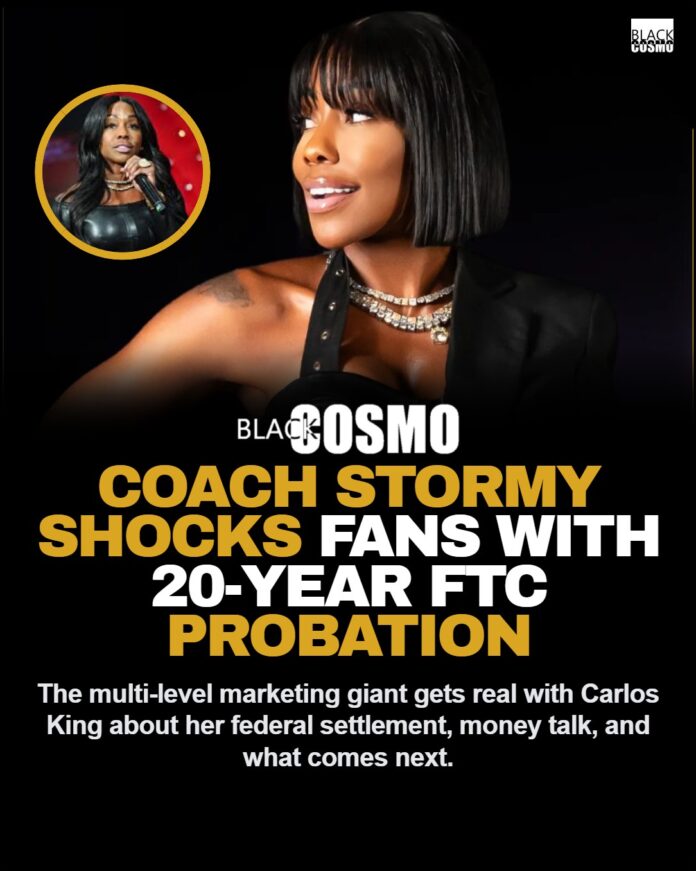
The timeline collectively gasped when the details of the Coach Stormy 20-year probation hit the internet. For years, the multi-level marketing space has been defined by flashy cars, luxury vacations, and loud promises of financial freedom. At the center of that ecosystem stood Stormy Wellington, a figure who built a massive following on the premise of turning regular people into high-earning moguls. Sitting down for a highly anticipated interview with Carlos King, she finally addressed the elephant in the room. The conversation didn’t just clear the air. It shifted the entire foundation of her public brand and left her massive fanbase completely stunned.
We knew the MLM hustle was under heavy scrutiny, but hearing a top earner admit to a two-decade government leash hits different. The Federal Trade Commission accused Stormy Wellington of using baseless earnings claims to recruit workers into companies like Total Life Changes and Farmasi. They pointed out that while she promised recruits six and seven-figure returns, the actual data showed most participants made absolutely nothing. To settle the allegations, she accepted a lengthy probation period that tightly restricts how she can talk about money, business, and success.
During the sit-down with King, she offered a reality check that felt miles away from her usual stadium-shaking motivation. “I never made a millionaire,” she stated plainly. “If I could make a millionaire, then all my kids would be multi-millionaires.” That specific quote sent shockwaves through the comment sections. For a brand practically built on the aesthetic of boundless wealth creation, hearing the architect say she cannot magically manufacture millionaires was a tough pill for loyalists to swallow. The side-eye from critics was immediate and severe. People who bought the starter kits, attended the seminars, and chased the dream felt a sudden, sharp sting of reality.
The federal complaint didn’t just deal in vague accusations. It brought devastating receipts. According to the data released surrounding the case, a staggering 76.8 percent of active participants in one of her previous ventures earned zero compensation in a single calendar year. In another company she heavily promoted, fewer than one percent of active members saw the six-figure income she routinely hyped in her videos. Those numbers are the quiet, brutal truth of the network marketing machine. It is a system built on the backs of the many to elevate the few. The lavish trips to Dubai, the designer bags, and the luxury cars presented a lifestyle that was mathematically impossible for the vast majority of her recruits to achieve.
For years, network marketing has aggressively targeted Black cosmopolitans and working-class families alike, promising a fast track out of systemic financial struggle. The pitch is always seductive. It speaks directly to the valid desire for generational wealth and time freedom. When a prominent figure who looks like us and speaks our cultural language validates that dream, the buy-in is instantaneous. That makes the fallout from the Coach Stormy 20-year probation even more complicated. It is not just a legal settlement. It feels like a fracture in community trust. The hustle culture that told people they just needed to ‘grind harder’ is being exposed as fundamentally flawed when the underlying math doesn’t support the claims.
Navigating a Coach Stormy 20-year probation means every word she utters about wealth generation now has to pass through a stringent legal filter. She explained her new stance to King, pivoting hard from financial promises to personal development. “I could lead you, I can mentor you, I can show you,” she explained. “It’s up to you to do the work.” The pivot is textbook damage control, but it also reflects a massive legal boundary. The FTC is not a suggestion box. When they step in, the game permanently changes. You cannot legally tell people how much they will make or claim you will help them hit a specific financial target without hard, documented proof.
She maintained that she did not believe her previous presentations were explicitly illegal, framing the situation as a steep learning curve. The new strategy involves abandoning the money talk entirely. “I don’t want to talk about money anymore. I want to talk about who you gotta become to get the money!” It is a clever linguistic shift. By focusing on the mindset and personal growth rather than the bank account, she keeps her audience engaged without triggering federal alarms. But for the people who followed her specifically for the financial playbook, the change in messaging feels like a massive bait-and-switch.
The reaction across social platforms has been deeply polarized. Loyal supporters are praising her transparency, framing the settlement as a temporary hurdle for a resilient leader. They view her alignment with personal development as a mature evolution of her brand. Critics are not nearly as forgiving. The comment sections under the interview clips are flooded with former MLM participants demanding accountability. They argue that the lavish lifestyle she paraded online was funded by the very recruits who ended up with zero return on their investment.
A Coach Stormy 20-year probation is a massive wake-up call to the entire online coaching and network marketing industry. The era of selling an unverified dream via social media broadcasts is rapidly closing. The federal government is actively watching the timelines, the webinars, and the income disclosure statements. Promising someone a six-figure lifestyle to sell skincare or detox tea is no longer just risky marketing. It is a direct invitation for federal prosecution.
The fallout strips away the shiny veneer of internet wealth and demands we look closely at who we trust with our aspirations. The pivot from promising riches to promising personal growth might satisfy the courts, but the court of public opinion is still deliberating.