


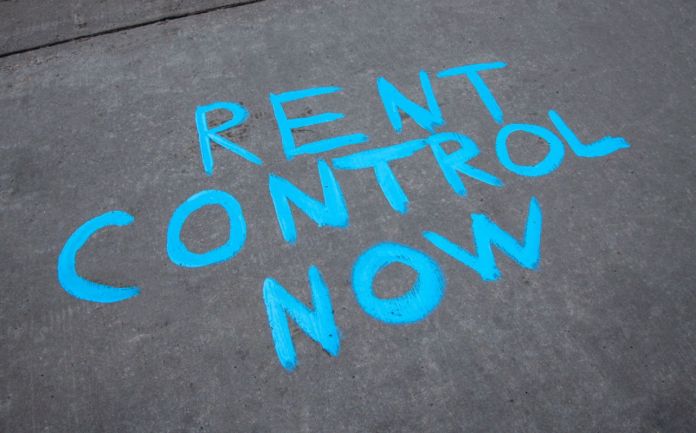
Although the Biden administration proposed a largely symbolic 5% cap on annual rental increases for the next two years for existing units owned by large landlords, the rental cap debate rages on.
According to a November survey of landlords operating at least one single-family investment property conducted by ResiClub and LendingOne, 84% intend to raise their rent prices in 2025.
As Fast Company reports, although only 202 landlords responded to the survey, the results provide a snapshot of the relative financial insecurity of landlords who intend to raise rents to recoup the rising costs of property management and interest rates.
Though 75% of landlords expect to buy at least one investment property in 2025, another 33% expect to sell at least one property in 2025. This reflects a cautious optimism about rental demand, rent growth, and price appreciation amid their concerns over interest rates and rising operating costs for investment properties.
Although the Biden administration proposed a largely symbolic 5% cap on annual rental increases for the next two years for existing units owned by large landlords in July, which the administration defined as those with more than 50 units, the rental cap debate rages on.
According to MarketWatch, renters have experienced significant rent increases over the past five years. Between June 2019 and June 2024, rental prices for units with zero to two bedrooms increased by 21.2%.
Realtor.com’s Chief Economist Danielle Hale told the outlet that recent rental price increases have strained renters’ budgets.
“Rental costs have risen significantly since before the pandemic and inflation has further strained renters’ budgets, underscoring the need for more supply to meet demand and to keep renters from contributing an increasing percentage of their incomes to housing costs,” Hale said.
According to Tara Raghuveer, the director of the Tenant Union Federation, rent control is necessary to relieve the increased rental costs.
“Rent control is sound economic policy, and it is the only solution that meets the urgency and scale of the crisis that millions of tenants endure every month,” Raghuveer said in a statement. “The president’s monumental directive is a recognition of the federal government’s responsibility to regulate the rental market and tenants’ power as a political class.”
Rent control, however, is not uniform and varies wildly from city to city. This makes the Biden administration’s proposal attractive to some experts, like University of Michigan economist Justin Wolfers, who pointed out in a series of social media posts in July that rent increases are the biggest driver of inflation.
In addition to Wolfers, Bill Kowalczuk, a real estate broker with Coldwell Banker Warburg in New York, believes the rent control proposal could benefit renters.
“I don’t think it’s a bad idea,” Kowalczuk said. “Especially in a market where tenants have seen much higher increases than that. At this point, everyone’s rent has increased exponentially since 2021. Five percent is still a good amount of money on top of already high rents.”
A 2019 paper on rent control in San Francisco, authored by Stanford economists Rebecca Diamond, Tim McQuade, and Franklin Qian, suggests that rent control could potentially prevent the displacement of Black and other renters of color.
As they wrote, “the effects of rent control on tenants are stronger for racial minorities, suggesting rent control helped prevent minority displacement from San Francisco.”
However, Black and other residents of color are also underrepresented in rent-controlled apartments, which the Urban Institute ultimately concluded means that rent control as it currently functions means that its “benefits are concentrated among wealthier, whiter households.”
Still, Jerusalem Demsas, as she wrote for Vox in 2021, sees rent control as a vital economic policy that could help discourage displacement amid increasing rental costs.
“Rent control does not and will not fix the underlying cost problem, and in a vacuum, a new rent control policy would likely exacerbate the supply crisis. But rent control as a tool for reducing displacement and as a part of a broader housing policy in high-cost cities and suburbs is necessary. Economists may be wary now, but if they don’t get on board and help design these policies, cities may be doomed to repeat the mistakes of the past.”