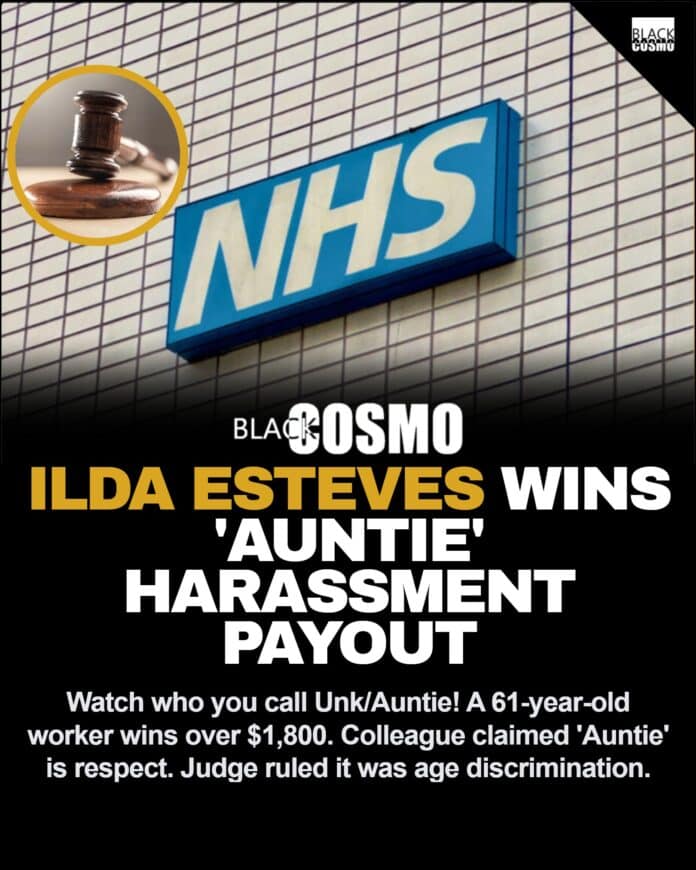

When cultural traditions collide with modern workplace boundaries, the results can lead to a tense legal showdown. Recently, a major employment tribunal in the United Kingdom set the internet ablaze after awarding a controversial Auntie harassment payout. At the center of this viral story is Ilda Esteves, a 61-year-old healthcare assistant who decided she had finally had enough of being addressed with a culturally specific, age-based moniker against her direct wishes. What started as an assumed gesture of respect quickly spiraled into a legally binding lesson on ageism, sexism, and professional consent.
The situation escalated when Ilda Esteves, an employee at the West London NHS Trust specializing in Women’s Forensic Services, took her grievance to court. According to reports sourced directly from The Shade Room, she secured a compensation award of £1,425 (approximately $1,900) after proving her case. Her colleague, a nurse of Ghanaian heritage named Charles Oppong, repeatedly referred to her as “Auntie” despite her clear, repeated requests to be called by her actual first name. In many African and Black diaspora communities, the term is a high honor. However, in this specific NHS professional environment, the tribunal found that overriding her preference constituted a hostile and intimidating workplace environment.
The Tipping Point of Workplace Disrespect
Diving deeper into the facts, the tribunal learned that the friction between the two colleagues went beyond just a single well-intentioned cultural slip. The nurse didn’t just use the moniker; he allegedly weaponized it. In a formal complaint submitted via email in September 2023, the 61-year-old stated: “A staff member called me auntie multiple times despite telling him to call me by my name. He said, ‘You want to be young then!'” She further testified that Oppong commented inappropriately on her lipstick and even suggested she would be a “good match” for another older staff member named George. The combination of the persistent familial title and these microaggressions painted a picture of someone whose boundaries were being willfully ignored.
The African Diaspora and Cultural Context
This historic Auntie harassment payout has ignited a deeply nuanced conversation across social media and within the African diaspora regarding the intersection of deeply ingrained cultural respect and modern-day workplace etiquette. In Ghanaian culture—and broadly throughout Black communities worldwide—calling an older woman “Auntie” is seen as a sign of utmost reverence, politeness, and community endearment. It is a title that strips away the coldness of corporate structures and replaces it with familial warmth. However, when these culturally rooted norms are transplanted into diverse professional environments where they aren’t universally understood or accepted, they can easily be perceived as offensive, diminishing, or distinctly ageist. The tension arises when the intent of the speaker clashes entirely with the experience of the receiver.
The Legal Verdict Separates Intent from Impact
Employment Judge George Alliott, who presided over the case, delivered a ruling that masterfully balanced cultural acknowledgment with employment law. Judge Alliott acknowledged during the hearing that “Auntie” is indeed an established term of respect in Ghanaian culture, noting the harasser’s heritage. However, the judge firmly stated that because the title was used against her explicit wishes, it inherently became offensive to her. The judge found the nurse’s testimony to be evasive and poor, concluding that the repeated comments were likely an offensive attempt at humor that ultimately created a highly uncomfortable and discriminatory environment based on age and sex. This vital distinction separates intent from impact.
Navigating Code-Switching in the Corporate World
For Black professionals navigating corporate and healthcare spaces, this ruling is a profound reminder of code-switching and cultural translation. While “Auntie” might be the standard way to address a respected elder at a family gathering, a church function, or a community event, the workplace operates under a strict umbrella of personal preference and legal protections. The ruling emphasizes that respect is fundamentally rooted in honoring how a person chooses to be identified. If a gesture meant to convey respect is expressly rejected by the recipient, continuing to use it morphs the action from cultural reverence into blatant disrespect.
The Final Word on Boundaries
Ultimately, the £1,425 compensation serves as a tangible reminder that professional boundaries must be respected above all else. This situation, popularized by coverage on The Shade Room, proves that “harmless jokes” or cultural misunderstandings can lead to severe real-world consequences. As workplaces become increasingly global and culturally diverse, employees must remain vigilant and empathetic about how their words land. The Auntie harassment payout will undoubtedly be referenced in HR departments for years to come, urging workers of all backgrounds to prioritize listening to their colleagues over enforcing their own cultural norms.