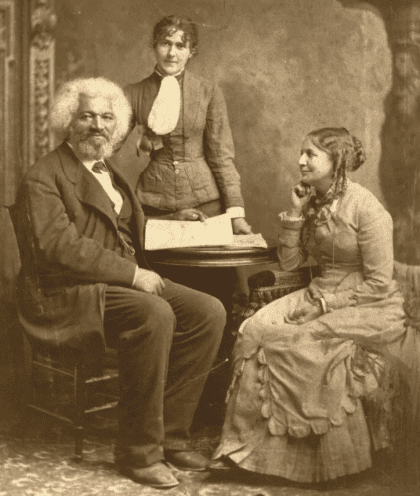
[Frederick Douglass], a prominent figure of the 19th century, stands out not only for his impactful activism and writing but also for his remarkable presence in photographs. Indeed, with over 160 known portraits, Douglass became the most photographed American of his time, especially during the 1880s. His keen understanding of photography’s power helped craft his public image.
Douglass deliberately used photography as a tool to challenge prevailing racist caricatures and promote a more dignified representation of Black Americans. He knew very well the power of visual rhetoric. He understood that in an era saturated with demeaning imagery, he could present a counter-narrative through carefully composed portraits. Instead of perpetuating stereotypes, he sought to showcase his intellect, character, and humanity. Douglass once proclaimed, “It is evident that the want of pictures…is a powerful means of promoting popular errors respecting the colored people.” He saw photography as an essential medium in the fight for equality and justice.
Beyond his own image, Douglass actively supported other Black photographers. He understood the importance of Black people controlling their own narratives and representations. This support fostered a sense of community and empowerment within the burgeoning field of Black photography, ensuring a more accurate and nuanced portrayal of Black life during a period of intense social and political struggle. By championing Black photographers, [Douglass] helped lay the foundation for future generations of artists and storytellers.
The social impact of Douglass’s photographic presence was significant. His portraits circulated widely, countering racist imagery. Public figures and everyday citizens alike expressed admiration for Douglass’s ability to use photography as a means of self-representation and empowerment. This recognition underscores the enduring power of visual media in shaping perceptions and promoting social change.
Frederick Douglass’s legacy extends far beyond his written words and speeches. His deliberate use of photography as a tool for social change leaves a lasting impact. Through carefully crafted portraits, Douglass challenged prevailing racist caricatures and asserted the dignity and humanity of Black Americans, reminding us of the power of images in the ongoing struggle for equality.
[efb_feed fanpage_id=”BlackCosmopolitan” words_limit=”25″ post_limit=”1″ skin_id=”115758″ cache_unit=”1″ cache_duration=”days” live_stream_only=”0″ load_more=”0″ links_new_tab=”1″ show_like_box=”0″]
Disclaimer:
For Education and discussion purposes. Please note no copyright infringement is intended, was recorded on BlkCosmo’s own equipment, and we do not own nor claim to own any of the original recordings used in this video and intend to use this as ‘fair use’.