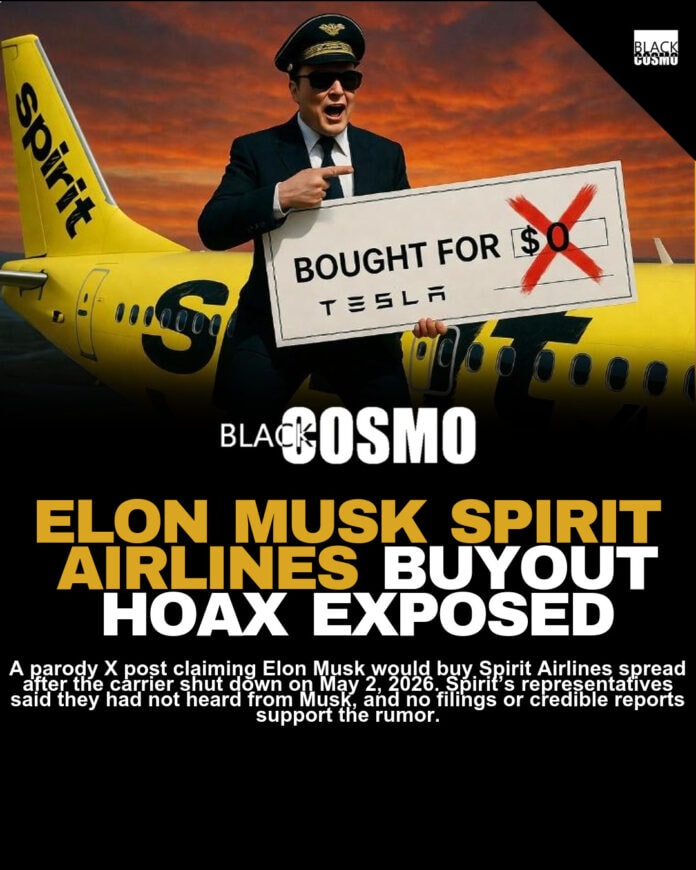
When rumors started flying that Elon Musk was about to buy Spirit Airlines after the carrier’s shutdown, a lot of people online were ready to believe it. The story had all the ingredients of a viral moment: a fallen budget airline, a billionaire known for unpredictable moves, and a flood of futuristic mockups showing what a revamped airline could supposedly look like.
But the story was never real. The claim appears to have started from a parody account on X, where a fake post suggested that Elon was planning to “reinvent air travel” by taking over Spirit. From there, the rumor spread fast across social media, helped along by reposts from users who either missed the joke or decided to run with it. Soon, people were sharing imagined “SpiritX” planes, robot attendants, and Starlink-powered flights like the deal was already underway.
What made the hoax so believable is that it fit neatly into the public image of Elon Musk. He has built a brand around disruption, spectacle, and big-tech ambition, so for many casual scrollers, the rumor did not sound far-fetched. Add in Spirit’s very real shutdown and the public’s appetite for meme-worthy chaos, and the false story had everything it needed to take off.
In reality, there were no credible reports, no official statements, and no filings suggesting any talks were happening. Representatives connected to Spirit reportedly said they had not heard from Musk or anyone tied to him, and the airline’s own statements made clear there was no viable path forward for continued operations. What people were reacting to was not news, but satire that got stripped of context as it moved across platforms.
There is something familiar about the way this played out. A joke gets posted, algorithms reward the most outrageous version of it, and suddenly fiction starts moving like fact. For audiences already navigating misinformation every day, it is another reminder to pause before sharing and to look at who is telling the story. In a media landscape built on speed and spectacle, discernment is still a form of power.