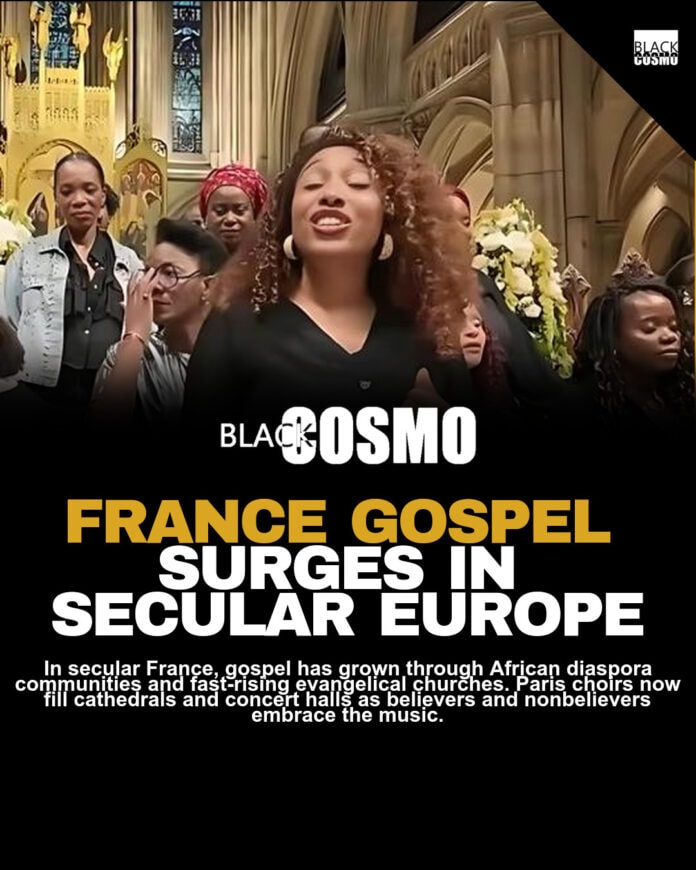
In secular France, gospel music is doing more than surviving; it is thriving, and 100 Voices of Gospel helps explain why. In a country known for strict separation between church and state, this choir has been drawing major crowds and turning gospel into a cultural force that reaches far beyond the walls of any one church.
A big part of that story starts with the African diaspora. Communities from sub-Saharan Africa, the Caribbean, and French territories like Martinique and Guadeloupe brought Pentecostal and evangelical worship traditions with them, and those traditions are deeply rooted in music. Gospel in France is not just something people attend as spectators. For many families and congregations, it is part of everyday spiritual and community life, and that energy has spilled into the wider public.
That wider appeal is what makes this moment so interesting. Even in a society where many people are secular, gospel offers something that still resonates: emotional release, collective joy, and a sense of connection. French audiences are showing up not only because of faith, but because the music itself is powerful enough to move people across cultural and religious lines. Concerts can feel less like formal performances and more like shared experiences where everyone gets pulled into the same spirit of celebration.
France’s growing evangelical and charismatic Christian communities have also helped build a stronger foundation for this scene. As those churches expand, so does the music that shapes their worship. At the same time, gospel has become part of public cultural life, appearing at festivals, in major venues, and in spaces that once might have seemed unlikely homes for this kind of sound.
What is especially striking is how local the movement has become. French artists and choirs are no longer simply borrowing from American gospel traditions; they are reshaping them through French language, African diasporic influence, and local musical styles. That is part of why 100 Voices of Gospel stands out as more than a performance group. They represent a larger shift in how Black global culture travels, transforms, and takes root in places people do not always expect.
For BlkCosmo readers, this is another reminder that Black cultural expression does not stay boxed into one nation or one tradition. It moves, adapts, and creates home wherever people carry it. Gospel in France may sound surprising at first, but when you follow the diaspora, the faith traditions, and the hunger for joy, it actually makes perfect sense.