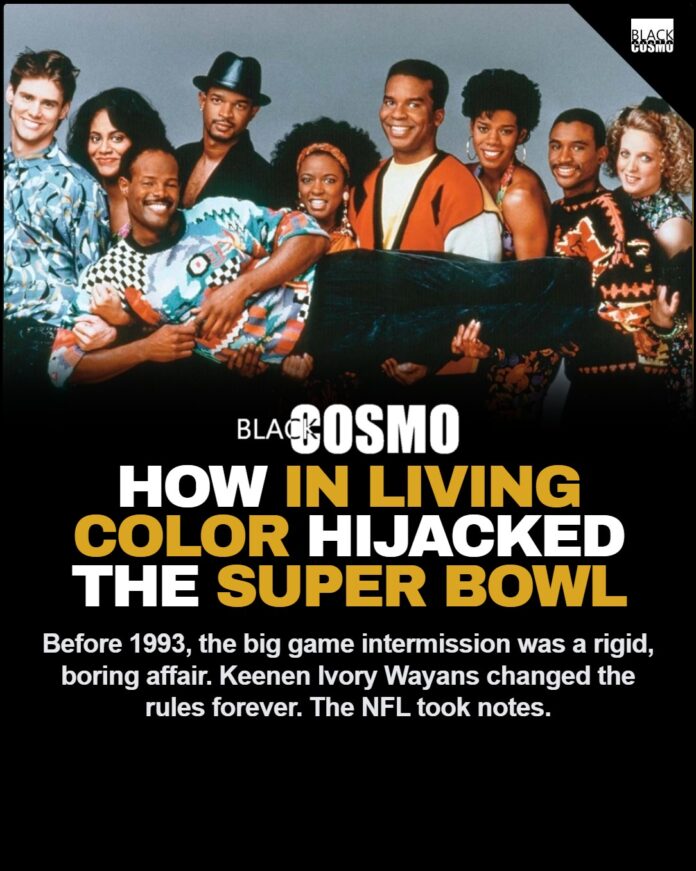
In 1992, the idea of an In Living Color Super Bowl halftime show didn’t just annoy the network executives over at CBS. It completely embarrassed them. Back then, the NFL treated their intermission like an extended bathroom break. While millions of viewers watched Washington battle Buffalo on the field in Minneapolis, the league served up a bafflingly dry aesthetic during the break. Network producers assumed they had a captive audience that wouldn’t dare touch the remote. Keenen Ivory Wayans and his young, hungry cast over at Fox saw a massive opening. They decided to broadcast a live, unscripted-feeling episode of In Living Color exactly when the football players headed to the locker room. The plan was brilliant, aggressive, and highly calculated.
To understand the sheer audacity of this move, you have to look at what CBS offered that night. The official presentation was titled “Winter Magic,” a bizarre salute to the upcoming Winter Olympics in Albertville, France. They put figure skaters Dorothy Hamill and Brian Boitano on teflon ice and had Gloria Estefan singing her pop hits in the background. It was completely disconnected from the energy of a massive, hard-hitting sporting event. Enter In Living Color. Wayans and his crew set up a live broadcast featuring Jamie Foxx, Jim Carrey, David Alan Grier, and Tommy Davidson. They weren’t just putting on a sketch show; they were actively telling the country to flip the channel. Fox even superimposed a massive DJ countdown clock on the bottom of the screen so fans knew exactly when to switch back for the third quarter kickoff. They were essentially hacking the biggest television event of the year.
The strategy worked flawlessly. Over 22 million people changed the channel, dealing a massive blow to the official broadcast. They traded ice skaters for Homey D. Clown and Men on Film. They watched Rosie Perez and the Fly Girls hit the stage decked out in heavy 90s streetwear, serving up choreography that felt raw, immediate, and tied directly to the pulse of urban America. It was a sharp, aggressive counter-programming stunt that exposed the NFL’s outdated entertainment playbook. Wayans understood that a captive audience doesn’t want to see a pageant. They want to be entertained. He gave viewers an actual reason to stay glued to the screen instead of heading to the kitchen.
That massive loss in viewership panicked the NFL brass. Executives watched their ratings plummet for 20 straight minutes. They realized that if they didn’t book an act big enough to hold the entire country hostage, rival networks would keep poaching their audience year after year. The direct response to that humiliation came exactly one year later. The league abandoned the marching bands, the drill teams, and the figure skaters for good. They picked up the phone and called Michael Jackson to headline the 1993 game. Jackson performed his biggest hits, stood perfectly still for ninety seconds just to let the crowd scream, and set a new standard for halftime performances.
Booking Jackson wasn’t a sudden burst of creativity from the league. It was an act of self-preservation. The entire modern era of the megastar halftime concert exists because a sketch show from Fox exposed a glaring weakness in the broadcast. Every time you watch Rihanna suspended in the air, or Dr. Dre bringing out the heavyweights of hip-hop, you are watching the long-term effects of that 1992 counter-programming hustle. The network realized they needed pop culture dominance to keep viewers locked in.
The In Living Color Super Bowl halftime show proved that the audience dictates the culture. Wayans brought a confident, brash energy to a time slot that desperately needed it. He didn’t ask the NFL for a seat at the table. He built a better table on a rival network and invited millions of people to come sit with him. That specific moment of connection between television hustle and urban comedy dismantled an old system and built the billion-dollar spectacle we watch today.
Editor’s Picks: If you want to dig into the creative minds behind the decade’s biggest television swings, check out a great hip hop biography to capture the era’s mood. Preparing for your own game day watch party? Stock up on some reliable home essentials to keep the living room right, and throw on some active noise cancelling headphones for pristine audio when the halftime hits.