
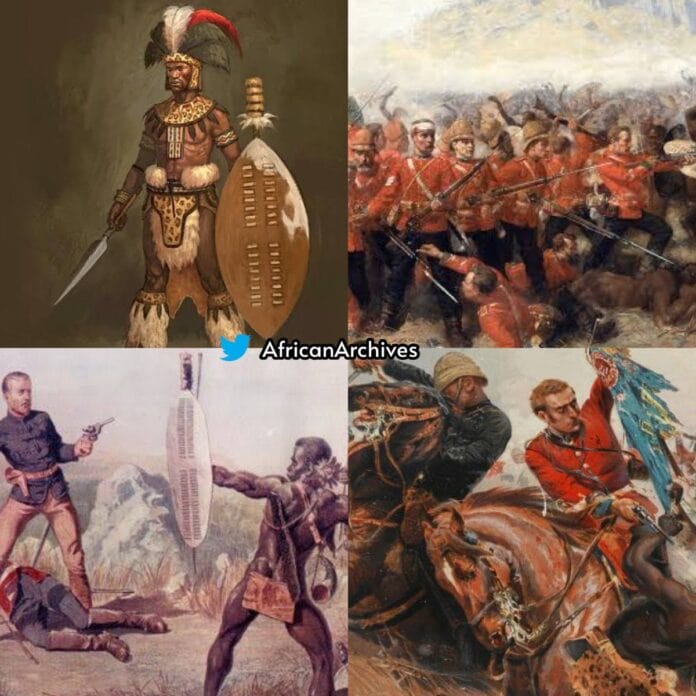
In the annals of history, few stories of anti-colonial resistance resonate as powerfully as the 1879 conflict between the British Empire and a formidable African kingdom. It’s a story of strategy, courage, and a defiant spirit that shattered the myth of European invincibility. This moment in time saw the Zulu People of South Africa inflict one of the most significant defeats on the British army in the 19th century, a victory that echoes through generations as a testament to their strength and sovereignty.
The conflict, known as the Anglo-Zulu War, was ignited by the British Empire’s expansionist ambitions. In 1879, they invaded the independent Zulu Kingdom, which had been a formidable, centralized state since its founding by the legendary warrior-king Shaka Zulu in 1818. The British, armed with modern rifles and steeped in imperial confidence, vastly underestimated their opponents. At the Battle of Isandlwana, a force of approximately 20,000 Zulu warriors, employing brilliant military tactics and armed primarily with traditional spears and cow-hide shields, decisively overwhelmed a technologically superior British column. The tactical brilliance of the Zulu People of South Africa in this battle remains a subject of military study and immense cultural pride, demonstrating that sophisticated strategy and unyielding resolve could overcome a massive technological gap.
This chapter of history often resurfaces on social media, shared in threads and posts that celebrate it as a powerful example of Black resistance. For many, the story of Isandlwana serves as a crucial corrective to historical narratives that often minimize or ignore African military victories against colonial powers. It’s a source of immense pride, reminding audiences that the continent’s history is not solely one of subjugation but is rich with moments of heroic defiance and strategic genius. The viral nature of these posts highlights a collective desire to reclaim and celebrate a history where Africans were not just victims, but architects of their own destiny who fought fiercely to defend it.
Ultimately, the victory at Isandlwana is more than just a historical footnote; it is a profound symbol of resilience. While the British would eventually regroup and win the war, this singular battle remains a powerful declaration of the Zulu spirit. It’s a reminder that before colonization, powerful and sophisticated societies thrived across Africa, and that their people met the tide of imperialism not with passive acceptance, but with courage, brilliance, and an unbreakable will to remain free.
[efb_feed fanpage_id=”BlackCosmopolitan” words_limit=”25″ post_limit=”1″ skin_id=”115759″ cache_unit=”1″ cache_duration=”days” live_stream_only=”0″ load_more=”0″ links_new_tab=”1″ show_like_box=”0″]
Disclaimer:
For Education and discussion purposes. Please note no copyright infringement is intended, was recorded on BlkCosmo’s own equipment, and we do not own nor claim to own any of the original recordings used in this video and intend to use this as ‘fair use’.