
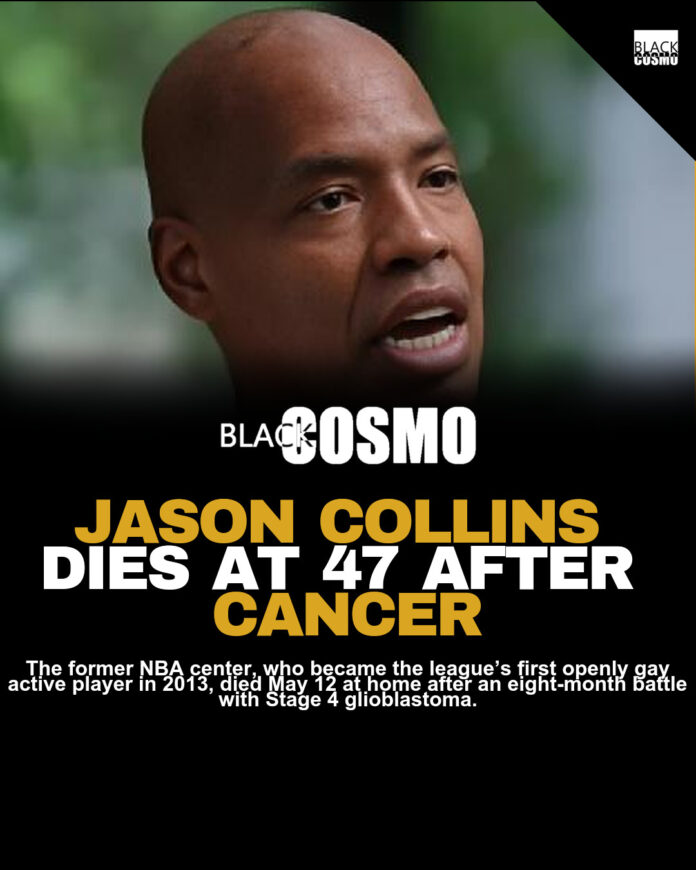
The sports world is mourning Jason Collins, whose family announced that he died on May 12, 2026, at age 47 after an eight-month battle with Stage 4 glioblastoma. He reportedly passed peacefully at home surrounded by loved ones, closing a chapter on a life that meant far more than box scores and stat lines.
His family shared that he faced an aggressive, inoperable brain tumor with strength and grace after it was discovered following sudden issues with focus and mental clarity. Even in the middle of a devastating diagnosis, those closest to him described the same steady resilience that defined his years in professional basketball and his public life afterward.
For many people, his name will always be tied to a groundbreaking moment in sports history. In 2013, he became the first openly gay active male athlete in a major U.S. professional team sport, shifting the culture of the league and opening space for conversations that had long been avoided. That move took real courage, especially in a world that often demands silence from athletes who live outside the norm.
During his 13 NBA seasons, he played for several teams, including the New Jersey Nets, Washington Wizards, and Boston Celtics. He helped the Nets reach two NBA Finals and built a reputation as a dependable veteran presence. While his career numbers were modest, his influence reached well beyond the court, especially after retirement, when he continued advocacy work around inclusion and representation in sports.
Just days before his death, he was honored with the inaugural Bill Walton Global Champion Award at the Green Sports Alliance Summit, though he was too ill to attend. His twin brother, Jarron Collins, accepted on his behalf and called him the bravest and strongest man he had ever known. NBA Commissioner Adam Silver also praised his humanity, leadership, and the way he helped make the sports world more welcoming for future generations.
The legacy of Jason Collins lives in every athlete who now feels a little safer telling the truth about who they are. For Black and Brown communities especially, his story sits at the intersection of visibility, courage, and dignity. He did not just make history; he helped reshape what belonging can look like in one of America’s biggest cultural arenas.