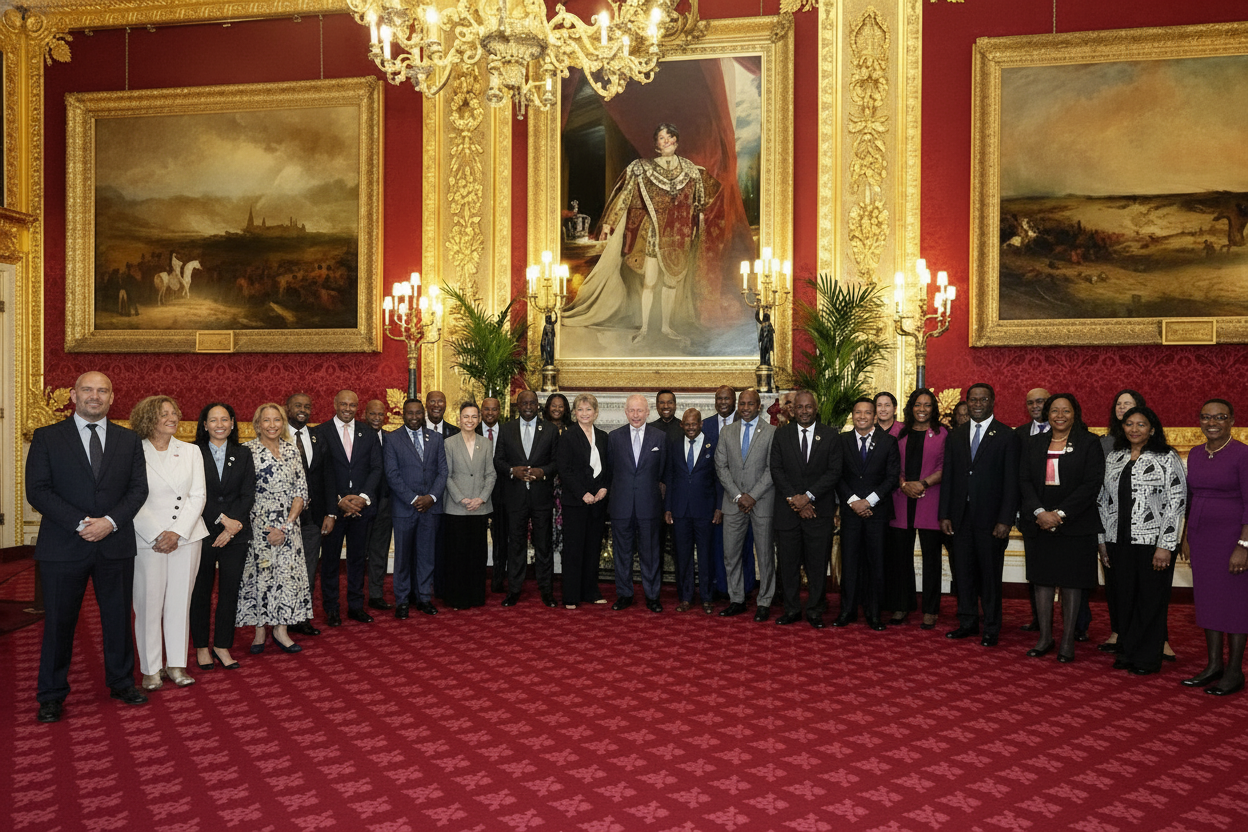
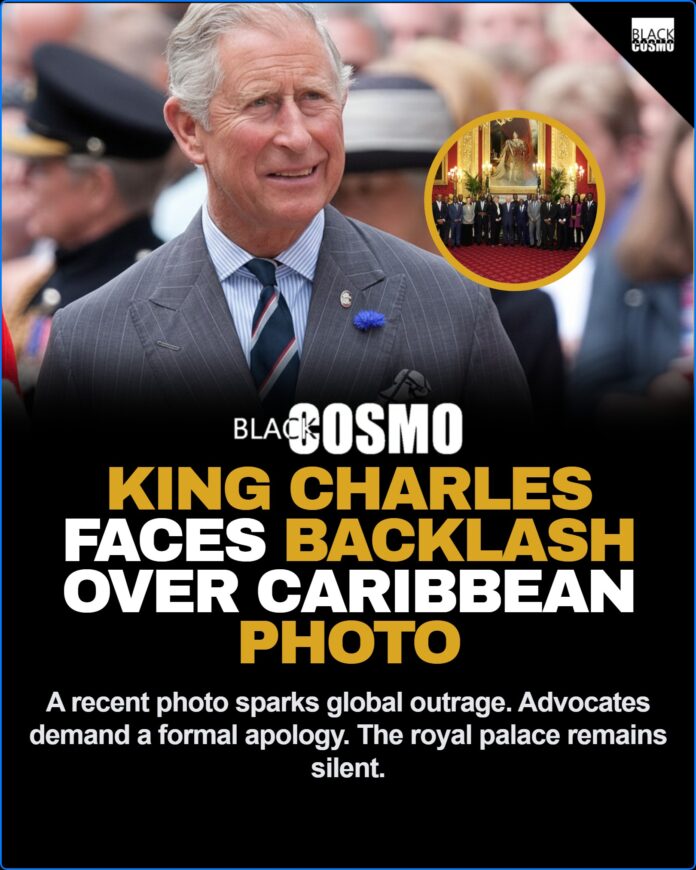
The global community is currently in an uproar after a controversial image surfaced online. In a move that has drawn intense scrutiny, King Charles poses with Caribbean officials in a photograph that is igniting fiery debates around the world. The picture was taken at St. James’s Palace during a Commonwealth Day reception on March 10, a seemingly standard diplomatic engagement meant to foster international relations. However, the backdrop of the image has triggered a massive wave of backlash from historians, scholars, and reparations advocates. Standing prominently behind the gathered dignitaries is a large portrait of King George IV, a British monarch who historically profited from the brutal labor of enslaved people on plantations in Grenada. As the call for reparatory justice grows louder across the globe, this glaring oversight has struck a deeply painful chord, highlighting the persistent shadow of colonialism that still looms over modern diplomacy.
For many observing this controversy, the setting of this gathering was not just tone-deaf; it was actively disrespectful to the legacy of those who suffered. The presence of King Charles beneath such a highly controversial painting, alongside esteemed representatives from Jamaica, Trinidad and Tobago, and St. Kitts and Nevis, has been described by experts as a monumental diplomatic misstep. Advocates for reparations have quickly pointed out the bitter irony of the situation. King George IV, who reigned from 1820 to 1830, received significant financial windfalls from Crown-owned estates in the Caribbean that were worked by hundreds of enslaved Africans. Having modern-day leaders from those very same regions pose under his likeness is a stark, visual reminder of the unhealed wounds of the transatlantic slave trade, and a clear sign that the royal institution still has much to learn about historical sensitivity.
The criticism surrounding the moment King Charles poses with Caribbean officials under this specific portrait has been swift, unrelenting, and completely justified. Arley Gill, the chairman of Grenada’s National Reparations Committee, expressed profound disappointment in the royal household’s lack of awareness. He articulated that it is incredibly offensive to have a portrait of a slavery-enriched monarch displayed so proudly during a meeting with descendants of the enslaved. According to Gill, placing persons of African descent below this painting essentially “rubs salt in the wounds” of a harrowing history that the British monarchy has yet to fully reconcile with. This powerful sentiment is echoed by academics globally, who see the photograph as a blatant normalization of historical amnesia, where the atrocities of the past are casually glossed over for the sake of a photo opportunity.
Independent researcher Desirée Baptiste, whose groundbreaking work has heavily focused on the British monarchy’s financial ties to enslavement, has publicly condemned the palace’s choice of venue for the gathering. Her previous findings revealed that George IV received substantial payments directly from enslaved labor on plantations in Grenada. By orchestrating a photo opportunity in this specific room without considering the implications, the monarchy has inadvertently highlighted its ongoing struggle to adequately address its dark colonial past. Baptiste has urged the palace to deepen its understanding of how these visual symbols impact the push for global equity. This incident is not isolated; rather, it is part of a broader, systemic issue regarding how former colonial powers choose to memorialize their history without acknowledging the immense human suffering that funded their opulent legacies and lavish lifestyles.
The backlash to the photograph comes at a critical time when the demand for reparations is gaining unprecedented momentum across Africa and the Caribbean. Organizations such as the CARICOM Reparations Commission are steadfast in their mission to seek reparatory justice for the millions of descendants of enslaved Africans. While the palace has previously backed a PhD study investigating the royal family’s historical links to the transatlantic slave trade, critics firmly argue that academic research alone is wholly insufficient. Meaningful repair requires formal, unequivocal apologies, substantial financial restitution, and a fundamental shift in how the monarchy engages with its former colonies. Symbolic gestures of sorrow, while noted, do little to mend the lasting economic, cultural, and psychological damages inflicted by centuries of relentless exploitation and systemic oppression.
Furthermore, the visual messaging of international diplomacy cannot be underestimated in today’s highly connected world. When high-ranking foreign ministers and high commissioners are hosted in spaces that unabashedly glorify the architects of their ancestors’ subjugation, it fundamentally undermines the very essence of modern diplomatic respect. The fact that the image was officially shared across various government platforms before the historical context of the painting was widely recognized speaks volumes about the pervasive nature of colonial blind spots. It underscores a crucial need for both the British establishment and international representatives to be hyper-aware of the historical narratives embedded within the walls of royal estates. Every portrait, every statue, and every artifact carries a heavy legacy that must be critically examined and contextualized.
As the public discourse continues to unfold and dominate news cycles, Buckingham Palace has conspicuously remained silent on the controversy. The glaring lack of an immediate statement, clarification, or apology has only fueled the frustration of those tirelessly demanding accountability. Moving forward, the pressure is mounting exponentially for the royal family to take definitive, actionable steps toward reparatory justice. Acknowledging the atrocities of the past is merely the first, long-overdue step; actively dismantling the ongoing glorification of figures who perpetrated and profited from those atrocities is equally vital for genuine healing. Until true accountability is achieved, the moment King Charles poses with Caribbean officials will continue to serve as a glaring reminder of a deeply flawed and entirely unresolved history.