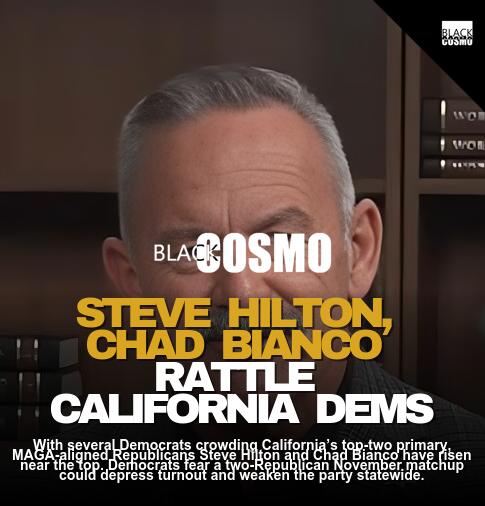
Steve Hilton is emerging as one of the biggest names in California’s governor’s race, and that alone has a lot of Democrats on edge. In a state that’s long been treated like solid blue territory, the idea that a proudly Trump-aligned candidate could make a serious run for the top office feels less like a political fluke and more like a warning sign about how shaky party confidence can get when the field is crowded and the strategy is messy.
What’s fueling the anxiety is California’s top-two primary system, where the two highest vote-getters advance to the general election no matter their party. That means if too many Democratic candidates split the vote, two Republicans could slip into the final matchup even in a state where Democrats usually dominate statewide politics. Add in another MAGA-friendly contender like Riverside County Sheriff Chad Bianco, and suddenly the conversation shifts from “California would never” to “California actually might.”
For Democratic insiders, the fear goes beyond one race. A November ballot without a Democratic option for governor could depress turnout, frustrate core voters, and create ripple effects down the ballot in legislative and congressional contests. It could also hand conservatives a major symbolic win in a state that has often positioned itself as a political counterweight to Trump-era policies on immigration, labor, education, healthcare, and the environment.
The larger truth here is that California has always been more politically mixed than the national stereotype suggests. Coastal cities may drive the image of a progressive stronghold, but inland regions and even parts of Los Angeles County tell a different story. There is a real conservative base in the state, and a noticeable chunk of it is fully aligned with MAGA politics. That reality helps explain why Steve Hilton is being taken seriously instead of dismissed as political theater.
For Black and brown communities especially, this race is a reminder that no state is too blue to ignore organizing, turnout, and coalition-building. Political labels can create comfort, but comfort is not the same as protection. When voters get complacent and parties get arrogant, the consequences can land hardest on the same communities already fighting to hold the line on basic rights, resources, and representation.