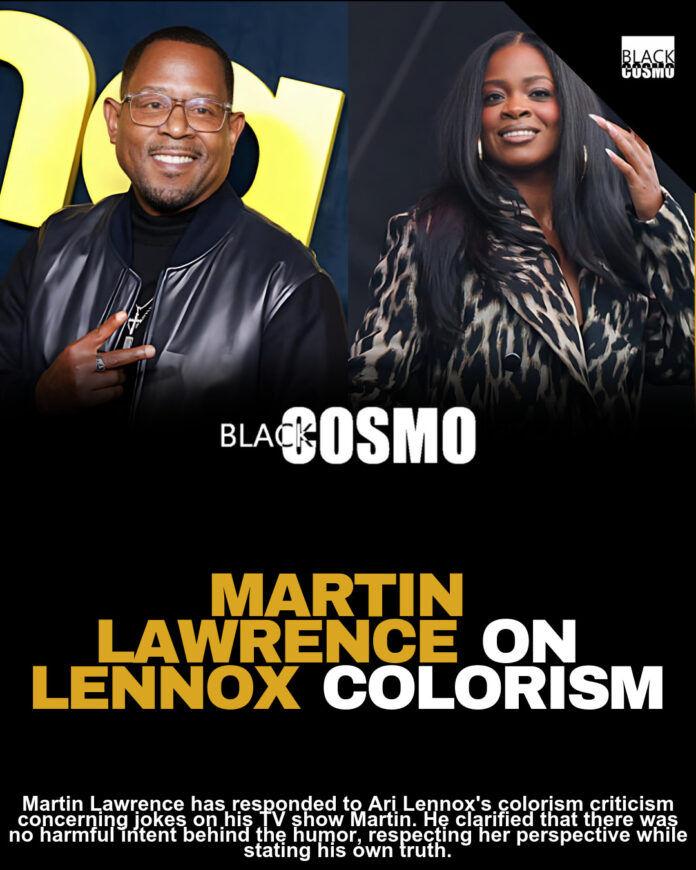
The legendary Martin Lawrence has finally broken his silence after Ari Lennox sparked a major online conversation about colorism on his iconic TV show, Martin.
He addressed the criticism head-on, making it clear that while everyone has a right to their feelings, there was never any harmful intent behind the jokes. This is a topic many public figures struggle with, but Martin Lawrence approached it with a balance of respect and firmness.
At the heart of this discussion is Ari Lennox. She openly shared how jokes targeting Pam, brilliantly played by Tichina Arnold, resonated differently for her as a dark-skinned Black girl growing up.
Martin didn’t dodge the issue when Ari Lennox’s comments resurfaced. He leaned into honesty, stating that the jokes, which are now a topic of decades-later debate, were never meant to cause harm. For him, the humor came from a genuine place of authenticity, good-natured banter, and mutual respect among the cast. “We were just keeping it real and having fun,” he explained. “That’s why we got a lot of laughs out of it. She has a right to have her own opinion but there was no malice intent.”
His statement is significant because it speaks to the comedic landscape of that era. Roasting was a huge part of the culture then—loud, exaggerated, and unapologetic. But times evolve, and so does our collective awareness. Martin’s response wasn’t dismissive. He acknowledged Ari’s feelings while standing firm in his artistic truth. This kind of balance is tough for many public figures, especially when navigating sensitive topics like colorism.
What’s even more impressive is that Martin didn’t try to shift blame or minimize the discussion. He didn’t pull the “too sensitive” card or attempt to rewrite history. Instead, he respected Ari Lennox’s perspective while clarifying his own intent. This approach is crucial, allowing for growth and new understanding without erasing the legacy of a man whose work undeniably shaped Black television.
Ultimately, Martin’s response is a powerful reminder that intention and impact can coexist. One doesn’t automatically cancel out the other. And while comedy will always push boundaries, these important conversations help us redefine where those lines should be drawn today.