
<
div xmlns:default=”http://www.w3.org/2000/svg” itemprop=”text”>
<p>When <a href="https://blkcosmo.com/?s=Mattel" target="_blank">Mattel</a> decided to step into the world of inclusive toys, they probably thought it was a clear win. Instead, they walked straight into a buzzing debate.</p>This week, the toy giant, Mattel, dropped its first-ever autistic Barbie. Instead of universal praise, they’re catching heat online. Critics are questioning if the doll truly represents autism or if it just neatly packages it for mass appeal. What started as a nod to neurodiversity has quickly become a big conversation about who defines autism and how deep “representation” really goes.
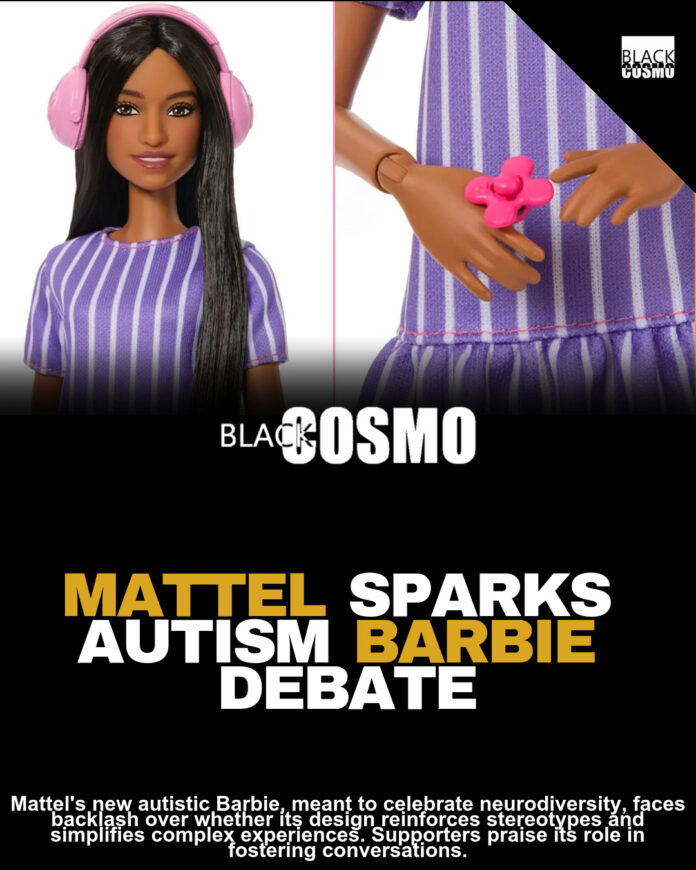
This doll joined Barbie’s expanding collection of inclusive designs. It was created with the Autistic Self Advocacy Network. This autistic Barbie comes with features meant to mirror common autistic experiences. Think a slightly averted gaze, bendable joints for stimming like hand-flapping, noise-canceling headphones for sensory overload, a fidget spinner, and a tablet for alternative communication.
But almost instantly, social media blew up with critics saying the design felt too stereotypical. Some autistic adults pointed out that the doll reinforces a narrow view of what “autism looks like.” Not every autistic person stims, avoids eye contact, or uses assistive tools, they argued. Others wondered if the doll unintentionally suggests autism is something to be managed or “fixed,” rather than fully embraced.
A major sticking point? The visual cues. While Mattel insists the features were intentional and thoughtful, many feel the accessories make autism seem overly medicalized or simplified for the masses. Essentially, people are asking: Does this doll reflect autistic people’s reality, or just what non-autistic people expect autism to look like?
Then there’s the timing and the message itself. Critics argue that dropping an autistic Barbie without truly amplifying autistic voices beyond a simple press release feels performative. Real inclusion, according to some autistic advocates, needs ongoing visibility, education, and representation behind the scenes. It’s not just about a product launch that boosts a big company’s bottom line.
Now, don’t get it twisted – the feedback isn’t all negative. Many parents of autistic children and autistic individuals themselves have actually praised the doll. They say it opens doors for conversations about neurodiversity and helps kids feel seen in places where they usually aren’t. Supporters remind us that no single doll can represent a whole spectrum, and that any visibility, even imperfect, is still a win.
Even with the differing views, this mixed reaction points to a deeper truth. Autism isn’t some fleeting trend, a checklist of features, or a quick branding opportunity. It’s a vast, intricate spectrum. It’s shaped by real lived experiences that simply don’t fit neatly into a toy box or onto a store shelf.
Mattel hasn’t publicly addressed the backlash yet. But the response makes one thing super clear. When it comes to representation, especially for marginalized communities, folks aren’t just here for good intentions anymore. They want nuance, real accountability, and genuine voices front and center in the narrative.
It seems in trying to expand who gets seen in the toy aisle, Mattel might have seriously underestimated just how layered and complicated true visibility can be.
</div>