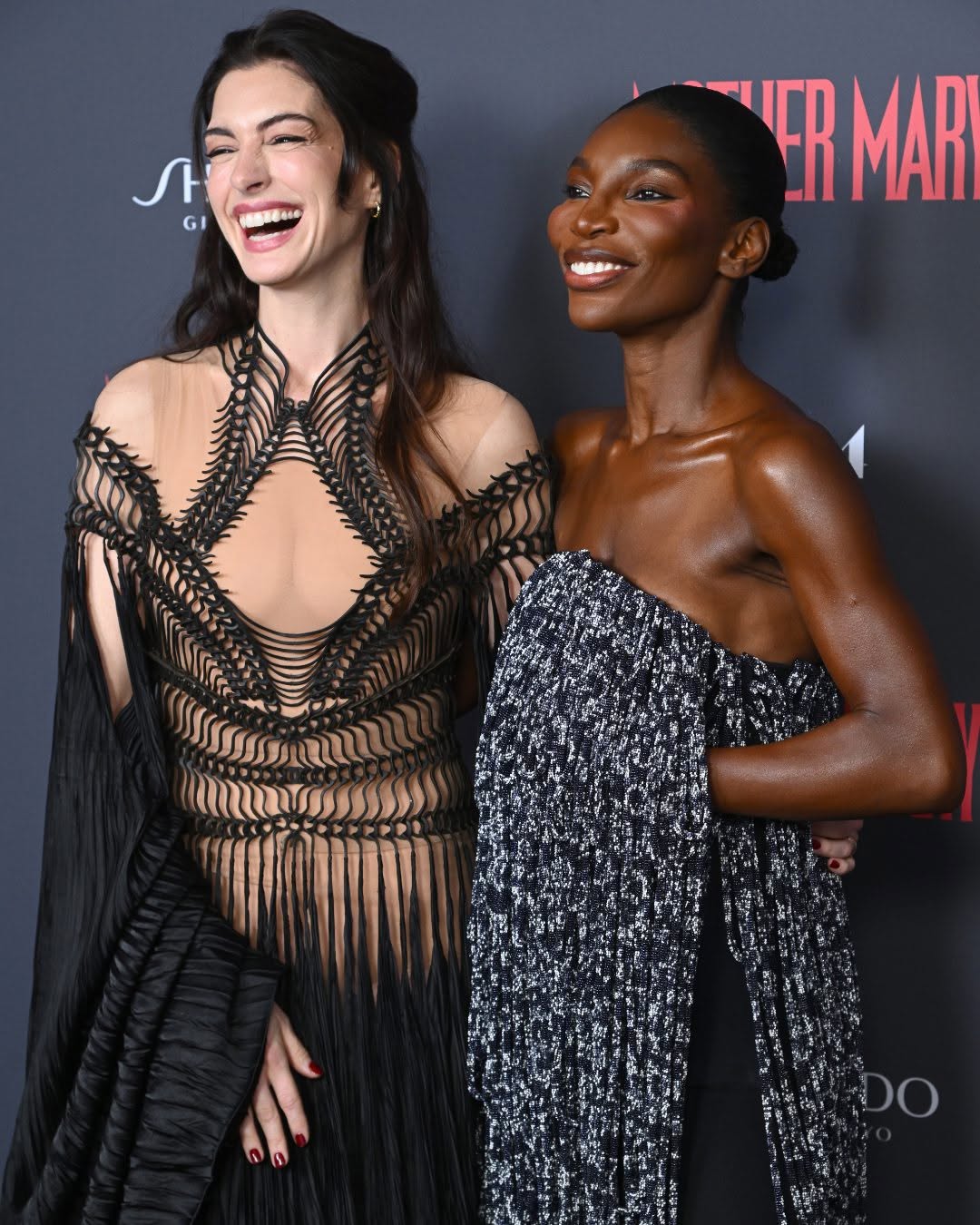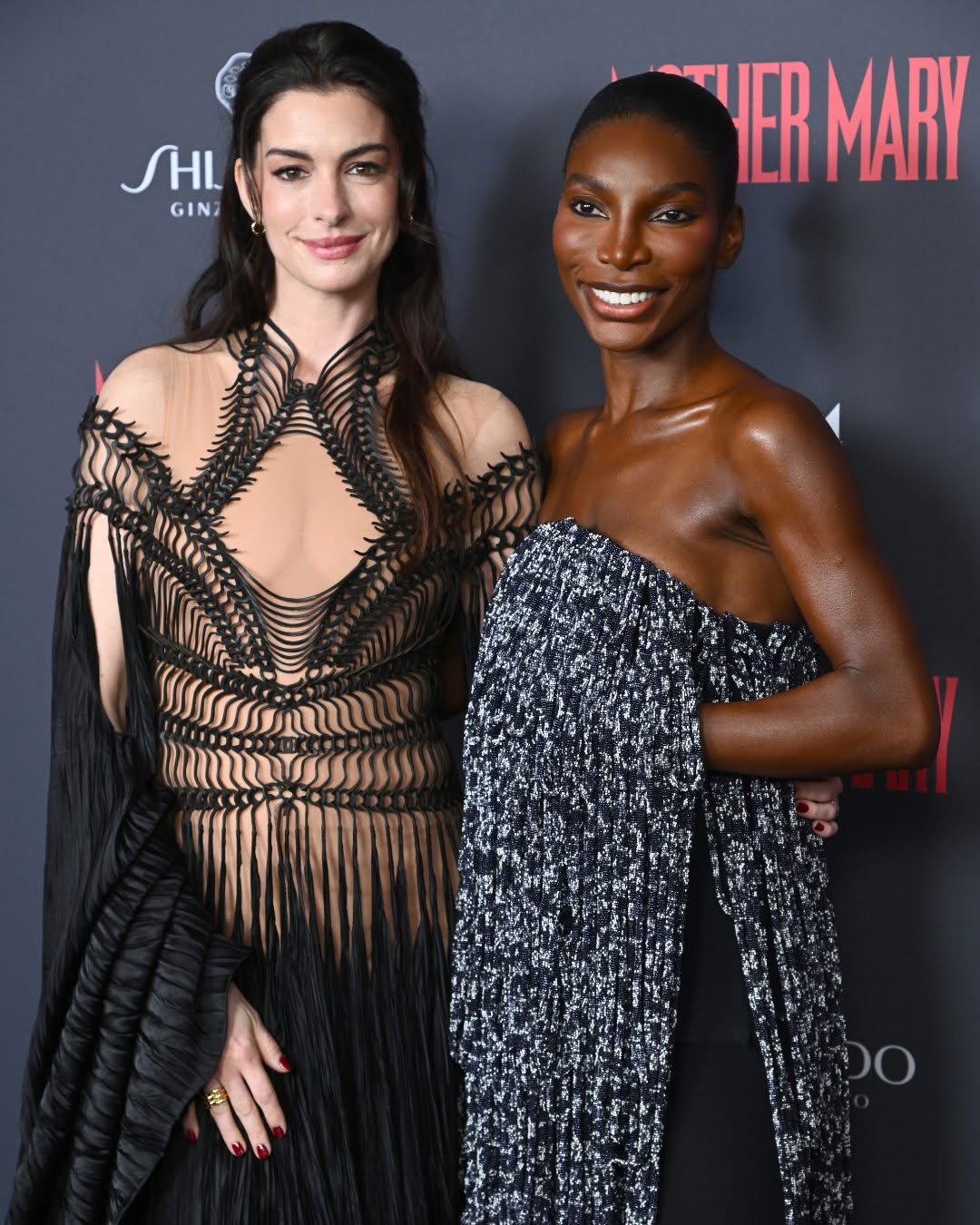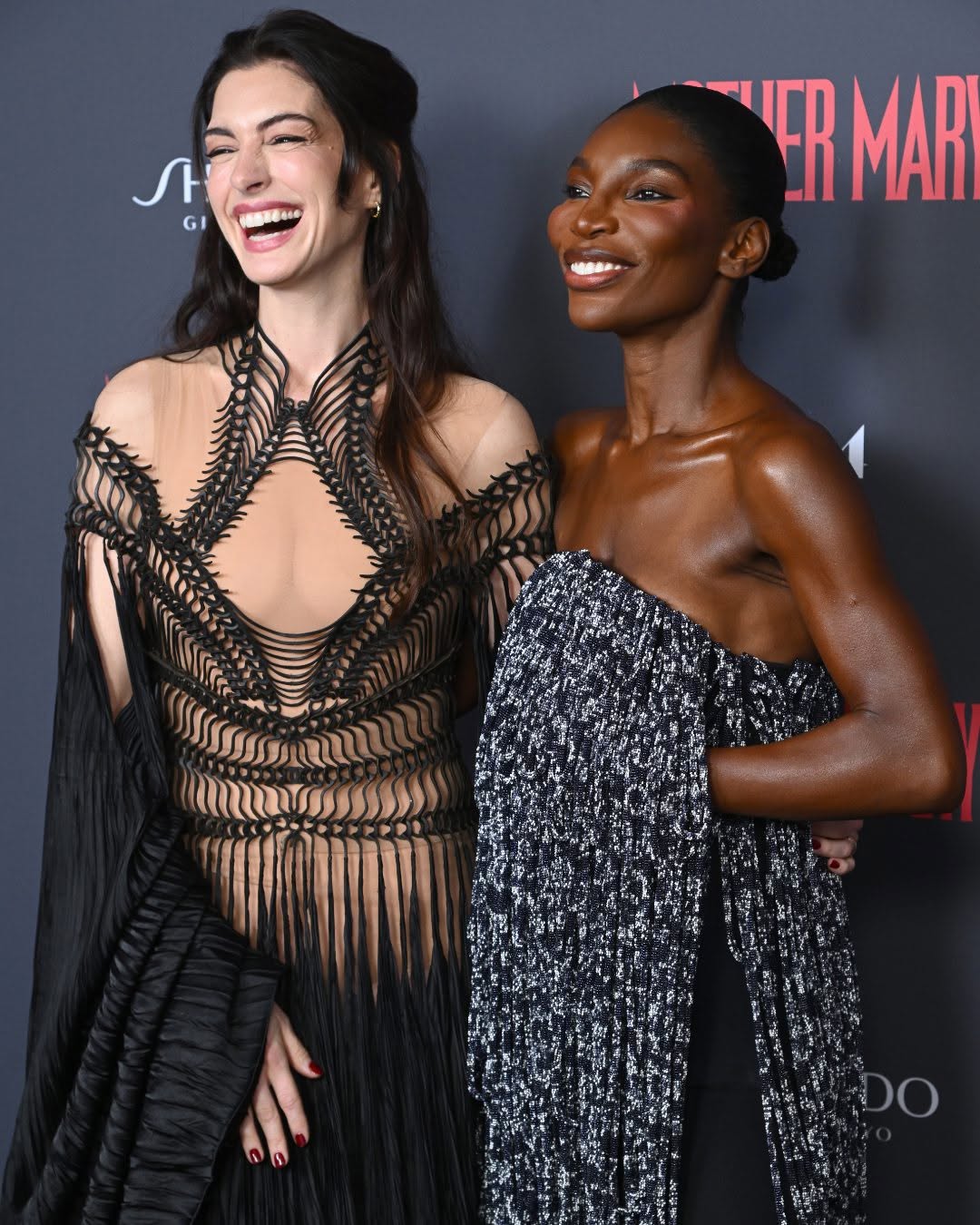
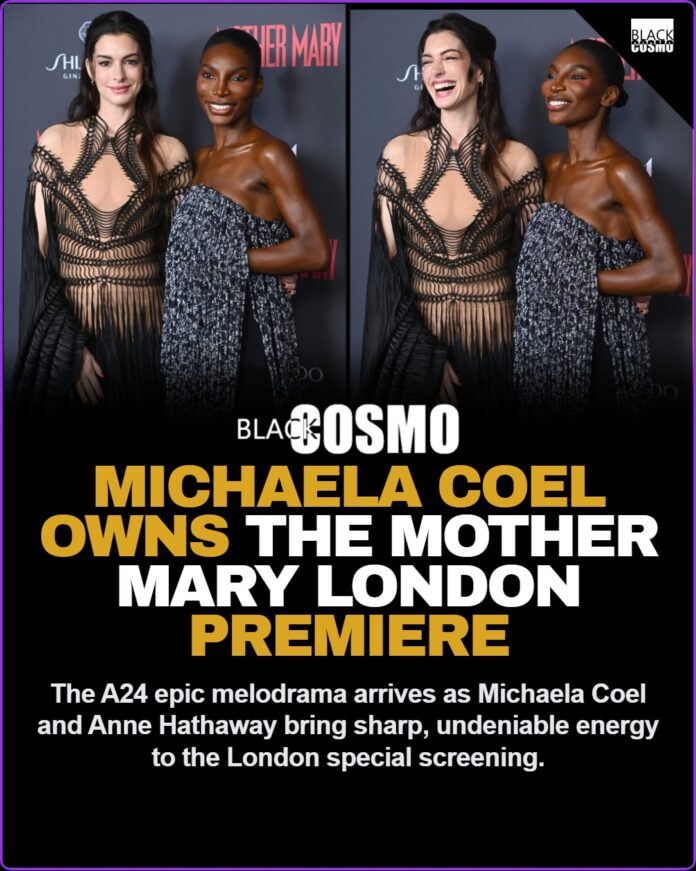
London’s Picturehouse Central usually plays it cool, but there is a specific kind of heat that happens when real cultural heavyweights share a marquee. We are officially in the era of Mother Mary. A24’s highly anticipated pop melodrama finally held its special screening, and the red carpet energy was exactly what we needed it to be. Anne Hathaway and Michaela Coel arrived not just as co-stars, but as two distinct forces of nature anchoring one of the most curious cinematic experiments of the year.
Let’s get straight to it. Seeing Coel step into the neon-soaked, high-anxiety universe of a fictional pop star’s life is a masterstroke. We know her as the architect of her own narratives—the sharp, unflinching voice behind I May Destroy You. Now, she steps into the shoes of Sam, an iconic fashion designer entangled with Hathaway’s global pop sensation. The pairing alone feels like a dare. Hathaway brings that dialed-up, theater-kid-turned-megastar intensity, while Coel operates on a completely different frequency. She brings an untamed, raw gravity. She does not have to scream to be heard. She just looks at the camera, and the whole room goes quiet.
The promotional photography and the glimpses we caught from the event channel something unexpectedly vast. If you look closely at the spread surrounding the film’s rollout, it evokes a profound sense of expansive tranquility mixed with raw, almost coastal isolation. It is a deliberate mood. A faded, slightly vintage aesthetic bleeds through the imagery. It feels less like a traditional Hollywood junket and more like a private, quiet contemplation captured on film. It strips away the noise of the pop-star plotline and focuses on the emotional isolation of the characters.
That visual language tells us exactly what kind of movie David Lowery made. It is not just a concert film with dialogue. It is a deep dive into the psychology of fame, and the allure of remote, quiet places when the noise becomes too much. Coel’s character serves as the anchor in that storm. The imagery taps into that primal human need for escape—a feeling of standing on the precipice of something vast and ancient. It is a mood that perfectly mirrors the internal quiet Coel brings to every role she touches.
Why does this matter for us? Because Michaela Coel is not just picking up checks in standard supporting roles. She chooses projects that allow her to maintain her specific cultural edge. Black women in Hollywood are too often asked to play the moral compass or the sassy sounding board. Playing a legendary, high-fashion designer in a queer-coded, Euro-centric pop thriller? That is a flex. It puts her directly in the lineage of creatives who define the aesthetic rules rather than just following them. She is the tastemaker.
Fans on Twitter were already losing their minds over the red carpet stills. People were not just dropping fire replies; they were dissecting the body language. “The way Michaela holds space next to Anne is a masterclass in quiet power,” one user noted. It is true. There is a specific chemistry here. Hathaway is the storm; Coel is the earth that absorbs it. The tension between them—both onscreen and in their public appearances—is the actual draw of the film. You do not buy a ticket just to hear the original songs penned by Charli XCX and Jack Antonoff. You buy a ticket to see these two women go toe-to-toe in high fashion.
The London screening proved one thing above all else. This is not your standard industry rollout. It is a cultural moment waiting to explode. A24 knows exactly what they have on their hands. We are watching two of the sharpest actors of their respective generations figure out how to share the same frame without breaking the lens. And frankly, Coel looks like she is having the time of her life doing it. Grab your tickets early. This one is going to start arguments in the group chat, and we are absolutely here for the fallout.