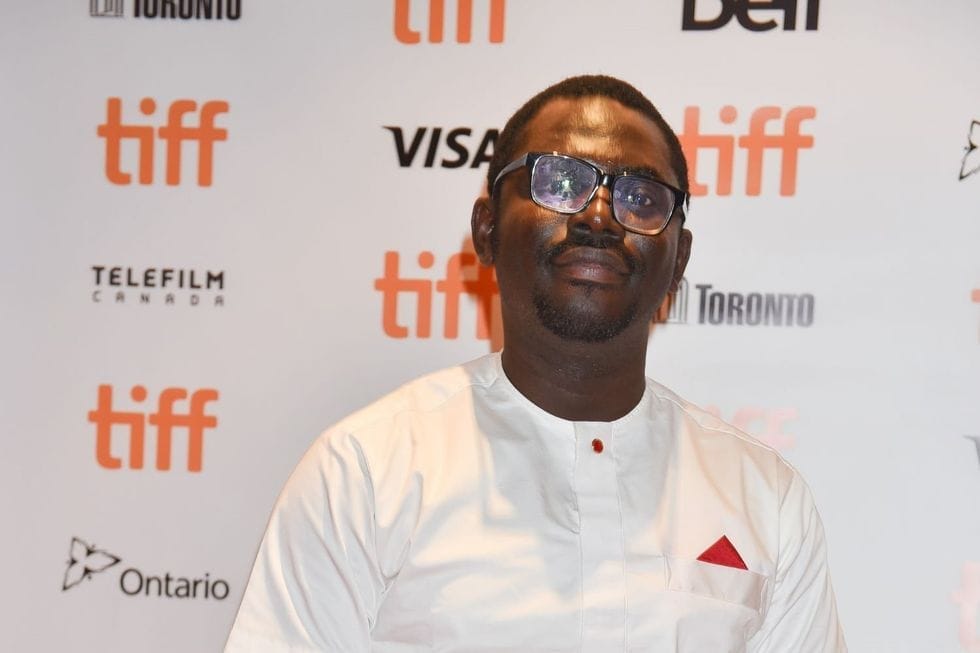
Niyi Akinmolayan believes in Nollywood. The veteran filmmaker has grown to become one of the better-known film directors in Nigeria over the past decades, witha catalog of local box office hits and well-streamed films. However, he firmly believes there’s much more to be done and achieved.
“Nigerian filmmakers are very stubborn; we make films because we like to and not because it’s very profitable,” Akinmolayan says over a Zoom call. It’s one of several matter-of-fact declarations he made during his conversation with
this past Sunday, January 12.
Two days before, the second and concluding part to Akinmolayan’s latest effort, Lisabi: A Legend is Born, the sequel to last year’sLisabi: An Uprising, premiered on Netflix. It wraps up the biopic of the myth of the titular figure, a hero of Egbaland, a prominent Yoruba tribe. The new film’s first half continues the high-octane portrayal of Lisabi leading the charge against undue taxation by the Alaafin of Oyo, while its second half imaginatively portrays the disputed ending of the hero’s Earthly life.
“We made a film of a little over three hours; it’s a biopic, and we had to tell the whole story,” the director says. “We also achieved high production value with the cinematography and other elements, which are things that Netflix and its viewers love to see. Hence, they suggested that we split the film into two parts, so viewers wouldn’t have to watch more than three hours in one sitting.”
Across its two installments, Lisabi is positively defined by several notable elements, including robust dialogue carried by parochial Yoruba dialects, impressive cinematography, colorful wardrobe choices, and Tolu Obanro’s impeccable score. While the collective runtime, especially the second part, lends itself to some indulgence with its pacing, Lisabi is a strong show of what has made Akinmolayan a reliable force in Nollywood: accessible storytelling with an equal measure of flash.
A striking part of the film is the prominent role of women, which isn’t typical of mythical retellings of male heroes. From the central role of Lisabi’s confidant Ikeola (Oyebade Adebimpe Adedimeji) to the coven of witches who take over and help win the war against the Alaafin’s army, Akinmolayan’s involvement of women as active participants in the rebellion is purposeful.
“Women have always been a strong force in Yoruba culture,” he says, referencing Funmilayo Ransome-Kuti andthe Abeokuta women’s rebellion. “Women have led uprisings and, I mean, we’ve had a female Alaafin before, and some people don’t know that. As a filmmaker, you ask yourself important questions, and when you question the norm, you put your interpretation on these myths.”
For its cast, Lisabi is a roll call of who’s who in mainstream Yoruba Nollywood. From Lateef Adedimeji’s spirited portrayal of the titular character and Odunlade Adekola’s turn as the Alaafin to cameos by Femi Adebayo and Jide Kosoko, it’s a star-studded fare. Conspicuously, it features several actors who have played lead roles in similarly-toned Yoruba epic films.
“Ultimately, what you’re looking for is who best represents the character and the role that you’re trying to cast,” Akinmolayan says about featuring repeat faces. Beyond that, however, he adds that the overarching problem is the limited frequency of big-budget productions. The way he explains it, film is a huge risk business with little breakeven and/or profit guarantee, so the few big-budget films feature proven actors who will attract viewers.
“First of all, filmmakers are not the ones who create celebrities; it’s the audience,” he says. “The moment people stop watching someone, nobody will hire that person. If the audience wants to see someone, filmmakers have that responsibility if they want to have commercial success.”
This is very pronounced in Nigerian cinemas, where producers bank on the popularity of actors as a draw for their films. It’s all tied to Nigeria’s ailing economy, which has done little to foster a strong cinema culture, especially in recent years when inflation has made watching films a luxury. Technically, there have beenblockbuster films recently, like Funke Akindele’s last two big screen filmscrossing the billion naira mark, butsome of it is a mirage.
“The problem with Nigeria is that you’re either extremely high or low,there’s barely any in-between,” Akinmolayan says. The lack of an in-between largely dictates that, in mainstream Nollywood, actors are recycled, there isn’t too much variety in the types of films being made, and the complaints on quality continue to rage on. “Until the economy favors filmmakers that can make a profit because they made a good film, that will never change.”
As an alternative, streaming is ideal for filmmakers to experiment with new story ideas and work with less popular actors. Still, streamers want to see data demonstrating viewer engagement and impact. Without a large subscriber base and continued growth, streaming can lead to the same challenges previously stated.
Last year, Prime Video cut its funding in Africa, and Netflix was said to havepulled out investments in Nigeria, a rumor it denied. During our conversation, Akinmolayan casually stated that Netflix had pulled funding. “The coming of Prime Video and Netflix helped us discover new talents. Now, imagine that they didn’t pull out. You’re going to have another year to discover more talent.” The reduction of investment from both streamers isundeniably tied to Nigeria’s economy.
Akinmolayan has worked with both streamers and delivered some of his more creatively ambitious work in collaboration with Prime Video, including the documentary Rainmakers and psychological thrillerThe House of Secrets. “There were few big faces [in Secrets], and it got a lot of excitement and energy from people, but we know very well that if we put it in cinemas, it probably wouldn’t hit 50 million naira,” Akinmolayan says, adding that “the story would still be what it is,” but the economics of filmmaking in Nigeria makes it difficult to pull off such endeavors consistently and constantly.
When I ask how Nollywood can fix its technical problems even with the uncertainty of incoming investments, he still defaults to the economics of being a filmmaker as the primary problem. “Almost everything we’re talking about, they are this way because filmmakers are either in a hurry or they don’t have the money to pay professionals properly,” he declares.
Compared to Hollywood, Akinmolayan says it’s difficult for Nigerian filmmakers to work on a script for years, pay a team to focus solely on a production, spend months shooting, conduct reshoots, work with focus groups, and implement other measures in an extensive process. He adds that many professionals would instead work in more stable environments like advertising or focus on better-paying gigs like music videos.
Even concerning the global success of Nigerian pop music, Akinmolayan explains that the Afrobeats template ofreinterpreting influences can’t simply be replicated. “We can reach a point where our films are locally and internationally successful. It’s not impossible,” he says, adding that having more cinemas in Nigeria and better integration across the continent should be a priority.
“Netflix and Prime Video will not help us find [success] in the international market. It’s not their job,” Akinmolayan says. “They’re software companies; we must prove we can reach those levels. It’s ridiculous that our films are not even doing great in Ghana and other parts of Africa. South Africans are not watching Nigerian films, and Nigerians are not watching South African films. We need to do the leg work of ensuring that there is a wide market wanting to see our films.”
Want to make a statement?
Leave a comment about this here!
_________
Disclaimer:
For Education and discussion purposes. Please note no copyright infringement is intended, was recorded on BlkCosmo’s own equipment, and we do not own nor claim to own any of the original recordings used in this video and intend to use this as ‘fair use’.