
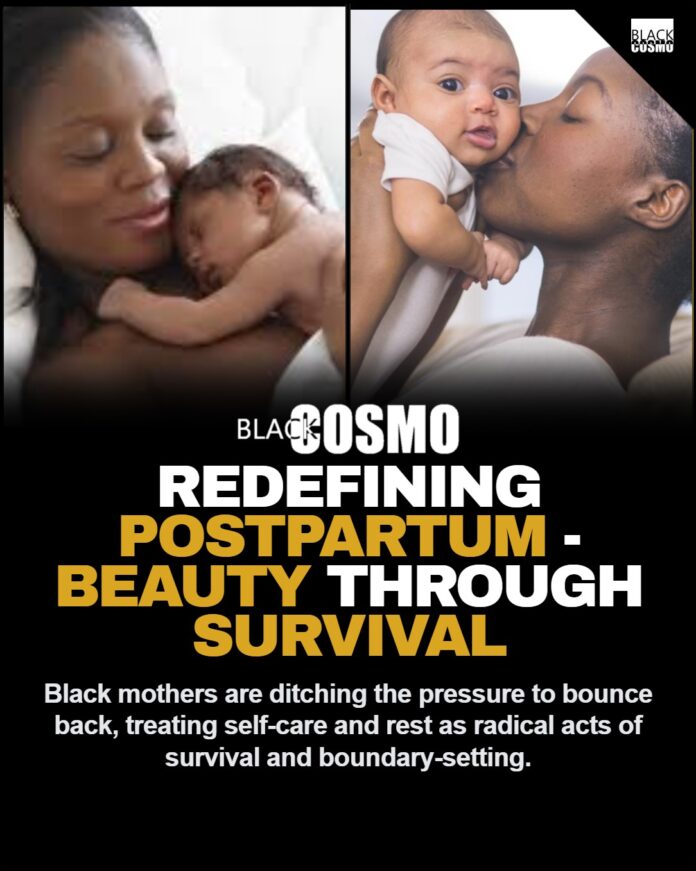
The pressure to snap back after giving birth is a scam. For years, the culture sold new mothers a fantasy of effortless recovery, complete with hospital glam shots and immediate gym sessions. Black women are entirely rejecting that narrative. During the 2026 Black Maternal Health Week, the conversation around Postpartum Beauty has stripped away the performance. It is no longer about looking like you never had a baby. It is about surviving the profound, exhausting process of bringing life into a system that routinely fails you. The CDC continues to report that Black women are three times more likely to die from pregnancy-related causes. Against that grim reality, self-care is not a luxury. It is a radical act of self-preservation.
The evolution of Postpartum Beauty requires a hard pivot. Before motherhood, a beauty routine might mean hours in a salon chair or an elaborate twelve-step skincare regimen. After the baby arrives, the stakes change. Time becomes the ultimate currency. Women are trading the aesthetic pressure of the outside world for routines that rebuild their physical and emotional foundations. They are demanding rest.
Beauty editor Aimee Simeon recently named the exact feeling. She realized quickly that she could not pour from an empty cup. Caring for herself became the only way she could properly show up for her baby. Sometimes, that care looks incredibly simple. Simeon relies on dropping her baby off with grandma for a few hours on a weekend. Her goal? Just to wash her hair or change her nail polish. That stolen afternoon is not a spa retreat. It is a necessary reset. It is a quiet moment to remember who she is outside of motherhood.
The physical toll of pregnancy and delivery demands a completely different relationship with your body. Dr. Elyse Love, a dermatologist, spoke candidly about her own shift. Before having a child, her routine was unapologetically high-maintenance. She stayed booked. Physical therapy. Strength training. Massages. Pilates. She did it all to prevent posture imbalances and stay in shape. Motherhood broke that schedule apart. Now, she might manage a workout two or three days a week, but the rest are rare indulgences she simply cannot fit in.
Sleep is her new religion. Dr. Love prioritizes rest above everything else, noting that if she goes more than three days with poor sleep, her body completely shuts down and she gets sick. She is eight months out from her delivery and admits she misses those super-strong pregnancy nails. The physical changes linger. When she tried to jump back into strength training just four months after giving birth, her immune system crashed. The strain was too much. She pivoted to low-intensity pilates out of pure necessity. Listening to your body is the only way forward.
Then there is the hair. Postpartum shedding is a universally humbling experience. One mother detailed her own battle with thinning edges, waiting for the shedding to finally slow down. Her strategy for dealing with the new half-inch baby hairs? A dedicated, unbothered weekend wash day. Scalp scrub. Treatment mask. A fresh silk press. She reclaims her time by doing her own nails at home, spending an hour in front of a movie just to feel put together for the week ahead. She also makes a monthly deep tissue massage a non-negotiable boundary. It works wonders for her physical and mental health.
These specific, deliberate choices are acts of defiance. Black women are navigating a medical establishment burdened by implicit bias and structural racism. Serena Williams made headlines in 2022 when she detailed her own harrowing birth experience, spelling out a terrifying truth: being heard was the difference between life and death. When the system leaves you to care for yourself, finding the time for a scalp scrub, a nap, or a fresh manicure takes on a heavier meaning. You are asserting your own worth. You are demanding space in a world that asks you to disappear into the background.
The ultimate advice from these mothers is refreshingly blunt. Give yourself grace. The routines that carried you through your twenties or your pre-baby life will likely fail you in the first year of motherhood. Your body is different. Your baby is constantly changing. Prioritizing nutrition and rest is the only real mandate. Finding a new rhythm is not about lowering your standards. It is an adjustment to a new season of life. Motherhood breaks you down and builds you back up. The real work is in the rebuilding.