
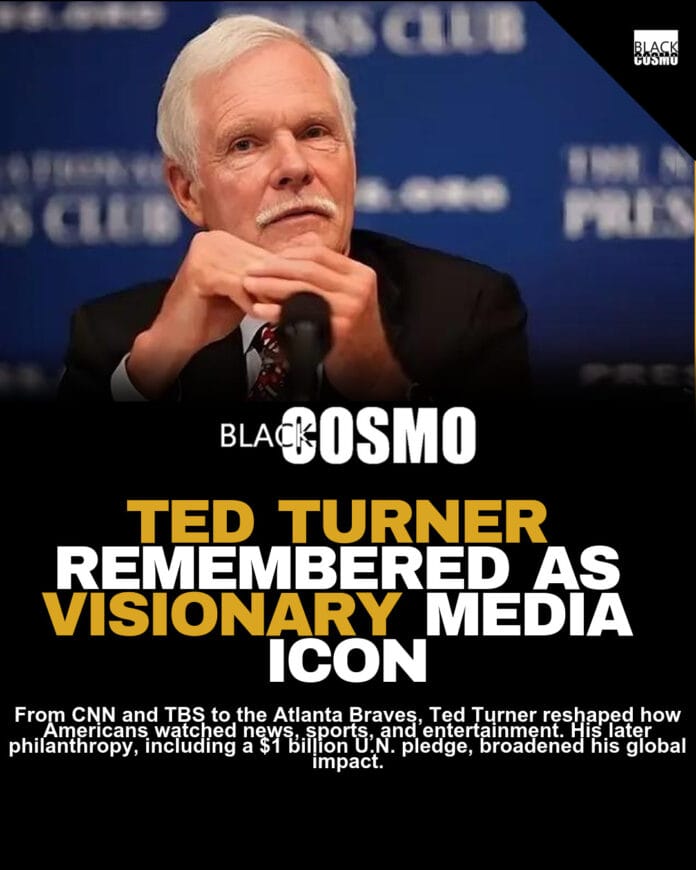
Ted Turner helped reshape the way America watched TV, followed sports, and understood breaking news. Long before streaming, apps, and endless scrolling, he was building a media world that felt immediate, national, and impossible to ignore.
He started with his family’s billboard business and turned that foundation into a media empire that changed the culture. When CNN launched in 1980, plenty of people dismissed the idea of a 24-hour news network. That doubt did not last long. The nonstop news format became a defining feature of modern life, and his influence could be felt in living rooms across the country.
His reach went beyond news. Through TBS and the superstation model, local programming became national entertainment. That shift mattered because it gave everyday viewers access to baseball, classic films, wrestling, sitcom reruns, and a shared TV experience that crossed regional lines. For many families, especially before the digital age fractured audiences, that kind of access helped create a common pop culture language.
Sports were another huge part of his legacy. As owner of the Atlanta Braves, he understood that television exposure could turn a local team into a national brand. The Braves became “America’s Team” for a generation of fans who may never have set foot in Georgia but still felt connected to the team. He brought that same sense of cultural importance to the Atlanta Hawks, treating sports as more than business and more than spectacle.
His public life also drew attention in other ways, especially through his marriage to Jane Fonda. Together they represented a mix of celebrity, activism, money, politics, and media power that felt especially notable in the late 20th century. Even outside broadcasting, he stood out, winning the America’s Cup in 1977 and earning respect as one of the top competitive sailors of his era.
What also made him different was how seriously he seemed to take the responsibility that came with success. His billion-dollar pledge to support the United Nations through the United Nations Foundation was one of the biggest philanthropic gifts ever made at the time. He also put energy into environmental causes, nuclear disarmament, and humanitarian work, showing that influence could extend beyond business headlines.
For BlkCosmo readers, the story of Ted Turner is a reminder that media power shapes how communities see themselves, how stories travel, and who gets centered in the national conversation. Whether people admired him, challenged him, or both, his imprint on American culture is too big to overlook.