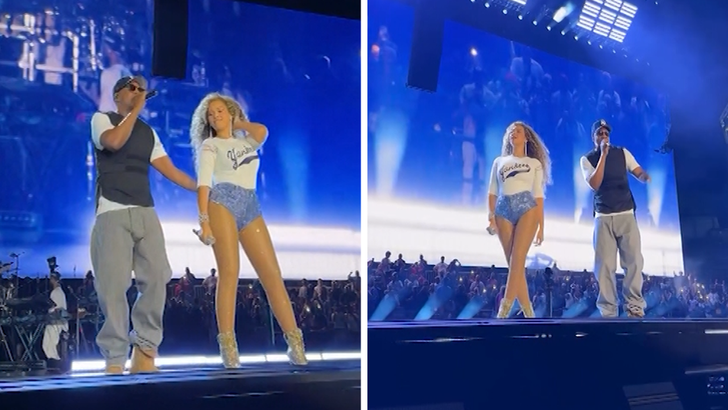
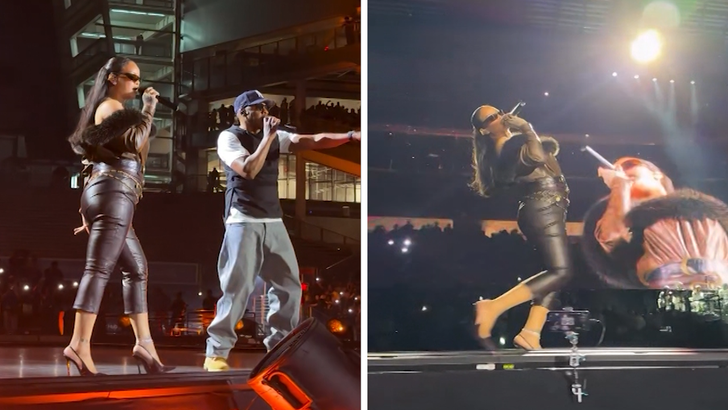
Damon Dash isn’t giving Jay-Z’s Yankee Stadium victory lap a standing ovation. Speaking on “The Art of Dialogue,” the Roc-A-Fella cofounder argued the three-night spectacle marking the 30th anniversary of “Reasonable Doubt” looked less like a celebration and more like a carefully orchestrated marketing campaign.
Dame’s critique centered on the business side rather than the music. He questioned why the entire production felt designed to push Yankees-branded merchandise, with logos and jerseys plastered throughout. Damon Dash saw the branding as overshadowing the performances themselves, suggesting the concerts functioned more as an ad campaign than a genuine artistic celebration.
According to Dame, all that commercial machinery made the music feel secondary. He speculated about crowd shots and promotional activations, wondering whether attendees were there organically or as part of a marketing budget. He was careful to note he didn’t actually know if that was the case, but the question itself shaped his overall impression.
Dame also took aim at the cinematic intro that opened the show, the one where Beyoncé shaved Jay-Z’s head before he walked onstage. He wasn’t buying it. The moment felt forced and artificial to him, an attempt to spotlight their relationship that came across as overly calculated rather than intimate.
He even joked he’d never let his own partner cut his hair, calling the whole scene “contrived.” From his vantage point, the Bronx shows were selling far more than just tickets and nostalgia. They were a polished product designed to move merchandise and control narrative in ways that felt antithetical to the raw energy of the original album.
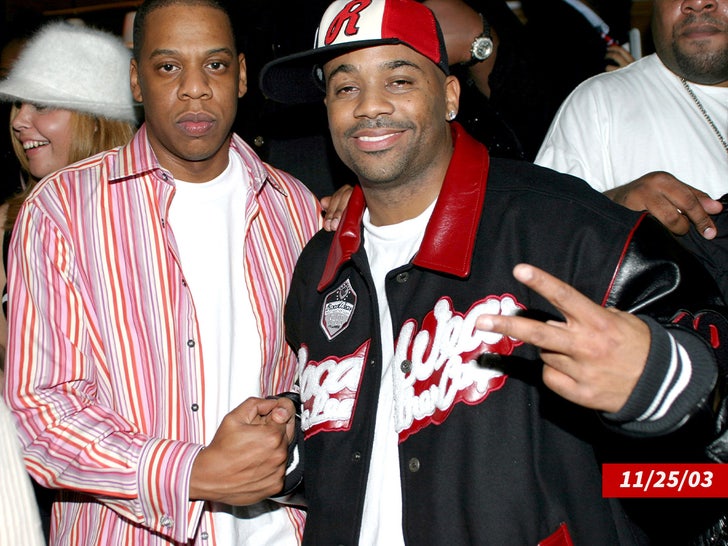
Of course, Dame isn’t exactly an unbiased observer when it comes to Jay-Z. The former business partners had a significant falling out years ago, so his skepticism about the Yankee Stadium run comes with that history baked in. Still, his perspective offers a counterpoint to the general praise the concerts received from most corners of hip-hop and entertainment.
July is officially National Watermelon Month—a U.S. Senate-approved celebration of one of summer’s favorite fruits. But behind those family backyard barbecues lies a piece of history that textbooks left out. Long before watermelon was hijacked and weaponized as a racist stereotype, the fruit was actually a powerful symbol of Black freedom and economic independence.
Watermelon was first domesticated in Africa thousands of years ago and became prized for its ability to store water in brutal heat. The fruit arrived in the U.S. South in the 17th century when enslaved Africans brought seeds during the Trans-Atlantic slave trade. While working under oppressive conditions, enslaved people relied on watermelon for essential nutrients and hydration. After emancipation, everything changed. The fruit became a vehicle for self-reliance as newly freed Black Americans began growing and selling watermelons on their own land.
An albumen print on cabinet card depicting African-Americans picking watermelons in a field. The photograph shows four men and four women standing in a large field, some carrying watermelons or bags. (Photo by Heritage Art/Heritage Images via Getty Images)
Black farmers became the nation’s largest producers of watermelon, according to the Southeastern African American Farmers Organic Network. The fruit had become a symbol of their freedom. That terrified white communities.
Sensing a loss of control, segregationists launched a deliberate propaganda campaign. They reframed the very tool of Black financial autonomy into a derogatory stereotype, one designed to suggest Black people were unfit for citizenship. The caricature painted Black people as “lazy,” “criminal,” and “simple creatures” who could be “satisfied” with nothing more than a slice of melon.
Popular culture in the 19th century became flooded with anti-Black propaganda to cement the narrative. “Frank Leslie’s Illustrated Newspaper” published one of the earliest documented caricatures of Black people eating watermelon in 1869. That sparked a wave of degrading “coon postcards” and toys that spread the poison further.
The film industry followed suit. Edison Studios released short silent films like “Watermelon Contest” (1896) and “A Watermelon Feast,” which depicted Black men uncontrollably devouring the fruit. The cultural messaging served a malicious purpose: dehumanize Black Americans and falsely paint them as too simple-minded to deserve basic voting rights.
The racism didn’t stay in the past. In 2009, less than two months into Barack Obama’s first term as president, Dean Grose, the mayor of Los Alamitos, California, sent an email from his personal account depicting watermelons instead of Easter eggs on the White House lawn. After complaints and an apology—where he claimed ignorance of the racial stereotype—he resigned.
The disrespect continued during Obama’s second term when the Boston Herald ran a controversial cartoon by Jerry Holbert. The drawing showed the nation’s first Black president brushing his teeth in a White House bathroom while a white intruder asked, “Have you tried the new watermelon-flavored toothpaste?” The newspaper initially doubled down, issuing a statement supporting Holbert’s “utmost integrity.” Later, Holbert himself admitted he “really did it wrong” and apologized for not thinking it through.
But decades of propaganda couldn’t erase deeper heritage. In the rural South, especially Mississippi, the Black community’s connection to watermelon endures as a celebrated tradition.
In Mississippi, that love has been famously immortalized on the cover of B.B. King’s iconic 1970 album, “Indianola Mississippi Seeds,” where a guitar is fashioned from a ripe melon. Every summer, Mize, Mississippi, hosts its annual watermelon festival with seed-spitting showdowns, eating contests, and hunts for the state’s heaviest melon. About 50 miles northwest in Jackson, the city celebrates its annual Fourth of July Watermelon Classic 5K.
“Watermelon is the pinnacle of Black agrarian legacy. It makes our land a portal—not just soil, but memory, spirit, and resilience,” the Southeastern African American Farmers Organic Network wrote on its website, describing the organization’s 2025 Watermelon Convergence. “Gatherings like this reclaim watermelon from the grip of racist caricature. That alone is a chapter in our story of how we got over.”
Kim Scott, ex-wife of Eminem, was arrested after police responded to her Michigan home on a reported suicide attempt. According to a police report obtained by BlkCosmo, she bit one of the officers who arrived to help her.
The incident unfolded on July 11, 2026, when officers were dispatched after a call reported an attempted suicide at the home. Upon arrival, they found Kim Scott in the basement, where the situation quickly escalated.
Officers reported finding Kim in the basement, partially clothed and in distress. She screamed at them to leave her home and became what police described as “irate and combative” when they attempted to assist her.
When officers tried to place her in handcuffs, she resisted. During the altercation, she bit an officer’s forearm, drawing blood. She also kicked one officer in the shin as she was being removed from the room. Police deployed a taser to gain control of the situation.
The officer who was bitten required hospital treatment both for the bite wound and due to exposure to Kim’s blood. Kim was subsequently arrested and charged with assaulting a police officer and resisting arrest.
If you or someone you know is struggling or in crisis, help is available. Call or text 988 or visit988lifeline.org.
Honey, grab your tea cups and prepare for an absolute political storm, because the digital streets have officially turned their sights on the former Vice President! Kamala Harris broke her silence to offer condolences following the sudden, shocking passing of South Carolina Senator Lindsey Graham, and the internet absolutely lost it.
The veteran Republican senator tragically passed away on Saturday evening at age 71 due to a sudden aortic tear, throwing Capitol Hill into a total state of mourning and shock. To show respect, Kamala took to social media to share a message honoring her former Senate colleague. But baby, the second her statement hit the internet, both ends of the political spectrum completely violently exploded in her comment sections—and they are dragging her to absolute shreds! Check out Kamala Harris trending across every platform right now.
The Condolences Statement That Set the Timeline on Fire!
On Sunday, Kamala released a formal statement trying to bridge the bipartisan divide, keeping it incredibly classy:
“I am saddened to learn of the passing of my former colleague, Senator Lindsey Graham. He was full of wit, energy, and charm, and he cared deeply about the Senate and the people of South Carolina. Doug and I are sending our thoughts and our prayers to his friends and loved ones.”
Why the Internet is Completely Destroying Her
In today’s hyper-polarized digital climate, trying to play the bipartisan diplomat is an absolute, high-stakes gamble that almost never goes unpunished by the internet peanut gallery! The second her tweet went live, Kamala got absolutely blindsided from two completely different directions:
The Left is Furious: Progressive and left-leaning users are completely dragging Kamala for describing Graham as full of “charm”. They are aggressively pointing out the heavy political battles they fought, specifically screaming about Graham’s instrumental role in pushing through conservative Supreme Court nominees like Amy Coney Barrett. “Charm?! He literally dismantled judicial rights! Why are we romanticizing his record just because he passed?” one angry user yelled.
The Right is Dubious: On the flip side, conservative commentators and Trump supporters are attacking her for “fake sympathy.” They are claiming her condolences are purely performative, accusing her of putting on a political show after spending years actively campaigning against the Republican agenda. “Now you want to call him a ‘colleague’ and praise him? The hypocrisy is unreal,” another comment read.
The Digital Streets Melt Down: Nobody Is Happy, Honey!
The sheer volume of quote-tweets and hostile replies has turned her post into one of the most highly “ratioed” political moments of the week! “Hold on a minute! Kamala Harris really thought she could slide onto the timeline, drop a polite ‘thoughts and prayers’ message for Lindsey Graham, and not get absolutely cooked by BOTH sides?! The left is mad she’s being nice, and the right is mad she’s existing! Nobody is happy, honey!” one viral user wrote on X, instantly securing tens of thousands of frantic retweets.
Another political observer added, “This is the sad reality of modern politics. Even a standard, polite condolence message to a deceased colleague’s family turns into a toxic war zone.” It’s like everyone’s holding onto a curated reading list of grievances, ready to deploy them at a moment’s notice. Neither Kamala nor her team have responded to the digital backlash, choosing instead to let the statement stand as a standard sign of Senate decorum.
We are keeping our notifications permanently locked to the Washington social feeds to see what other political fallout drops next, so stay completely locked into BlkCosmo, honey! Do you think the internet is being too harsh on Kamala, or did she deserve the drag? Let’s talk about it below!
Sports broadcasting is facing a long-overdue correction in how it frames women’s athletics. The European Broadcasting Union has stepped forward with a new set of guidelines aimed at correcting decades of voyeuristic camera work. Titled “Raising the Bar,” this new handbook focuses on women’s track and field. It offers clear instructions to help broadcasters avoid filming female athletes in ways that objectify them. This initiative represents a serious step toward respecting female athletes as competitors first.
For too long, television coverage of women’s sports has struggled with a split focus. On one hand, audiences tune in to watch world-class speed, strategy, and power. On the other hand, production crews often rely on close-up angles that reduce these elite competitors to passive spectacles. The European Broadcasting Union developed these standards to address this exact issue. By working directly with female athletes, they identified which camera angles display physical skill and which ones cross the line into disrespect.
Track and field has historically been at the center of this debate. Female runners, jumpers, and throwers wear functional, high-performance gear designed for speed and range of motion. Yet, broadcasters often exploit these outfits. Instead of focusing on the tension in the blocks or the focus on an athlete’s face, cameras have frequently lingered on pelvic areas and glutes during warm-ups and resets. The new guide contrasts these two approaches directly. It shows operators how to capture the true spirit of the sport without compromising the athlete’s dignity.
This discussion carries deep weight for Black women in sports. For generations, Black female athletes have brought exceptional talent and personal style to the track. From colorful hair and manicured nails to customized track suits, they have defined the aesthetic of modern athletics. Too often, media coverage has responded by hyper-sexualizing their bodies or viewing them through an exotic lens. Correcting camera angles is a necessary step in protecting their professional image. It shifts the gaze from anatomical curiosity to respect for their speed, endurance, and technical mastery.
The visual guide divides camera angles into two distinct groups. On the respectful side, the focus remains on the athlete’s facial expressions, their starting positions, and their genuine joy after a race. These shots capture agency and human emotion. On the negative side, the guide flags tight, low-angle zooms on body parts during stretching or adjustments. By eliminating these unnecessary views, the guidelines place the focus back on athletic achievement. It forces production teams to view these women as elite professionals rather than visual entertainment for a casual observer.
This policy change arrives at a crucial time. Women’s sports are experiencing massive growth in television ratings, sponsorships, and global attention. Track and field stars are capturing the public imagination like never before. As more viewers tune in, the demand for high-quality, professional coverage grows. Broadcasters can no longer rely on outdated production habits that alienate viewers and disrespect the competitors. This guide is not about restricting how athletes dress or policing their self-expression. Instead, it places the responsibility on the media to maintain professional standards.
While the initial rollout of “Raising the Bar” targets track and field, the goal is to expand these principles to other sports. Applying these rules across different disciplines will set a healthier standard for sports media worldwide. It ensures that the focus remains on talent, record-breaking runs, and intense competition. Female athletes have spent decades proving their skill on the world stage. Now, the media platforms that broadcast them are finally adjusting their lenses to match that greatness. Real progress is happening behind the scenes, and sports coverage will be much better for it.
Sean “Diddy” Combs just unloaded one of his crown jewel properties on Miami’s Star Island, selling it for $55 million, according to BlkCosmo. The waterfront property at 1 West Island was purchased by JFStar LLC, a real estate holding company based in Newport News, Virginia, as first reported by The Real Deal.
The off-market deal came together with the buyer financing the purchase through an $18.5 million bank mortgage. The nearly 8,000 square foot property sits on roughly two acres and includes a two-story main residence, a guest house, six bedrooms, 8.5 bathrooms, a pool, spa, and waterfront dock access.
Sean “Diddy” Combs originally acquired the property from singer Gloria Estefan and her husband Emilio in 2021. Now, as he serves a 4-plus year federal sentence, the sale marks a significant asset liquidation from his once-sprawling Miami real estate portfolio.
Records show Combs still holds ownership of his primary Star Island residence at 2 Star Island, located directly adjacent to the property just sold. That property made headlines in March 2024 when federal agents raided it as part of their investigation into allegations of sex trafficking and racketeering. The newly sold 1 West Star Island was not included in that raid.
The legal landscape shifted when a trial jury found Combs not guilty of sex trafficking and racketeering charges but convicted him on two counts under the Mann Act for transporting people across state lines for sexual purposes. That conviction ultimately resulted in his current incarceration.
The $55 million sale appears to be one of several moves Combs or his representatives have made to address his financial obligations from behind bars, signaling a notable shift in how his once-prominent luxury real estate holdings are being managed.
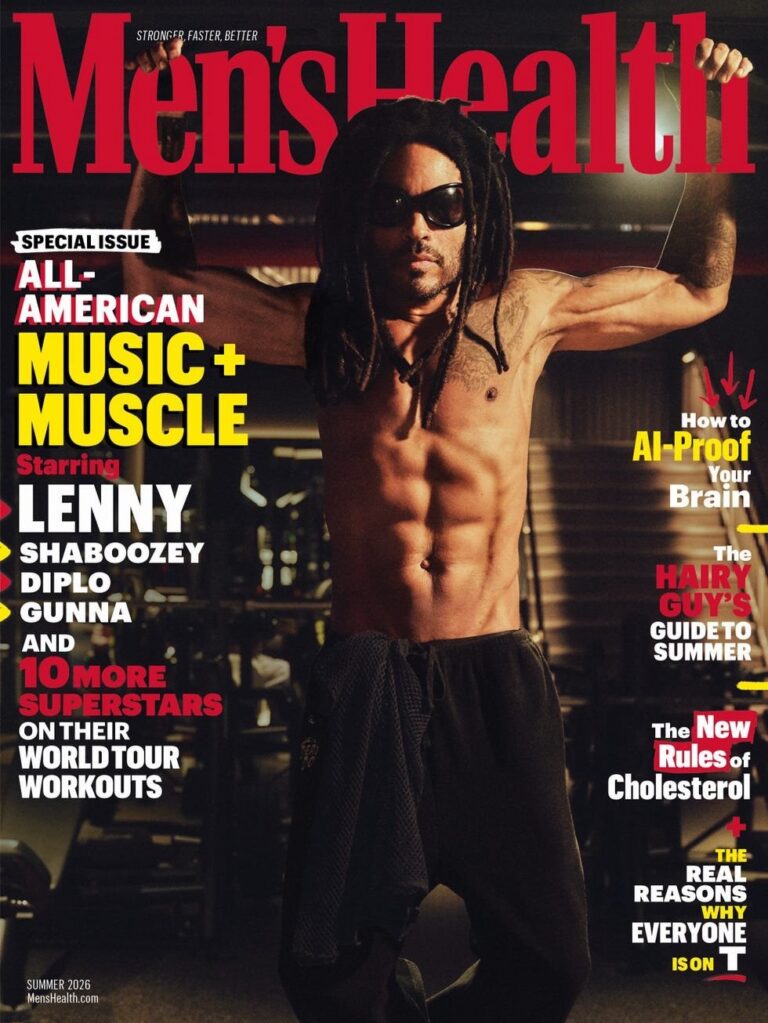
Lenny Kravitz is gracing the cover of Men’s Health Magazine, and honestly, we’re here for it. The legendary musician and actor continues to defy the odds when it comes to aging gracefully, proving that talent, style, and dedication to wellness know no expiration date. This cover moment celebrates a man who has remained a cultural icon across decades, consistently reinventing himself while staying true to his artistic vision.
Lenny Kravitz has always been more than just a pretty face—he’s a four-time Grammy Award winner who blends rock, funk, and soul into something uniquely his own. From his breakthrough in the ’90s to his continued relevance today, he’s shown Black artists and creatives how to build a legacy that transcends music. His approach to health, fitness, and self-care has become part of his brand, inspiring fans to invest in their own wellness journeys.
This Men’s Health cover is a reminder that excellence doesn’t have an age limit. For Black readers who’ve grown up watching Kravitz evolve, this moment feels like recognition of someone who paved the way for so many of us to dream bigger and live bolder.
Kim Scott, ex-wife of Eminem, attempted suicide on Saturday and was rushed to a Michigan hospital. According to dispatch audio obtained by BlkCosmo, emergency responders were called to her home in Chesterfield for a reported suicide attempt.
The 911 call detailed the nature of the emergency, with a caller explaining that Kim Scott had cut her wrist with a knife. First responders arrived on scene and transported her to the hospital for medical evaluation and care.
Video footage obtained by BlkCosmo captured the moment emergency personnel wheeled Scott from her home on a gurney and loaded her into the ambulance for transport to the hospital.
Scott and Eminem were married twice over the years, with both marriages ending in divorce. Their relationship has long been a subject of public interest, particularly given its references in his music over the decades.
This incident comes months after Scott faced legal trouble. In May, she was arrested on suspicion of operating a vehicle while intoxicated following a crash into a parked car, also in Chesterfield.
If you or someone you know is struggling or in crisis, help is available. Call or text 988 or visit 988lifeline.org.
Black women in Mississippi have long been ahead of the curve in seeing what it takes to create systems in this country that work for the greater good rather than the privileged few. From Fannie Lou Hamer, who forced the nation to confront the violence of disenfranchisement, to Ida B. Wells, whose fearless journalism exposed America’s racial terror, they have never waited for permission to name the truth. They have been at the forefront of national change for generations, and we should be listening to them now, because the next chapter of this country will depend on whether we finally build policies that help people not just survive, but thrive.
New polling from Springboard to Opportunities, The Highland Project, and Brilliant Corners Research Strategies shows what Black women in Mississippi are actually asking for. A staggering 90 percent of respondents say that economic conditions are worsening, and more than half report that their income is not keeping pace with the rising cost of living. They are not asking for extravagance. They are asking for breathing room. They want policies that help them live with dignity, take care of their families and create space for success alongside joy. The distinction matters, because when we talk about economic security only in terms of jobs, wages and spreadsheets, we miss what people are actually trying to build: a life that feels whole.
One of the most revealing findings is that having enough money to live comfortably scores higher for joy than for success. That may sound counterintuitive, but it makes deep sense. For Black women who are falling behind financially, money is not mainly about status. It is about peace of mind. It is about not having to choose between a student loan payment and groceries, between a child’s needs and your own rest, between making it through the week and making it through the month.
In other words, respondents are naming a gap between the life they feel they should live and the life that would actually make them feel good. That gap is narrowest around family and faith, the anchors of their lives. It is widest around money, where financial stability is more urgently tied to joy than to success, and around personal pursuits, which are seen as joyful but not always treated seriously.
These insights should reshape how we think about policy. Programs that provide economic relief are not simply meeting material needs. They are creating the conditions for joy. They are reducing stress, restoring dignity and making it possible for women to breathe without the toxic and constant weight of financial worry. If we want families to thrive, policy has to do more than keep people just barely above water. And we know that when Black women thrive, they never do so alone.
Getty images stock photo
Like so many seemingly intractable problems in this country, the solutions exist, but the political will does not. More than two-thirds of those polled say lawmakers do not listen to Black women when designing assistance programs. That should not surprise us. Black women have long been expected to carry their families, their communities and this country’s conscience through their political activism without being centered in the decisions that affect their lives. Too often, policy is built around harmful narratives: that people are poor because they did not work hard enough, budget well enough or want success badly enough.
But many Black women know better because they live the truth every day. A mother working for $7.25 an hour cannot simply “work harder” into financial stability. No amount of grit or elite-level budgeting can erase wages that do not cover rent, food, transportation, childcare or the other costs of raising a family. What Black women need is not more blame and unrealistic expectations. They need fair wages, direct support, affordable access to child care and systems that trust them to know what their families need.
The data also makes clear that too many women feel disrespected by our current systems of support. Forty percent said they felt disrespected navigating the social safety net, a figure that should trouble anyone who believes public programs should serve people with dignity. Any other system with a “D” grade would be considered a failure, and our leaders should pay close attention to the lived experience of those who actually use public benefits. When women must jump through endless hoops to get help, when paperwork replaces compassion and when systems treat need like a moral failure, the harm is not just administrative. It is emotional, spiritual and generational.
There are antidotes to the problem. Springboard to Opportunities runs the Magnolia Mother’s Trust, the country’s longest-running guaranteed income program, giving monthly cash payments to low-income Black mothers with no strings attached, along with support for planning and connection to community resources. It is a powerful example of the kind of policy Black women are asking for, because it starts from the simple premise that mothers know best what their families need, and they should be trusted to use resources in the ways that make the most sense for their lives and create the conditions for joy.
Black women understand that success is holistic. It is spiritual. It is relational. It is grounded in family, faith and the ability to live without constant financial strain. That is not a narrow definition of well-being. It is a fuller one than many public policies are designed to recognize.
So if policymakers are serious about helping families thrive, they need to start by listening. Listen to Black women when they say financial stability creates joy. Listen when they say the safety net should not feel degrading. Listen when they say economic policy is not just about survival, but about the right to rest, to care, to hope and to enjoy life. Joy is not meant to be a crumb, especially in a country where we have enough for everyone to feast.
Aisha Nyandoro is the founder and CEO of Springboard to Opportunities, a Mississippi-based nonprofit working to end generational poverty.
Black Don’t Crack: Angela Bassett, 67, Looks Absolutely Unbelievable at Lincoln Center—Shows How a Real Grown Woman Dresses
Honey, throw your entire vanity cabinet in the trash, because the ultimate Queen of Agelessness has officially shut down New York City! We’re talking about the legendary, Oscar-nominated icon Angela Bassett, who looked completely breathtaking at the star-studded opening night of The Whoopi Monologues at Lincoln Center’s Mitzi E. Newhouse Theater. She is out here putting the entire industry on notice, and honestly? We’re here for it.
Angela Bassett attends “The Whoopi Monologues” Opening Night at Mitzi E. Newhouse Theater on July 13, 2026 in New York City. (Photo by Theo Wargo/Getty Images)
At 67 years young, Angela Bassett didn’t just walk the red carpet—she gave a masterclass in how a true, elegant, high-society grown woman carries herself. While younger starlets are stepping out in barely-there designs to grab quick clicks, Auntie Angela showed up wrapped in pure class and killer style. This is Black excellence on full display, and we’re taking notes.
The Blueprint: Classic, High-Contrast Elegance
Let’s break down this absolute serve. Angela pulled up rocking a flawless, high-contrast monochrome two-piece ensemble that screams sophistication.
On top, she wore a beautifully structured, sleeveless black top adorned with bold, 3D white floral embellishments that gave the look an ultra-expensive, dimensional texture. The piece paired seamlessly with a flowing, high-waisted maxi skirt in a striking black-and-white graphic print that moved beautifully as she posed for cameras. The tuxedo blazer aesthetic mixed with flowing fabric created that perfect balance—powerful yet graceful. She topped it off with elegant black heels and chic, tinted glasses, keeping her hair in a sleek, voluminous shoulder-length blowout.
Angela Bassett poses at the opening night of “The Whoopi Monologues” at Lincoln Center’s Mitzi E. Newhouse Theater on July 13, 2026 in New York City. (Photo by Bruce Glikas/WireImage)
How to Mix Prints Like a Pro: Mixing florals with bold graphic lines is usually a risky move that can end up looking chaotic. But because Angela kept the entire color palette strictly limited to black and white, the patterns complement each other perfectly instead of fighting for attention. That’s how you create a statement piece that feels intentional and refined.
The Internet Has Fallen to Its Knees: “She Looks 35, Honey!”
The second the high-definition red carpet arrivals hit the internet, the comment sections completely exploded into pure adoration. Nobody could believe this woman is heading toward her late sixties. The skin, the grace, the undeniable presence—it’s giving timeless Black beauty and radical confidence.
Angela Bassett attends “The Whoopi Monologues” Opening Night at Mitzi E. Newhouse Theater on July 13, 2026 in New York City. (Photo by Theo Wargo/Getty Images)
“Hold on—Angela Bassett is sixty-seven years old looking like she’s thirty-five and easily running circles around girls in their twenties?! The skin, the arms, the class… she is the ultimate standard of a grown woman, honey!” one viral user screamed, racking up tens of thousands of agreement retweets. Another fan added, “This is how you command a room without showing every inch of your body. Elegant, stylish, and age-appropriate while still being incredibly powerful. Bow down!”
With The Whoopi Monologues shaping up to be one of the hottest tickets in Off-Broadway theater this season, Angela made sure opening night was one for the history books. We’re keeping our eyes locked to New York red carpets to see what look she drops next. This is how you celebrate your skin, your body, your freedom to express style on your own terms—and that’s what real grown-woman energy looks like.
Are you loving Angela’s sophisticated style as much as we are? Let’s talk about it in the comments below!