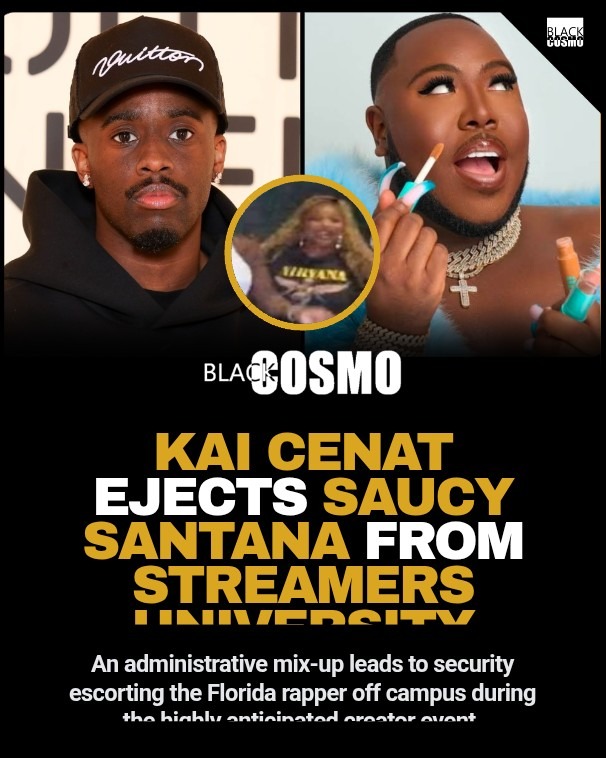
The digital ecosystem thrives on direct boundaries and respect for the spaces creators build from the ground up. This reality became highly apparent at the second annual Streamers University when Saucy Santana was kicked out by Kai Cenat after a serious breakdown in communication. The incident occurred on the campus of the highly anticipated creator camp, where Lizzo, who serves as a guest faculty member this semester, brought the Florida rapper along as an uninvited guest. What was supposed to be a collaborative weekend of networking and content creation turned into a tense standoff with security, revealing the strict rules governing these modern creative hubs.
For those watching from the outside, the clash reveals the growing pains of a maturing creator economy. Lizzo, whose presence as an instructor was meant to elevate the curriculum, arrived on campus with Saucy Santana in tow. But Streamers University operates on strict protocols, and unauthorized visitors are quickly flagged. Security personnel intercepted Santana, requesting his departure, which led to an immediate verbal disagreement. Lizzo interceded, and the conversation turned tense when an officer made an unsolicited remark regarding her age. Visibly displeased, she demanded the guard keep his hands off her. While the situation escalated rapidly on-site, the core issue came down to basic administrative clearance.
The Rules of the Campus
Kai Cenat was quick to address the situation directly on his broadcast to prevent rumors from distorting the facts. He clarified that the issue was not a personal grievance against either artist but a matter of structural boundaries. Cenat explained that he had previously informed Lizzo’s team about the event’s restricted nature, emphasizing that even high-profile guests must follow protocol. He stated that he saw Santana on campus and realized the message had not been conveyed properly. Cenat stated that the breakdown lay entirely with Lizzo’s management team, which failed to inform her that unapproved guests were prohibited. He explicitly defended the singer, stating she was innocent in the matter.
The incident points to a broader shift in how online creative spaces operate. Streamers University is no longer just an informal gathering of internet personalities. It has grown into a highly structured training ground with substantial backing, brand partnerships, and safety liabilities. When an unapproved visitor enters the premises, it compromises the security framework established for the students and faculty. In this context, the decision where Saucy Santana was kicked out by Kai Cenat is less about celebrity friction and more about standard operational procedure. Running a large-scale event requires uniform enforcement of rules, regardless of the guest’s social standing.
Navigating Celebrity and Security
The physical confrontation with security guards introduced an uncomfortable element to the evening. Accounts from the scene show that as guards escorted Santana away, the dialogue between Lizzo and the security staff deteriorated. The age-related comment directed at her was unprofessional and shifted the focus from a simple policy enforcement to a personal dispute. When public figures participate in community-driven events, clear communication between their respective management teams remains essential to prevent these uncomfortable public spectacles.
Cenat’s reaction to the event showed a level of professional maturity. Rather than allowing the narrative to spin out of control, he took immediate accountability for his team’s actions while standing firm on his event’s regulations. He made it clear that while he respects Lizzo and her career, the boundaries of Streamers University must be honored. This approach protects the integrity of the project, which aims to provide genuine mentorship to emerging creators without the distractions of unmanaged celebrity entourages.
Building a Professional Creator Space
The evolution of creator-led events requires a new standard of professionalism from everyone involved. High-profile artists are accustomed to a certain level of deference and access in traditional Hollywood spaces. But in the creator economy, the hosts are often young entrepreneurs who have built their platforms independently. They set the rules, control the access, and demand the same respect that traditional media executives receive. Lizzo’s participation as faculty is a distinct cultural alignment. In this space, she does not adjust to the format; she defines her role within it, while creators like Kai Cenat establish the boundaries of the environment. The brief conflict at Streamers University serves as a case study in this cultural alignment, showing that the power balance has shifted. Celebrities entering these spaces must operate within the guidelines defined by the creators themselves.
As Streamers University continues its curriculum, the focus returns to the students and the craft of content creation. The administrative error that led to the confrontation has been resolved, with Cenat publicly clearing Lizzo of any intentional wrongdoing. The incident will likely serve as a reminder for management teams to thoroughly vet event guidelines before arrival. For the culture, it remains a clear demonstration that independent platforms have the authority to enforce their own boundaries, ensuring that respect for the platform remains paramount.