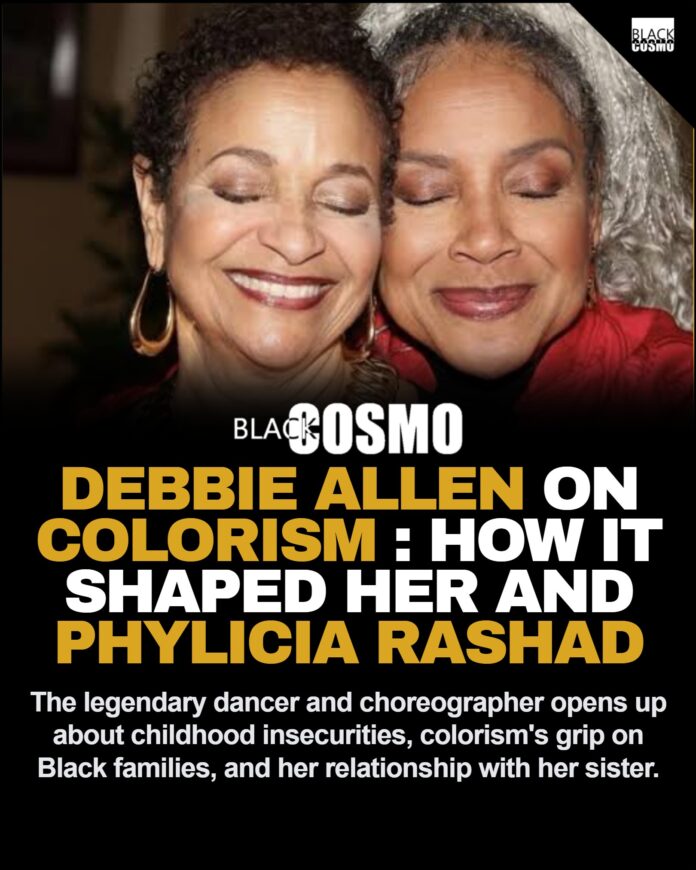
Debbie Allen has spent decades shaping American entertainment as a choreographer, director, producer and performer. But in a recent conversation about colorism, she turned to a more personal chapter of her life, discussing how skin-tone bias affected her childhood and her relationship with her sister, Phylicia Rashad. Her description of the experience as “colorism foolishness” brought a deeply personal dimension to a subject that continues to influence how Black people are perceived, treated and valued.Colorism, the preferential treatment of people with lighter skin over those with darker complexions, has a long and complicated history within Black communities. Its roots are closely tied to slavery, European beauty standards and social hierarchies that attached greater privilege to proximity to whiteness. Those standards did not disappear with emancipation. They evolved, finding expression in entertainment, advertising, romantic relationships and, at times, the most intimate setting of all: the family.
Allen’s remarks are significant because they bring that history into a personal conversation about sisterhood. Colorism is often discussed through broad cultural patterns, including the underrepresentation of darker-skinned women in leading roles and the persistent preference for lighter complexions in beauty and fashion. Yet its effects can be more difficult to confront when they emerge within families, where affection and belonging are expected to exist beyond such distinctions.
For children, these experiences can be particularly difficult to understand. Differences in the attention, praise or treatment family members receive may be noticed long before a child has the vocabulary to identify the bias behind them. The consequences can extend beyond self-image, influencing confidence, sibling relationships and the way individuals come to understand their place within their own communities. The existence of such dynamics does not necessarily mean that a family lacks love. It does, however, raise difficult questions about how inherited attitudes can shape relationships, sometimes without those involved fully recognizing their impact.
The relationship between Allen and Rashad adds another dimension to the discussion. Both women have established formidable careers in entertainment, earning recognition for their talent, discipline and contributions to the performing arts. Their professional achievements, however, do not place their personal histories beyond scrutiny or shield them from the social pressures that affect other Black families. Success and painful childhood experiences can coexist, just as love between siblings can exist alongside unresolved differences in how they experienced the world.
The entertainment industry provides a broader context for understanding why these conversations remain relevant. For generations, casting decisions, promotional campaigns and beauty standards have influenced which complexions receive the greatest visibility and commercial appeal. Lighter-skinned performers have often benefited from preferences that leave darker-skinned talent fighting for comparable recognition. These patterns have never been absolute, and Black performers across the colour spectrum have achieved extraordinary success. Nevertheless, questions about representation, opportunity and the standards used to define conventional beauty remain central to discussions about equity in entertainment.
What makes colorism particularly difficult to challenge is that it is not always expressed through overt hostility. It can appear in seemingly casual comments about complexion, comparisons between siblings, assumptions about attractiveness or praise that consistently favours lighter skin. Such attitudes may be repeated across generations, even by people who would reject the idea that they discriminate against anyone. Recognizing that distinction matters: acknowledging the influence of colorism does not require reducing every family interaction to prejudice, but it does require taking seriously the ways bias can become normalized.
Allen’s willingness to discuss her experience also raises an important question about what accountability looks like within families and communities. Honest conversations about colorism need not become exercises in assigning blame or publicly judging individual relationships. They can instead create opportunities to examine the standards people inherit, the assumptions they repeat and the damage those attitudes may cause. That process requires more than acknowledging that colorism exists. It calls for a willingness to question the beliefs and behaviours that allow it to persist.
There is also a reason these conversations resonate beyond the people directly involved. Many Black women have described navigating beauty standards that rank complexions, facial features and hair textures according to narrow ideals. Others have encountered colour-based assumptions in workplaces, schools, social settings or their own households. Personal accounts from prominent figures can bring greater visibility to these experiences, but they should also encourage a wider examination of the cultural practices that sustain them.
Allen’s reflections offer a reminder that public achievement does not erase private history. Her career and Rashad’s accomplishments are part of their individual legacies, but the conversation about colorism points to a larger cultural issue that extends well beyond two sisters. The challenge is not simply to condemn colour-based prejudice when it becomes visible. It is to recognize how deeply such attitudes can become embedded in everyday life, including among people who care for one another.
Ultimately, confronting colorism requires honesty about its history and its present-day consequences. It also requires a willingness to reconsider the standards by which beauty, worth and social acceptance have been measured. When those conversations begin within families, they can be uncomfortable. But avoiding them does not make the underlying attitudes disappear. Addressing them openly is an important step toward ensuring that skin tone is no longer treated as a measure of anyone’s value.
Editor’s Note: For further reading on the history of colorism, Black identity and the cultural forces that shape perceptions of beauty, explore our curated collection of Black literature on colorism, identity and family dynamics.