
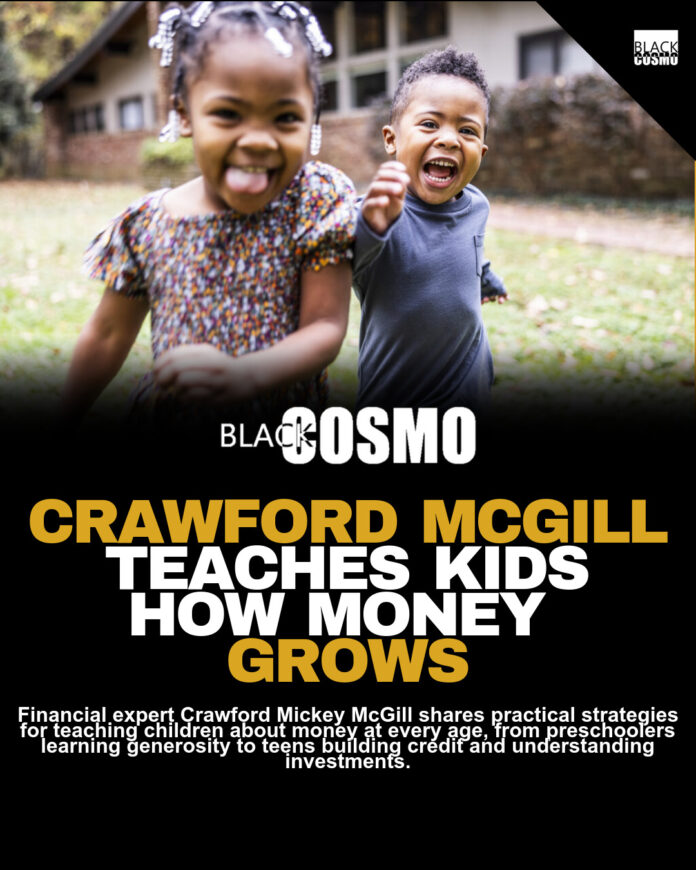
Every tap-to-pay transaction, $3 ATM fee, and cash-stuffed birthday card offers a teaching moment. October marks Financial Planning Month, bringing renewed focus to financial education for young people. The Root recently spoke with Crawford Mickey McGill, CEO of Houston-based Reveal Wealth Strategies, about how parents can share money lessons with children at different ages. His core message is simple: parents don’t need to be financial experts to start these conversations. They just need to be willing to have them.
Understanding money management is particularly important in Black households. A 2021 Census report found that Black Americans hold less than 5% of the country’s wealth. For many families, learning about finances happens alongside their children. McGill’s approach emphasizes that Financial Planning Month isn’t just about numbers—it’s about breaking generational cycles and building pathways to stability.
Breaking the Silence Around Money
Conversations about money have long been taboo in many households. McGill encourages families to push past that discomfort, even when discussing mistakes. “Your current situation doesn’t have to be your family’s future situation,” he said. That shift in perspective opens space for honest dialogue rather than shame.
Introducing Money to Young Children
Financial lessons can start early, well before kids grasp the difference between quarters and dimes. Teaching sharing, gratitude, generosity, and delayed gratification builds a foundation for money management. But lessons aren’t always verbal. McGill recalls his father tipping hotel housekeepers and stopping to help stranded drivers. “Kids emulate what they see, not always what they’re taught,” he said. Children absorb financial values through observation.
School-Age Children Learn Through Practice

When birthday money and allowances arrive, parents have concrete opportunities to teach saving and spending. McGill’s family followed a 50-10-40 split: 50% to savings, 10% to tithing or giving, and 40% to spending. The exact percentages matter less than establishing the habit.
Real-world scenarios work best. When McGill’s daughter ran a lemonade stand, he charged her $3 for supplies, teaching her about cost of goods sold. “Anything can be a lesson,” he said. Those early entrepreneurial ventures introduce kids to profit margins and pricing without feeling like homework.
Preteens and Teens: Building Credit and Decision-Making

Digital payment technology complicates spending visibility for older kids. Tap-to-pay feels painless, making it easy to lose track of how much is going out. McGill recommends showing older children their account balance before and after purchases. Apps like Greenlight or BusyKid can help, though they require ongoing parental attention. These aren’t set-it-and-forget-it tools—parents need to review spending and watch for fees.
Credit building should begin thoughtfully. McGill added his daughter as an authorized user on his card at 16. This allowed her to build credit history while managing emergencies, but only because he maintained a strong payment record and kept the balance low. Late payments and high usage damage both scores. It’s a tool that works only with discipline.
Parents should understand the difference between responsible credit building and identity theft. Opening credit fraudulently in a child’s name destroys their financial foundation before they even start. “You are destroying their credit before they get a chance to even approach the world,” McGill warned.
Teaching Teens How Money Grows

Once teens grasp spending and credit, mock investment portfolios introduce the concept of growing wealth. McGill recommends starting with a virtual $10,000 and having them invest in companies they know—sneaker brands, fast-food chains, retailers. Before each purchase, have them research what the company does, how it makes money, why people buy from it, and its long-term prospects.
Free tools like HowTheMarketWorks.com and the SIFMA Foundation’s Stock Market Game use real market data. McGill suggests tracking a portfolio for at least six months so teens experience both gains and losses. “The goal isn’t to teach kids how to pick stocks—it’s to teach them how to think like owners,” he said. That ownership mentality shifts their entire relationship with money.
Young Adults and Financial Independence
When young adults earn their first paychecks, McGill urges them to save before committing to car and housing payments. If an employer offers a 401(k) match, take it. That’s free money. If a 401(k) isn’t available, automated transfers to a high-yield savings account create consistent savings without requiring willpower each month.
Wealth Beyond Money
For McGill, wealth extends beyond what one generation leaves the next financially. He describes “transformational wealth” as the knowledge and skills passed down that help relatives and others recognize and seize opportunities. “Each one teach one,” he said. That philosophy represents the real inheritance—not just dollars, but the wisdom to build them.
★TR★