

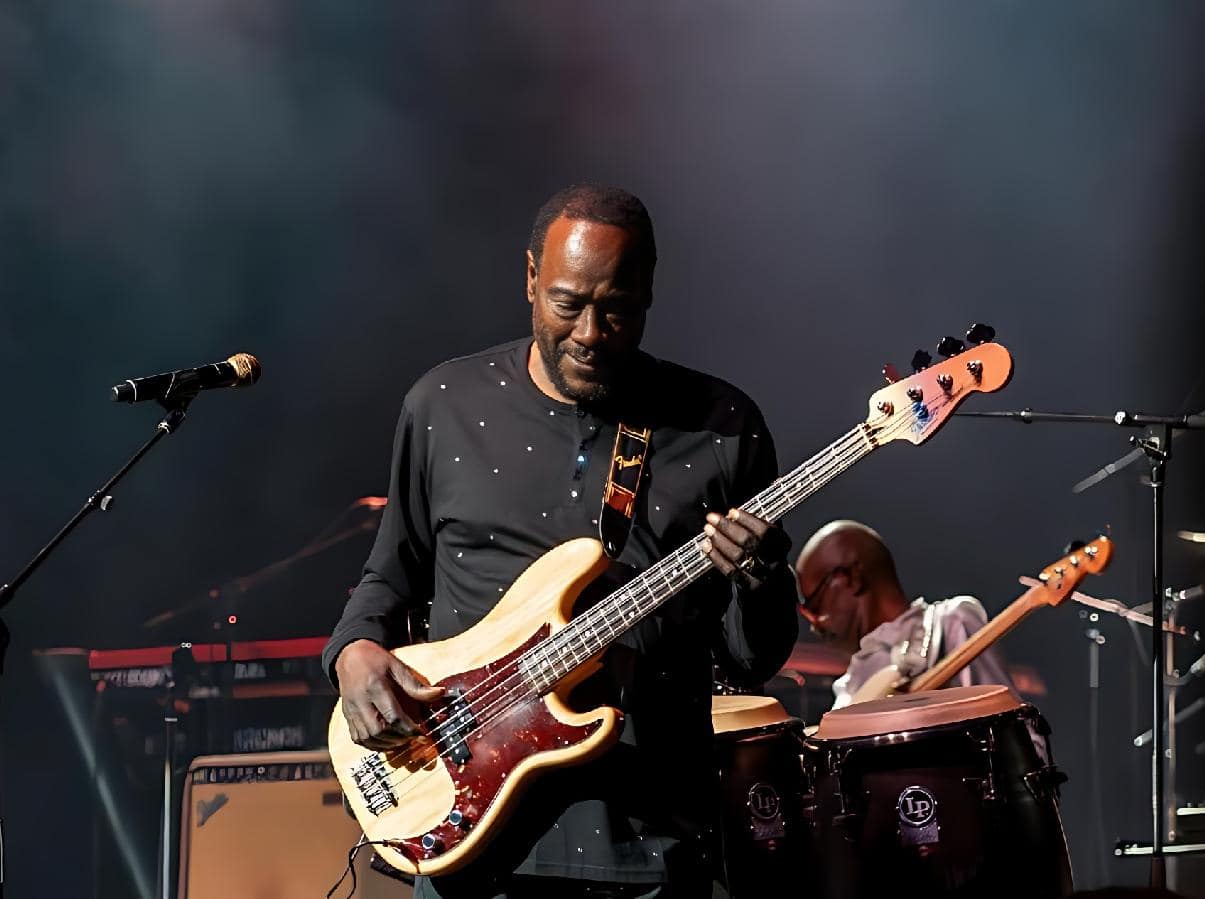
Ronald LaPread, the founding Commodores bassist whose grooves helped shape some of Motown’s most durable records, has died at 75. His daughter, producer Soraya LaPread, confirmed the news after what multiple reports described as a sudden medical event in Auckland, New Zealand.
For anyone who knows the Commodores beyond the biggest singalong hooks, Ronald LaPread was part of the group’s engine room. He was not the flashiest face in the lineup, but the bass work mattered. It gave songs like “Brick House,” “Easy,” “Zoom,” “Three Times a Lady,” “Still” and “Nightshift” their weight, swing and staying power.
LaPread was born in Tuskegee, Alabama, and came up with the musicians who would become the Commodores while they were students at Tuskegee Institute. Alongside Lionel Richie, Thomas McClary, Walter “Clyde” Orange, William King and Milan Williams, he helped build a band that moved easily between funk, soul, pop and slow-burn ballads.
That range is part of why the Commodores lasted. They could lean into a hard groove one minute and turn around with a tender radio staple the next. LaPread’s role in that balance often sat in the background, which is how bass players tend to be remembered, if they are remembered fairly at all. But listen closely and it is there, steady and unshowy, like the difference between a good song and a record that actually lives with people.
From Tuskegee to Motown’s top tier
After signing with Motown, the Commodores grew from a college-born group into one of the label’s major success stories. Their late 1970s run was especially strong, with albums including “Commodores,” “Natural High” and “Midnight Magic” helping define the era.
LaPread played on 11 Commodores albums and remained in the band through 1986. That means he was there for the major rise, the crossover years and the transition that followed Lionel Richie’s departure. Even as the spotlight shifted, the band kept going, and 1985’s “Nightshift” became one of its most resonant later hits, winning a Grammy and honoring Marvin Gaye and Jackie Wilson with real feeling.
There is a reason groups like the Commodores still hold up. The songs were polished, yes, but they also had muscle. Bass lines like LaPread’s gave them shape. In another context, people might call that a curated reading list for the ears, a catalog that keeps revealing new details the longer you sit with it. Different records for different moods. A little romance, a little grit, a little cultural meditation without ever sounding academic.
A quieter life in New Zealand
After leaving the Commodores in the mid-1980s, LaPread relocated to New Zealand, where he lived for roughly four decades. It was a sharp shift from the visibility that comes with being part of one of America’s best-known R&B acts, and by most accounts, he chose a more private life there.
Even so, the music never really stopped following him. The Commodores’ catalog has remained part of the soundtrack for cookouts, family reunions, old-school radio and those nights when somebody pulls out a portable espresso after dinner and insists the playlist needs “real music.” That kind of longevity cannot be manufactured.
His passing also landed with particular weight in Tuskegee, where local leaders remembered him as one of the city’s distinguished sons. The connection makes sense. The Commodores are part of Tuskegee’s cultural story, and LaPread was one of the musicians who carried that story well beyond Alabama.
The musicians who hold the center
There is often a tendency, years later, to flatten groups into one or two famous names. But bands do not work that way. Not really. The chemistry comes from everybody, especially the players who hold the center while someone else takes the spotlight.
That is where LaPread’s legacy sits. In the pocket. In the discipline. In the part of the arrangement that lets the rest bloom, whether the song feels dressed up in a tuxedo blazer kind of elegance or loose enough for pure dance-floor release. His playing was never about chasing attention. It was about serving the song.
And for Black audiences especially, that kind of musicianship means something. It is part of a longer freedom struggle inside American music, where craft, memory and community keep meeting each other in the groove. Not every legacy needs grand mythology. Sometimes it is enough to say the work was excellent, the records lasted, and people felt it.
Fans have been revisiting favorite songs, sharing clips, memories and quiet thank-yous. Some are discovering details they missed the first time around. Others are just pressing play again, maybe while stacking meal prep containers in the kitchen or throwing on gold hoop earrings before heading out, letting the soundtrack do what it has always done.
LaPread is survived by his wife, two sons and his daughter Soraya. His name may not have always led the headline, but his contribution to the Commodores’ sound is easy to hear and hard to replace.
★e★