**The Supreme Court Police Stops Ruling: A Step Forward in Understanding**
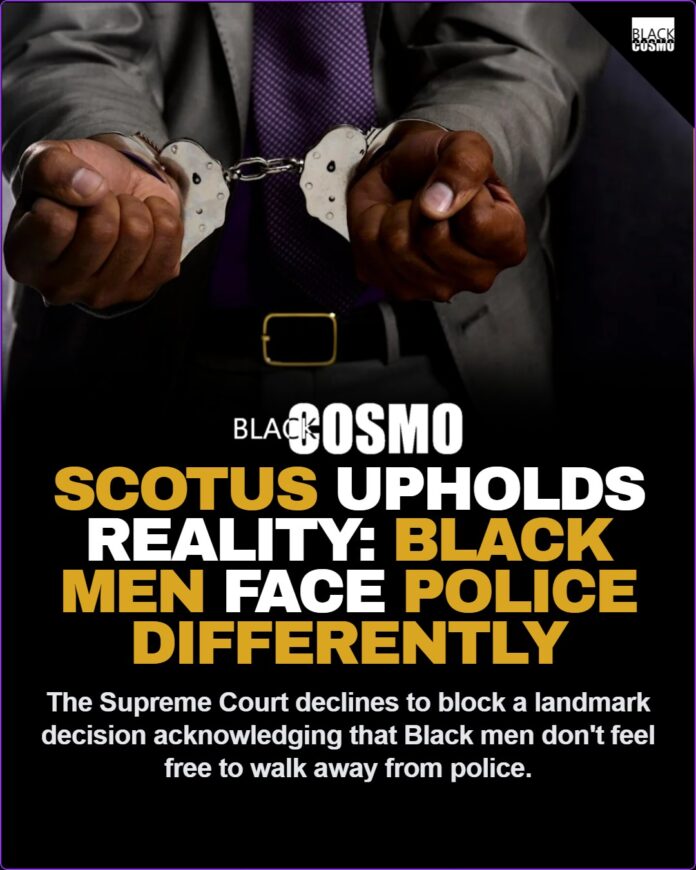
As we navigate our daily lives, it’s easy to take for granted the small moments that shape our experiences with law enforcement. But when it comes to police stops and interactions with Black men, the stakes are high. Recently, the Supreme Court declined to review a lower court ruling that found Black men may experience police encounters differently than their White counterparts. This decision lets stand a crucial acknowledgment of the unique challenges Black men face during police stops, and it’s a significant step forward in understanding these complexities.
The original ruling, which has been met with both praise and criticism, highlights the need for more nuanced discussions about racial profiling and law enforcement interactions. While some may see this as a minor decision, it holds weight for our community, who knows all too well the very real experiences Black men have with law enforcement. By recognizing these differences, we’re moving closer to acknowledging the systemic issues that perpetuate inequality.
But what does this mean for us? How can we use this moment to continue pushing forward on this issue? One thing is clear: our voices matter. As Black men and women, we’ve been saying it all along – our experiences are valid, and they deserve to be heard. This decision may not have solved the problem of police brutality or systemic racism, but it’s a recognition that these issues exist in the first place.
The Supreme Court ruling acknowledges the differences in how Black men experience police stops. This is not about special treatment or leniency; it’s about acknowledging that our experiences are not the same as those of others. It’s time for us to use this momentum to continue pushing forward on this issue.
What does this mean for our community? For one, it means we have a momentary reprieve from some of the more egregious forms of racial profiling. But it also means we must remain vigilant and continue to push for change. We can’t afford to become complacent in the face of progress.
We know that police stops can be a traumatic experience, especially for Black men. This ruling is not about absolving law enforcement of their responsibilities or excusing racist behavior. Rather, it’s about acknowledging the complexities of these interactions and working towards solutions that prioritize community trust and understanding.
As we move forward, let’s use this moment to continue amplifying our voices. We must push for policies and practices that address systemic racism and promote accountability within law enforcement. It’s time for us to harness the energy around this issue and channel it into meaningful action.
In closing, this decision marks an important step towards acknowledging the complexities of police stops and racial profiling. But let’s be clear – we still have work to do. As Black men and women, we must continue to hold law enforcement accountable and push for policies that prioritize community trust and understanding. The fight for justice is not over yet.