
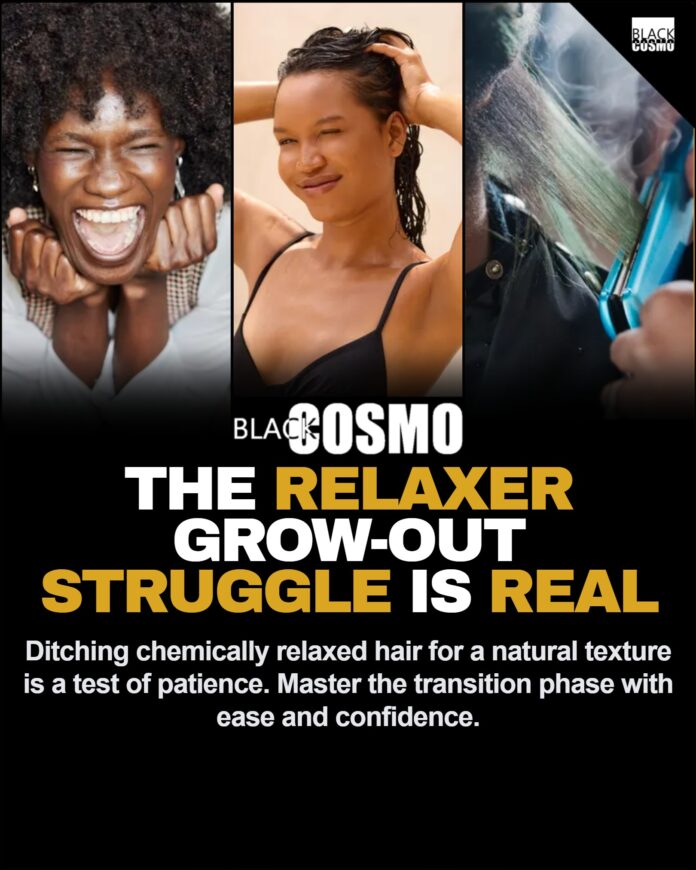
The decision to transition back to your natural hair texture is rarely simple. In her latest breakdown for MadameNoire, writer Shannon Dawson unpacks why the transition is such a test of endurance. Navigating the relaxer grow-out struggle means managing two entirely different hair textures at the same time, which often leads to frustration and breakage if you do not know what you are doing. Caring for new growth alongside processed, chemically straightened ends is a delicate balancing act. Without a clear plan, many women end up losing length and experiencing severe shedding before they can even enjoy their natural curls.
According to experts highlighted by Shannon Dawson, the secret to surviving this awkward phase lies in protecting the hair at its weakest point and maintaining a meticulous routine. It is all about preserving the health of your scalp and strands while you let your natural texture reclaim its space. When you stop relaxing your hair, you are dealing with two entirely distinct structural profiles. If you do not change your daily practices, the transition can quickly turn into a frustrating ordeal. Fortunately, the right approach makes the entire transition manageable.
1. Identify Your Line of Demarcation and Build a Strong Wash Day Routine
First, the key to transitioning without losing your hair is preventing breakage where your relaxed and natural textures meet. This meeting point is known as the line of demarcation. Design Essentials experts point out that this is the weakest area of your hair. To protect this fragile boundary, you must keep your strands heavily moisturized and handle them with care.
A consistent, seven-day wash cycle is your first line of defense. Wash your hair every week using a high-quality shampoo followed by a deep conditioner. To help lock in moisture, use a hooded dryer or a hair steamer during your deep conditioning step. This opens the hair cuticle, allowing the product to penetrate deeply. Pair this with a nourishing leave-in conditioner to keep your strands hydrated.
This deep hydration is critical because chemical relaxers fundamentally alter your hair structure. Cosmetic chemist Erica Douglas explained that relaxers break disulfide bonds to loosen the natural curl pattern. This chemical process permanently weakens the hair strands. To combat this weakness, use bond-building products like the Olaplex No. 5 Hydrating Curl Conditioner or the Redken Acidic Bonding Curls Conditioner to support your hair during this transition.
2. Detangle With Patience and Section Your Hair
Detangling is another critical crossroad where many people lose their hair. Because new growth is textured and relaxed ends are straight, they easily tangle and form knots. If you rush through this step, you will cause unnecessary shedding and breakage.
To detangle safely, always use a wide-tooth comb and work your way from the ends up to the roots. Never start detangling at the roots, as this drags knots downward and creates tight tangles that snap the hair. Sectioning your hair is the best way to keep the process manageable. As noted by experts at Hairlicious, parting your hair into six to eight distinct sections makes detangling much easier and keeps you from feeling overwhelmed. Never speed through detangling, especially when your hair is wet and at its most vulnerable.
3. Decide Between a Gradual Transition and the Big Chop
At some point, you must decide how you want to handle the physical transition. You can either cut your hair gradually or opt for a big chop. A big chop involves cutting off all of your chemically processed hair at once, allowing you to embrace your natural curls immediately. This is a bold, clean start that eliminates the relaxer grow-out struggle of managing two textures.
If you prefer to keep your length, you can transition gradually. This method requires trimming small amounts of your relaxed ends every six to eight weeks while letting your natural hair grow in. Still, you cannot avoid the scissors forever. Stylist Brendnetta Ashley explained that as your natural hair grows, your straight ends become increasingly delicate. Because those chemically straightened ends have been on your head the longest, they are weak and prone to snapping. Regular trims are necessary to keep the line of demarcation from splitting further up the hair shaft.
4. Avoid Direct Heat and Choose Smart Protective Styles
During the transition phase, it is tempting to use flat irons or blow dryers to force your two textures to blend. Relying on excessive direct heat is a mistake. High heat weakens the line of demarcation, making your hair snap and break off.
Instead, opt for protective styling to minimize daily manipulation. Styles like flat twists, braid-outs, perm rod sets, and low buns keep your ends protected and reduce daily wear and tear. You can also use extensions, sew-ins, or box braids to give your hair a rest. When wearing these styles, make sure they are not installed too tight. Keep your scalp moisturized and avoid putting too much tension on your edges.
Protecting your hair while you sleep is another essential step. Cotton pillowcases absorb moisture from your hair and cause friction that leads to breakage. Wrap your hair in a silk or satin scarf before bed, or sleep on a satin pillowcase to preserve moisture and keep your hair smooth overnight. Consistency in your night routine will help you retain your length.
Editor’s Picks: As you transition your hair care, transition your overall lifestyle with our curated essentials. Dive into deep stories of self-discovery, step out in style with high-end luxury fashion, keep your space clean with a budget-friendly spin mop, and tune out the world during wash day with high-fidelity active noise cancelling headphones.