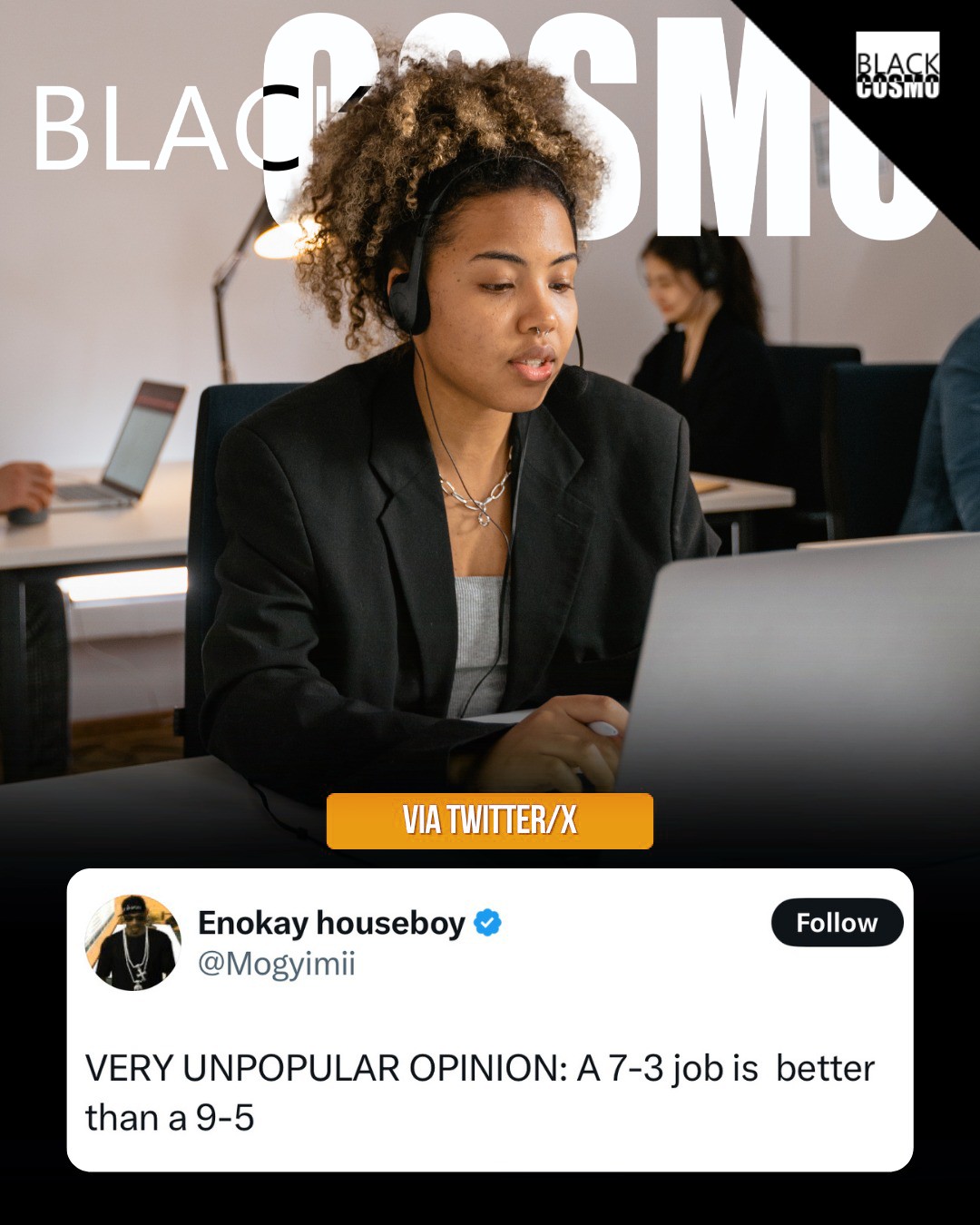
The conversation on the timeline is buzzing, and it’s not just about climbing the corporate ladder but about when you clock out. Black Cosmopolitans are actively discussing a shift in work-life dreams, posing the question: Is the 7 AM to 3 PM workday now the ultimate goal, surpassing the long-standing 9 to 5? This isn’t just about squeezing more into your day; it’s about reclaiming time and reshaping our daily rhythms to fit our lives, not the other way around.
The allure of a 7 AM to 3 PM schedule is understandable. Ending the workday at 3 PM opens up a significant chunk of the afternoon for personal pursuits, whether that’s catching up on family responsibilities, hitting the gym with daylight still in the sky, or diving into creative projects and side hustles before the evening rush. This earlier finish can mean avoiding the dreaded rush hour traffic twice a day, making commutes smoother and more predictable. It’s particularly appealing for early risers and those who find their peak productivity happens in the morning. Plus, managing childcare, school runs, and appointments often becomes less of a logistical headache with an earlier end to the traditional workday.
However, the 9 to 5 still commands a strong presence for valid reasons. It remains the standard for many industries, aligning with typical business hours, team collaboration peaks, and essential services like banking and appointments. This established structure often makes job transitions smoother and ensures you’re available for those midday meetings that are the backbone of many corporate environments. For those who aren’t natural early birds, the 9 to 5 allows for a more gentle start to the day, avoiding the pre-dawn wake-up calls that a 7 AM start might demand.
It’s also crucial to acknowledge that for many in our community, particularly those in essential services like healthcare, education, and frontline industries, early start times are already a reality, often without the benefit of choice or flexibility. For them, the debate isn’t about preference but about the structural limitations of their roles. For those who do have the agency to choose their hours, the decision often boils down to what truly enhances their overall quality of life – is it the freedom of an extended afternoon, or the structured rhythm that allows for consistent morning energy and mid-day collaboration?
Ultimately, the modern work landscape is pushing us to rethink not just how much we work, but how our work fits into the full spectrum of our lives. The appeal of the 7-3 isn’t just a scheduling tweak; it’s a cultural shift towards prioritizing well-being and personal time, even within the confines of a structured job.
https://www.facebook.com/100063965143458/posts/1205982181543942
Want to make a statement?
Leave a comment about this here!
[efb_feed fanpage_id=”BlackCosmopolitan” words_limit=”25″ post_limit=”1″ skin_id=”115758″ cache_unit=”1″ cache_duration=”days” live_stream_only=”0″ load_more=”0″ links_new_tab=”1″ show_like_box=”0″]
Disclaimer:
For Education and discussion purposes. Please note no copyright infringement is intended, was recorded on BlkCosmo’s own equipment, and we do not own nor claim to own any of the original recordings used in this video and intend to use this as ‘fair use’.