
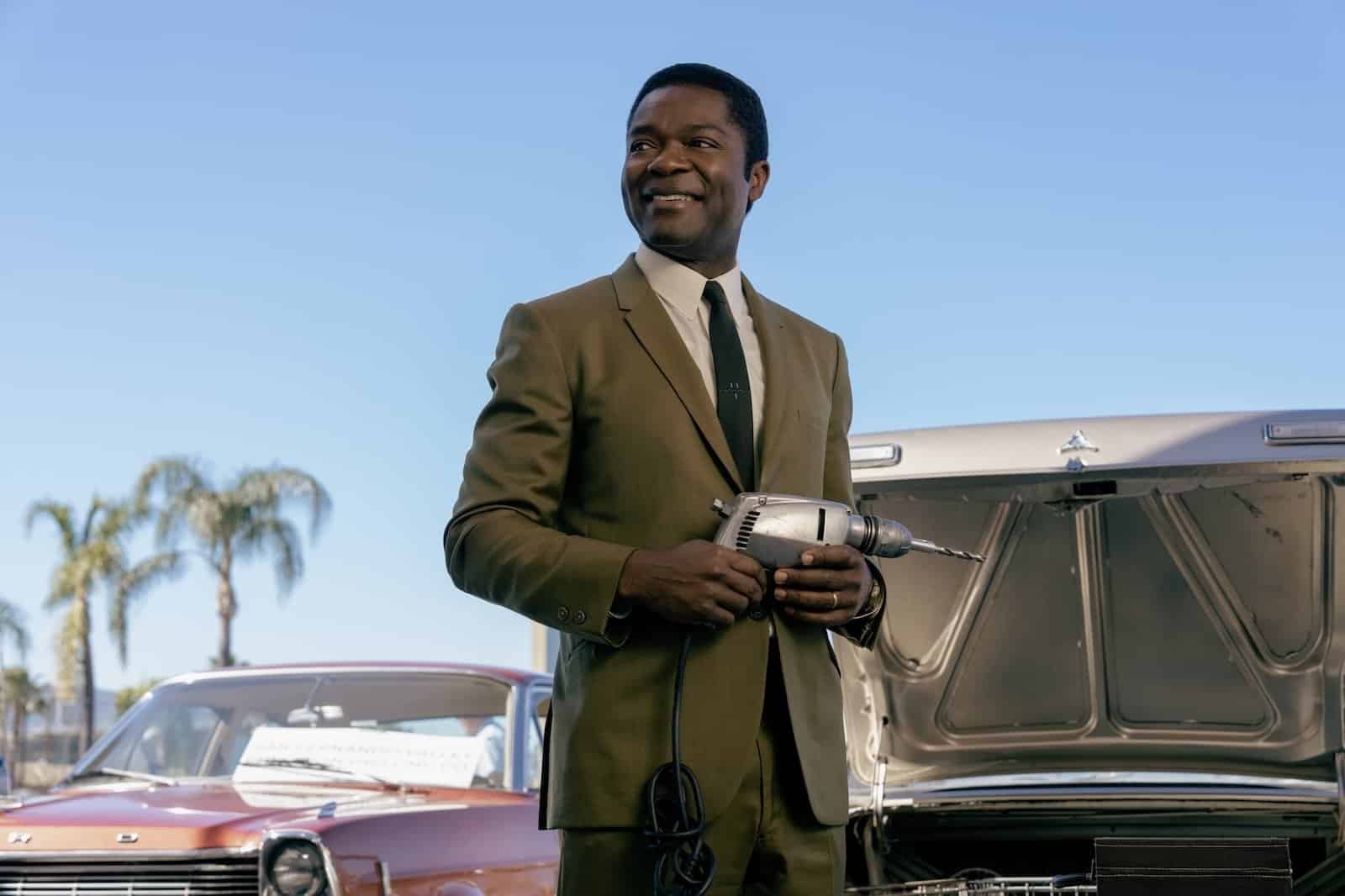
David Oyelowo‘s recent comments were supposedly a call for Black unity. Instead, they sounded like a lecture from a British actor who built his career playing an iconic Black American on screen, complete with the financial rewards that come with it.
On the One54 Africa podcast, David Oyelowo addressed the conversation about Black British actors taking roles from Black Americans, sparked by Druski’s viral skit. Rather than engage directly, he pivoted: “We’re not talking about the art of acting. We’re talking about scarcity. We’re talking about the fact that there’s not much pie.”
He’s not wrong about the scarcity. Quality roles for Black actors remain limited in mainstream cinema. But accuracy doesn’t shield his argument from legitimate pushback. The real issue is watching someone who became famous playing Martin Luther King Jr. tell Black Americans they’re overreacting when questioning why so many signature Black American roles keep going to British actors.
The backlash made sense. A man profiting from portraying one of America’s most important figures was now minimizing concerns about representation in his adopted industry.

The pattern is clear. Cynthia Erivo played Harriet Tubman. Daniel Kaluuya embodied Fred Hampton in “Judas and the Black Messiah.” Idris Elba became household through “The Wire.” These are roles that could have gone to American actors with direct ancestral ties to these stories.
What complicates matters is that both Erivo and Oyelowo have made public statements about Black American culture that raised serious questions about their understanding of it.
During his podcast appearance, Oyelowo explained how he constructs characters: “If you take the Nigerian accent like this, and you slow it down, you put a lot of slavery in there. Then you start to put a little bit of subservience in it.” The implication was that Black American dialect is essentially West African speech filtered through enslavement and submission. That’s a fundamental misreading. Southern Black English isn’t the language of subjugation. It’s a distinct cultural inheritance built through resilience, creativity, and survival against impossible odds.
He’s far from alone in this misstep. In 2013, Erivo tweeted casually about doing something in a “ghetto American accent,” triggering the #NotMyHarriet hashtag among Black Americans tired of seeing their own history entrusted to people who seemed to view their culture as a costume accessory or dialect exercise.The solution feels straightforward. If casting directors and producers want to cast Black British actors in roles depicting Black American lives, those actors need to demonstrate genuine respect for and understanding of that culture. If they’ve publicly dismissed or mocked it, that door should close.
Other British actors like Daniel Kaluuya, Damson Idris, Naomie Harris, and Gugu Mbatha-Raw have managed to work in these spaces without the missteps. They haven’t gone on social media or podcasts taking jabs at the very community they’re representing on screen. That’s the baseline.
The industry should be intentional about this. Casting agents, directors, producers, all of it. No role should go to an actor who hasn’t earned the trust of the community that role belongs to, especially not when there are American actors ready for the opportunity.
An old saying rings true: all skinfolk ain’t kinfolk. Just because someone shares your complexion doesn’t mean they share your commitment to your people’s story.
★tr★


