For seasoned observers of women’s basketball, the sudden and aggressive elevation of Caitlin Clark did not come as a surprise. Instead, it followed a deeply familiar script. The manufactured cult of Caitlin Clark was positioned as the sole savior of a league built on the backs of Black women who have dominated the court for decades. From the very beginning, Black women recognized this dynamic for what it was, watching a player receive unprecedented protection and hype before ever proving she could carry professional franchise success. This was not a sports storyline. It was a cultural narrative designed to center whiteness in a space where it has historically been secondary to Black athletic talent. The swift coronation felt less about her skill set and more about a desire to find a palatable superstar who could appeal to a demographic that had previously ignored the league.
This protective bubble has begun to show significant cracks. When Caitlin Clark faces on-court struggles or makes questionable decisions, her actions are routinely excused as growing pains. Meanwhile, Black players who display the same intensity are labeled as aggressive or hostile. This double standard has exposed the unearned currency of white entitlement. By centering the entire league’s marketing on a single prospect, officials have invited a fanbase more interested in racial grievance than the sport itself. These new observers are often loud, defensive, and ready to police Black athletes who do not show deference to their chosen star. The real-time consequence is a hostile environment for veterans who have carried the sport for years without a fraction of the institutional protection currently afforded to a rookie.
This situation reflects a broader pattern seen in corporate and cultural spaces. Black women regularly watch less-proven colleagues get fast-tracked, shielded from criticism while receiving top-tier resources. The league’s current marketing strategy relies heavily on the cult of Caitlin Clark to draw short-term viewership, but this approach comes with a long-term cost. Many of these new spectators are not invested in the actual game. They show up to voice grievances, bringing an uncomfortable energy to arenas and targeting longtime players with online harassment. For years, the league stood as a haven of progressive values and community solidarity, but this sudden influx of fans driven by racial defense threatens to change that environment entirely. When a fan base is built on resentment rather than a love for basketball, the foundation is inherently fragile.
We are seeing what happens when marketing outpaces actual product delivery. When a manufactured star cannot instantly deliver championships, the illusion begins to fade. The WNBA now finds itself in a difficult position, holding golden handcuffs. They cannot easily pivot without risking the temporary ratings boost, yet they are tied to a player who has not earned her crown through dominant professional play. For Black women, the entire spectacle is a familiar lesson in how systems protect mediocrity at the expense of established excellence. Our community knows the exhausting reality of having to outperform peers tenfold just to receive basic recognition, only to watch a newcomer with a loud base get handed the keys. It is a slow-motion moment of exposure, revealing that the hype was never purely about basketball.
The long-term health of the sport cannot rely on an unsustainable anchor. A league’s growth must be organic, respecting the veterans who laid the groundwork and the rich history of the game. When the hype machine operates with such desperate speed, it inevitably sets up its subject for failure while alienating the core audience. The current conversation is not merely a debate over rookie stats or shooting percentages. It is an exploration of power, privilege, and who is allowed to be human on the hardwood. As the season progresses, the reality on the court will continue to challenge the narrative created in boardrooms, proving that hype cannot substitute for the hard-earned excellence that has always defined women’s basketball.
Lifestyle Pick: Keep your lounging space cozy with these plush slippers.
Culture Recommendation: Read deeper into the structural issues of race and power with our curated selection of Black literature.
Shop the Vibe: Upgrade your court-side presence with premium luxury fashion.
Creator’s Essential: For host commentary and analyzing cultural topics, we recommend this high-performance condenser microphone for podcasting.
Sylvester was one of the most iconic disco musicians. His hit song “You Make Me Feel (Mighty Real)” is a classic that still gets folks on the dance floor decades after its release. But while Sylvester had the gift of making everyone feel safe and free, he struggled to find the same protection in his own life. Having been shunned by the communities he grew up in and dropped by record labels despite being a proven musical success, he had to knock down barriers and move on his own.
He made his own lane that took him to new heights while remaining true to his queer identity. For this Black Music Month and Pride Month, we’re looking back at Sylvester, one of disco’s most important pioneers.
Early Years
LOS ANGELES – NOVEMBER 4: Disco singer Sylvester aka Sylvester James poses for a portrait on November 4, 1984 in Los Angeles, California. (Photo by Eric Blum/Michael Ochs Archives/Getty Images)
Born on September 6, 1947, in South Central Los Angeles, Sylvester James was raised primarily by his mother and grandmother, two women who shaped his earliest sense of self through their proud sense of style and unapologetic presence. In the Amazon Music documentary “Love Me Like You Should: The Brave and Bold Sylvester,” his sister Bernadette Baldwin recalled, “My grandmother was like his idol. He just loved the way she dressed, the way she carried herself, and that trickled down to my mother, and they accepted him for who he was.” That acceptance from the women closest to him became foundational.
A Musical Child
Sylvester’s love for music arrived early. As a young boy, he joined the choir at his local Pentecostal church, where he began developing the iconic falsetto that would later define his sound. At home, he was constantly singing. He especially loved Etta James, and would sing along to her records with his mother, according to Baldwin. That early training, rooted in gospel and soul, gave him the vocal foundation he’d carry throughout his life.
Rejected By The Church
UNITED KINGDOM – JANUARY 01: HAMMERSMITH ODEON Photo of TWO TONS O’ FUN and SYLVESTER, with backing singers Martha Wash and Izora Rhodes Armstead who were called Two Tons O’ Fun before becoming the Weather Girls (Photo by Max Redfern/Redferns)
Despite his talent and passion, his time in the choir ended abruptly. At 13 years old, Sylvester was ostracized from his church for being gay and forced to leave the first place that had given him permission to perform. But being rejected didn’t make him retreat into silence. Instead, he grew bolder.
Never One To Conform
1984: French disco singer Sylvester. (Photo by BSR Agency/Gentle Look via Getty Images)
The disco musician was never one to hide his extravagant personality. According to the AIDS Monument, an organization focused on teaching the history of the AIDS epidemic, Sylvester arrived for his high school graduation photo wearing his hair in a beehive and draped in a blue dress. This was a monumental show of confidence at the time. Beyond the racism he faced as a Black man, dressing in gender-nonconforming ways was cause for arrest in Los Angeles under local ordinance. But Sylvester refused to apologize for existing as himself.
Joining The Disquotays
Out of high school, Sylvester joined a Los Angeles-based group of Black drag queens and transgender women called the Disquotays, where he went by the nickname Dooni. According to The Los Angeles Times, Sylvester was the one other members counted on to do their hair before a night out. He attended masquerades and festivals with the group, always adorned in an outfit that commanded attention. This was his community, and they gave him the freedom he couldn’t find anywhere else.
The Move To San Francisco
CIRCA 1975: Disco singer Sylvester aka Sylvester James poses for a portrait in circa 1975. (Photo by Michael Ochs Archives/Getty Images)
In 1970, at 22 years old, Sylvester decided to leave Los Angeles for San Francisco, joining a group of local drag performers called the Cockettes. With them, he performed solo segments in their shows, pulling from the jazz traditions of Josephine Baker and Billie Holiday. The city’s queer scene offered something Los Angeles couldn’t: a place where he could be completely himself.
Going Solo
Touring with the Cockettes wasn’t quite enough. Sylvester wanted more, wanted bigger. In 1972, he formed Sylvester and the Hot Band, blending funk and rock into something new. They released two albums in 1973 before disbanding that same year. On his own again, Sylvester signed with Fantasy Records under Harvey Fuqua, the legendary executive who saw his potential.
With the deal came backup singers Martha Wash and Izora Rhodes, two gospel-trained vocalists who would later become known as The Weather Girls. For Sylvester, this meant returning to his choir roots, but this time with the freedom the church had denied him. These were artists who understood his vision and shared his spirituality.
Becoming The Disco Queen
LOS ANGELES – 1978: Disco singer Sylvester aka Sylvester James presents a gold ‘Step II’ album to Merv Griffin during his latest appearance on Griffin’s TV talk show along with Sylvester’s back up singers from Two Tons o’ Fun aka the Weather Girls, Marth Wash (left) and Izora Rhodes (right), in 1978 in Los Angeles, California. (Photo by Michael Ochs Archives/Getty Images)
Sylvester’s first solo album dropped in 1977 and performed well. But it was “Step II” in 1978, and specifically the single “You Make Me Feel (Mighty Real),” that changed everything. Fully embracing the disco scene with his soaring falsetto, Sylvester became known as “The Disco Queen,” a title he wore with absolute pride. The song was electric, urgent, celebratory. It sounded like freedom.
Billboard awarded him Best Male Singer at their 1978 Disco Forum. “Step II” went gold in 1979. Soon he was opening for Chaka Khan, David Bowie, the Commodores. The mainstream was finally ready for what San Francisco already knew.
Fully Embraced In San Francisco
San Francisco’s queer community embraced him completely. In 1979, riding high on his success, Sylvester became the first openly gay artist to perform at San Francisco’s War Memorial Opera House. That same night, then-Mayor Dianne Feinstein presented him with the key to the city. It was a moment of official recognition for someone who had never tried to be anything other than himself.
Dropped By His Record Label
CIRCA 1975: Disco singer Sylvester aka Sylvester James and electronic dance music pioneer and producer Patrick Cowley pose for a portrait at the mixing board in a recording studio in circa 1980. (Photo by Michael Ochs Archives/Getty Images)
The success didn’t last with Fantasy Records. In 1980, despite everything he’d accomplished, they dropped him. Executives didn’t want a queer, gender-bending Black man as the face of their label. When Sylvester refused to dim his light, they let him go. He moved to Megatone Records, the label of his friend Patrick Cowley, and recorded four more albums there. The decision to walk away on his own terms proved to be exactly what he needed.
Used His Platform For Good
Sylvester understood the power he held and used it to advocate for those who needed it most. He performed at Pride events in San Francisco and London in 1979. In 1982, he joined Joan Rivers and Charles Nelson Reilly for an AIDS fundraiser at Los Angeles’ Studio One nightclub. He performed benefit concerts and released “Trouble in Paradise” in 1983, raising awareness about the crisis unfolding around him. These weren’t performative gestures. This was a statement piece of solidarity.
Showing Up For His Community
SAN FRANCISCO – SEPTEMBER 6: Disco singer Sylvester aka Sylvester James poses for a portrait with his mother Letha Hurd and his birthday cake on his birthday September 6, 1980 in San Francisco, California. (Photo by Michael Ochs Archives/Getty Images)
In 1987, his partner Rick Cranmer died of AIDS. That same year, Sylvester was also diagnosed. By 1988, his health had deteriorated rapidly. He was hospitalized with pneumonia, but even in crisis, he kept showing up. In June, he appeared at the Gay Freedom Parade in a wheelchair. That October, when the Castro Street Fair announced they were dedicating a tribute to him, Sylvester gave press interviews to raise awareness about AIDS even though he was too sick to attend. He was advocating for his community right up until the end.
Gone Too Soon
1984: French disco singer Sylvester. (Photo by BSR Agency/Gentle Look via Getty Images)
Sylvester passed away in December 1988 at age 41 from AIDS-related complications. His funeral was held with an open casket, and he was dressed in a red kimono, a final act of defiance and beauty. In his will, he left all future royalties to Project Open Hand and the AIDS Emergency Fund, ensuring his legacy would continue supporting those affected by the disease he couldn’t survive.
Legacy
Portrait of Sylvester James (1947–1988), American disco singer better known as Sylvester, circa 1980. (Photo by Anthony Barboza/Getty Images)
Today, Sylvester is celebrated for his iconic dance hits, but during his lifetime, he had to carve out safe spaces in a world that actively resisted his existence. His fearlessness and unapologetic self-expression became a blueprint for artists who came after him. In 2005, seventeen years after his death, he was inducted into the Dance Music Hall of Fame.
“Pose” star Billy Porter captured what made Sylvester irreplaceable in the Amazon Music documentary “Love Me Like You Should: The Brave and Bold Sylvester”: “He crossed over. He was a genderfluid Black man in mainstream music. That hasn’t happened since. There have been a lot of us who have tried, and I’ve been trying for 30 years. Nobody did it like Sylvester.”
DaBaby is finally putting the legal fallout from his infamous bowling alley brawl in the rearview. The lawsuit tied to the 2022 fight has been settled.Court documents obtained by BlkCosmo show that a notice of settlement was filed Thursday in the case stemming from DaBaby‘s altercation with ex DaniLeigh’s brother, Brandon Curiel, who goes by Brandon Bill$, at Corbin Bowl in Los Angeles. The filing states the matter will be dismissed within 45 days.The settlement marks the end of a years-long legal saga that began after Brandon sued DaBaby and the bowling alley over injuries he allegedly suffered during the melee.Deposition testimony had revealed Brandon’s account of the incident, where he claimed DaBaby approached him before any punches flew and said, “I just want to slap you up a bit. I just want to slap you around a little bit.” Brandon also alleged DaBaby threw the first punch, though the rapper’s legal team countered that Brandon was the aggressor.The tension between them had roots deeper than that single night. Bad blood simmered from DaBaby’s rocky relationship with DaniLeigh, with Brandon publicly criticizing the rapper and the two exchanging words long before they ever ended up at the same bowling alley.After years of legal wrangling, this beef is finally settled.
Following the release of the Michael Jackson biopic, Michael, celebrities have been sharing personal memories and stories about the King of Pop. One story that’s been circulating involves another icon gone too soon—someone who spoke about the profound influence Jackson had on him and his career.
People have been sharing a clip of Kobe Bryant talking about what Jackson taught him and even being “intimidated” by MJ. Yes, the man who coined the “Mamba Mentality” mindset of relentless dedication and unwavering focus admitted that he was intimidated by Jackson’s work ethic. It’s the kind of Olympic athlete memoir moment that reminds us how even the greatest performers learn from those who came before them.
During an appearance on Jimmy Kimmel Live, Bryant opened up about that transformative relationship.
“He really showed me his process, how he sold $50 million off Thriller,” Bryant recalled. “He showed me how he composed songs, how he structured them, how he trained, who inspired him. He walked me step by step, things he learned from them, how it made him a better entertainer. How he studied The Beatles, how he broke down every single note, it’s fascinating stuff. I thought I was working hard until I met him. I was like, ‘Yo, dude!'”
Bryant also shared a funny story about visiting Jackson’s Neverland Ranch. He became nervous during the trip because his car was running low on gas and there were no nearby gas stations anywhere. When he mentioned his concern, Jackson casually responded, “Don’t worry, we have one on the ranch.”
Kobe was stunned to discover that the property actually had its own fully functional private gas station. He was grateful for the help, and Kobe Bryant made it back home without a hitch. That kind of attention to detail and preparation—the cultural meditation on excellence that Jackson embodied—stayed with him throughout his legendary career.
Voter frustration is turning the next Los Angeles mayoral race into something bigger than a routine reelection test. For Mayor Karen Bass, that matters. The latest mood around City Hall is less about party labels and more about whether residents believe anyone is really in control of a city dealing with homelessness, public safety concerns, traffic, budget anxiety, and the usual cloud of insider politics.
Karen Bass (Getty)
That’s why the conversation around Karen Bass feels unusually charged right now. Her challengers are coming from opposite ends of the political spectrum, but they are tapping into the same sentiment: a lot of Angelenos think the city is stuck. That kind of protest energy can be messy, even contradictory, but it is real.
The two names drawing attention are former reality TV figure Spencer Pratt and Los Angeles City Councilmember Nithya Raman. They could not be more different in style or policy. Pratt offers a blunt, punitive line on homelessness, the kind of simplified tough-talk that plays well with voters tired of seeing tents, encampments, and official plans that never seem to land. Raman, by contrast, is making a more familiar progressive case, centered on affordable housing, mental health treatment, and employment support.
What their support appears to share is dissatisfaction with the status quo. Not necessarily deep confidence that either would outperform Bass on day one. More a message. A protest vote, in part, from residents who feel they have heard too many promises and watched too little change.
Scroll to continue reading
RECENT News
That frustration is not confined to one ideological camp. Plenty of Democratic voters, including reliable ones, are fed up too. They are looking at a city they believe has become harder to afford, harder to navigate, and harder to trust. In that atmosphere, City Hall can start to feel like an exclusive club, polished on the outside and inaccessible where it counts.
Los Angeles City Hall – via Depositphotos
The city’s image problem is also a governance problem. Complaints about corruption, cronyism, back-room dealing, and bureaucratic drift have not gone away. If anything, they have settled into public life like bad weather. That is part of why outsider energy, whether it comes dressed in anti-establishment swagger or progressive reform language, keeps finding an audience.
Pratt’s appeal is obvious, even if his policy ideas are thin. He presents himself as the fed-up citizen who wants to break the machinery. Raman occupies a different lane. She is in government already, but still reads to many voters as an outlier rather than a creature of the system. Two very different brands. Same opening.
Still, elections are not mood boards. They are delivery tests. Los Angeles does not need campaign aesthetics, whether that looks like a tuxedo blazer version of clean reform politics or a rougher anti-politician performance. It needs competence. Real planning. The sort of unglamorous follow-through that matters more than a statement piece at a donor event or Tom Ford sunglasses on a debate stage.
Whoever wins will have to confront land use and development head-on. That means limiting checkbook politics, tightening oversight, and pushing more affordable housing without letting luxury-first development continue to dictate the terms. The city also needs a transportation strategy that treats gridlock like the daily emergency it is, not a permanent backdrop. Light rail expansion, better bus corridors, synchronized signals, and smarter traffic monitoring are basic governance, not dream language.
Then there is policing, always one of the hardest tests for any mayor in Los Angeles. Misconduct, accountability, public trust, and safety are not issues that can be handled through slogans. They require steadiness, political judgment, and a willingness to confront power without drifting into empty symbolism.
And yes, the money matters. Residents notice when city budgets grow while basic quality-of-life concerns remain unresolved. They notice when public agencies feel less like responsive institutions and more like overstuffed closets with no fridge organizer in sight. The fix is not flashy. Oversight, review, enforcement, transparency. Boring words, maybe. But this city could use a curated reading list of practical reforms more than another round of branding.
There is also a deeper cultural piece here. Los Angeles is always selling a version of itself, and sometimes City Hall buys into that mythmaking too. But voters are asking harder questions now. They want less performance and more seriousness. Less polished image management, more grounded leadership. You hear that fatigue in neighborhoods across the city, from longtime homeowners to renters juggling two jobs and cold brew dinners, trying to make sense of a place that can feel both rich with possibility and worn down by dysfunction.
For Black voters and other communities that tend to read politics with a longer memory, this moment also lands differently. People know reform language can sound beautiful and still produce very little. They know punishment-first policy can be politically seductive and socially destructive. The real challenge is finding leadership that understands the city beyond slogans, with some grasp of freedom struggle politics, mass incarceration realities, and the lived pressure of housing insecurity. That kind of political literacy matters more than campaign theater.
Bass enters this period with the advantages of incumbency and a record she can defend, even with critics lining up. She has already shown she understands the machinery of power. Her challengers now have to prove they can do more than channel discontent. They have to show they can run a city this complicated, this unequal, and this restless.
That is the race underneath the race. Not just who can win a headline, but who can govern Los Angeles when the applause fades and the paperwork begins. No rhinestone purse politics. No affordable luxury dupe version of reform. The next mayor will need political judgment, public credibility, and the stamina to manage a city that never really pauses.
Earl Ofari Hutchinson
Earl Ofari Hutchinson is an author and political analyst. His forthcoming book is Trump’s Obama Obsession and he hosts the weekly news and issues commentary radio show, The Hutchinson Report, on Wednesdays at 6 PM PST and 9 PM EST.
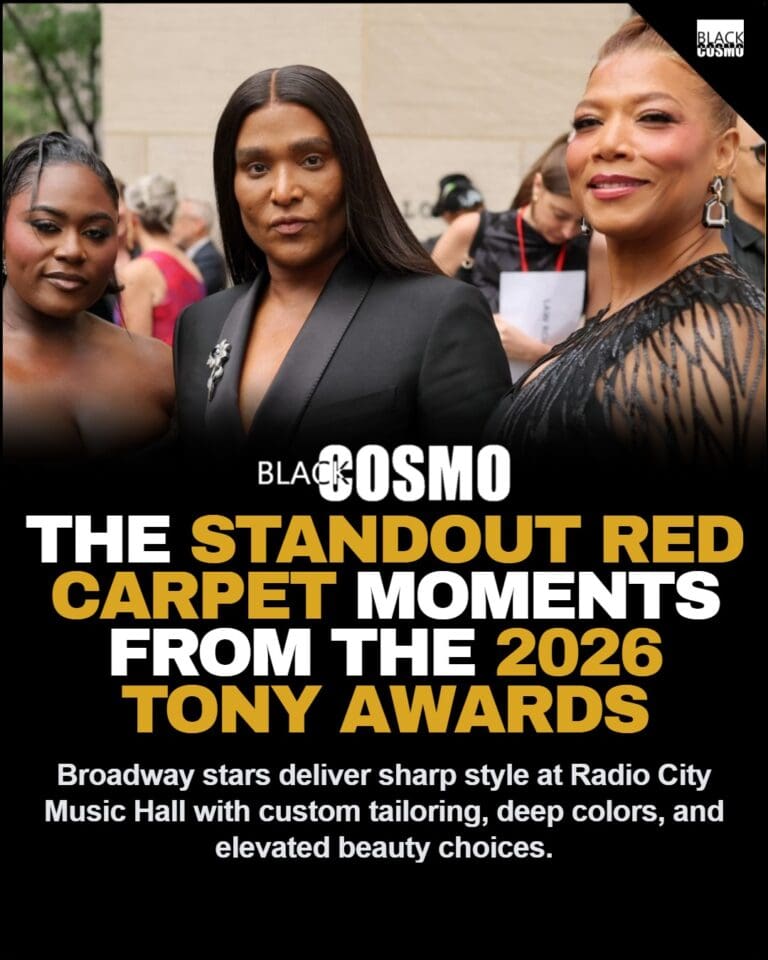
The Standout Red Carpet Moments From the 2026 Tony Awards
Broadway’s biggest night has always understood something Hollywood occasionally forgets: the red carpet is not a formality. It is an opening act.
The 79th Annual Tony Awards at Radio City Music Hall delivered that truth in full. While the ceremony honored the season’s most celebrated productions, the arrivals outside set a tone that was theatrical, considered, and unmistakably alive — a reminder that the people who make Broadway work tend to think in costume even when they’re off the clock.
Queen Latifah arrived first in the conversation, as she almost always does. Her black ensemble — anchored by sweeping peacock-feather detailing — operated at the intersection of old Hollywood scale and contemporary restraint. The silhouette demanded space. The sleek high bun and luminous makeup gave it focus. It was the kind of look that does not ask for attention so much as assume it, which is precisely the point with Queen Latifah. She set the register for the evening early, and most of the carpet rose to meet it.
Ayesha Curry came prepared with a counterargument. Where Latifah operated in maximalism, Curry chose precision: a deep red gown coordinated to her lip color, soft face-framing strands breaking the line of her updo just enough to keep it from feeling severe. The look worked because it refused to compete with itself. Every element reinforced the same intention, and that kind of editorial discipline — knowing what not to add — reads as luxury on a red carpet. The evening proved that Broadway stars often choose custom creations over off-the-rack luxury fashion, opting instead for garments built around a single clear idea.
Kara Young, fresh from a critically acclaimed Broadway run, made the case for color in a vivid green gown styled with sculpted baby hairs and a rich berry lip. The beauty choices were not accessories to the dress — they were in active dialogue with it, a high-concept approach to theater-season dressing that felt entirely native to the room. Young understands that on a Broadway carpet, the performance does not stop when the show closes.
Danielle Brooks arrived in sequins, and the sequins cooperated. Her shimmering gown caught light from every angle, creating a visual rhythm that suited both the venue and the occasion — this was, after all, a celebration of live performance, and there is something appropriate about a dress that moves like a spotlight. Alex Newell pushed further into fashion-as-statement territory with a look rooted in silhouette, texture, and a clear refusal to be understated. Newell has long understood the red carpet as an extension of the stage: a place where identity gets to be loud, specific, and entirely one’s own.
The broader carpet held its own. Leslie Odom Jr. reinforced his standing as one of the sharpest dressers in the industry, his tailoring as precise as a well-blocked scene. Jeremy Pope arrived in something more architecturally bold, all geometry and intention. Adrienne Warren and Ariana DeBose brought the kind of sharp contemporary shapes that look like they were designed with movement in mind — fitting for performers who rarely stand still. Deborah Cox brought elegance without effort, and Amber Ruffin, true to form, made wit look like a dress code.
What separates the Tony Awards red carpet from its Hollywood counterparts is not just the talent on display but the creative framework surrounding it. Broadway culture has always valued craft, transformation, and specificity over trend-chasing. These are artists who spend months inhabiting characters, dissecting text, and making deliberate choices — and it shows in how they dress when the camera finds them off-script. The result is a carpet that reads less like a promotional event and more like a genuine expression of a community.
As the curtain closed on another remarkable ceremony, one truth held: Broadway’s brightest stars know how to make an entrance long before they step onto the stage.
Editor’s Picks:
Culture Recommendation: For deeper narratives on representation and art, browse our selection of Black literature celebrating creative voices.
Lifestyle Pick: Elevate your vanity and match the red carpet glamour with a signature perfume for your next night out.
Tech Upgrade: Capturing your own high-quality content or listening to theater cast albums on the go? Treat yourself to the Apple AirPods Max.
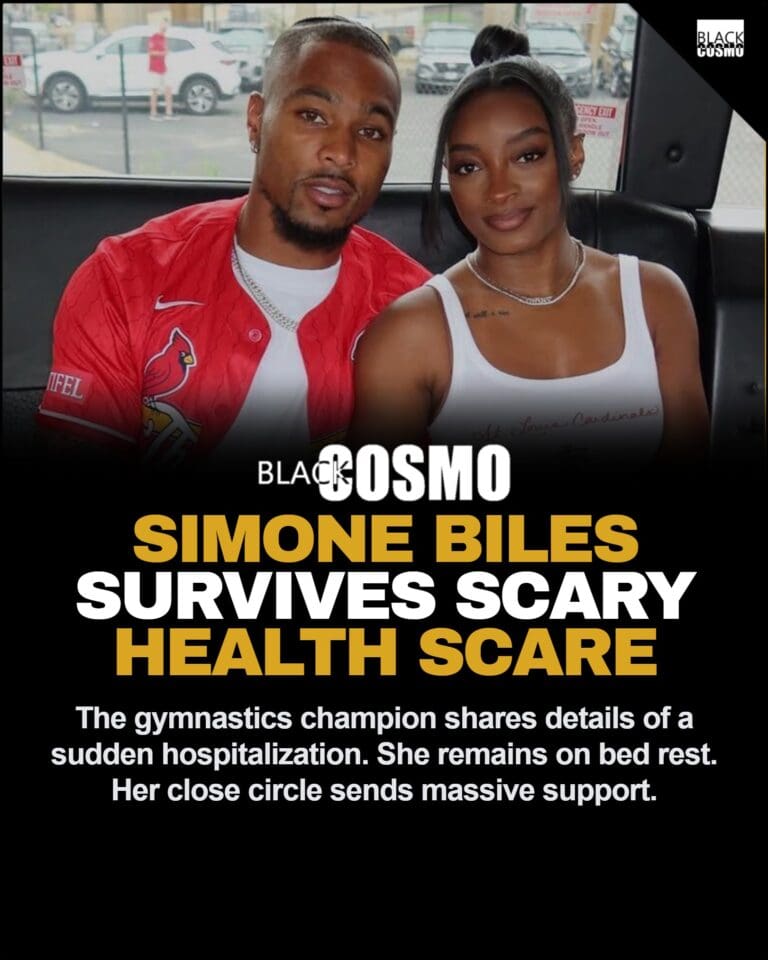
The global community stopped in their tracks this weekend when a sudden Simone Biles health update left everyone deeply concerned. On Saturday, June 6, 2026, the elite athlete shared a series of posts on her Instagram Stories detailing a terrifying medical emergency that required immediate hospitalization. Her raw disclosure sent ripples of worry through her millions of followers as she revealed she was recently on the brink of a life-threatening crisis. She is currently recuperating at home in Texas after what she described as one of the most frightening experiences she has ever endured.
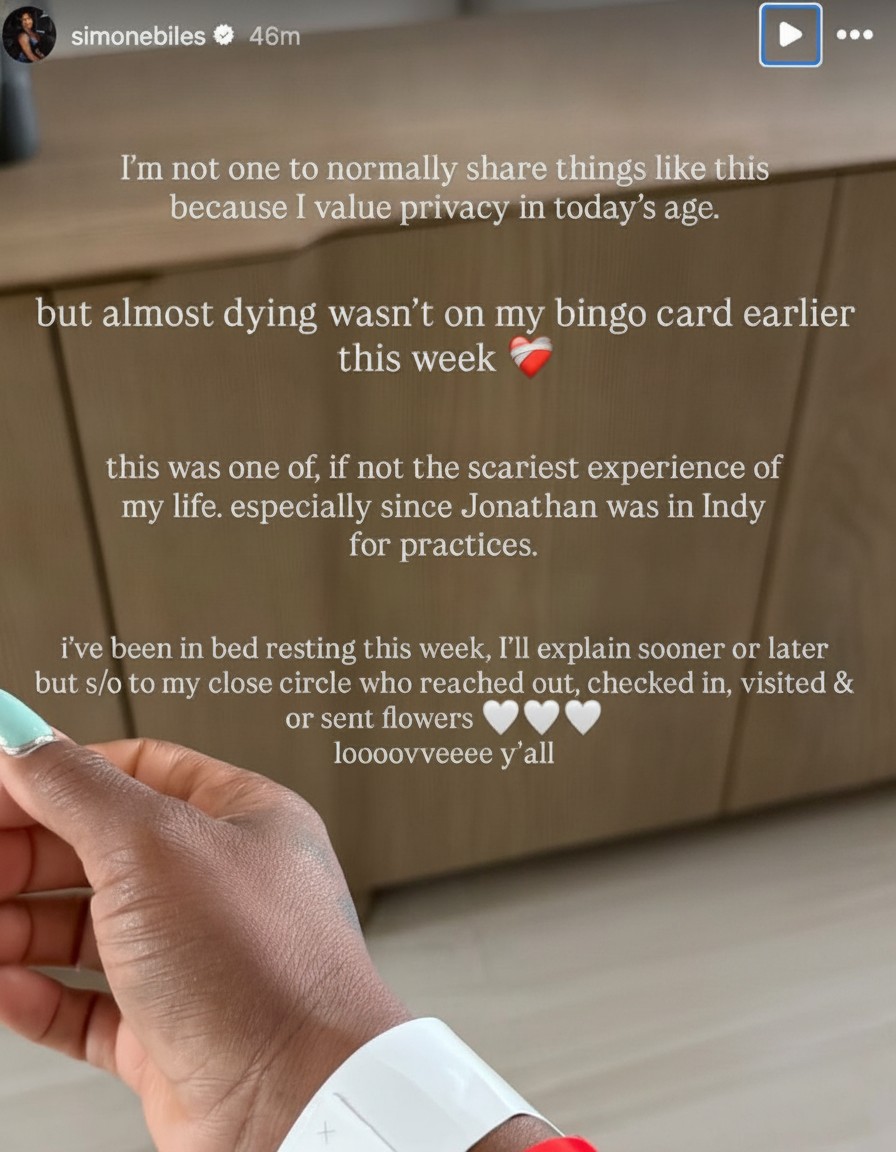
The legendary athlete, who is married to Indianapolis Colts safety Jonathan Owens, posted photos showing her arm wrapped in three distinct medical wristbands, including a red allergy band, along with an IV site dressing. While Simone Biles did not immediately reveal the precise medical diagnosis that led to her hospitalization, she made the gravity of the situation plain. “I’m not one to normally share things like this because I value privacy in today’s age,” she wrote, adding, “But almost dying wasn’t on my bingo card earlier this week”. The suddenness of the event was compounded by the fact that Owens was away in Indiana for team practices, leaving her to face the initial terror of the health crisis without him close by.
Faced with a sudden drop in well-being, the gymnastics star relied on her close-knit circle of family and friends to navigate the emergency. She expressed her gratitude to those who stepped in to offer comfort and assistance. “This was one of, if not the scariest experience of my life, especially since Jonathan was in Indy for practices. I’ve been in bed resting this week. I’ll explain sooner or later, but shout-out to my close circle who reached out, checked in, visited and or sent flowers”. Biles showed glimpses of her healing environment, sharing photos of beautiful floral bouquets that filled her home, along with a picture of her resting in bed alongside her beloved French bulldogs, Lilo and Rambo.
Following this latest Simone Biles health update, supporters from around the world have sent messages of encouragement. To reassure her audience, Biles also uploaded a screenshot showing a heart rate reading of 126 beats per minute. This level of transparency is rare for public figures who often keep their medical struggles completely behind closed doors. When a fan on social media reached out in deep concern to ask whether the scare was due to an accident, violence, or illness, the gymnast replied directly with a reassuring but sober confirmation: “health,” accompanied by a heart symbol. This quiet confirmation put an end to rumors, steering the focus back to her recovery and physical health.
An unexpected Simone Biles health update brings to light a crucial conversation about the vulnerability of even the most physically fit individuals. For years, elite athletes have been placed on pedestals of near-superhuman endurance, but moments like this remind the public of the fragile nature of health. Biles has long been a voice for self-preservation and mental health, famously prioritizing her well-being during intense global competitions. Now, facing a physical health crisis, her decision to share her vulnerability serves as a reminder that taking time to rest and heal is not a luxury, but an absolute necessity.
As Biles continues her bed rest, her husband remains in constant contact from his training camp. The couple, who married in 2023, have built a strong foundation of mutual support despite the demanding schedules of their respective professional careers. Owens’ absence during the emergency only magnified the fear of the moment, yet Biles’ recovery is being cushioned by her local support system in Houston. Her promise to explain the details of her hospitalization “sooner or later” shows that she is focused on finding stability before dealing with public scrutiny.
Editor’s Picks for Rest and Recovery:
Explore stories of strength and triumph with our curated collection of Black womanhood memoirs.
Prioritize your relaxation days in the ultimate comfort with premium loungewear designed for ease.
The strategic trajectory of Regina Hall is a masterclass in creative independence, and the actress has spent over two decades ensuring her industry profile remains fluid. From her breakout moments in late-nineties cinema to her recent dramatic acclaim, we are constantly watching Regina Hall keeping us guessing with her next creative move. She refuses to settle into a single comfortable lane, opting instead for a path that values versatility over predictable success.
With the theatrical arrival of the new *Scary Movie* sequel, Regina Hall has effortlessly pivoted from prestigious dramatic work back into raw, unadulterated slapstick comedy. It is a transition that would induce career whiplash for lesser performers. Yet, for the Washington, D.C. native, returning to Brenda Meeks is not a step backward. It is a deliberate assertion of artistic freedom. She reminds the industry that a performer can occupy the heights of auteur-driven drama while remaining entirely in touch with the brilliant absurdity of mass-market parody. This complete control over her narrative defines her longevity.
Just months ago, the chatter surrounding the actress centered on *One Battle After Another*, the intense cinematic feature directed by Paul Thomas Anderson. In that film, she delivered a quiet, deeply interior performance as Deandra, a member of a leftist revolutionary cell. Sharing scenes with the likes of Leonardo DiCaprio and Teyana Taylor, she earned serious awards attention. It was a role defined by hushed urgency and weight, a sharp contrast to the loud, reactive energy required of her in spoof films. Critics praised her dramatic depth, noting that she held her own in a dense ensemble without ever raising her voice. This stark contrast highlights her unique ability to modulate her energy based on the demands of the director.
To go from that level of prestige immediately into a film parodying modern horror features like *The Substance* and *Smile* is a move few agents would advise. The new *Scary Movie* installment, written and produced by the original Wayans brothers, Marlon, Shawn, and Keenen Ivory, is designed to dismantle the very idea of prestige. It targets elevated horror and modern culture with the same unfiltered, R-rated fervor that made the original films successful in the early 2000s. While some actors might fear that returning to slapstick would tarnish their dramatic standing, she treats comedy with the gravity of a true specialist. To watch Regina Hall keeping us guessing by returning to this silly franchise is to witness a star who knows her audience and values genuine comedy.
Her path has always been unconventional. After earning her master’s degree in journalism from NYU, she entered the acting world relatively late, making her film debut in *The Best Man* in 1999. Since then, her filmography has resisted easy categorization. Whether she is leading the acclaimed indie *Support the Girls*, which earned her a historic Best Actress win from the New York Film Critics Circle, or hosting the Academy Awards, she operates without a rigid blueprint. This unpredictability keeps Regina Hall keeping us guessing, rendering her immune to the typecasting that frequently limits her peers in the industry.
Currently, she is notably absent from the intense press tour for the new comedy release. Her absence is not due to a lack of support for the project but rather because she is already immersed in her next endeavors. Reports from production circles indicate she is currently filming a new series alongside Adam Driver for Netflix, maintaining her frantic, dual-track momentum. By skipping the promotional circuit to remain on set, she proves her focus lies in the work itself rather than the celebrity apparatus. She chooses the quiet satisfaction of the camera over the noise of red carpets.
To capture the sharp, versatile style of our favorite leading lady, explore our curated lifestyle picks.
Culture Recommendation: If you are inspired by her career journey of self-determination, explore our favorite selections of Black literature.
Shop the Look: Channel that sleek red-carpet confidence with these select pieces of modern luxury fashion.
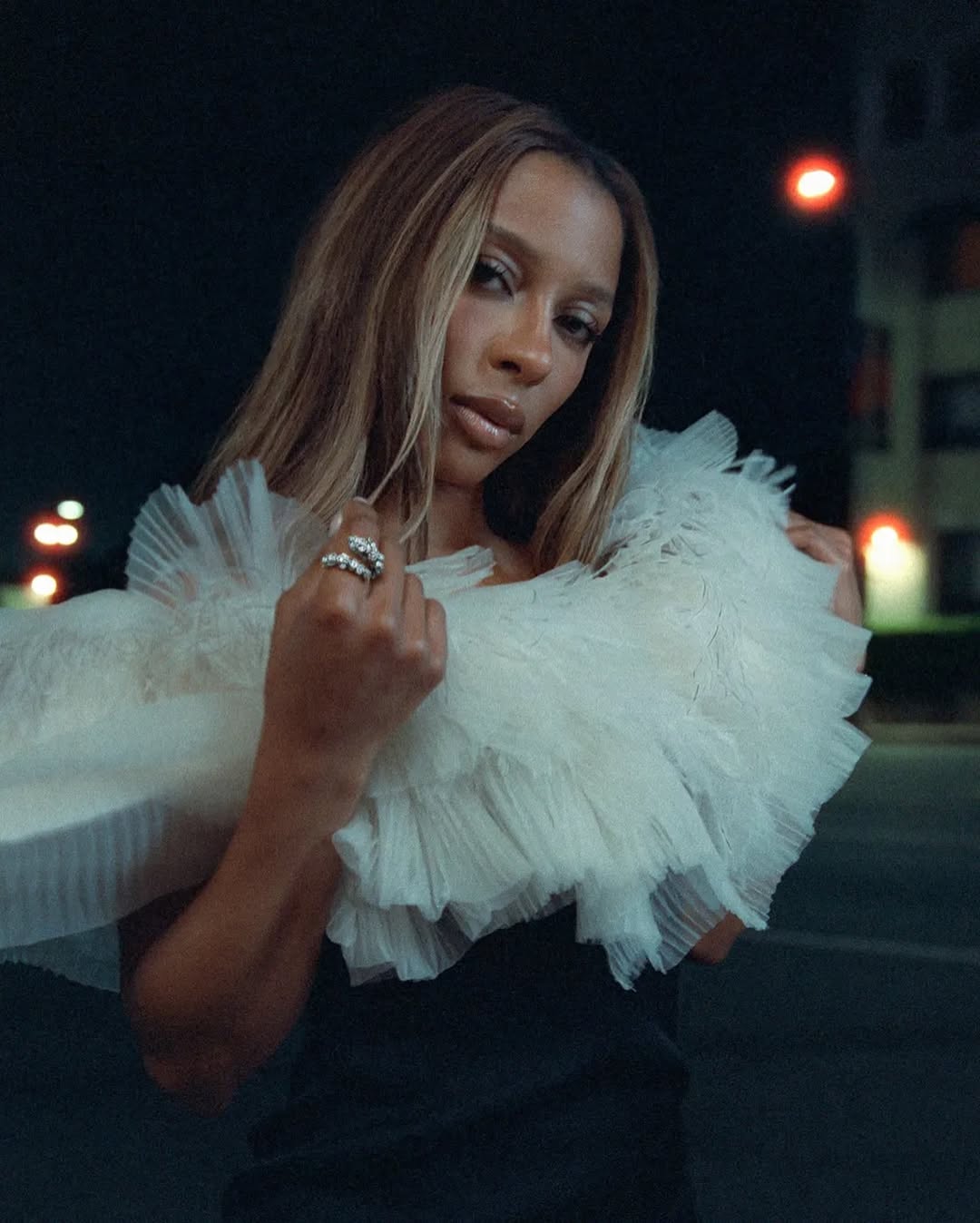
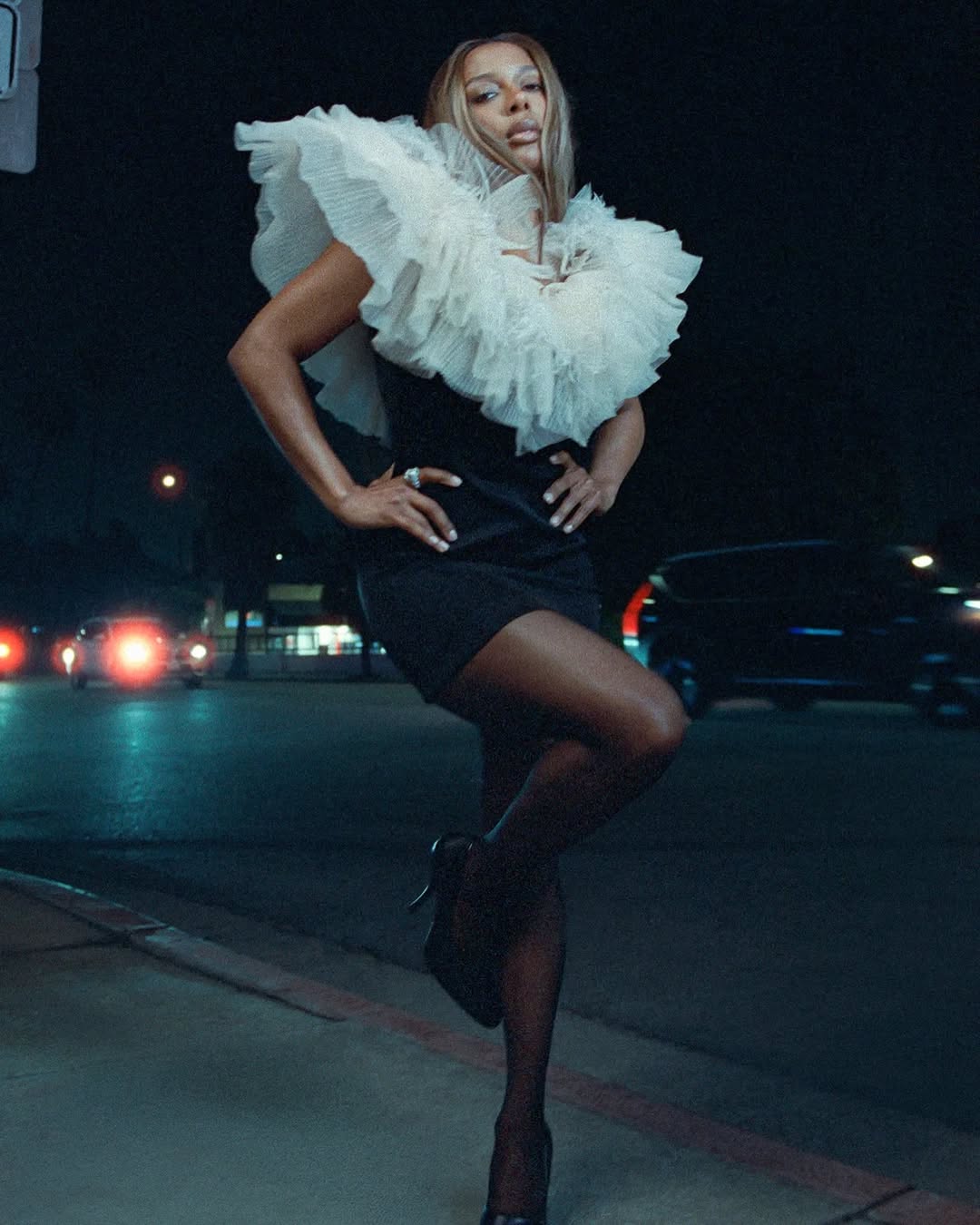
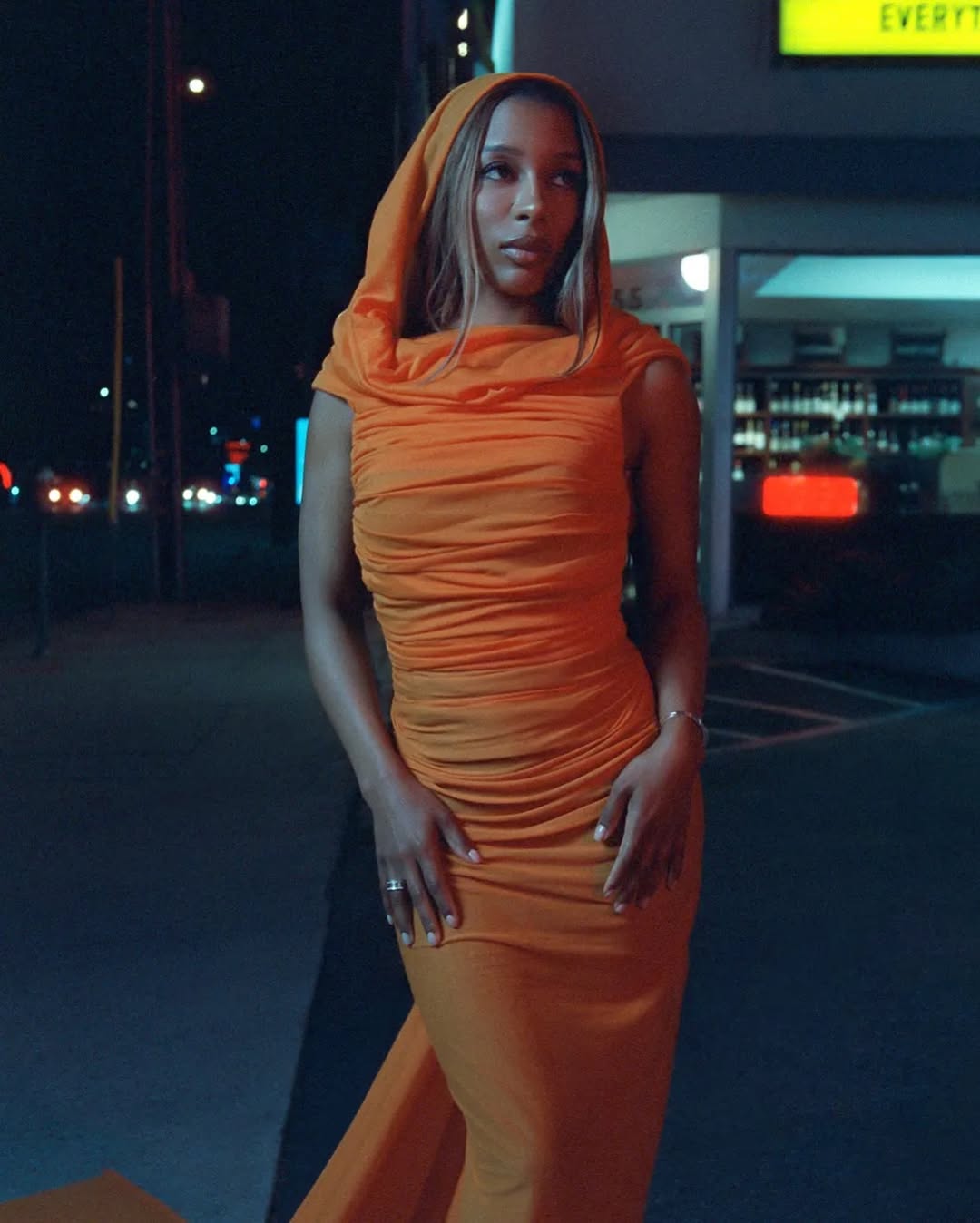
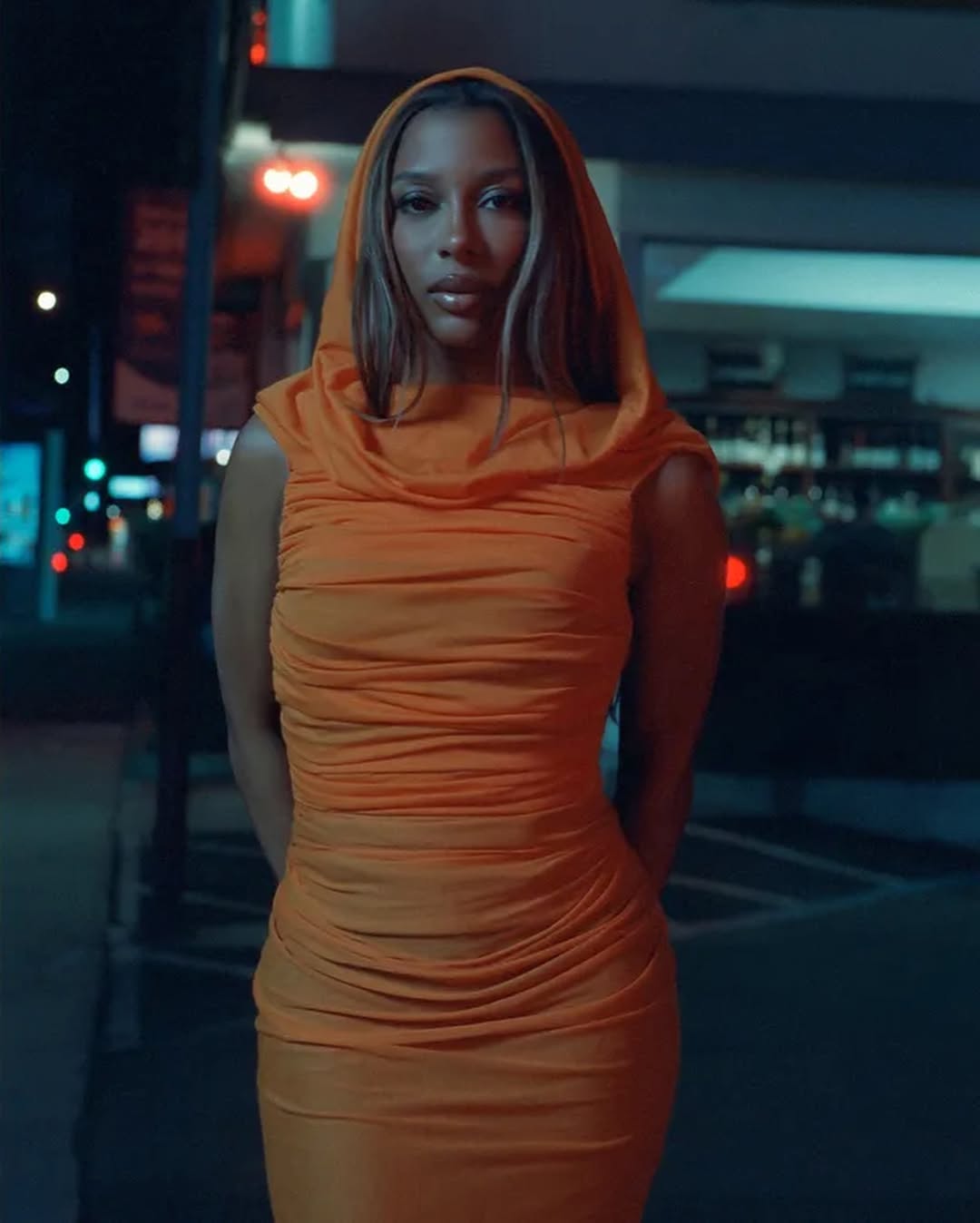
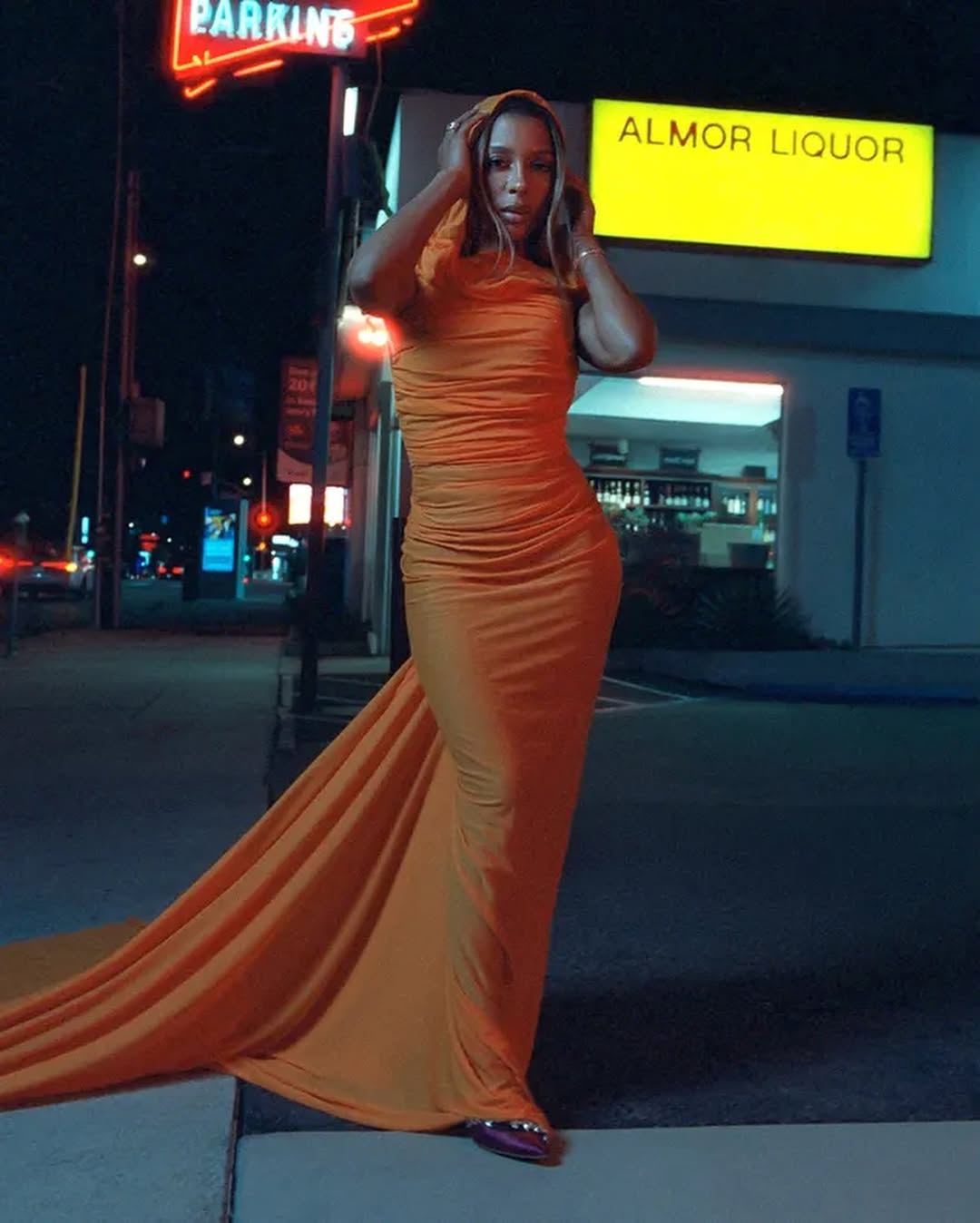
There is a distinct difference between surviving the spotlight and mastering it. Victoria Monét has spent years doing both. Now, she is operating in a space of complete creative sovereignty. In the June 2026 issue of Who What Wear, photographed beautifully by Erica Snyder, the singer, songwriter, and multi-Grammy winner steps forward to show the world what happens after you finally collect your long-deserved flowers.
For this editorial cover feature, styled by Dione Davis with hair by Davontae Washington, Victoria Monét swaps her sharp, feline claws for something much softer but infinitely wider: butterfly wings. It is an aesthetic pivot that mirrors her personal journey. Following her whirlwind sweep at the 2024 Grammy Awards, she faced the heavy reality of an intense career comedown. But instead of letting the industry momentum dictate her pace, she chose to rebuild her relationship with her own success. This means setting boundaries and deciding when to step back and when to lean in.
The Soft Evolution of a Star
Artists are often pushed to constantly scale higher, chasing numbers and accolades. Monét is choosing a different path. She explains that she is learning to detach from the pressure of awards, ensuring that her creative worth does not rise and fall with trophies. Her new mindset is about longevity and peace. This shift in perspective is visible in her visual presentation, which pairs delicate, fluid pieces with high-end structural garments. She is no longer trying to prove her presence; she simply exists in it.
The Who What Wear cover shoot leans heavily into this duality. Styled in Balenciaga and draped in Bulgari jewelry, her appearance is a study in quiet confidence. This is not about trying to fit into a pre-existing mold. Instead, she is defining the style herself. The editorial marries her sound and look perfectly, making it clear that she is in total control of her narrative. Her style reflects the complexity of Black womanhood, blending vulnerability with undeniable strength. The visual imagery does not rely on loud, flashy trends, preferring classic shapes that highlight her poise.
A Nostalgic Glimpse Into the Next Album
Her upcoming musical era is deeply connected to her roots. She shares that her new work is inspired by her childhood in Mobile, Alabama. She recalls dancing in front of her grandmother’s old analog television set, soaking in the sights and sounds of classic R&B. This monochrome nostalgia forms the foundation of her new music. Her voice, which once slipped through sultry, honey-dripped backbeats, is now taking flight, soaring over richer, more expansive production. She is using her past to build a highway toward her future.
Her aesthetic choices for this era are deliberate. By leaning into a monochrome palette and classic silhouettes, she is paying homage to the generations before her while creating something modern. Her styling merges streetwear ease with high-end elegance, bridging the gap between her past and present. It is a visual representation of her musical growth. She is no longer just performing; she is crafting a cohesive world for her audience to enter. Every outfit in the shoot tells a story of a woman who knows exactly who she is.
From Behind the Scenes to Center Stage
Monét’s journey is unique because of her background as an industry writer. For years, she penned hits for some of the biggest names in music, including Ariana Grande. Moving from the background to center stage was not a sudden leap, but a steady alignment of her skills. She did not change her essence to fit the pop star mold; she made the mold adjust to her. Now, she is mentoring other writers and producing her own projects with a level of authority that only comes from years of grind.
Achieving this level of creative control requires a trusted circle of collaborators. For this shoot, Dione Davis curated a wardrobe of exquisite luxury fashion, while Davontae Washington designed hair that felt both classic and contemporary. Together, they established a visual language that matches her sonic evolution. They understand her vision and work to elevate it without overshadowing her natural grace.
This level of detail is exactly what makes her stand out. Whether she is performing on stage or posing for an editorial, she approaches her work with the precision of a seasoned artist. To fully experience the warmth and depth of her new sonic era, audiophiles recommend listening with advanced equipment that supports personalized spatial audio. The nuances of her production are designed to be felt as much as they are heard. Every note, background vocal, and instrument is placed with intent, showing her genius as an arranger.
Monét’s journey is a blueprint for artists navigating the modern music industry. She has proved that it is possible to achieve mainstream success without losing your soul or your creative agency. By choosing peace over constant hustle, she is setting a new standard for longevity. We are watching a master creator step into her true artistry, completely on her own terms.
Lifestyle Pick: Elevate your daily routine and personal scent collection with a classic, high-quality perfume designed to linger beautifully.
1 of 7
Victoria Monét posing for Who What Wear June 2026 Cover Feature
Victoria Monét posing for Who What Wear June 2026 Cover Feature
Victoria Monét posing for Who What Wear June 2026 Cover Feature
Victoria Monét posing for Who What Wear June 2026 Cover Feature
Victoria Monét posing for Who What Wear June 2026 Cover Feature
Victoria Monét posing for Who What Wear June 2026 Cover Feature
Victoria Monét posing for Who What Wear June 2026 Cover Feature
Justice has a way of taking its time, but when it arrives, it carries a heavy weight. On June 4, 2026, a Grant County jury in New Mexico delivered a clear statement on medical accountability. The estate of the late Star Trek actress Nichelle Nichols received a $13 million verdict in a wrongful death lawsuit against Gila Regional Medical Center and a treating physician. The legal battle began years ago, but the resolution provides a sense of finality to a family that lost their guiding light under deeply troubling circumstances. The legendary actress, beloved worldwide for her role as Lieutenant Uhura, died in July 2022 at age 89, leaving behind a legacy that changed television history. Yet her final hours were marked by avoidable systemic failures in a local hospital.
In July 2022, Nichelle Nichols was living in Silver City with her son, Kyle Johnson, who had relocated her to care for her during her struggle with dementia. On July 29, she began experiencing acute respiratory distress and anxiety at her assisted living facility, Millie’s Assisted Living. Emergency responders rushed her to Gila Regional Medical Center. Doctors at the facility diagnosed her with congestive heart failure. She was admitted to the hospital for evaluation overnight. But what happened next formed the core of the wrongful death lawsuit.
According to the lawsuit, the medical staff did not perform the necessary cardiac workups. Lisa Curtis, the attorney representing the estate, noted that the hospital had poor policies regarding emergency cardiac care. The hospital had recently canceled its on-call requirement for an echocardiogram technologist. This decision left the staff without the immediate means to fully assess a patient with a severe heart condition. Rather than transferring the actress to a larger, better-equipped facility in nearby Las Cruces, where specialists were readily available, the hospital placed her in an observation unit. They discharged her the next morning, on July 30, and sent her back to the assisted living center. Just seven hours after leaving the hospital, she stopped breathing. Emergency CPR was unsuccessful.
The trial, presided over by Judge Jim Foy, concluded after a brief deliberation. The jury took only about two hours to find the hospital and the treating physician, Dr. Tsering Sherpa, negligent. The verdict allocated 40 percent of the responsibility to Gila Regional Medical Center, translating to $5.2 million of the total award. The doctor was held 60 percent responsible for the negligence. Theresa Hacsi, another attorney for the estate, remarked that this decision should serve as a catalyst for local healthcare facilities to reform their protocols. It highlights a critical issue in rural healthcare, where inadequate staffing and policy gaps often lead to preventable tragedies.
Her career was defined by breaking barriers. When she stepped onto the screen in 1966 as Uhura, she was one of the first Black women to play a prominent role that was not a domestic worker or a caricature. Her presence was so significant that Martin Luther King Jr. personally convinced her to stay on the show when she considered leaving for Broadway. He told her that her role was a crucial representation of Black dignity and capability. Her influence extended beyond the screen as she later worked with NASA to recruit women and people of color into the space program. Seeing her family fight for her in court feels like a continuation of her lifetime of advocacy for fair treatment and basic dignity.
For Kyle Johnson, the lawsuit was about more than a financial settlement. It was a matter of dignity and respect. Caring for an aging parent with dementia is a deeply taxing emotional journey. When that journey is cut short by systemic neglect, the pain is amplified. Silver City, New Mexico, where they lived, is a quiet area, but its local hospital fell short of the standard of care that any citizen deserves. The lawsuit argued that Gila Regional Medical Center hired, credentialed, and poorly supervised medical staff who were unqualified to treat critical conditions. This verdict is a warning to rural health providers that they cannot cut corners when it comes to patient lives.
The medical neglect of Black elders is an ongoing issue that rarely gets the spotlight it deserves. Often, symptoms are dismissed, or the quality of care in smaller communities is substandard. Having a high-profile case shine a light on these failures is rare. The Nichols estate used their platform to hold this facility accountable, ensuring that other families in Silver City might not have to endure the same sudden loss. The attorneys noted that this case is about making the hospital a safer place for all its residents, turning a devastating loss into a push for systemic improvement.
Our Editor’s Picks
To celebrate the enduring contributions of Black pioneers and their deep impact on our culture, we have curated a selection of recommendations for our readers:
Culture & History: If you want to explore the history of Black women who paved the way in entertainment and science, browse our curated list of books focusing on African American history and memoir.
Home & Style: Bring a touch of low-maintenance beauty to your favorite reading corner with these life-like artificial plants.
Timeless Fashion: Elevate your wardrobe with classic pieces that stand the test of time, just like the style of early Hollywood’s pioneers, by exploring our collection of luxury fashion.
Tech Workspace: Ensure your computer and digital storage are up to the task of preserving your precious memories with a high-speed M.2 SSD upgrade.