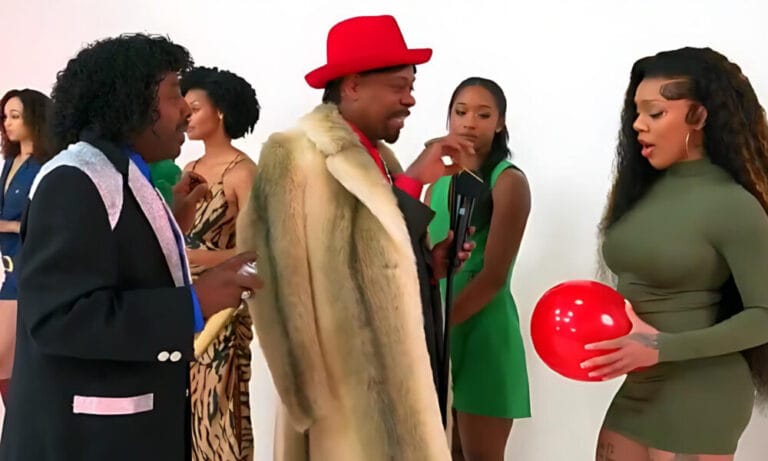
Dave Chappelle returned to Saturday Night Live (SNL) for his fourth time as host, delivering a memorable sketch that delighted fans of his iconic Chappelle’s Show characters. In the sketch, Chappelle resurrected his infamous “Player Hater” character, Silky Johnson, known for his scathing disdain and sharp tongue. This time, Silky was featured in the viral YouTube-inspired dating show, Pop the Balloon, hosted by SNL cast member Ego Nwodim, who portrayed the real-life host, Arlette Amuli.
The sketch, based on the format created by Amuli and Bolia Matundu, introduces single contestants to a series of potential partners, each holding a red balloon. If a contestant isn’t interested, they quickly pop the balloon and explain why they won’t pursue anything further. Silky Johnson, as expected, brought his signature brand of disdain to the dating game, and when rapper GloRilla appeared as one of the women, Silky’s biting commentary led to her immediately popping her balloon.
Chappelle’s character was a throwback to his Chappelle’s Show days, where Silky won the infamous “Player Hater of the Year” award at the Player Hater’s Ball in 2002, famously declaring, “I hate you. I hate you. I don’t even know you, and I hate your guts.” The hilarious nod to the past had fans reminiscing about the brutal, yet comically exaggerated world of player haters.
Donnell Rawlings also made an appearance as Ashy Larry, another beloved Chappelle’s Show character. Doused in baby powder to highlight his chronically dry skin, Ashy Larry quickly met the wrath of the popping balloons, adding another layer of nostalgia to the sketch. Rawlings’ portrayal of Ashy Larry was a fan favorite during the original run of Chappelle’s Show, further cementing the bond between the two comedic talents.
The connection was instant when Delali Ayivi and Malaika Nabillahtou first met at a restaurant in Togo. Ayivi, a Togolese in the diaspora, and Nabillahtou, who has lived in Togo all her life, quickly realized through their conversation and exchange of creative ideas, that they shared something in common beyond their Togolese heritage; they wanted to put Togo on the creative map. “When it comes to West Africa, people talk about Nigeria, Ghana, and the Ivory Coast, nobody knows Togo,” Nabillahtou tells BlackCosmopolitan.
“Since we met,we knew we needed to build something for our country. That’s why we created this community.” The community in question is Togo Yeye (meaning New Togo in Ewe, the widely spoken local language in Togo). Togo Yeye, co-founded and run by Ayivi, a photographer, and Nabillahtou, a creative director, has set itself apart for the striking and perception-shifting imagery it has created in and about Togo. Their works explore various themes and always bring together local talents from models to photo assistants. Togo Yeye lends itself as a creative institution that creates a compelling narrative of what it means to be young and Togolese today while also creating a blueprint for other aspiring Togolese artists to follow.
The collective has exhibited at Photo Vogue Festivals, shot Update for Nataal Magazine, and recently collaborated with Vlisco on its latest campaign, “Blossoming Beauty,” launched last Tuesday, January 14. It is a visual collection highlighting Togo’s natural resources and Vlisco’s connection with Togolese culture.
Togo Yeye shares something in common beyond their Togolese heritage; they want to put Togo on the creative map.
For Togo Yeye, this Vlisco project represents one of those rare moments when their work is exhibited in the place where it was created and can be seen by the people it aims to represent. “Because we lack industrial support and platforms within Togo, we get to exhibit a lot outside of the continent or maybe within the continent as well, but not in Togo,” Ayivi says. “People rarely get to see themselves in Togo in the work that we do because we don’t have the platforms for it, so one motivating factor was that we got to shoot a campaign that would be seen on the African continent but specifically in Togo, and Visco has huge billboards in Togo.” Since the campaign’s release, the duo say they’ve been getting pictures from people who pass by the billboards featuring bold prints and stunning natural backdrops.
Creating for the future
In their visual language, Togo Yeye is consistent and particular about veering away from the Western gaze and instead creating work that speaks towards a future where West African image-making isn’t imitative yet immediately identifiable. “When we looked at how people expressed themselves creatively, we realized a lot of the studio photography was trying to be something they’re not,” Ayivi says. “So, we began using everything that’s around us. The colorful walls, gates, our town, beaches, water, mountains, etc. We don’t have to try to be something we’re not.”
Thecreative community in Togois still siloed around traditional forms of creativity, primarily music. Unlike neighboring countries Ghana and Benin, or further Nigeria, Nabillahtou and Ayivi say the creative scene can sometimes feel small or centered around already well-known faces. Through workshops, hiring local talent of all ages and backgrounds to be behind and in front of the creative process, setting up residencies, and offering advice to emerging artists and collectives, Togo Yeye is particular about creating a legacy where opportunities, specifically for creative people in Togo and West Africa, are democratized and easier to access.
Togo Yeye often creates works that interact with nature and the mundane details of everyday Togolese life.
Photo courtesy of Togo Yeye.
Before meeting Ayivi, Nabillahtou was in medical school, a safe choice she had chosen even though she had been creating video projects for people and creative directing for as long as she could remember. “Being in this collaboration with Delali really opened my eyes to opportunities. I remember her telling me I can do whatever I want,” Nabillahtou says. “This collaboration gave me the wings to have an option of a career in [the creative] industry. Now, it’s not just me; many others are working with us and discovering new ways, even if not with Togo Yeye, because they have other options to work in the industry.” Ayivi says the feeling is mutual.
Togo Yeye has been around for nearly five years and has developed a creative community that’s mostly figuring it out as they go. “Against all the difficulties and struggles that come with this process, we see a youth that’s trying against all odds,” Ayivi says. “I think that’s our scene at the moment. It’s a whole bunch of people doing their best.”
As Nabillahtou sees it, “If we can have 10 Togo Yeye in every West African country, just give two years, and things will change.” Adding, “Because we are young, we love our country, so we try to find a way to put our effort together to create something where everybody is equal, where everybody is well treated, and everybody can do what he wants.”
And on Ayivi’s part, “I think we can use our visual language to instill pride, but at the same time show in our visuals and our thinking that nothing is stopping us from being great or greater.”
Disclaimer: For Education and discussion purposes. Please note no copyright infringement is intended, was recorded on BlkCosmo’s own equipment, and we do not own nor claim to own any of the original recordings used in this video and intend to use this as ‘fair use’.
Compassion is a profound emotional response that connects us to others—a genuine desire for their well-being and a willingness to alleviate suffering. At its core, however, compassion begins within us, through self-compassion. Self-compassion is far more than an indulgence—it’s a powerful cornerstone for building personal resilience and extending authentic compassion to others, creating a foundation for meaningful connections and emotional strength. To truly cultivate empathy and kindness for others, we must first learn to extend that same grace to ourselves.
Why Self-Compassion Matters
Self-compassion entails treating yourself with the same kindness, understanding, and care you’d offer a close friend. It’s about acknowledging your humanity, accepting imperfections, and recognizing that struggles are a universal experience. Studies show that self-compassion leads to increased happiness, motivation, better relationships, and reduced anxiety and depression.
Kristin Neff, a pioneer in self-compassion research, breaks it down into three components: self-kindness, common humanity, and mindfulness. These elements combine to create a foundation for emotional resilience. When we’re compassionate toward ourselves, we’re better equipped to manage stress and respond to life’s challenges with grace.
From Self to Others: The Ripple Effect
Self-compassion doesn’t end with the self. By practicing it, we become more attuned to the struggles of others, fostering a natural extension of kindness and empathy. This ripple effect strengthens relationships and community bonds, illustrating how self-care directly influences societal well-being.
Debunking Myths: The Truth About Self-Compassion
Despite its benefits, self-compassion is often misunderstood, with many associating it with weakness, self-indulgence, or avoidance of responsibility. Common myths prevent people from embracing this transformative practice, leaving them stuck in cycles of self-criticism and burnout. Let’s address and dispel these misconceptions.
Myth 1: Self-Compassion Equals Weakness
One of the most pervasive myths is that self-compassion makes you weak or complacent. In reality, self-compassion fosters resilience. By treating yourself kindly during setbacks, you build the emotional strength needed to bounce back and face challenges with renewed determination.
Self-compassion is often conflated with self-indulgence, but the two are vastly different. While self-indulgence involves unchecked gratification, self-compassion focuses on long-term well-being. It’s about making choices that nurture your growth, even if they’re difficult in the short term.
Myth 3: Self-Compassion Excuses Bad Behavior
Another misconception is that self-compassion is an excuse to avoid responsibility. On the contrary, self-compassion helps us acknowledge mistakes without harsh judgment, creating a safe space for accountability and improvement.
By debunking these myths, we clear the way for more people to embrace self-compassion as a transformative tool for personal and interpersonal growth.
Techniques for Self-Compassion: From Letter-Writing to RAIN Meditation
Self-compassion is not just a mindset; it’s a practice. Incorporating tangible techniques into your daily life can help you cultivate a kinder relationship with yourself. Here are two powerful methods to get started:
Writing a Letter to Yourself
Letter-writing is a simple yet profound way to nurture self-compassion. Here’s how to practice it:
Set the Scene: Find a quiet, comfortable space where you can reflect without interruptions. This creates a calming environment that allows you to focus deeply and engage fully in the exercise, enhancing its effectiveness.
Imagine a Compassionate Friend: Think of what a kind, understanding friend would say to you in your current situation.
Write Freely: Draft a letter to yourself from this perspective, offering encouragement and understanding.
Revisit the Letter: Keep the letter and read it during challenging times to remind yourself of your innate worth.
This exercise helps reframe negative self-talk and creates a supportive internal dialogue.
The RAIN Meditation
RAIN is a four-step mindfulness practice designed to cultivate self-compassion during difficult moments:
Recognize: Acknowledge what you’re feeling.
Allow: Accept your emotions without judgment.
Investigate with Kindness: Explore the underlying causes of your feelings with curiosity and care.
Natural Awareness: Rest in the awareness that these feelings are temporary and do not define you.
Practicing RAIN regularly can help you respond to life’s challenges with greater ease and self-kindness.
Expanding Empathy: The Role of Loving-Kindness Meditation
Loving-kindness meditation (LKM) is a powerful practice that extends the benefits of self-compassion to others. Rooted in Buddhist traditions, LKM involves sending goodwill and positive intentions to yourself and others. Here’s how it works:
Start with Yourself: Begin by silently repeating phrases like, “May I be happy. May I be healthy. May I be free from suffering.”
Extend to Loved Ones: Gradually extend these wishes to friends and family.
Include Difficult People: Challenge yourself to send goodwill to those you find challenging.
Embrace All Beings: Expand your circle of compassion to include everyone, everywhere.
Research shows that LKM enhances empathy, increases positive emotions, and reduces biases. For instance, a study published in the Journal of Happiness Studies found that participants who practiced LKM for just 15 minutes a day experienced significant improvements in their emotional well-being and social connectedness. By practicing loving-kindness, you build emotional resilience and foster deeper connections with others.
Understanding Empathy and Compassion
Although empathy and compassion are closely related, they are distinct concepts. Understanding their differences is crucial for cultivating a balanced approach to emotional intelligence.
Empathy: Feeling with Others
Empathy involves understanding and sharing the feelings of others. While it’s an essential component of emotional connection, empathy alone can sometimes lead to emotional exhaustion, known as compassion fatigue.
Compassion: Acting with Kindness
Compassion goes beyond empathy by including a desire to alleviate suffering. It’s an action-oriented response that transforms emotional resonance into meaningful support.
By focusing on compassion rather than just empathy, we can prevent burnout and sustain our ability to care for others over the long term.
Cultivating Compassion in Daily Life: Mindfulness Beyond Meditation
Compassion isn’t limited to formal meditation practices. It can be woven into the fabric of daily life through mindful actions and intentional communication.
Mindful Communication
Active Listening: Fully engage with others by listening without interrupting or judging.
Nonverbal Cues: Use soft eye contact, open body language, and gentle gestures to convey understanding.
Clarity in Words: Be concise and considerate in your communication, avoiding misunderstandings.
Compassionate Workplace Practices
Check In: Regularly ask colleagues how they’re doing and genuinely listen to their responses.
Encourage Collaboration: Foster a team culture that values support and shared success.
Model Kindness: Lead by example, showing patience and empathy in professional interactions.
By integrating these practices, you can create an environment that nurtures compassion and fosters meaningful connections.
The Transformative Power of Compassion
Cultivating compassion—starting with self-compassion and extending outward—is a transformative journey. It’s not just about being kind; it’s about creating a ripple effect that enhances personal well-being, strengthens relationships, and contributes to a more empathetic society.
Small Steps, Big Changes
Transformation begins with small, consistent actions. Writing a letter to yourself, practicing RAIN meditation, or offering a kind word to a colleague might seem minor, but over time, these habits create profound shifts in mindset and behavior.
The Broader Impact
Compassion fosters resilience, reduces stress, and promotes emotional intelligence. On a societal level, it strengthens community bonds and inspires collective action toward a kinder, more inclusive world.
By embracing compassion, we not only improve our own lives but also contribute to a culture of empathy and understanding. Start with yourself, and watch the ripple effect unfold.
MB&F timepieces, with jaw-dropping designs, complications and price tags, transcend time and almost appear more as works of art than […]
MB&F timepieces, with jaw-dropping designs, complications and price tags, transcend time and almost appear more as works of art than watches. Two decades of innovative timekeeping, of course, calls for a celebration, and the horologist is marking the occasion with two wildly detailed anniversary watches.
(MB&F)
Be it a six-figure gemstone sculpture of a watch or a $200,0000 titanium mechanical marvel, an MB&F watch release (let alone two) seems to be an event of the highest order. The new MB&F LM Perpetual Longhorn and LM Sequential Flyback Longhorn meet the moment accordingly, with the Perpetual Longhorn using an impossibly precise 581-component movement in the process.
(MB&F)
The luxury timepiece brand partnered with watchmaker Stephen McDonnell on the futuristic look, design and hardware found on both watches. Although each are equally eye-catching, the Sequential Flyback Longhorn in particular is packed with impressive bells and whistles. Functionality for pilots complements the company’s Twinverter binary switch, allowing for independent timekeeping and functions like split-second timekeeping, along with a laundry list of features powered by distinctive square pushers.
(MB&F)’
Of its Legacy Machines line, MB&F views each timepiece not necessarily as a straightforward watch, but more so a series of “kinetic, 3-dimensional sculptures for the wrist,” all the while emphasizing “traditional watchmaking of the highest craftsmanship.”
(MB&F)
The skeletonized display of each new Legacy Machine timepiece offers a tantalizing glimpse into the world of MB&F, one where nearly anything seems possible in terms of timekeeping: Utilitarian functionality meets high-minded design, especially as far as MB&F’s perpetual calendar movement is concerned.
(MB&F)
Perhaps the most conventional thing about each enviable timepiece is the brown leather strap upon which it rests. Certainly, nothing contained within each boundary-pushing watch is standard-issue, except in the world of MB&F. And for the handsome price tag of about $184,000, a piece of two decades of watch history is yours for the taking, with further details available online at MB&F.
Mentioned in this article: gear Horology luxury Luxury Watches MB&F news Style Watches
A mesmerizing interpretation of Chinese iconography and stunning serpentine motifs were conceived by creatives based in Rolls-Royce’s Shanghai offices to help a VIP client celebrate the Year of the Snake in a way that even outdoes Hubot’s efforts on the luxury watch brand’s Spirit of Big Bang. But beyond the Lunar New Year connection, the “Phantom Dragon” holds a special significance to Rolls-Royce, being the first in a series of special-edition Phantoms celebrating the iconic model’s centenary.
(Rolls-Royce)
In 1925, the Phantom’s debut year, The Autocar magazine wrote in a review of the new model: “Few are the firms engaged in the manufacture of motor cars who enjoy quite such a reputation as Rolls-Royce Ltd. Almost the conjoined names have become the household word for luxury, and every novelist worthy of the name imparts a distinguished air to any character by crediting him or her with the possession of one of the firm’s cars.” As the flagship vehicle in Rolls-Royce’s fleet, the Phantom has helped RR maintain that reputation indefatigably for the past 100 years, serving as arguably the ultimate automotive canvas for the most luxurious type of customization.
(Rolls-Royce)
The Phantom Dragon, based on the burly Extended version of the coach car, exemplifies Rolls’s opulent brand of customization capability. Designers started with an informed perspective, taking inspiration from “an ancient legend, dating back over 3,000 years, that tells of two dragons, protectors of the human realm, who were gifted a divine pearl by the gods for their good deeds,” the brand said.
(Rolls-Royce)
“Rather than greedily claiming the treasure for themselves, the dragons deferred to one another—a scene that came to symbolize kindness and generosity of spirit. Moved by the dragons’ loyalty, the gods then bestowed upon them a second pearl, which the creatures absorbed before ascending as deities themselves. While the dragons symbolize power and good fortune, the pearl is a symbol of purity and perfection. As these two elements are captured together, the interplay of the dragons signifies the harmonious balance of Yin and Yang—two complementary forces united in the pursuit of enlightenment and a fulfilling life.”
(Rolls-Royce)
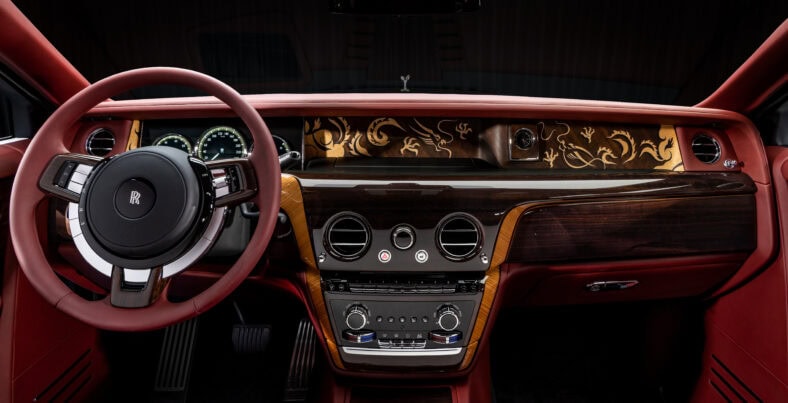
The client elected to keep the exterior simple, opting for a nearly blacked-out scheme occasionally interrupted by shimmers of chrome. The interior is where the mythical magical happens, beginning with the gallery running the full width of the fascia, which features a 297-piece marquetry pattern that was created by a single artisan using four species of wood—smoked eucalyptus, sycamore, ash, and black bolivar—over the course of three months. The artwork represents the two dragons, enclosed within swirling clouds, guarding the pearl contained in a Bespoke clock.
(Rolls-Royce)
A red and white dragon also appear in a more abstract form on the Bespoke Starlight Headliner. This majestic celestial composition comprises 768 red and 576 white fiber-optic lights, each individually hand-fitted and surrounded 24 shooting star-inspired elements. Elsewhere, more woodcraft continues with smoked eucalyptus accents and door panels crafted by high-end Canadian furniture company Canadel. Meanwhile, red and black leathers clad the front and rear reclining seats respectively, which are topped with headrests featuring the client’s embroidered family name in traditional Chinese calligraphy.
(Rolls-Royce)
While the Phantom Dragon is a bespoke creation, we’ll be we’ll be eagerly awaiting the other centenary-celebrating Rolls-Royce Phantoms slated to roll out in 2025.
Mentioned in this article: Chinese New Year Lunar New Year luxury luxury cars Rolls-Royce Rolls-Royce Phantom Year of the Snake
While each product featured is independently selected by our editors, we may include paid promotion. If you buy something through our links, we may earn commission. Read more about our Product Review Guidelines here.
The first time my boyfriend motioned towards the iFLY building in Queens, NY, on our drive home from his parents’ house, I felt a pang of anxiety. “I want to try that with you one day!” he said excitedly, to which I immediately scoffed, “Yeah, right.” While I love most rollercoasters, I assumed indoor skydiving would feel like jumping off a cliff into the ocean or actually, you know, jumping out of a plane — both of which freak me out and reaffirm my fear of heights.
Once I was horizontal during my first flight, I felt a sense of relaxation wash over me as I gave into the wind and simply just enjoyed myself.
Little did I know, the iFLY indoor skydiving experience is not at all scary. And while it doesn’t necessarily emulate the thrill of leaping off a moving vehicle 10,000 feet in the air, it does feel like the real thing — at least physically. The biggest difference? iFLY, which opened its first wind tunnel in 1998 and has expanded to more than 80 locations worldwide, boasts an impressive technology system that allows flyers to enter a chamber from the ground, and then enjoy bodyflight. The vertical tunnel produces recirculating wind with four powerful fans at the top that draw compressed air up into a column, and this allows your body to float. Many athletes have taken this a step further by entering into competitive indoor skydiving, which involves completing a certain number of maneuvers in an allotted amount of time.
When I finally built up the courage to book a session at iFLY, I was apprehensive at first, but as soon as I met my instructor and he explained all of this to me, my fear melted away. Ahead, you’ll learn about my experience taking flight for the first time, and I’ll break down answers to some commonly asked questions about the indoor skydiving experience.
About Indoor Skydiving at iFLY
Flyers must be at least 3 years old, and children under 18 must have a parent or guardian sign a waiver.
A height requirement of 40 inches tall is only in effect at iFLY Paramus and iFLY NJ Edison — you can fly at any height at all other locations.
There is a weight limit of 300 pounds, but flyers between 260 and 300 pounds will require an additional evaluation by staff at time of arrival; high flights are only available for those 260 pounds or less.
All flyers must sign a waiver and watch a preflight video if they are first time flyers.
The iFLY experience lasts approximately one hour and 30 minutes, including the check-in process. Reservations at all locations are required, and there is a 48-hour cancellation policy.
While you can attend with friends and family, flyers enter the flight chamber one at a time with the instructor, so you won’t be flying at the same time as the rest of your group.
Women who are pregnant and people who have injuries, hard casts, or hard prosthetics are not permitted to fly.
Purchasing a first-time iFLY package includes a training session, all flight gear, flight time in the tunnel (60 seconds per flight), hands-on personal assistance from the instructor, and a personalized flight certificate.
The driver of the wind tunnel takes photos of each flyer mid-flight, which are available to purchase for digital download immediately following your session.
What I Like About Indoor Skydiving at iFLY
PS Photography | Sarah Wasilak
While I felt an undeniable thrill leading up to my first flight, I felt safe thanks to the careful guidance of my instructor Andy Bracco, who was professionally trained by the International Bodyflight Association (IBA), the company that trains and accredits all instructors at iFLY. Bracco has been skydiving nine times and counting, so having him right next to me in the air column the entire time was comforting to say the least. It was also incredibly easy to learn the hand directions, which are given by the tunnel driver mid-flight. There’s one for “relax,” one for “legs straight,” one for “legs bent,” and one for “chin up,” which is really all I had to remember once I entered the chamber.
Once I was horizontal during my first flight, I felt a sense of relaxation wash over me as I gave into the wind and just enjoyed myself. As you can probably tell from the giant smile on my face, the flight was nothing short of fun, and maybe even went by too quickly. I was also delightfully surprised to discover that I felt no sensation of falling or my stomach dropping — I honestly felt light as a feather floating in the air. I can 100 percent promise you this experience will not cause motion sickness, even if you’re super sensitive.
My favorite perk? The photos and videos of myself mid-flight that were delivered to my inbox as soon as I touched down on solid ground.
Does Indoor Skydiving at iFLY Feel Like the Real Thing?
According to Bracco, my flight instructor, jumping out of an airplane feels the exact same way physically as indoor skydiving. (I know, I was surprised by this information and needed convincing, too.) While each flight within the wind tunnel lasts 60 seconds, the free fall portion of jumping out of a plane lasts approximately 45 seconds. Depending on the iFLY package you choose, you can opt for double-length flights to increase your time in the air, but just like real skydiving, all you feel is the wind in your face and zero “stomach drop” sensation.
What Should You Wear For Indoor Skydiving at iFLY?
PS Photography | Sarah Wasilak
iFLY suggests wearing well-fitting, casual clothes, including pants and a shirt without a collar. My best advice would be to choose leggings and a tee so that you can easily put on your flight suit over whatever you’re already wearing. The flight suit is equipped with handles at the back that are meant for the instructor to grip during spotting. I had a full day planned with dinner and a show after flying, so I was wearing leather pants and a sleeveless turtleneck during my first go, and this worked perfectly fine. However, if I went back, I’d definitely go for stretch pants instead.
You must wear lace-up sneakers or running shoes, which are required for your flight. Any loose items such as earrings, necklaces, bracelets, watches, rings, and hair accessories should be removed before flying and stowed away in the complimentary locker you’ll have access to during your session. If you prefer to wear goggles, iFLY offers pairs big enough to fit over eyeglasses, but they aren’t required. Finally, your hairstyle must allow for a proper fitting helmet, so folks with long hair are instructed to braid it or keep it in a low bun.
How Much Does Indoor Skydiving at iFLY Cost?
There are many different packages you can choose from at iFLY, and payment is accepted via credit card only. The cost of a package typically starts around $90, which includes two flights for one person. However, this varies depending on the location you’re visiting, day of the week, and whether you have flown before. For example, at the Queens, NY, location, you have the option to purchase a four-pack ($159) or 10-pack for up to five people ($499), and you can tack on a high flight to any session, which costs an additional $20.
If you receive a gift voucher or digital gift card, it does not expire and you can redeem it via the online reservation system when booking your flight. Discounts are also given to military personnel, first responders, medical employees, and educators or government employees and their immediate family. You may also luck out purchasing a discounted package online at Virgin ($105 and up), TripAdvisor ($105 and up), or Get Your Guide ($105 and up).
The Verdict: Is Indoor Skydiving Worth It?
While I definitely think iFLY was worth the price for a first-time experience, I wouldn’t necessarily pay to fly again unless I was increasing my time in the air. Sixty seconds goes by very quickly, and it’s definitely not long enough to practice fine-tuning skills such as turns and control — which is an option for those who are interested. In my opinion, a two-flight package is a unique gift for a first-timer.
Rating:
★★★★☆
Want to make a statement? Leave a comment about this here!
[efb_feed fanpage_id=”BlackCosmopolitan” words_limit=”25″ post_limit=”1″ skin_id=”115758″ cache_unit=”1″ cache_duration=”days” live_stream_only=”0″ load_more=”0″ links_new_tab=”1″ show_like_box=”0″] _________ Disclaimer: For Education and discussion purposes. Please note no copyright infringement is intended, was recorded on BlkCosmo’s own equipment, and we do not own nor claim to own any of the original recordings used in this video and intend to use this as ‘fair use’.
Martin Luther King Jr. Day, celebrated on the third Monday of January, is more than a federal holiday; it is a day of service and reflection dedicated to honoring the legacy of one of the most influential leaders in civil rights history. The day coincides with King’s January 15 birthday and encourages Americans to embrace his principles of equality, justice, and nonviolent activism.
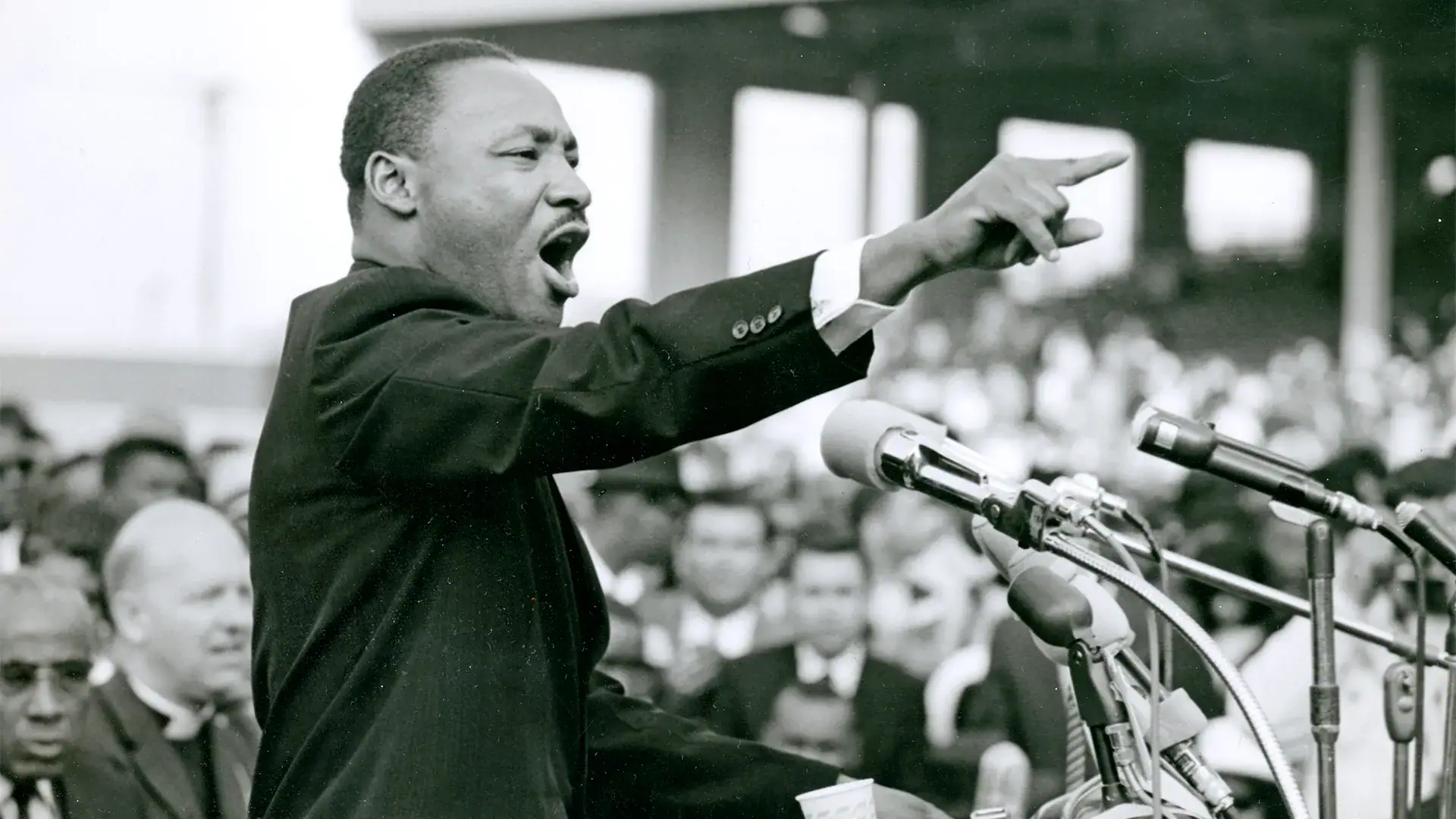
The Rev. Martin Luther King Jr.’s 1963 “I Have a Dream” speech, delivered on the steps of the Lincoln Memorial, remains a defining moment in the fight for civil rights. King deliberately chose that location to honor President Abraham Lincoln, saying, “A great American, in whose symbolic shadow we stand today.” Today, millions gather in that same symbolic shadow, remembering King’s dream and the fight for a more just society.
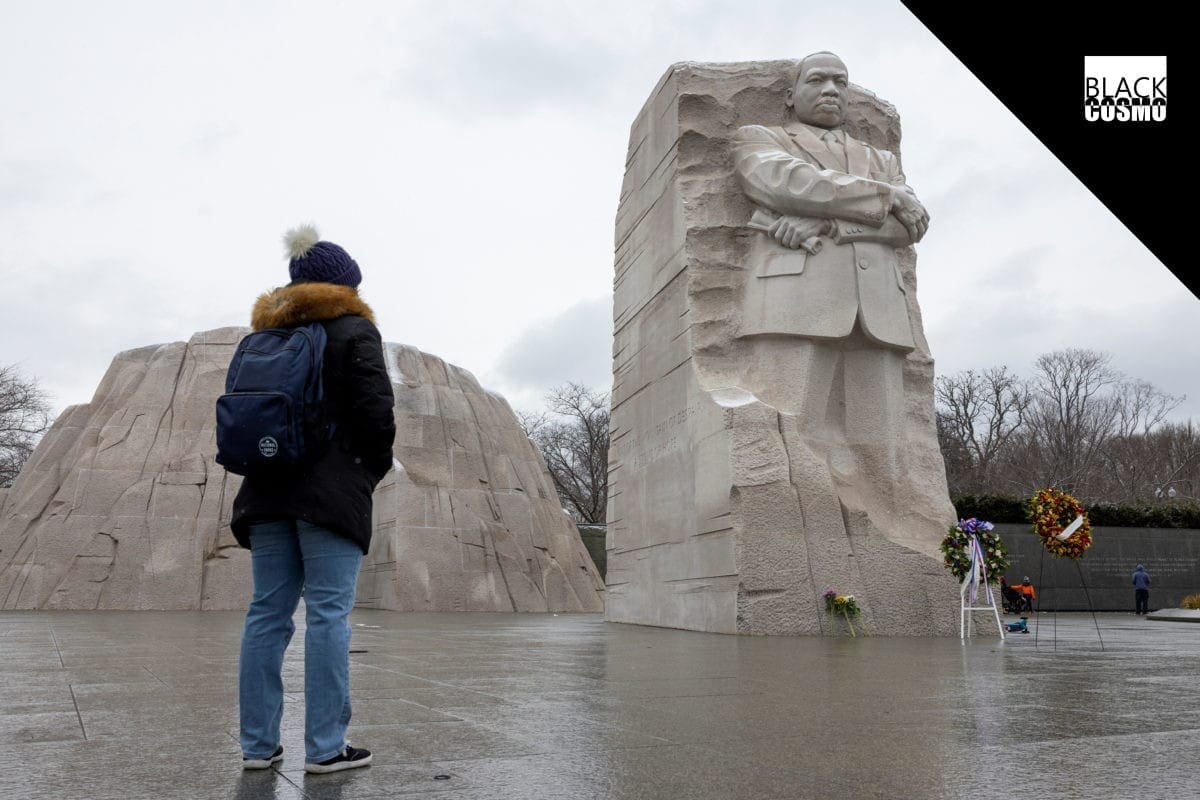
A person looks up at the Martin Luther King, Jr. Memorial on Martin Luther King Jr. Day in Washington, U.S., January 15, 2024.
The Struggle to Establish MLK Day
The journey to make Martin Luther King Jr. Day a federal holiday was long and contentious. Just four days after King’s assassination in 1968, U.S. Representative John Conyers introduced legislation to honor him with a national holiday. However, gaining widespread support proved challenging. King’s advocacy for economic justice, affordable housing, and opposition to the Vietnam War had made him a polarizing figure. Polls at the time showed that many Americans viewed him as “too radical.”
Despite these challenges, Conyers and the Congressional Black Caucus fought tirelessly for years to push the legislation forward. Coretta Scott King, King’s widow, worked to keep his legacy alive, lobbying for support and raising awareness. In 1980, Stevie Wonder amplified the movement by releasing his song “Happy Birthday,” dedicated to King, which became a rallying cry for the holiday.
The Turning Point
By the 1980s, America was reflecting on its progress in civil rights and regretting the Vietnam War’s divisive impact. Public opinion began shifting in King’s favor, and the movement gained traction. Finally, in 1983, 15 years after King’s death, President Ronald Reagan signed the bill into law, establishing Martin Luther King Jr. Day as a federal holiday to be observed on the third Monday of January.
However, the fight didn’t end there. Many states resisted recognizing the holiday. Southern states, in particular, delayed adoption, citing a range of excuses from financial concerns to outright opposition. Arizona’s resistance became infamous when Governor Evan Mecham repealed the state’s recognition of the holiday in 1987, claiming, “Black people don’t need a holiday. They need jobs.” This decision sparked widespread protests, celebrity boycotts, and economic losses, including Arizona’s opportunity to host the Super Bowl. After years of activism and public pressure, Arizona reinstated the holiday in 1992 via voter initiative.
South Carolina was the last state to adopt the holiday in 2000, though controversially, it also allowed observance of Confederate Memorial Day. These battles highlighted the enduring struggles for racial equity and justice, even in celebrating a man whose life was dedicated to those ideals.
A Day of Service and Action
Unlike other holidays, Martin Luther King Jr. Day is designed as a “day on, not a day off.” In 1994, Congressman John Lewis and Senator Harris Wofford introduced legislation, signed into law by President Bill Clinton, designating it as a National Day of Service. Across the country, communities commemorate King’s legacy through acts of kindness, service projects, and civic engagement.
Major cities and suburbs host parades, concerts, and festivals, while volunteers engage in activities like community clean-ups, food distribution, and blood donation drives. Organizations like AmeriCorps have invested millions of dollars into nonprofits and community programs, enabling hundreds of thousands to participate annually. CEO Michael Smith notes that the holiday serves as a spark, inspiring year-round service.
Carrying King’s Vision Forward
King’s family, including his daughter, Rev. Bernice King, continues to advocate for his principles. She urges people to go beyond quoting King’s famous speeches, calling for daily action rooted in nonviolence and justice. Scholars like Lerone Martin, director of the Martin Luther King Jr. Research and Education Institute at Stanford University, emphasize the importance of engaging with King’s writings, such as his 1963 “Letter from Birmingham Jail,” to better understand his philosophy and mission.
Reflecting on King’s legacy isn’t just about remembering his achievements; it’s about carrying his vision into the future. As Martin says, “We can arm ourselves with his ideals. We can continue to have a conversation with him—not just on one day but throughout the year.”
Martin Luther King Jr. Day stands as a powerful reminder of the work still to be done. It challenges us to move from “symbol to substance,” transforming the ideals of liberty and justice into everyday action. By honoring King’s legacy through service, education, and advocacy, Americans can ensure his dream remains alive for generations to come.
10 Things You May Not Know About Martin Luther King Jr.
Explore 10 surprising facts about the civil rights leader.
1. King’s Birth Name Was Michael, Not Martin
King was born Michael King Jr. on January 15, 1929. In 1934, however, his father, a pastor at Atlanta’s Ebenezer Baptist Church, traveled to Germany and became inspired by the Protestant Reformation leader Martin Luther. As a result, King Sr. changed his own name as well as that of his five-year-old son.
2. King Entered College At the Age of 15
King was such a gifted student that he skipped grades nine and 12 before enrolling in 1944 at Morehouse College, the alma mater of his father and maternal grandfather. Although he was the son, grandson and great-grandson of Baptist ministers, King did not intend to follow the family vocation until Morehouse president Benjamin E. Mays, a noted theologian, convinced him otherwise. King was ordained before graduating college with a degree in sociology.
3. King Received His Doctorate in Systematic Theology
After earning a divinity degree from Pennsylvania’s Crozer Theological Seminary, King attended graduate school at Boston University, where he received his Ph.D. degree in 1955. The title of his dissertation was “A Comparison of the Conceptions of God in the Thinking of Paul Tillich and Henry Nelson Wieman.”
King speaks near the Reflecting Pool in Washington as part of the Prayer Pilgrimage for Freedom in May 1957. It was the first time King addressed a national audience, and his “Give Us the Ballot” speech called for equal voting rights.
4. King’s ‘I Have a Dream’ Speech Was Not His First at the Lincoln Memorial
Six years before his iconic oration at the March on Washington, King was among the civil rights leaders who spoke in the shadow of the Great Emancipator during the Prayer Pilgrimage for Freedom on May 17, 1957. Before a crowd estimated at between 15,000 and 30,000, King delivered his first national address on the topic of voting rights. His speech, in which he urged America to “give us the ballot,” drew strong reviews and positioned him at the forefront of the civil rights leadership.
King sits for a police mugshot in February 1956 after he was arrested for directing the Montgomery bus boycott.
5. King Was Imprisoned Nearly 30 Times
According to the King Center, the civil rights leader went to jail 29 times. He was arrested for acts of civil disobedience and on trumped-up charges, such as when he was jailed in Montgomery, Alabama, in 1956 for driving 30 miles per hour in a 25-mile-per-hour zone.
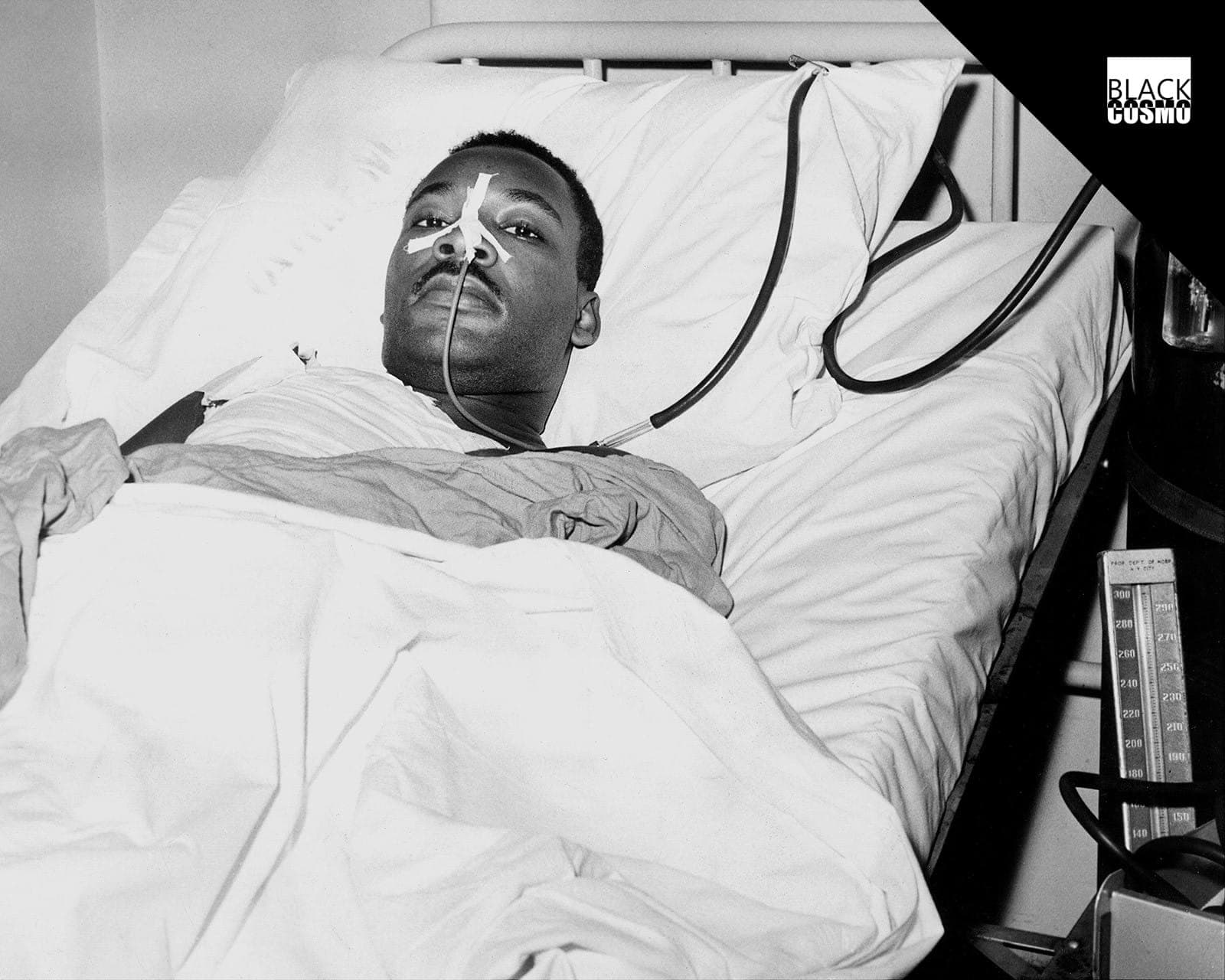
King is photographed at Harlem Hospital in New York after he was stabbed in the chest on September 20, 1958. The near-fatal incident occurred when he was autographing copies of his book “Stride Toward Freedom” at a Harlem bookstore. The attacker was Izola Curry, a mentally ill black woman who was later committed to a hospital herself.
6. King Narrowly Escaped an Assassination Attempt a Decade Before His Death
On September 20, 1958, King was in Harlem signing copies of his new book, Stride Toward Freedom, in Blumstein’s department store when he was approached by Izola Ware Curry. The woman asked if he was Martin Luther King Jr. After he said yes, Curry said, “I’ve been looking for you for five years,” and she plunged a seven-inch letter opener into his chest. The tip of the blade came to rest alongside his aorta, and King underwent hours of delicate emergency surgery. Surgeons later told King that just one sneeze could have punctured the aorta and killed him. From his hospital bed where he convalesced for weeks, King issued a statement affirming his nonviolent principles and saying he felt no ill will toward his mentally ill attacker.
7. King’s Last Public Speech Foretold His Death
King had come to Memphis in April 1968 to support the strike of the city’s Black garbage workers, and in a speech on the night before his assassination, he told an audience at Mason Temple Church: “Like anybody, I would like to live a long life. Longevity has its place. But I’m not concerned about that now … I’ve seen the Promised Land. I may not get there with you. But I want you to know tonight, that we, as a people, will get to the Promised Land. And I’m happy tonight. I’m not worried about anything. I’m not fearing any man. Mine eyes have seen the glory of the coming of the Lord.”
On April 4, 1968, King was fatally shot on the balcony of the Lorraine Motel in Memphis. Here, people stand over King’s fallen body as they point in the direction that the gunshots came from. James Earl Ray was arrested in London in June 1968, and the next year he confessed to the crime and was sentenced to 99 years in prison.
8. Members of King’s Family Did Not Believe James Earl Ray Acted Alone
Ray, a career criminal, pled guilty to King’s assassination but later recanted. King’s son Dexter met publicly with Ray in 1997 and argued for the case to be reopened. King’s widow, Coretta, believed the Mafia and local, state and federal government agencies were deeply involved in the murder. She praised the result of a 1999 civil trial in which a Memphis jury decided the assassination was the result of a conspiracy and that Ray was set up to take the blame. A U.S. Department of Justice investigation released in 2000 reported no evidence of a conspiracy.
9. King’s Mother Was Also Slain by a Bullet
On June 30, 1974, as 69-year-old Alberta Williams King played the organ at a Sunday service inside Ebenezer Baptist Church, Marcus Wayne Chenault Jr. rose from the front pew, drew two pistols and began to fire shots. One of the bullets struck and killed King, who died steps from where her son had preached nonviolence. The deranged gunman said that Christians were his enemy and that although he had received divine instructions to kill King’s father, who was in the congregation, he killed King’s mother instead because she was closer. The shooting also left a church deacon dead. Chenault received a death penalty sentence that was later changed to life imprisonment, in part due to the King family’s opposition to capital punishment.
10. George Washington, Abraham Lincoln and Cesar Chavez are the Only Other Americans to Have Had Their Birthdays Observed as a National Holiday
In 1983 President Ronald Reagan signed a bill that created a federal holiday to honor King. The holiday, first commemorated in 1986, is celebrated on the third Monday in January, close to the civil rights leader’s January 15 birthday.
The Weeknd is stepping up in a big way … dropping $1 million to support L.A. firefighters and residents caught in the chaos of the raging wildfires.The singer is teaming up with his XO Humanitarian Fund and World Food Program USA … directing his donation to the LAFD Foundation, GoFundMe’s Wildfire Relief Fund, and the L.A. Regional Food Bank to bolster relief efforts.
Fox 11 Los Angeles
This is just the latest move from The Weeknd amid the crisis … he also pulled the plug on his January 25 concert at the Rose Bowl.
He also shared the release date for his sixth studio album, “Hurry Up Tomorrow,” would be pushed back a week to January 31.
The Weeknd, aka Abel Tesfaye, explained postponing his projects was all about supporting the recovery of fire-ravaged communities.
Want to make a statement? Leave a comment about this here!
[efb_feed fanpage_id=”BlackCosmopolitan” words_limit=”25″ post_limit=”1″ skin_id=”115758″ cache_unit=”1″ cache_duration=”days” live_stream_only=”0″ load_more=”0″ links_new_tab=”1″ show_like_box=”0″] _________ Disclaimer: For Education and discussion purposes. Please note no copyright infringement is intended, was recorded on BlkCosmo’s own equipment, and we do not own nor claim to own any of the original recordings used in this video and intend to use this as ‘fair use’.
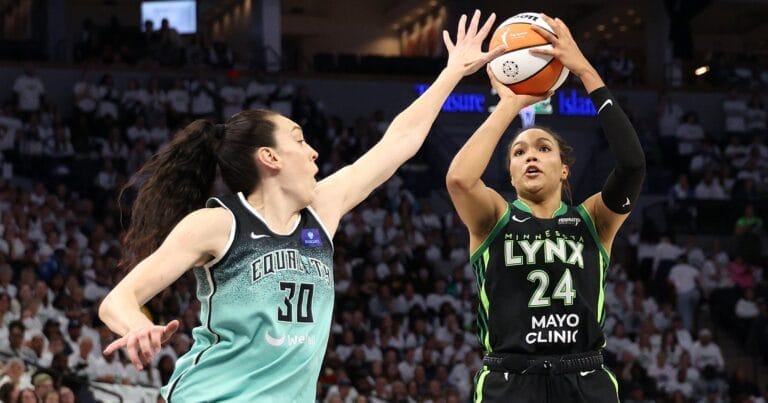
The WNBA season ended on an incredible high, with the New York Liberty clenching their first championship in 28 seasons after beating out the Minnesota Lynx in Game 5 of the finals. And thanks to two of the finals competitors, Breanna Stewart and Napheesa Collier, the excitement doesn’t have to end with the 2024 season.
Stewart and Collier have launched Unrivaled, a 3-on-3 basketball league that takes place during the WNBA off-season and starts Jan. 17, 2025. Unrivaled has been rolling out announcements regarding sponsors, players, salary, rule and schedule since 2023 — and we’ve stayed on top of it all.
Ahead, here’s everything you need to know about Unrivaled basketball, the roster, and how to tune in.
What Is Unrivaled?
Unrivaled is a brand-new style of 3-on-3 basketball, played on a 70-by-50-foot compressed court. Founded by Olympians and WNBA veterans Breanna Stewart and Napheesa Collier, the league features six teams, with six players on each team. The inaugural season begins Jan. 17 and is based in Miami located at Mediapro, a custom-designed facility that has a capacity of 850.
Who Is Playing in the Unrivaled League?
Unrivaled has officially announced all 36 players. The roster includes several other WNBA Finals stars (like Stewart, Collier, Sabrina Ionescu, and Courtney Williams); respected vets like Brittany Griner and Jewell Lloyd; as well as popular rookies, Angel Reese, Kate Martin, and Rickea Jackson. You can see the full list below:
Breanna Stewart
Napheesa Collier
Chelsea Gray
Arike Ogunbowale
Jewell Loyd
Rhyne Howard
Kahleah Copper
Jackie Young
Angel Reese
Dearica Hamby
Kayla McBride
Marina Mabrey
Satou Sabally
Allisha Gray
Natasha Cloud
Skylar Diggins-Smith
Rickea Jackson
Dijonai Carrington
Courtney Vandersloot
Brittney Sykes
Shakira Austin
Tiffany Hayes
Brittney Griner
Azurá Stevens
Courtney Williams
Kate Martin
Aaliyah Edwards
Lexie Hull
Aliyah Boston
Alyssa Thomas
Stefanie Dolson
Rae Burrell
Jordin Canada
Sabrina Ionescu
Cameron Brink
Katie Lou Samuelson
Unrivaled also announced the signing of Natisha Hiedeman for a relief player contract on Jan. 17. Hiedeman is suspected to replace Marina Mabrey who recently suffered a right calf strain, pulling her off the court for at least two weeks, per ESPN.
What Unrivaled Teams Have Been Announced?
There are six basketball clubs in Unrivaled: Vinyl, Mist, Laces, Rose, Phantom, and Lunar Owls. There are currently six players on each team:
Vinyl BC – Arike Ogunbowale (Club Captain), Aliyah Boston, Rhyne Howard, Jordin Canada, Dearica Hamby, Rae Burrell
Mist BC – Breanna Stewart (Club Captain), Jewell Loyd, Dijonai Carrington, Courtney Vandersloot, Aaliyah Edwards, Rikea Jackson
Laces BC – Alyssa Thomas (Club Captain), Jackie Young, Kayla McBride, Stefanie Dolson, Kate Martin, Tiffany Hayes
Rose BC – Chelsea Gray (Club Captain), Angel Reese, Kahleah Copper, Brittney Sykes, Azurá Stevens, Lexie Hull
Lunar Owls BC – Napheesa Collier (Club Captain), Courtney Williams, Skylar Diggins-Smith, Shakira Austin, Allisha Gray, Cameron Brink
What Unrivaled Coaches Have Been Announced?
The Unrivaled coaching staff is stacked with an all-star group of leaders, including:
Teresa Weatherspoon – Vinyl BC
Phil Handy – Mist BC
Andrew Wade – Laces BC
Nola Henry – Rose BC
Adam Harrington – Phantom BC
DJ Sackmann – Lunar Owls BC
When Does Unrivaled Basketball Start?
The Unrivaled season begins Jan. 17 in Miami, FL. The season will last nine weeks, including playoffs, and the six teams will play in a round-robin schedule. The top four teams at the end of the regular season will make the playoffs. There will also be a 1 v 1 championship within Unrivaled to determine the best 1 v 1 player in the world and, according to Collier, there will be a $250,000 prize.
So it’s a single elimination tournament to determine the best 1v1 player in the world. And I’m ACTUALLY not supposed to say this but…first place gets minimum $250k 💰🤑 https://t.co/8Jb2DYEXhs
The league is setting a record with the highest average salaries in women’s sports history, starting at $100,000. Inaugural Unrivaled players will also receive equity ownership. This is monumental for WNBA players, considering that the conversation around the league’s pay gap and need to play overseas during the WNBA off-season has been a point of contention among athletes for decades.
“As elite basketball players and also moms, we get it. We get both sides of it,” Stewart told PS in a recent interview, discussing the creation of Unrivaled. Stewart went on to say that she takes pride in being able to “make this league where players can stay home, have their families be close, and make sure that the W and these players are constantly relevant and top of mind and you don’t have to figure out which country they’re playing in overseas.”
Unrivaled is also offering equity to players not on the team. In fact, it just announced several NIL partnerships with collegiate phenoms, Flau’jae Johnson and Paige Bueckers.
Where Can You Buy Unrivaled Tickets?
Tickets were released to Ticketmaster starting Nov. 21. Newsletter subscribers received exclusive early access to tickets before they go live to the public.
The opening night games on Jan. 17 will feature Napheesa Collier and the Lunar Owls BC vs. Breanna Stewart and the Mist BC at 7 pm ET — continuing the excitement from the WNBA finals matchup. Then, Angel Reese and the Rose BC will take on Aliyah Boston and Vinyl BC at 8 pm ET.
Alexis Jones is the senior health and fitness editor at PS. Her passions and areas of expertise include women’s health and fitness, mental health, racial and ethnic disparities in healthcare, and chronic conditions. Prior to joining PS, she was the senior editor at Health magazine. Her other bylines can be found at Women’s Health, Prevention, Marie Claire, and more.
Want to make a statement? Leave a comment about this here!
[efb_feed fanpage_id=”BlackCosmopolitan” words_limit=”25″ post_limit=”1″ skin_id=”115758″ cache_unit=”1″ cache_duration=”days” live_stream_only=”0″ load_more=”0″ links_new_tab=”1″ show_like_box=”0″] _________ Disclaimer: For Education and discussion purposes. Please note no copyright infringement is intended, was recorded on BlkCosmo’s own equipment, and we do not own nor claim to own any of the original recordings used in this video and intend to use this as ‘fair use’.
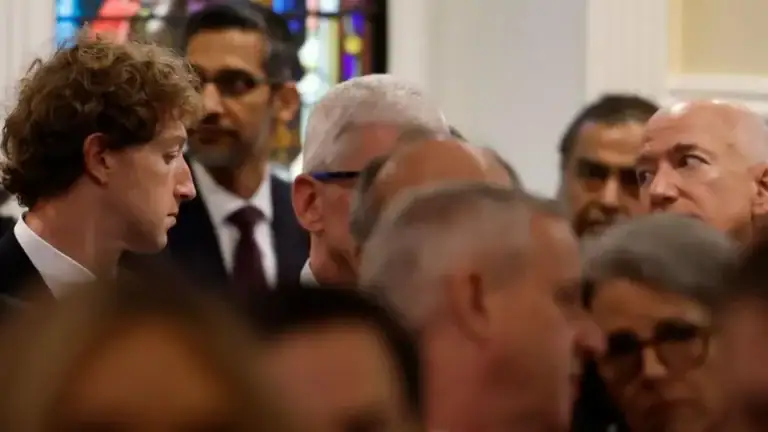
A parade of tech billionaires and key members of his orbit joined President-elect Donald Trump as he kicked off his pre-inaugural celebrations with a church service on Monday morning.
Amazon founder Jeff Bezos, Meta boss Mark Zuckerberg, Apple leader Tim Cook, and Google chief Sundar Pichai were seen taking their prime seats at St John’s Church. So far Michelle Obama does not seem to be in attendance.
Media tycoon Rupert Murdoch, FIFA president Gianni Infantino and former UK Prime Minister Boris Johnson were also spotted at the church.
Many of these executives were among the first business world critics of Trump during his first term, speaking out on issues such as climate change and immigration.
Tech leaders Mark Zuckerberg, Jeff Bezos, and Tim Cook were seen sitting together at a morning church service ahead of Donald Trump inauguration (Getty Images)Former Executive Chairman of Fox Corp Rupert Murdoch attends services at St. John’s Church in Washington, D.C. (Getty Images)
TikTok chief executive Shou Zi Chou too is expected to attend the inauguration, as his company grapples with the fallout from a US ban, as well as Sam Altman of OpenAI and Dara Khosrowshahi of Uber.
Then of course there is SpaceX and Tesla boss Elon Musk, who spent nearly $300m helping the president campaign and has stuck closely to his side ever since.
It is a striking spectacle. The last public event in Washington to bring so many tech bosses together in the same room was a 2020 congressional hearing aimed at their companies.
Today, most of the firms still have serious outstanding matters before the US government, including anti-monopoly lawsuits, investigations, regulatory fights and tariffs.
Last week, Senator Elizabeth Warren and Michael Bennett, both Democrats, shared a letter addressed to the executives, which accused them of trying to “cozy up to the incoming Trump administration in an effort to avoid scrutiny, limit regulation and buy favor”.
Donald Trump arrives at St. John’s Church along with Melania Trump. Mark Zuckerberg is in the background. (Photo by Anna Moneymaker/Getty Images)
“Funny they never sent me one of these for contributing to Democrats,” Mr Altman posted on social media in reply.
How enduring the tech bromance proves and how far Trump will push on many of these issues remain open questions.
But the president, who left office the first time as a kind of pariah in the business world, appears to be revelling in his new position.
As he wrote on social media last month: “Everybody wants to be my friend!!!”
Trump’s budding friendships with tech executives have not gone over well with everyone in his circle.
Former Trump White House chief strategist Steve Bannon on Sunday called Musk a “truly evil guy”, claiming he would have him “run out of here by Inauguration Day”.
“I look at this and I think most people in our movement look at this as President Trump broke the oligarchs, he broke them and they surrendered,” Bannon told ABC News.
Want to leave a comment? We are talking about this here.











:upscale()/2025/01/06/791/n/1922729/tmp_IcY06h_882d350bd7b639be_ezgif-1-64ce515082.gif)
:upscale()/2025/01/06/792/n/1922729/tmp_9AIlp4_aa05d6595255aa42_IMG_3407.JPG)
:extract_cover():upscale():fill(ffffff)/2025/01/06/868/n/1922729/19e6664f677c341178f8c2.98697279_ifly1-30.jpg)
:extract_cover():upscale():fill(ffffff)/2025/01/06/868/n/1922729/ceb79897677c33ee68e655.24070643_2c.jpg)
:extract_cover():upscale():fill(ffffff)/2025/01/06/867/n/1922729/0e5991e3677c33bcc66716.63684094_98.jpg)