
Home Blog Page 570

Are Gym Equipment Wipes Effective in Reducing Bacterial Growth?

0


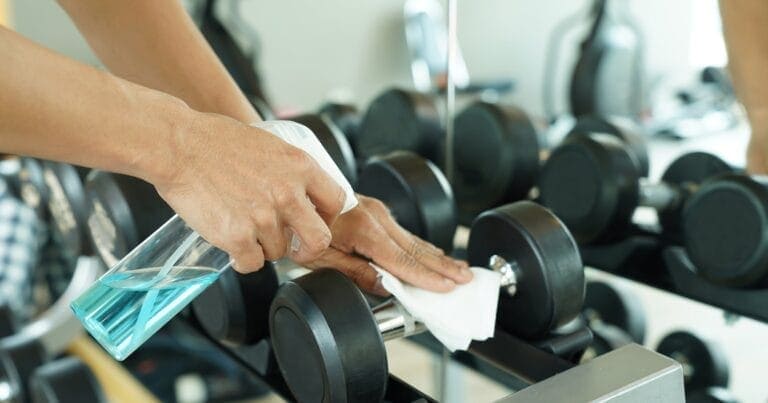
Gym equipment wipes: You use them, we use them, and we all hope the person who used the machine before us used them, too. But how effective are those little wipes, really? Are they actually doing anything, or is this an example of a polite gesture that’s more for show than sanitation?

Here’s the good news: The gym isn’t a high-risk area for getting sick–as long as the person next to you isn’t coughing and sneezing. Even grimy equipment isn’t particularly problematic. “Overall, the risk of infection from surfaces people might come in contact with at a gym is very low,” says Daniel Kuritzkes, MD. You’re more likely to get sick from respiratory droplets from someone coughing or sneezing than you are from touching a surface (as long as you’re careful not to touch your face afterward, more on that important caveat later). However, wiping equipment down is still effective for killing most germs — and is an important part of being plain old courteous in a shared gym space.

We spoke with experts to find out just how effective equipment wipes are, and the best ways to avoid spreading (and catching!) germs at the gym.

Experts Featured In This Story

Daniel Kuritzkes, MD, is the chief of the infectious diseases division at Brigham and Women’s Hospital.

Erin Nitschke, NFPT-CPT, NSCA-CPT, is a health coach, ACE scientific advisory panel member, and program director of sciences at Laramie County Community College.

Shira Doron, MD, is the chief infection control officer at Tufts Medicine.

How Effective Are Equipment Wipes At Disinfecting?

We can all take a collective sigh of relief—equipment wipes are generally effective for eliminating the germs that cause most respiratory illnesses (when used correctly, that is). “Most bacteria and viruses are readily killed with standard disinfectant wipes,” says Dr. Doron. What makes the biggest difference in wipe effectiveness is contact time, AKA the number of minutes a surface has to stay wet with disinfectant in order for it to work against a particular germ.

“An ideal wipe has a short contact time of a couple of minutes for both common bacteria, like Staph and E. coli, and viruses, like influenza and coronavirus,” says Dr. Doron. If the wipe has a longer contact time, there’s a greater chance that the disinfectant will dry on the surface before it has a chance to work.

Dr. Nitschke recommends looking for wipes labeled as EPA-approved disinfectants for viruses and bacteria. It’s better to wipe the equipment down and let it dry out, rather than wiping it dry. Wiping and drying immediately after may not provide full disinfection, follow the product’s instructions for optimal results, says Dr. Nitschke.

Are Equipment Wipes More Effective Against Certain Germs Than others?

Here’s some good news: It’s pretty easy for an equipment wipe to knock out respiratory viruses such as influenza and coronavirus, says Dr. Kuritzkes. But the norovirus, which causes gnarly digestive symptoms such as nausea and vomiting, is notoriously challenging to kill and requires bleach or similarly strong products, says Dr. Doron. That’s what makes it so contagious…and why it’s always important to wash your hands post-workout.

Should You Wipe Down Equipment Before And After Use, Just to Be Safe?

This is more of a personal choice, although it certainly doesn’t hurt, says Dr. Nitschke. Wiping down equipment before you use it can add an extra layer of precaution, as there’s no guarantee that equipment has been cleaned (even though gyms encourage users to clean equipment after using it).

Dr. Kuritzkes says he always wipes down equipment before using it. Dr. Doron doesn’t, but both agree they take extra precautions not to touch their face while working out and always wash their hands thoroughly when they leave the gym.

What, Exactly, Should You Be Wiping Down at the Gym?

Machine handles and dumbbells and squat rack bars and mats and machines, oh my. There’s no shortage of things you touch at the gym, so how do you know what you should wipe off after use? Dr. Nitschke recommends wiping down all surfaces that you come in contact with during your workout, including machine and dumbbell handles and squat rack bars, in addition to pads, benches, and mats. Handles and bars are high-touch areas that can easily transfer bacteria, sweat, and oils from one person to another. While pads and benches may only come into direct contact with your body, having a blanket rule to wipe down everything is still a good idea. This respects the hygiene of the shared space and reduces germ spread for everyone.

How Else Can You Avoid Germs at the Gym?

Aside from breathing in respiratory droplets from a sick person, the greatest risk of infection is going to come from picking something up on your hands and then touching your face, says Dr. Doron. “Since people tend to touch their eyes, nose and mouth a lot without realizing it, it is easy to pick up germs from gym equipment, transfer it to the mucus membranes of the face and get sick that way. If you avoid touching your face until you are done with your workout and wash your hands well, how well disinfected the equipment is doesn’t really matter as much.”

Dr. Nitschke also emphasizes the importance of maintaining your own personal hygiene in a shared gym environment. For example, she recommends bringing a clean towel to place on benches or mats, washing your hands before and after visiting the gym, and, again, avoiding touching your face during workouts. And, hopefully it goes without saying, but if you’re not feeling well, please stay home and rest rather than risk spreading germs to others and/or exacerbating your symptoms. “Remember that gym etiquette goes beyond cleanliness. It’s about being mindful and respectful of the space and the people around you,” she says. “These small acts of consideration create a healthier and more enjoyable environment for everyone.”

Want to make a statement?
Leave a comment about this here!

[efb_feed fanpage_id=”BlackCosmopolitan” words_limit=”25″ post_limit=”1″ skin_id=”115758″ cache_unit=”1″ cache_duration=”days” live_stream_only=”0″ load_more=”0″ links_new_tab=”1″ show_like_box=”0″]
_________
Disclaimer:
For Education and discussion purposes. Please note no copyright infringement is intended, was recorded on BlkCosmo’s own equipment, and we do not own nor claim to own any of the original recordings used in this video and intend to use this as ‘fair use’.

Love Bombing: How to Recognize and Stop Emotional Manipulation

Imagine being swept off your feet by a whirlwind romance, only to discover it’s a calculated tactic of manipulation. This is the essence of love bombing, a phenomenon gaining increasing attention in the world of relationships. Love bombing is a manipulative strategy where someone overwhelms their partner with excessive affection, attention, and adoration, often with the hidden agenda of control. At first, it can feel like a dream come true, but the reality can be far more damaging.

Consider Sarah, who met Tom at a friend’s party. Within days, Tom was texting her constantly, surprising her with lavish gifts, and proclaiming she was his soulmate. Sarah felt like she was living a fairy tale, but her friends began to worry about the intensity and speed of the relationship. This scenario, while seemingly romantic, illustrates how love bombing often begins – a flood of affection that can mask darker intentions.

The Allure and Danger of Overwhelming Affection

We’ve all experienced the rush of attraction when meeting someone new. Your heart races, your palms sweat, and you can’t stop thinking about them. It’s a universal experience that poets and songwriters have celebrated for centuries. But when does this natural excitement cross the line into something harmful?

Love bombing amplifies this initial spark to an unsustainable degree. The person engaging in love bombing showers their target with compliments, attention, and grand gestures of affection. At first, this can feel like winning the emotional lottery. The intensity of their attention can make you feel uniquely special and understood. However, this overwhelming affection often serves a manipulative purpose. It is designed to fast-track intimacy and make you dependent on their validation.

The danger lies in how this behavior exploits our natural desire for connection and validation. It bypasses the healthy pace at which trust and intimacy normally grow. When someone offers everything you’ve ever wanted in a partner within a short span of time, it’s easy to ignore red flags. The constant attention, extravagant gestures, and declarations of love can leave you breathless – but also blind to the true motivations behind these actions.

This manipulation can leave you vulnerable, creating an emotional imbalance that’s difficult to recognize until it’s too late. And when the affection suddenly diminishes or turns into criticism, it can leave you questioning your own judgment and worth.

Understanding How Love Bombing Progresses

Love bombing typically unfolds in phases, each with distinct patterns that help create and sustain the manipulative dynamic. By understanding these phases, you can better identify and protect yourself from emotional manipulation.

Phase 1: Idealization

This is the phase where the love bomber creates an environment of seemingly perfect romance. Their actions include constant texts and calls, lavish gifts, and grand romantic gestures. They may praise you effusively and claim to understand you in ways no one else ever has. At this stage, everything feels magical. You’re swept up in a tidal wave of affection and attention that feels both exhilarating and unique.

However, the intensity of this phase is often a red flag. Genuine connection takes time to develop, and this flood of affection can create a false sense of intimacy. If the relationship feels too good to be true, it’s worth stepping back and assessing whether the affection is truly genuine or part of a calculated effort.

Phase 2: Devaluation

Once the love bomber feels they have secured your trust, the dynamic often shifts. The constant affection may be replaced by subtle criticisms or manipulative behaviors. Compliments turn to put-downs, and they may begin to question your decisions or belittle things they once praised. You might feel confused by their sudden change in demeanor.

This phase can also include gaslighting, where the love bomber invalidates your feelings or perceptions, making you question your reality. They may isolate you from friends and family, suggesting that these relationships are interfering with your connection. This tactic deepens their control and makes it harder for you to reach out for help.

Phase 3: Discard

In some cases, the relationship ends abruptly. The love bomber may withdraw entirely, leaving you feeling abandoned and bewildered. Alternatively, they might cycle between moments of affection and periods of neglect, keeping you emotionally off-balance and dependent on their approval. This rollercoaster dynamic can erode your self-esteem and make it difficult to leave the relationship.

It’s important to recognize that not all relationships follow these exact stages, but the pattern of idealization followed by devaluation is a hallmark of love bombing.

The Lasting Emotional Impact

The aftermath of a love bombing relationship can be deeply painful and long-lasting. Victims often report feelings of confusion, self-doubt, and emotional exhaustion. The stark contrast between the initial idealization and subsequent devaluation can leave you questioning your judgment and struggling to trust others.

Common Effects Include:

  • Lowered Self-Esteem: Constant criticism and emotional manipulation can undermine your confidence.
  • Anxiety and Depression: The stress of navigating the relationship’s highs and lows can take a toll on your mental health.
  • Isolation: Many victims find themselves distanced from their support systems, making it harder to seek help.
  • Trust Issues: Moving forward, it can be challenging to trust new partners or even your own instincts.

These emotional wounds may persist long after the relationship ends, but recovery is possible with time, support, and self-care.

Recognizing the Signs and Taking Action

Awareness is your first line of defense against love bombing. While every relationship is unique, there are common warning signs to watch for:

  • Over-the-top gestures or declarations of love early in the relationship.
  • Pressure to spend all your time together or make premature commitments.
  • Disregard for personal boundaries, such as becoming upset when you prioritize other relationships or activities.

What You Can Do:

  1. Trust Your Instincts: If something feels off, don’t dismiss it. Your intuition is a valuable guide.
  2. Maintain Boundaries: Protect your independence by setting clear limits on time, communication, and personal space.
  3. Seek Outside Perspectives: Friends and family can offer valuable insight and help you spot red flags.
  4. Take Your Time: Healthy relationships develop gradually. Resist the pressure to rush into commitment.

Healing and Moving Forward

Breaking free from a love bombing relationship is a significant step, but healing takes time and effort. Rebuilding your self-esteem and rediscovering your independence are essential parts of the process.

Strategies for Recovery:

  • Reconnect with Loved Ones: Rebuild connections with friends and family who support and affirm your worth.
  • Engage in Self-Care: Prioritize activities that bring you joy and help you feel grounded, such as exercise, journaling, or creative pursuits.
  • Seek Professional Help: A therapist can provide tools to process your emotions, rebuild confidence, and develop healthier relationship patterns.
  • Set New Standards: Reflect on what you want in a relationship and establish clear boundaries for the future.

The Journey to Authentic Love

Understanding love bombing equips you with the tools to protect yourself and build healthier connections. Authentic love is not about overwhelming intensity or grand gestures; it’s about respect, trust, and mutual growth.

Healthy relationships develop at a natural pace, allowing trust and intimacy to grow over time. They respect your individuality, support your goals, and bring out the best in both partners. By recognizing the signs of manipulation and prioritizing your well-being, you can create the foundation for meaningful and fulfilling relationships.

Remember, the most important relationship you have is the one with yourself. Nurture your self-worth, trust your instincts, and approach the world of romance with both an open heart and a discerning mind. By doing so, you can move forward with strength and confidence, ready to embrace the love you truly deserve.

The US’s ancient, underrated culinary capital

0
Alamy The exterior of San Xavier del Bac Mission (Credit: Alamy)Alamy
(Credit: Alamy)

Home to the oldest continuously cultivated soil in the US, this desert-bound city boasts a fascinating food scene all its own.

The shady portico of San Xavier del Bac Mission, a whitewashed oasis set against the cactus-studded mountains of the Sonoran Desert, offered a brief reprieve from Arizona’s scorching summer sun as I walked with local chef Ryan Clark. The stucco mission, known as the “White Dove of the Desert”, was founded in 1700 when this part of Arizona belonged to New Spain, but Clark was more excited to arrive at nearby San Xavier Co-op Farm on the Tohono-O’odham reservation.

“The ground you’re standing on is where agriculture in the United States began,” Clark told me. “Approximately 4,200 years ago, the ancestors of the Tohono O’odham transitioned from hunting and foraging in the desert to planting corn. These plots hold the oldest continuously cultivated soil in our nation.”

This year marks the tenth anniversary of when Tucson became the first city in the US to be named a Unesco City of Gastronomy, joining the ranks of Parma, Italy; Chengdu, China; and Lyon, France as a centre of global culinary importance. The Unesco designation was a nod to the city’s deep-seated agricultural roots and has transformed Tucson into a culinary travel destination while also inspiring chefs, bakers, brewers and distillers to incorporate the area’s traditional ingredients in new ways. Today, alongside iconic staples like birria tacos and Sonoran hot dogs, you’ll find American Single Malt whiskey smoked in mesquite, artisanal chocolate made with chiltepin chilli and Michelin-worthy tasting menus showcasing the desert’s bounty.

Visit Tucson The San Xavier Co-op Farm is located on the oldest continuously cultivated land in the US (Credit: Visit Tucson)Visit Tucson
The San Xavier Co-op Farm is located on the oldest continuously cultivated land in the US (Credit: Visit Tucson)

Tucsonan cuisine reflects the many disparate peoples who have called the Sonoran Desert home over the centuries – a colourful stew of influences from Indigenous nations, Spanish settlers, Anglo American cowboys and Chinese railroad workers. As Carolyn Niethammer, the author of the book A Desert Feast: Celebrating Tucson’s Culinary Heritage, writes: “Tucsonan cuisine was fusion long before fusion became popular.”

Since 1983, Native Seeds/SEARCH, a Tucson-based seed bank, has preserved hundreds of near-extinct seeds from the American Southwest, often in partnership with Indigenous communities.In recent years, annual culinary celebrations like the Agave Heritage Festival (10-13 April) and Sonoran Restaurant Week (6-14 September) highlight chefs and distillers working with traditional desert ingredients.

The best of 2025

Tucson, Arizona was named one of BBC Travel’s 25 best places to visit in 2025, a list highlighting destinations that are not only welcoming visitors, but using tourism as a force for good. See the full list here.

According to Niethammer, the foundation of Tucsonan cuisine took shape four millennia ago, when Sonoran Indigenous societies foraged the desert for cacti, small game, wild seeds and grasses.

“Sonoran hunter-gatherers were remarkable botanists, capable of identifying hundreds of edible plants from this seemingly inhospitable land,” Niethammer said. Mashed mesquite pod porridge sweetened with prickly pear fruits was a staple, and cholla cactus buds sustained Indigenous groups during lean times. Cholla buds were crucial staples in March, a time the Tohono-O’odham called “the month without food”, due to dwindling food stores and plunging temperatures. To season game like jackrabbits, javelina and mule deer, the Tohono O’odham turned to chiltepin chillies, blisteringly hot peppers and mesquite wood, which infused meat with sweet, piquant smoke.

Kayla Draper Chef Kayla Draper serves corn masa ice cream in a chocolate-chiltepin shell (Credit: Kayla Draper)Kayla Draper
Chef Kayla Draper serves corn masa ice cream in a chocolate-chiltepin shell (Credit: Kayla Draper)

Many of these ancient ingredients remain mainstays in contemporary Tucsonan kitchens. At The Hub Restaurant and Ice Creamery, chef Kayla Draper, a local resident and member of the Navajo Nation, adds ground mesquite pods into tiramisu to add a nutty, molasses-like flavour to the classic Italian treat. Draper pairs her mesquite tiramisu with scratch-made prickly pear sorbet. A dram from Whiskey Del Bac, a local distillery smoking malt with mesquite wood, adds a final exclamation point to the desert dessert. In homage to the food of her Navajo ancestors, Draper makes blue corn macarons and corn masa ice cream encased in a chocolate-chiltepin shell.

Meanwhile, cholla buds are a favourite salad topping for chef Clark. “We call cholla buds ‘desert asparagus’. They have a chewy bite like a semi-cooked beet,” Clark said. “The clean, herbaceous flavours pair well with a light vinaigrette.”

As Niethammer explained, the diet of the Sonoran desert’s early residents transformed with the advent of agriculture here in roughly 2200 BCE, which likely came from contact with Mesoamerican cultures. “Corn was the first crop the ancestors of the Tohono-O’odham planted,” Niethammer said. “Ancient corn, domesticated from a Oaxacan wild grass called teosinte, was only about three inches long, and the Tohono O’odham still relied on foraging and hunting even after adopting agriculture.”

Squash became part of the Sonoran diet around 800 CE and shortly thereafter, beans. “Beans require a heat-resistant vessel to cook, so they likely only became a Sonoran staple after the Indigenous people learned how to make pottery,” Niethammer told me. Squash, beans and corn became known as The Three Sisters: a nutritious trio still relished in Tucson from roadside diners to white-tablecloth dining rooms like Maynards Kitchen, located near the the historic Hotel Congress.

Johnny Motley Many local restaurants, like Maynards Kitchen, serve modern takes on ancient favourites, like The Three Sisters (Credit: Johnny Motley)Johnny Motley
Many local restaurants, like Maynards Kitchen, serve modern takes on ancient favourites, like The Three Sisters (Credit: Johnny Motley)

Tucsonan cuisine evolved again in the late 16th Century, when Father Eusebio Kino and a small group of Spanish missionaries settled in the Santa Cruz Valley. Pork, beef and Mediterranean crops like figs, quince, olives, and – most importantly – wheat joined The Three Sisters and desert herbs in Sonoran larders.

“The primary goal for the Spanish was to convert the Indigenous people to Catholicism, and they needed wheat for communion wafers,” Niethammer said. “Father Kino planted a desert-adapted grain called [white Sonora wheat]. Today, you’ll still find [it], a relative of winter wheat, across Tucson.” Low in gluten content, white Sonora wheat is ill-suited for making bread but adds a delightful nutty flavour to biscuits and tortillas. At Barrio Bread, a Tucson bakery specialising in heritage grains, head baker Don Guerra mixes the wheat into his dough to make ciabatta rolls, bolillos (soft, torpedo-shaped bread rolls), and baguettes. In 2022, Guerra won the James Beard Award for Outstanding Baker.

Another major culinary transformation happened when the US acquired what is now Tucson in 1854. Soon after the Gadsden Purchase, in which the US acquired Arizona from Mexico, the Southern Pacific Railroad reached Tucson. Anglo American ranchers poured in, introducing canned fish and meats and cowboy barbecue. Chinese railroad workers also brought new ingredients and dishes.

“Many rail workers had been farmers in China, and they pioneered the cultivation of new crops like strawberries, lettuce and soybeans in the [nearby] Santa Cruz Valley,” Niethammer said. Adjusting to available ingredients and the palates of their customers, Chinese grocers sold Chinese chorizo, pork sausage seasoned with soy sauce, rice wine and chilli. Today, the annual Chinese Chorizo Festival (held in March), celebrates this Sino-Sonoran sausage in sushi, fried rice and even cocktails.

Johnny Motley Barrio Bread's baker, Don Guerra, has won a James Beard Award (Credit: Johnny Motley)Johnny Motley
Barrio Bread’s baker, Don Guerra, has won a James Beard Award (Credit: Johnny Motley)

“Tucson may not have as many glitzy restaurants as Phoenix or Scottsdale,” Draper told me. “But our food is more distinctive and soulful, and we Tucsonans take pride in our culinary heritage – especially after the Unesco recognition.” For visitors eager to learn about Tucsonan cuisine, she recommends tours with Taste of Tucson, which leads gourmet excursions through the city’s historic downtown as well as off-the-beaten-track neighbourhoods.

Draper also recommends Zio Peppe, which has been attracting pizza aficionados from across the US with pies made from mesquite-flour and garnished with pickled cholla buds since it opened in 2021. Elsewhere, BATA, one of Bon Appetít’s best new restaurants in 2022, has garnered national buzz for its live fire cooking and creative Sonoran dishes like squash ice cream. Tucson’s distillers and brewers also are embracing heritage ingredients. Crooked Tooth Brewing Co. crafts a prickly pear sour beer, and on the harder side of the ABV spectrum, Whiskey del Bac produces a Scotch-style whiskey with barley smoked with mesquite wood rather than traditional peat.

On my last night in Tucson, chef Clark and I knocked back a round of prickly pear margaritas at Ventana Canyon before heading to Fourth Avenue, the so-called “heartbeat of Tucson”, lined with elegant Mission Revival architecture and boisterous bars. After dark, food carts selling Sonoran hot dogs, a classic late-night snack, congregate here. As the franks sizzled on a small grill and the cook heaped beans, cheese and salsa on a steamed bolillo bun, Clark waxed poetic.

“You see all the culinary layers of Tucson in a Sonoran hotdog: beans and chillies from the Indigenous Sonorans; bolillo buns from the Spanish; and bacon, cheese and tubed meat from Anglo Americans.” And Chinese influences? Clark suggested I return next March for the Chinese Chorizo Festival. Spooning pickled jalapenos onto his hot dog, Clark said, “A cheesy dog with beans and salsa: quintessentially American and quintessentially Tucsonan.”

Tank says Grammys are needed after L.A. fires

0

Want to make a statement?
Leave a comment about this here!

[efb_feed fanpage_id=”BlackCosmopolitan” words_limit=”25″ post_limit=”1″ skin_id=”115758″ cache_unit=”1″ cache_duration=”days” live_stream_only=”0″ load_more=”0″ links_new_tab=”1″ show_like_box=”0″]
_________
Disclaimer:
For Education and discussion purposes. Please note no copyright infringement is intended, was recorded on BlkCosmo’s own equipment, and we do not own nor claim to own any of the original recordings used in this video and intend to use this as ‘fair use’.

Soulja Boy defends performing for Trump, claims Obama and Kamala never paid him.

0

Soulja Boy is speaking up and out in defense of his performance for the Crypto Ball – an event held in Donald Trump‘s honor.

And, true to form, the rapper did not hold back.

Full story below…

The ‘Crank Dat’ MC came under fire – alongside the likes of Snoop Dogg and Rick Ross – for taking to the stage at the event.

Venting via Instagram, the 34-year-old hissed:

“Obama never put money in my pocket, n*gga. Kamala never put money in my pocket, n*gga. Trump put money in my pocket, n*gga.

Motherf**kers trying to say something about me performing at the Crypto Ball, did Kamala call my f**king phone? Did Obama call my motherf*cking phone?

Y’all so worried about…Snoop Dogg…Rick Ross. Kamala, you didn’t even win b*tch. Y’all can s*ck my d*ck. I do what the f**k I want to do.”

#SouljaBoy defends himself after people criticized him for supporting #DonaldTrump pic.twitter.com/62BpHM5khg

— HOT 97 (@HOT97) January 19, 2025

Soulja Boy’s words follow a less expletive led clapback from Nelly, who is performing at the formal inauguration on January 20.

Want to make a statement?
Leave a comment about this here!

[efb_feed fanpage_id=”BlackCosmopolitan” words_limit=”25″ post_limit=”1″ skin_id=”115758″ cache_unit=”1″ cache_duration=”days” live_stream_only=”0″ load_more=”0″ links_new_tab=”1″ show_like_box=”0″]
_________
Disclaimer:
For Education and discussion purposes. Please note no copyright infringement is intended, was recorded on BlkCosmo’s own equipment, and we do not own nor claim to own any of the original recordings used in this video and intend to use this as ‘fair use’.

Navigating Narcissism: The Ultimate Guide to Thriving and Self-Protection

Life can be challenging enough on its own, but when you find yourself entangled with a narcissist—whether in personal relationships or professional settings—the complexity multiplies exponentially. The constant emotional drain, manipulation, and criticism can leave even the strongest individuals feeling depleted and questioning their self-worth.

But there’s hope. With the right strategies and mindset, you can not only survive but thrive in the face of narcissistic behavior. This guide will help you navigate these challenging dynamics, protect your well-being, and rediscover your strength.

Understanding the Narcissist’s Playbook

To effectively handle interactions with narcissists, it’s crucial to first understand what drives their behavior. Narcissism is characterized by:

  • An inflated sense of self-importance
  • An insatiable need for admiration
  • A profound lack of empathy for others

These traits manifest in many ways, from dominating conversations to expecting special treatment in every situation. It’s not just about being self-centered; it’s about a fundamental disregard for others’ thoughts, feelings, and experiences.

For example, a narcissist might monopolize discussions, constantly redirecting attention to themselves. Over time, this behavior can erode your sense of value and importance, whether in personal relationships or professional collaborations.

Narcissistic Traits vs. Narcissistic Personality Disorder (NPD)

It’s important to note that not everyone who exhibits narcissistic behaviors has NPD. Narcissistic traits exist on a spectrum:

  • Mild narcissistic tendencies may appear in individuals who occasionally act self-centered but can still recognize and adjust their behavior.
  • Full-blown NPD is a clinically diagnosed condition involving pervasive patterns of grandiosity and entitlement.

Understanding this distinction helps you tailor your strategies. For someone with NPD, protecting yourself often becomes the priority, as the prognosis for change is typically poor. However, for those with narcissistic tendencies, managed interaction and boundary-setting might yield better outcomes.

The Hidden Toll: How Narcissists Drain Your Time and Energy

One of the most insidious aspects of dealing with narcissists is how they gradually consume your emotional and mental resources. Often, this drain happens so subtly that you don’t notice the extent of it until you’re completely exhausted.

Recognizing the Patterns

Consider how much time and energy is spent on:

  • Direct interactions with the narcissist
  • Preparing for these encounters
  • Recovering from their impact

You might find that what seemed like occasional annoyances actually occupy a significant portion of your day. This isn’t just about time spent in their presence; it’s the mental replaying of conversations, second-guessing decisions, or bracing yourself for the next encounter.

Taking Back Control

Start tracking how much of your energy is consumed by these interactions. This awareness often serves as the wake-up call needed to make changes. Once you’ve recognized the toll, you can:

  • Identify opportunities to minimize contact.
  • Set boundaries that protect your time.
  • Prioritize activities that replenish your energy.

Setting Boundaries: The Foundation of Self-Protection

Establishing boundaries is one of the most effective ways to protect yourself from a narcissist’s behavior. However, it requires strategy, consistency, and resilience.

Steps to Setting Effective Boundaries

  1. Clearly Define Your Limits Take time to reflect on what behaviors you will no longer tolerate. Write these boundaries down to make them tangible.
  2. Communicate Assertively Use “I” statements to express your needs, e.g., “I need uninterrupted time to focus on my tasks” rather than, “You’re always interrupting me.” This approach reduces defensiveness and keeps the focus on your needs.
  3. Anticipate Pushback Narcissists often react negatively to boundaries. Expect resistance and be prepared to stand firm. Consistency is key.
  4. Enforce Consequences Follow through if boundaries are crossed. For example, if a narcissist constantly interrupts you, end the conversation politely but firmly: “We can continue this discussion later when interruptions aren’t an issue.”

The Reality of Boundary-Setting

Boundary-setting isn’t a one-time event; it’s an ongoing process. As situations evolve, so too will your boundaries. Be patient with yourself and recognize that this is a sign of growth, not failure.

The Art of Non-Engagement: Disrupting Their Patterns

One of the most effective techniques for dealing with narcissists is learning the Grey Rock Technique. This involves becoming as uninteresting as possible to the narcissist by minimizing emotional reactions and keeping interactions neutral.

How to Apply the Grey Rock Technique

  • Keep responses short and unemotional. For example, reply with “I see” or “That’s interesting” rather than engaging deeply.
  • Avoid sharing personal information that could be used to manipulate you.
  • Maintain politeness without enthusiasm. The goal is to provide no emotional fuel for the narcissist’s behavior.

By disrupting their expected patterns of interaction, you reduce their ability to draw energy or satisfaction from engaging with you. While this approach may feel unnatural at first, it’s a powerful way to protect your peace of mind.

Reclaiming Your Energy: The Power of Self-Care

Dealing with narcissistic behavior can be emotionally draining. To counteract this, adopt an Energy First Mindset.

Practical Steps to Replenish Your Energy

  1. Identify Activities That Rejuvenate You Whether it’s reading, meditating, exercising, or spending time with supportive people, prioritize what truly restores your well-being.
  2. Schedule Self-Care as Non-Negotiable Treat self-care as essential, not optional. This ensures you have the energy to handle challenging interactions.
  3. Learn to Say No Narcissists often make endless demands. Politely but firmly decline requests that don’t align with your priorities.
  4. Recognize Warning Signs of Burnout Pay attention to symptoms like constant fatigue, irritability, or stress-related health issues. Use these signals as reminders to step back and recharge.

Educating Yourself: Knowledge as Empowerment

The more you understand narcissistic behavior, the better equipped you’ll be to navigate it. Empower yourself with resources that provide insights and strategies.

Steps to Build Your Knowledge

  • Read books by psychologists specializing in narcissism and emotional intelligence.
  • Attend workshops or webinars on topics like boundary-setting and emotional resilience.
  • Join support groups to connect with others who share similar experiences.

As you learn, you’ll gain clarity about the dynamics at play and confidence in handling them effectively.

Recognizing When to Leave: Protecting Your Long-Term Well-Being

Sometimes, despite your best efforts, the healthiest choice is to distance yourself from a narcissist. This decision is deeply personal and often difficult but can be necessary for your well-being.

Signs It May Be Time to Leave

  • Persistent anxiety, depression, or physical health issues.
  • A constant feeling of dread around interactions.
  • An inability to maintain your boundaries despite repeated efforts.

If leaving is the best option, create a safety plan. Confide in trusted friends or family, seek legal advice if needed, and build a strong support network to help you through the transition.

Thriving Beyond Narcissism

Moving past a narcissistic relationship is challenging but also an opportunity for profound personal growth. Many who have successfully navigated these dynamics report:

  • Increased Confidence: Recognizing and asserting your needs can transform how you view yourself.
  • Stronger Relationships: With clear boundaries, you attract healthier connections.
  • A Renewed Sense of Purpose: Reclaiming your time and energy opens the door to pursuing long-forgotten dreams and passions.

Embracing a New Chapter

Thriving beyond narcissism isn’t just about surviving a difficult relationship. It’s about rediscovering your strength, building resilience, and living a life aligned with your values. Each step you take—whether setting a boundary, seeking support, or practicing self-care—moves you closer to the empowered, authentic life you deserve.

You have the strength within you to navigate this challenge. Trust in your ability to grow, adapt, and thrive. Your journey is not just about managing a difficult relationship; it’s about becoming the best version of yourself.

The Secret To Surviving Staffing Shortages Without Burning Out –

0

It can be done—just follow these four steps.

The struggle is real. Balancing multiple demands alongside budgetary constraints is a challenge, and it’s a miracle you show up every day.

Here’s my top tip: Delegate.

Ideally, your staffing shortages aren’t so severe that you’re left doing everything yourself. Get creative. Even with limited resources, there’s likely someone on your team eager to take on new challenges. That person is the perfect candidate for delegation.

Step 1: Identify the Right Person

The key to successful delegation is selecting someone with both the skill and will to handle the task. Have an open and transparent conversation about their career goals and their interest in taking on responsibilities outside their current role. You’re looking for someone who may not be an expert yet but has the potential to succeed. This is your opportunity to nurture their growth and development while alleviating your workload.

Step 2: Clarify Expectations

Clear communication is critical. Set expectations for processes, deadlines, key contacts, and any rules they need to follow. Encourage questions to ensure mutual understanding. This step not only gives you peace of mind but empowers the person taking on the task.

Step 3: Check In—Without Micromanaging

You know how it feels to be micromanaged, so let’s break that cycle. Schedule regular check-ins to review progress, address questions, and adjust plans as needed. Use these moments to celebrate milestones and recognize their efforts.

Step 4: Reflect and Refine

Once the project is complete, sit down together to discuss what worked well and what could be improved. If the experience was positive, repeat the process! Delegation not only helps you avoid burnout but prepares your team members for growth, creating a win-win situation.

When done right, delegation is like contributing to your 401(k): short-term discomfort for long-term gains. You’ll regain control of your life, minimize burnout, and develop your team—all while working with limited resources.

You’ve got this!

Teni and Seyi’s Pre-Wedding Shoot: A Love Story in Every Frame

Oh, love is definitely in the air, and it’s swirling around Teni and Seyi like a perfectly orchestrated romantic movie! Let’s talk about their pre-wedding shoot that is giving us all the feels—like, seriously, all of them. These two lovebirds are not just serving looks; they are dishing out a whole banquet of love, elegance, and chemistry that’s making us weak in the knees. Get ready to dive into the dreamiest, most heart-fluttering pre-wedding shoot you’ve seen in a while!

First off, can we talk about how Teni and Seyi just nailed the art of couple goals? From the very first shot, it’s clear these two are not just in love; they are IN LOVE—caps lock and all. The way they look at each other? Pure magic. You can practically see the sparks flying. It’s like they’re in their own world, and we’re just lucky enough to get a peek into it. Whether they’re sharing a sweet laugh or gazing deeply into each other’s eyes, the chemistry is palpable, electrifying, and oh-so-infectious.

Teni and Seyis Pre-Wedding Shoot-A Love Story in Every Frame-afrocosmopolitan wedding

Now, let’s get into the details because, honey, the details are where the magic happens. Teni’s outfits? Absolutely stunning. She moves effortlessly from chic to glam, each look more captivating than the last. And Seyi? Well, he’s every bit the dashing gentleman, matching Teni’s elegance with his suave, sophisticated style. Together, they are a fashion powerhouse, giving us endless inspiration for pre-wedding vibes that are both timeless and modern. Talk about couple goals, wedding inspiration, and style envy all wrapped up in one gorgeous package!

Teni and Seyis Pre-Wedding Shoot-A Love Story in Every Frame-afrocosmopolitan wedding

But what really takes this shoot to the next level is the undeniable connection between these two. Every pose, every smile, and every touch tell a story—a story of love, trust, and an unbreakable bond. It’s not just about the pretty pictures (though, let’s be honest, the pictures are gorgeous); it’s about the way they make you feel. You can almost hear the love songs playing in the background as you scroll through the photos. It’s the kind of love that makes you believe in fairytales and happy endings, and we are here for every single moment of it.

Teni and Seyis Pre-Wedding Shoot-A Love Story in Every Frame-afrocosmopolitan wedding

The locations chosen for the shoot are nothing short of breathtaking. Every setting perfectly complements their love story, whether they are posing in a field that has been sun-kissed, surrounded by the beauty of nature, or against a stylish urban backdrop. It’s a seamless blend of romance and style, with each shot capturing a different facet of their relationship. Picture-perfect, stunning locations, breathtaking scenery—this shoot has it all!

Teni and Seyis Pre-Wedding Shoot-A Love Story in Every Frame-afrocosmopolitan wedding

And let’s not forget the little details that make this shoot so special. The subtle touches, the candid moments, the laughter that seems to bubble over from their hearts—everything is just so genuine. You can tell that this is not just a pre-wedding shoot; it’s a celebration of their love, their journey, and the beautiful future they’re about to embark on together.

Teni and Seyi's Pre-Wedding Shoot: A Love Story in Every Frame

In short, Teni and Seyi have set the bar seriously high with their pre-wedding shoot. It’s romantic, it’s stylish, and it’s full of joy and love. It’s the kind of shoot that makes you want to fall in love all over again. So, if you’re looking for inspiration for your own pre-wedding shoot—or just want to swoon over a beautiful love story—Teni and Seyi’s photos are the perfect place to start. Pre-wedding magic, couple goals, style inspiration, love overload—you name it, this shoot has it all.

Teni and Seyis Pre-Wedding Shoot-A Love Story in Every Frame-afrocosmopolitan wedding

For Black Women, Self-Love Is A Revolutionary Act

The dehumanization of Black women has historical roots that are deep and thick. Many have been conditioned not to see Black women – especially dark-skinned Black women – as fully human, credible or desirable. In some cases, society has been conditioned not to see Black women at all.

It’s for this reason that Hollywood film The Woman King, featuring a majority cast of dark-skinned Black women as protagonists, feels so momentous – because it has never happened before. As such, we steel ourselves. We have adapted, developing coping mechanisms to protect us from the experiences of such lovelessness. And while we more than thrive, it can, at times, be incredibly hard to access self-love.

Let’s take Dr Autumn Adia Griffin’s definition of self-love, from her text Finding Love In A Hopeless Place: Black Girls’ Twenty-First Century Self-Love Literacies, which she characterises as: ‘the will to extend one’s self for the purpose of nurturing, celebrating, preserving, or protecting one’s own or another’s physical, mental, emotional, or spiritual growth.’ Given that it requires taking up space, pushing for growth and honouring all that you are, it strikes me that it is a revolutionary act to have the audacity to love yourself as a Black woman.

As a child, I learned that it was ‘better’ to be lighter. I remember one sobering moment, when I was around seven years old, and a young white girl asked her mother why I was the same colour as ‘poo-poo’. I wasn’t alone. Decades later, Black parents still reach out to me, devastated that their children are being likened to faeces by peers refusing to play with them in the playground, resulting in children, as young as four, trying to wash their skin off. That kind of social exclusion is corrosive to self-esteem and to building a positive sense of self.

You might have heard of the Clark Doll Test, which was conceived by psychologists Dr Kenneth and Dr Mamie Clark in the 1940s to observe the biases and racial perceptions among children aged 3-7 at the height of US segregation. At the time, the test revealed that many children, including white children, associated positive attributes with white skin and negative attributes with Black. Since then, the test has been performed across the globe, including the UK, and to this day continues to yield similar results. Children learn racism, including internalised racism, pretty damn quickly. So much so, that they begin to pick up on who is valued in society, who isn’t, and where they belong within that spectrum, before they can even ride a bike.

Today, this looks like disproportionate outcomes in domestic abuse cases; Black women being 84 per cent more likely to receive online hate-speak than white women. It means disproportionate healthcare outcomes, from delays being treated and diagnosed for breast cancer, to Black women being four times more likely to die in childbirth. It’s in the policing of our hair, employment outcomes and colourism cropping up in wage gap statistics. And that’s before we even begin to unpack the corrosive tacit agreement in the ‘beauty industry’ that to have lighter skin and Eurocentric features is to somehow be more desirable, more feminine and worthier of products that actually suit your needs and don’t cause you any longterm harm. Nothing about racism is about love.

With this constant exposure to these somewhat uninspiring, at best, and terrifying at worst outcomes, to have the audacity to love yourself as a Black woman is an act of revolution.

In order to ask that others treat Black women with basic human dignity, respect and loving care, we need also to do that for ourselves.

To intentionally practise self-love, is to reclaim the parts of our humanity that have been stripped from us by society. This is not only necessary and a reinforcement of our inherent worthiness, but it counteracts the negative programming so many have ingested about Black women. From parents, to partners to children, to peers, we teach people how to treat us by the way we treat ourselves. It is vital for individual and generational healing and, for some, it will be life-saving.

Here are some steps to help you on your self-love journey:

● To practice self-love is to declare in both words and action that you are worthy of rest without needing to ‘earn it’ and working yourself into a regular state of burnout.

● It is to be intentional and counteract any negative chit-chat about yourself and replace it with loving words to affirm your brilliance:- I am loving, I am smart, I am kind, I am powerful, I am deserving of wellness and ease, I am worthy.

● It is to be curious about how you can treat your body with better care, tenderness and respect for carrying you this far.

● Practising self-love encourages us to create new habits, so instead of waking up in the morning to scroll through social media, could you start a new habit by taking time to list the things you love about yourself? If you struggle, just start with one thing and build on it.

● Self-love also encourages us (and I know this isn’t always straightforward) to limit / no longer put yourself in hostile environments and seek out spaces (on and offline) that are intentionally curated for Black women.

As bell hooks said – ‘love is an action.’ To practise self-love we have to be intentional, and choose to nurture our relationships with ourselves as we would any other relationship. To build trust in yourself by doing the things you say you are going to do for yourself, perhaps by prioritising your mental health by taking that breathwork or meditation class, or by saying no, or by asking for what you need and asking for help.

Start by asking yourself…

● What is the current relationship you have with yourself?

● How can you celebrate yourself today – just because?

● How can you apportion space in your diary for intentional rest every day?

● What one thing can you do, that you keep putting off, that will prioritise your wellbeing?

● Can you practise holding and maintaining boundaries by learning to say no? Try some of these:-

-No thank you. That doesn’t work for me.

-No. That’s not acceptable. I will not allow you to harm me in this way.

-No. I don’t have capacity.

-No.

For me, it’s the little things, not the grand gestures, that nurture self-love. From being intentional with whom I spend time with, by starting my day by consuming something loving and nurturing, to being intentional with the food and drink I put in my body and being uncompromising on my rest days.

Make no mistake, to choose self-love in this way is both simple and hard. I am certain I haven’t mastered my relationship with myself and probably never will. But there is joy in continuing to grow. I learn new things about myself and others and I wouldn’t want it any other way. But what I know for sure is this, once you are on the path, it is both life-changing and liberating.

After Too Many Restless Nights, I Went on a “Sleep Vacation”

For my entire life, I’ve categorized myself as a “good” sleeper. My evidence mainly relies on the fact that I can fall asleep pretty much anywhere, stay asleep for a ridiculous amount of time, and rarely wake up during the night.

But, recently, I’ve come to the realization that the amount of sleep I get doesn’t always necessarily translate to the quality of sleep I get: I often stay up late, end up oversleeping, and usually feel tired throughout the day, which are all red flags telling me to get my act together. So, in the name of health, wellness, and “sleepmaxxing,” I decided to chase after a good night’s rest – by going on a trip to Mexico, of course.

Travel, van and woman with peace hand sign on road trip in Mexico, happy, relax and smile. Summer, nature and journey in a countryside with a black woman excited about adventure and hipster lifestyle

Thanks to the Hilton Honors and American Express team, I was whisked away to the Waldorf Astoria Los Cabos Pedregal to experience the property’s luxurious amenities, bank some R&R, and hopefully come out on the other side a new person (or, at least with a new sleep routine).

A growing number of people are being seduced by sleep tourism, a trend that involves traveling with the explicit goal of improved sleep. Hotels and resorts have begun to offer sleep-related packages, which often include sound healing, guided meditations, spa visits, pillow menus, and state-of-the-art sleep accommodations.

Some are more intense than others: For example the Preidlhof, located in northern Italy, offers a program that includes a comprehensive sleep analysis – tracked by a small device worn by visitors – along with a personalized sleep massage, sleep rituals, acupuncture, as well as sound and quartz classes. Oh, and everything is supervised by sleep experts and an on-site doctor.

Absurd? Maybe, but travelers are into it – according to Hilton’s 2025 trends report, 49 percent of travelers said one of the reasons they plan to travel is to rest and recharge, and two-thirds of respondents say they sleep better in hotels. And from 2020 to 2022, wellness trips increased by 30 percent annually, according to the Global Wellness Institute, with spending on these experiences surging by 36 percent each year.


Admittedly, I’m not the kind of person who takes wellness trips. When I travel for pleasure, I try to pack in as much as possible: sightseeing, going on adventurous side quests, and eating and drinking my way through wherever I land, often exhausted and feeling like I need a vacation from my vacation upon return.

But what I’ve learned during my short time on Earth is that traveling is not the same thing as vacationing. Traveling is going and experiencing a new place and culture; it takes effort, time, and energy. Vacationing, on the other hand, typically means going and specifically prioritizing relaxation. It’s meant to give you a total refresh and escape from daily, hectic life, and conflating the two can cause a serious rift in your sleep schedule. So, I embarked on an intentional sleep vacation with one goal in mind: to rest and recharge as much as possible.

The itinerary for the trip was a sleepy girl’s dream: slow morning yoga, leisure time by the pool, sound baths, spa treatments, and mindful yoga classes taught by Phyllicia Bonanno, an Alo Moves instructor who’s been on sleep vacations before (and highly recommends them). And while I thought I’d be able to get away with bedrotting in Cabo, I was sorely mistaken. The trick to optimize rest, Bonanno says, is to still be active. “Moving your body throughout the day is really essential to rest,” she says. “If you’re always resting, that’s not beneficial. If you’re always moving, that’s not beneficial. You need the two.”

Our mornings began with a yoga practice led by Bonnano, and our afternoons were free for us to roam about the property on our own terms. I laid out. I ordered an absurd amount of poolside nigiri. I soaked in my room’s personal plunge pool. I spent time at the spa – which, thanks to the Hilton Honors American Express Aspire Card, hotel goers can earn 14X Hilton Honors points on property purchases, including spa services – and received a lymphatic drainage massage that may have changed my life.

I didn’t work or think about work – at least, I tried – and I spent the evenings connecting with the other people on the trip, eating excellent food (and drinking even better tequila), and participating in relaxing sound baths and even a gratitude-focused cacao ceremony. And, of course, I slept.

“Sleep is another form of food for our bodies and our minds,” Bonnano says. If that’s the case, I was fed. Between 10:00 p.m. and midnight each night, I was back in my room, getting ready for sleep. My normal bedtime routine mainly consists of skincare and doomscrolling, but once I was tucked away in the 400-thread-count sheets, I made a conscious effort to only use my phone to listen to self-guided meditations courtesy of the Alo Moves QR code on my bedside table.

The rooms were equipped with specially-made Waldorf Astoria mattresses (that I can’t stop thinking about now that I know they can be purchased online) and lush pillows outfitted with silk pillowcases. I brought my own silk sleep mask to cover my eyes, but also used the enormous blackout curtains to stop any light from entering the vicinity. And while my room wasn’t too close to the beach, the waves were still audible enough to lull me to sleep.

I banked over seven hours of good sleep each night, and by the time I was ready to leave the Waldorf Astoria and head home, I was in full zen mode. My mind felt clearer. I felt more gratitude and free of my persistent brain fog, all of which spilled over into my non-vacation life and sleep cycle. During those few days, I also did absolutely nothing – and I feel better for it. “80 percent of Americans are chronically sleep deprived, so if you’re dedicating a vacation to rest and recovery, you’re setting yourself up for success afterwards in terms of paying off that sleep debt,” neurobiologist Maj. Allison Brager, PhD, told me after I arrived back home.

Of course, we can’t ignore the inherent privilege that comes with being able to afford to take a vacation, especially a trip focused entirely on resting and unplugging. People have jobs, kids, families, and responsibilities, and putting those on hold to focus on oneself is a huge advantage. But you don’t need to spend thousands of dollars on a hotel sleep package. You can still reap the benefits of prioritizing rest, even if you’re at home.

Dr. Brager recommends focusing on the SLANT acronym, standing for surface, light, air quality, noise, and temperature. “[When] you’re sleeping on a good surface, you’re controlling the light input, you have good air quality, you’re able to control the noise, and you’re sleeping in a cool environment, then you’re getting a far better night of sleep,” she says.

Prioritizing quality sleep has become imperative for me since returning from Mexico. Instead of feeling guilty for doing nothing every once in a while, I’ve reframed it as necessary for my wellbeing and putting myself first – two things we should all be doing more often.