Could a trash boss actually be the secret sauce to your ultimate career glow-up, rather than the roadblock keeping you from your bag? According to our Forever First Lady, Michelle Obama, a stint working under a subpar leader in a deeply underwhelming job might actually be the unexpected fuel you need to launch your empire in the long run.
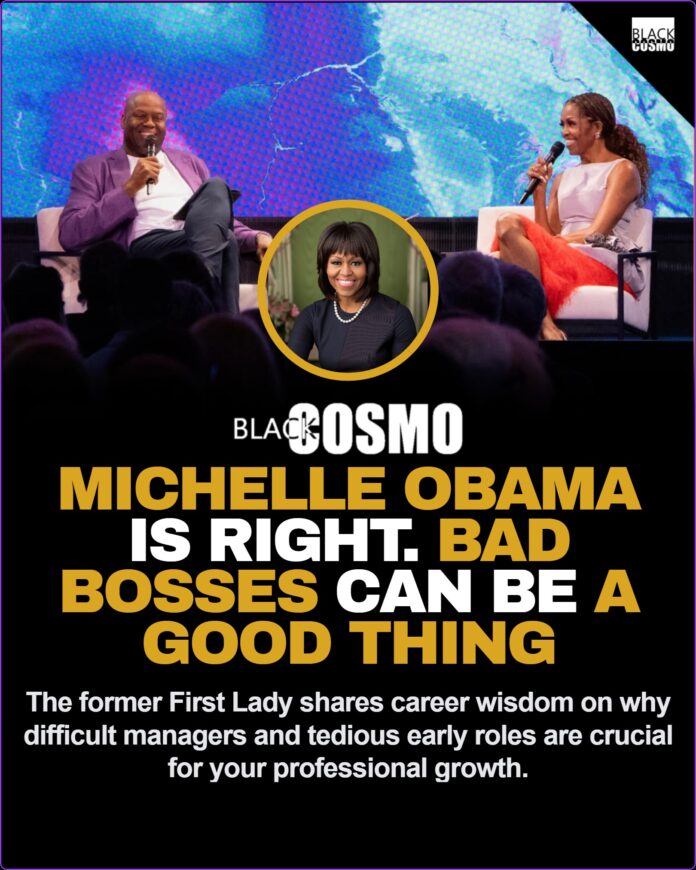
Speaking at a live podcast recording in London, the icon and best-selling author cautioned young people heading into today’s hyper-competitive workforce. She warned that expecting a flawless, soft-life career path right out of the gate might actually be doing them a major disservice. In fact, she argues that even the most frustrating professional seasons can pay massive dividends down the line.
“That’s what I want young people to understand: that every experience, the bad boss, the boring assistant job, the job [in which] you thought that you weren’t appreciated, the one that didn’t give you the assignment you wanted when you wanted it – all of that is learning to be resilient,” the 62-year-old powerhouse told the captivated audience, noting that it is “important” to “learn how to do something you don’t like and be good at it.”
While today’s generation of corporate baddies might want to jump straight into doing “what they are good at” and claiming their seat at the table, Obama dropped some old-school wisdom. She noted that “you have got to earn that, carrying some bags and having some tough times and having people treat you unfairly.” Even that manager who conveniently “forgets” to give you a coin-raising promotion “when you think you deserve it” might actually be performing a masterclass in “character building,” preparing you “before being your own manager, being your own leader,” she suggested.
Now, let’s be real: Mrs. Obama’s advice might initially feel like the career equivalent of your mama telling you to eat your collard greens because they’re “good for you.” In a world dominated by TikTok’s “quiet quitting” and “act your wage” trends, it’s easy for critics to frame this as classic generational warfare—just another baby boomer telling fragile youngsters to suck it up and hustle. But if you read between the lines, our Forever FLOTUS’s words are doing something much deeper than Gen Z bashing or toxic productivity championing.
Instead, her advice is a masterclass in radical reframing. It’s a reality check that trying to completely curate a life free of friction just isn’t realistic. No one walks straight out of graduation and into their dream corner office with a perfect boundary-respecting manager. Learning to navigate the fragile ego of a chaotic boss or mastering the chess game of messy office politics builds a tactical corporate armor that will keep you protected when the stakes—and the salaries—get much higher later in your career.
As someone who has navigated more than her fair share of managers who could only be described as… extravagantly unique, I have to stand with Michelle on this one. Their idiosyncrasies, power trips, and outright subpar behavior didn’t break me; they made me incredibly sharp, even if they simply served as a textbook example of exactly how not to lead.
Take, for instance, a completely chaotic PR internship from my early twenties. I was dispatched to the sleek, intimidating media houses of London clutching display stands teeming with cheap nail varnish branded in the agency’s colors. My assignment? Somehow sweet-talk my way past security and secure a spot for this plastic abomination on the front desks of major editors. Shockingly, elite media conglomerates did not want unsolicited corporate clutter blocking up their chic reception spaces, and their security staff let me know it in no uncertain terms.
As an introverted overthinker who absolutely detests confrontation and will replay embarrassing moments in full high-definition technicolor before bed, this was a literal nightmare. At one point, I genuinely contemplated chucking the entire box of nail polish straight into the River Thames (only my concern for the local marine life stopped me). But looking back, that cringeworthy ordeal was a form of professional exposure therapy. It forced me to fake confidence, drop my people-pleasing tendencies, and stop caring so much about rejection. Once you’ve survived the sheer embarrassment of being laughed out of a Conde Nast lobby, presenting a deck to a room of board members feels like a walk in the park.
Then there was the “Ghost Boss”—a manager who was simply never there, leaving a trail of administrative fires for me to extinguish in her extended absences. I was constantly thrown into high-stakes meetings with thirty seconds’ notice, forced to speak on projects way above my pay grade, and left to make executive decisions on the fly. My nervous system was on a perpetual roller coaster, and I spent my Sundays in a state of “what on earth is going to happen next?” dread. But that trial by fire cured me of my perfectionism. I learned that “done” is often better than “perfect,” and that I was far more capable of thinking on my feet than I ever gave myself credit for.
The lessons we take from bad leadership can shape our entire entrepreneurial blueprints. Just ask Charlotte Leigh, who now runs her own successful fine jewelry business. She recalls an early manager who had a profound, albeit painful, impact on her career. “She was extraordinarily unprofessional,” Leigh remembers. “During an office move, I found myself painting the staff toilet because, as a keen and eager junior desperate to impress, I simply did what I was asked. On another occasion, after an anonymous email was sent to one of her clients criticising her conduct, she systematically accused every member of staff of being responsible. The atmosphere became one of suspicion rather than trust.”
This boss, Leigh adds, would regularly stroll into the office hours late carrying luxury shopping bags while her underpaid team logged grueling hours—a massive disconnect between leadership and basic respect. Yet, Leigh views that toxic season as invaluable. “When I started my first company at 21, I was determined to create a culture built on trust, respect, accountability, and leading by example,” she says. “Some of the most important lessons in business come not from great mentors, but from witnessing poor leadership first-hand.”
Career coach Hannah Salton agrees that clashing with difficult managers is a masterclass in emotional intelligence. “Having bosses I didn’t click with earlier in my career helped me develop my resilience,” she notes. While it’s hard to see the silver lining when you’re crying in the office bathroom, Salton encourages her clients to objectively list what they are learning from the friction—even if it’s just a checklist of behaviors they promise never to inflict on others when they become the boss.
However, let’s make one thing abundantly clear: there is a massive difference between a challenging, character-building boss and an abusive, toxic workplace.
We know our Forever First Lady would never advocate for young, diverse professionals to subject themselves to racial microaggressions, gaslighting, or psychological warfare in the name of “building character.” A truly toxic, manipulative manager can erode your self-esteem and damage your mental health in ways that take years to heal. We shouldn’t have to search for “growth nuggets” in an environment that is actively making us sick.
So, how do you distinguish between a manager who is stretching you and one who is breaking you? Salton suggests tuning into your gut. “If you feel frustrated but still able to cope, a demanding boss might actually end up making you more resilient in the long run,” she says. “But if you genuinely feel it’s eroding your confidence and self-esteem, that’s the signal it’s gone beyond character-building and is worth addressing.”
Chartered counselling psychologist Dr. Kirstie Fleetwood-Meade adds that a healthy, challenging manager will make you feel stretched, occasionally stressed, but ultimately more capable and confident. A toxic manager, however, leaves you “increasingly anxious, depleted, or questioning your own judgement.” When survival mode kicks in, you stop growing and start just trying to get through the day. “If you are constantly on edge, doubting yourself or dreading work, it may be a sign that something more concerning is happening,” she warns.
True resilience isn’t about quietly absorbing mistreatment; it’s about navigating difficult professional landscapes while keeping your dignity, your boundaries, and your mental health fully intact. Learning to spot the difference between a tough lesson and a toxic situation is perhaps the most powerful career skill you will ever master. So take the lessons, build your strategy, and use every bad boss as a blueprint for how you’ll run your own empire.