
A staggering 80% of people with sleep apnea don’t know they have it. But for Black men, the numbers paint a starker picture: roughly 24% of African American males carry an undiagnosed sleep apnea diagnosis, with only a fraction ever receiving treatment. What gets written off as snoring or simple tiredness could actually signal something serious—a sleep disorder connected to hypertension, heart disease, and stroke.
Sleep apnea remains one of the most overlooked health threats in Black communities. To understand what’s really happening, we spoke with Dr. Kenneth Lee of the University of Chicago Sleep Center about the subtle warning signs many people brush aside—and how modern diagnosis has moved past the old lab-wired nightmare scenario. The good news: getting tested is easier than ever. The catch: you have to know what to look for. Here’s what sleep apnea actually looks like.
The Numbers Are Alarming
The National Sleep Foundation estimates that 29 million Americans have sleep apnea. Men experience it two to three times more often than women, per the Mayo Clinic. But prevalence doesn’t equal awareness. Dr. Lee notes that research suggests 15 to 30 percent of the general population has some degree of sleep apnea, yet about 80 percent go undiagnosed. For Black men specifically, one study found that only 5 percent received treatment.
During Men’s Health Month, this gap becomes impossible to ignore. Black men face disproportionate health burdens already; undiagnosed sleep apnea compounds existing risks.
What Actually Happens
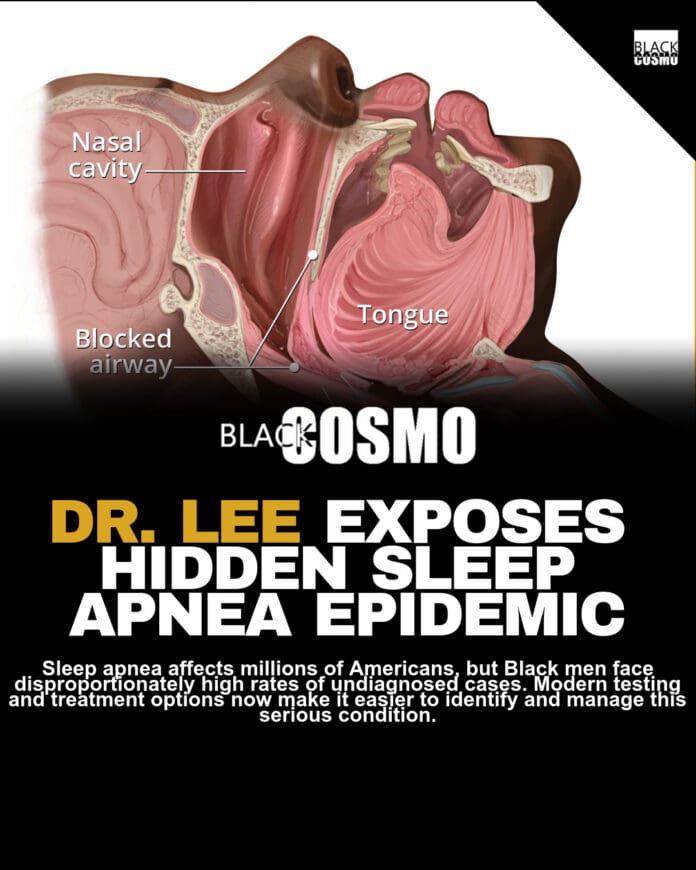
Obstructive sleep apnea, the most common form, occurs when throat muscles relax during sleep, narrowing the airway and blocking airflow to the lungs. When oxygen levels drop, the brain triggers a wake response so breathing can resume. That cycle repeats 5 to 30 times per hour, disrupting restorative sleep and leaving you exhausted.
Snoring is the most obvious red flag, but it’s not a guarantee. “Not everybody who snores has sleep apnea,” Dr. Lee emphasizes. Waking up gasping for breath is a stronger indicator. Partners often catch what you miss: pauses in breathing or thrashing movements during the night.

The Symptoms You’re Probably Ignoring
Morning headaches. Dry mouth. Waking up still exhausted after eight hours. Daytime drowsiness. All of these point to sleep apnea, yet most people chalk them up to stress or aging.
There are less obvious signs too. Repeated nighttime bathroom trips often get misattributed to a full bladder. Mistakes at work, slower thinking, or general lack of energy can all stem from fragmented sleep. Low job performance becomes a real concern when untreated sleep apnea affects your ability to focus and react safely.
Dr. Lee’s core message: if you’re tired after supposedly getting a full night’s rest, something’s wrong. “It may not necessarily have to be this way,” he says.
Why Black Men Remain Undiagnosed
Unawareness tops the list. Snoring is still treated as a cultural joke in many spaces, a sign of deep sleep rather than a warning signal. Time and access barriers make screening harder for people already juggling work, family, and limited healthcare options. Black men are statistically more likely to have undiagnosed chronic conditions, according to research in the Annual Review of Public Health.
But perhaps the biggest obstacle is normalization. People live with symptoms for decades and never question them. “A lot of people will just say, ‘This is how I’ve been my entire life,'” Dr. Lee observes. The problem is that acceptance can mask a serious condition.
The Health Risks Are Real
Sleep apnea connects directly to conditions already hitting Black men hard: high blood pressure, heart disease, and diabetes. Nearly 60 percent of Black men have hypertension, according to the American Heart Association. Left uncontrolled, it spirals into heart attack, stroke, kidney failure, or death.
Untreated sleep apnea amplifies this risk. Long-term complications include stroke and dementia. The connection isn’t abstract—it’s personal and immediate for millions.
Testing and Treatment Have Changed
The old sleep lab setup—wired sensors everywhere, night in a clinical bed—kept people away from diagnosis. Modern technology flipped the script. While a sleep study still starts the process, home testing devices now exist. The WatchPAT works around your finger and wrist, collecting data while you sleep in your own bed.

Treatment varies too. CPAP machines remain an option, but so are oral appliances, positional therapy, weight-loss medications, and surgery for certain cases. Dr. Lee encourages working with a sleep specialist to find what works best for you. “Once we get the sleep apnea treated, it can be a game-changer,” he says. Better energy. Better focus. Better health.
The path forward is clear: recognize the symptoms, get tested, and get treatment. Your life might depend on it.
★tr★