Home Blog Page 156

When Rap Lyrics Turn Deadly

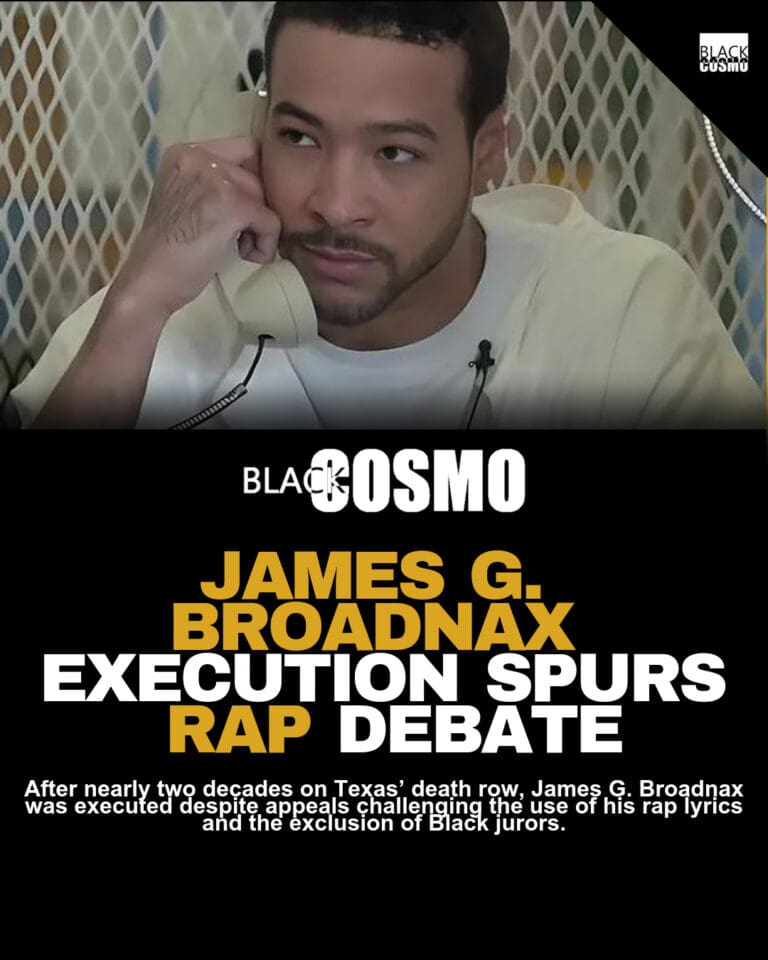
The execution of James G. Broadnax on April 30 has reignited urgent questions about race, art, and justice in America. After spending nearly two decades on death row in Texas, his case drew national attention not only because of last-minute appeals, but because prosecutors had used pages of his handwritten rap lyrics during sentencing to help argue for the death penalty.

Broadnax was convicted in 2009 by a nearly all-white jury in a robbery and double murder case tied to the 2008 killings of Stephen Swan and Matthew Butler in suburban Dallas. His legal team argued for years that Black jurors were improperly excluded and that presenting his lyrics as evidence of criminal mentality was unconstitutional. Those lyrics were not used to prove guilt in the original trial phase, but were shown during sentencing, where jurors were asked to decide whether he should live or die.

The case also gained new attention after a sworn 2026 statement from Broadnax’s cousin and co-defendant, Demarius Cummings, who said he was the one who pulled the trigger. Cummings had already been sentenced to life without parole and said he felt compelled to correct the record after learning the execution was imminent. Reports surrounding the case also pointed to DNA evidence that linked Cummings to the murder weapon and a victim’s clothing, while excluding Broadnax.

Scholars and advocates have long warned that rap lyrics are treated differently from other forms of creative expression in court. Violent imagery in film, fiction, or heavy metal rarely gets framed as a literal confession, but rap is often read through stereotypes that cast Black expression as inherently criminal. That double standard has shown up in hundreds of cases across the country, especially when prosecutors want to shape how juries feel about a defendant rather than what the evidence actually proves.

For Black audiences, this story lands in a familiar and painful place. It is about more than one trial or one verdict. It speaks to how Black art is still misread as autobiography, how bias gets dressed up as common sense, and how cultural misunderstanding can carry life-or-death consequences. The legacy of James G. Broadnax now sits inside that larger conversation, where the policing of Black expression remains deeply entangled with the policing of Black life.
Ghosts of Mississippi Hits the Supreme Court

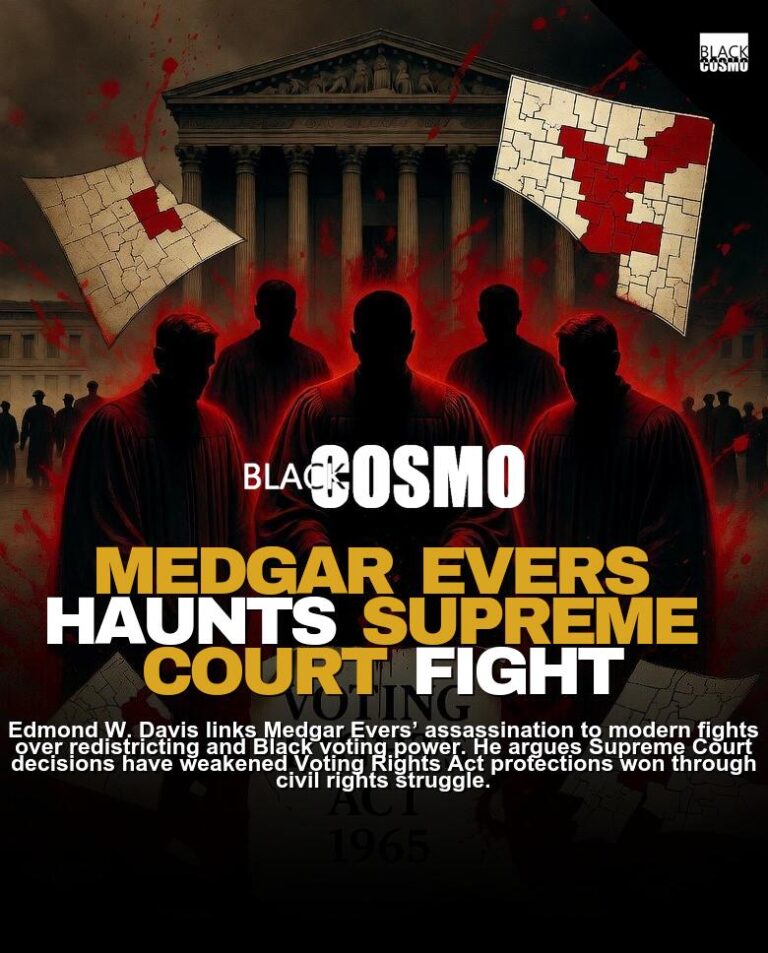
Medgar Evers did not die for a history lesson. His 1963 assassination remains a brutal flashpoint in a war for Black political power that has simply traded burning crosses for bureaucratic maneuvers. The old racial battles over access and autonomy never vanished from the American South. They just put on a suit. What once looked like night-riding terror and mob violence now functions quietly through courtroom gavels, partisan redistricting, and the steady erosion of voting protections won entirely through Black blood and sacrifice.

The New Weaponry of Disenfranchisement

Drawing a straight, undeniable line from Evers bleeding out in his Jackson driveway to the current assault on the ballot box reveals a chilling reality. The tactics carry a higher polish today, but the objective remains exactly the same. Rifles and physical intimidation have been swapped for sophisticated district maps and deliberate judicial rulings designed to gut the Voting Rights Act piece by piece. For Black voters across the country, the threat no longer announces itself with a megaphone. It arrives buried in legal procedure and complex state legislature votes.

Framing the fight this way strips the polite veneer off modern policy debates. Voting access is not an abstract partisan issue. It is a grinding, generational struggle over who gets to exist as a full citizen. The system learned how to preserve deep inequalities without relying on the crude public hatred of the Jim Crow era. The so-called “ghosts of Mississippi” are not just memories haunting the Delta. They are active political forces, speaking a new language to achieve an old outcome.

The Defiance of Memory

At the core of this ongoing fight stands Myrlie Evers-Williams. For decades, she served as the ultimate symbol of refusal—a widow who rejected the idea that a murder could be swept under the rug of polite Southern society. Justice only survives when someone demands the truth stay above ground. Right now, as political fatigue sets in and the rollback of civil rights feels heavy, her persistence offers a clear blueprint. Refusing to forget is an act of rebellion. Community organizing and raw, honest storytelling remain essential tools against systemic erasure.

For Black Cosmopolitans, this reality stretches far past a single court docket or a specific state limit. It confirms a fundamental rule of American life: the second Black progress threatens to shift real, tangible power, the rules of the game will change. Acknowledging Medgar Evers requires looking past the sepia-toned image of a civil rights martyr. It means staring directly at the unfinished, dangerous work he left behind. The driveway where he fell still points toward a ballot box that remains fiercely guarded.

Vanessa Bryant Slams Pregnancy, Remarriage Rumors

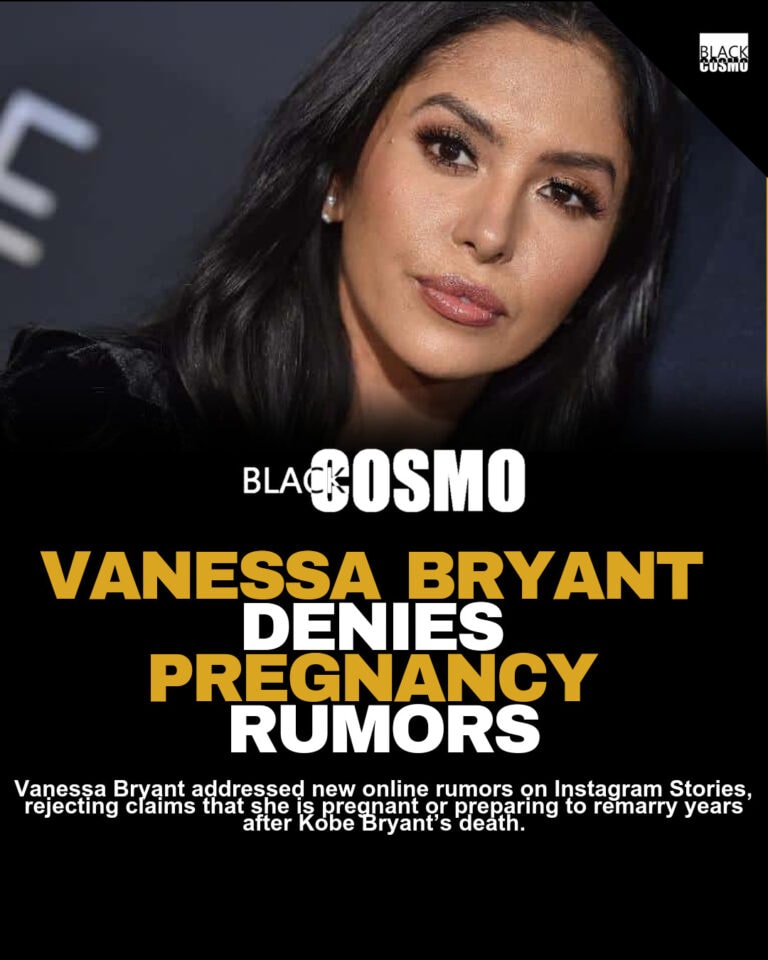
Vanessa Bryant is making it clear that internet rumors about her personal life are not getting a pass. Over the weekend, she used Instagram Stories to shut down fresh speculation claiming she was either pregnant or preparing to remarry, responding with sharp sarcasm to the nonstop gossip.

The latest round of chatter included a post alleging she planned to remarry after inheriting part of Kobe Bryant’s fortune, while other rumors pushed the familiar and false pregnancy narrative. She answered both at once, calling out how wildly inconsistent the claims were and making it obvious she was not interested in entertaining made-up stories. She also shared a message about protecting her peace and refusing chaos, a quiet but direct reminder that not everything deserves her energy.

This is not the first time she has had to check the internet. Over the past few years, false stories about her relationships, family dynamics, and even AI-generated content have circulated online with little regard for the real grief and healing behind her public image. She has repeatedly used social media to correct the record, especially when rumors cross the line and begin dragging her daughters into the conversation.

The timing makes the gossip feel even more invasive. The renewed attention comes not long after what would have been her 25th wedding anniversary with Kobe Bryant, as well as Gianna Bryant’s birthday, both deeply emotional milestones for the family. In that context, the rush to turn her life into rumor fodder says more about online culture than it does about her.

What stands out is how Vanessa Bryant continues to choose dignity over disorder. For a lot of Black and brown audiences who understand what it means to grieve publicly while still protecting home, that kind of boundary-setting is more than a clapback. It is a reminder that peace is a form of power.

Ashlee Jenae Fiancé Speaks After Zanzibar Death

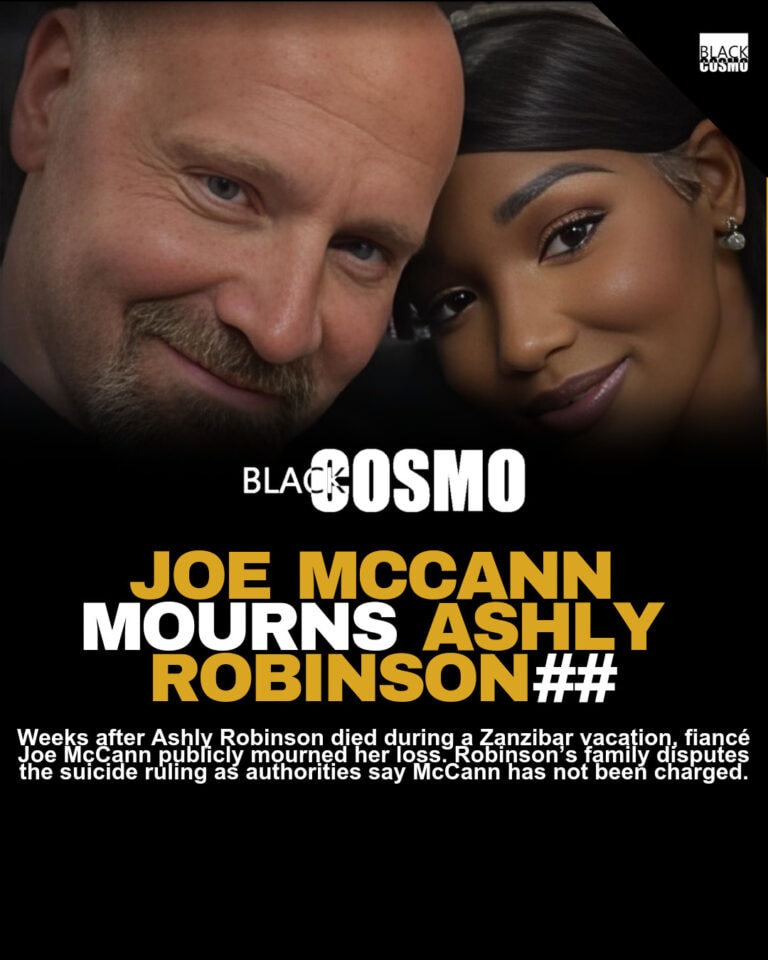
Joe McCann has broken his public silence following the sudden death of his fiancée, Ashly Robinson, the New Jersey content creator known to her followers as Ashlee Jenae. The tragedy during a Zanzibar getaway has ignited a firestorm of speculation, leaving a grieving family at odds with international authorities.

On April 9, what began as an idyllic escape to the East African coast devolved into a fatal nightmare. Local authorities in Zanzibar report that a severe dispute erupted between the couple, prompting hotel management to intervene and move them into separate accommodations. The physical distance did nothing to temper the escalating crisis. McCann told police that he later went to check on Robinson, accompanied by hotel security, only to discover her unresponsive in her room.

A Disputed Conclusion

Zanzibar officials moved quickly to classify the loss as a suicide. Investigators confiscated McCann’s travel documents and detained him for questioning, a standard protocol in incidents involving foreign nationals. Police ultimately treated him strictly as a witness, clearing him of any criminal charges. For Robinson’s family, the official narrative rings completely hollow. Her parents flatly reject the suicide ruling and demand a forensic, unvarnished look at the final hours of their daughter’s life.

Facing mounting online scrutiny, McCann issued a statement this week detailing his grief. He described Robinson not just as his romantic partner, but as his best friend—a woman who formed a deep, maternal bond with his children. He outlined their mutual plans to build a future and a family together, framing her passing as a shock that left him empty.

The Weight of Public Scrutiny

The reality on the ground tells a story of fractured relationships and raw hostility. When Robinson was laid to rest back home in New Jersey, Joe McCann was noticeably absent from the funeral. It was a stark exclusion by a family demanding answers, cutting him out of the final goodbye.

Ashlee Jenae built a brand on beauty and light. The sharp contrast between her curated joy and the grim reality of a hotel room dispute has struck a nerve among Black Cosmopolitans following the case. A sudden death overseas breeds suspicion. Add a popular content creator to the mix, and the internet immediately steps in to play detective. The comment sections under her old posts have morphed into impromptu forums demanding accountability and transparency.

Beyond the social media discourse sits an absolute tragedy. A family is burying a daughter while battling a foreign government’s paperwork. A fiancé is walking away from detention into massive public backlash. Zanzibar investigators hold the facts tightly, leaving a dangerous vacuum that rumors immediately fill.

While McCann attempts to process his return to an empty home, the Robinson family draws a hard line against the man she intended to marry. The physical distance of the funeral exclusion speaks volumes about the battle ahead. Ashly Robinson leaves behind a digital archive of joy, abruptly cut short by a tragedy that her loved ones refuse to leave unchallenged.

New Minions & Monsters Trailer Just Dropped

The yellow agents of chaos are back, and this time they are tearing through the manicured studio lots of Hollywood. Minions & Monsters flips the script on the beloved franchise, dropping Illumination’s signature troublemakers into a celebrity-obsessed disaster zone of their own making.

The new trailer teases a collision of studio glitz and B-movie monster thrills. Instead of plotting world domination in a subterranean lair, the crew finds themselves navigating the treacherous waters of fame. One wrong move on a movie set accidentally unleashes actual monsters onto the streets of Los Angeles. It takes the familiar storyline and injects it with pure adrenaline. Coming off the massive global box office haul of “Despicable Me 4,” the studio knows exactly what audiences want right now. They are keeping the momentum burning hot by introducing fresh faces while anchoring the story in the frantic slapstick that made these characters pop culture titans.

Hollywood Royalty Meets Animated Mayhem

You cannot talk about a modern blockbuster without looking at the call sheet. The studio pulled together an absolute powerhouse roster for the voice booth. Allison Janney, Christoph Waltz, and Jeff Bridges bring serious pedigree to the madness. Add in the sharp comedic timing of Jesse Eisenberg, Zoey Deutch, Trey Parker, Bobby Moynihan, and legendary voice actor Phil LaMarr. That lineup gives the film incredible range. Pierre Coffin steps back into the director’s chair and co-writes the script. Coffin practically built this franchise from the ground up, and his deep understanding of these babbling, goggle-wearing sidekicks ensures the joke delivery stays razor-sharp.

The Ultimate Family Theater Run

What makes Minions & Monsters cut through the noise is a simple truth. People crave loud, theatrical fun that refuses to take itself too seriously. For Black Cosmopolitans managing busy households, the movie theater remains a prime destination for genuine family connection. Animation consistently bridges the generational gap better than almost any other medium. The sheer spectacle, the nostalgic laughs, and the creature-feature thrill ride offer a perfect weekend escape for your entire crew. When the theater lights go down and those familiar yellow silhouettes hit the screen, the only guarantee is absolute, unapologetic pandemonium.

Karyn Kusama on The Terror: Devil in Silver

0

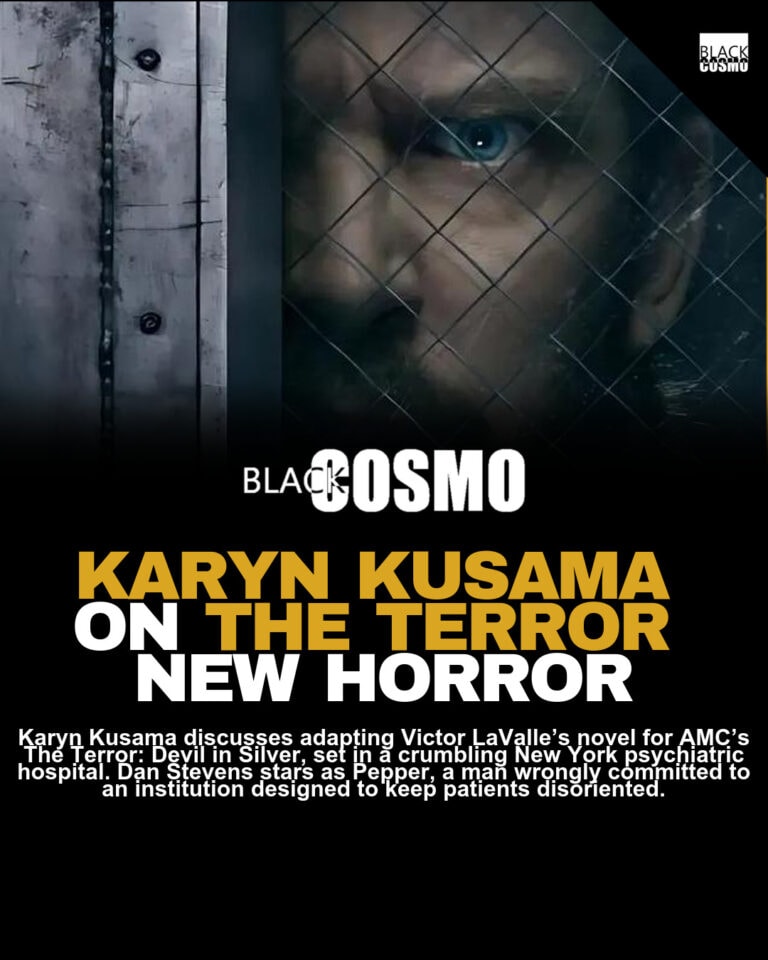
The Terror: Devil in Silver strips away cheap jump scares to expose a much darker beast: the American mental healthcare system. Director and executive producer Karyn Kusama adapts Victor LaValle’s acclaimed novel into a suffocating psychological thriller where the real monsters hold the keys to the ward. The project leans heavily on LaValle’s literary depth, giving the series a sharper, more visceral edge than your standard television thriller. Kusama recognized early on that the brilliance of the source material lies in its balance. She notes that LaValle operates on a rare frequency, blending sharp situational humor with the crushing reality of systemic neglect.

That delicate balance grounds the nightmare of Pepper, a working-class everyman played by Dan Stevens. Pepper finds himself wrongly committed to New Hyde Psychiatric Hospital, and the walls immediately begin to close in. Instead of relying on buckets of blood or cheap cinematic tricks, the narrative digs into how paranoia breeds inside facilities designed to disorient their occupants. Kusama pushes the narrative beyond a simple survival story. Pepper’s descent into a fragile reality forces him to battle both the literal horrors stalking the corridors and the suffocating weight of his own guilt, rage, and buried trauma.

A Prison Disguised as a Clinic

To capture that bone-deep claustrophobia, production took over an abandoned correctional facility on Staten Island. You can feel the cold concrete through the screen. The decay is authentic, and it gives the production a heavy, inescapable dread. Kusama explicitly stated that the sprawling, rotting space acts as a living entity that actively strips away human agency. The peeling paint, flickering fluorescents, and echoing hallways do heavy lifting here. New Hyde operates with a brutal, silent authority, framing the hospital not as a place of healing, but as a rigid trap designed to break the mind before it breaks the body.

Heavyweight talent surrounds Stevens, elevating the stakes in every scene. The cast features veterans like CCH Pounder and Judith Light, who bring a grounded, terrifying gravitas to the ward. They share the screen with a formidable lineup that includes Aasif Mandvi, Chinaza Uche, Stephen Root, and Marin Ireland. Kusama demands extreme precision from her cast, requiring them to pivot from psychological dread to pitch-black comedy without missing a beat. She pushed the ensemble to find the dark comedy inside the misery, knowing that marginalized people often use humor as a shield against bureaucratic violence. The ensemble matches that energy perfectly, breathing life into a forgotten community of patients who understand the unwritten rules of surviving a broken system.

Mirrors and Monsters

Horror holds a unique power when it stops dealing in fantasy and starts naming the structures that keep everyday people trapped. The Terror: Devil in Silver zeroes in on the terrifying reality of losing control over your own life to faceless bureaucracy. For Black Cosmopolitans, the anxiety of navigating a rigid, indifferent system strikes a deeply familiar nerve. The series holds up an unflinching mirror to the personal devils people carry inside and the systemic beasts waiting in the administrative wings. As Pepper stares down the dark, endless hallways of New Hyde, the suffocating silence of the hospital speaks volumes about who the real enemy is.

Chef’s Favorite High-Protein Meal for 6-Day Weeks

IN THE FALL of 2020, chef Kevin Tien opened Moon Rabbit in D.C. and, like so many of us, had to find a way to move through pressure, grief, and uncertainty. Running became that outlet. It gave him a little quiet in the middle of everything. That same balance shows up in Vietnamese Steak & Eggs, a recovery meal that feels hearty, practical, and full of care.

Vietnamese Steak & Eggs

THE TRUE FLAVOR power of this dish comes from Chef Tien’s steak sauce. It hits salty, tangy, and a little sweet in a way that wakes the whole plate up. If you want to see why Vietnamese Steak & Eggs keeps getting attention, start with that sauce.

Nutrition per serving: 460 calories, 40 g protein, 14 g carbs (1 g fiber), 26 g fat

Flavor Bonus!

Chef Tien makes what he calls “umami soy sauce,” and honestly, it sounds like the kind of kitchen move that changes everything. It doubles down on that deep salty-savory flavor without making the dish feel heavy. In a small bowl, combine a 1-inch piece of kombu, wiped with a damp cloth, 2 dried shiitake mushrooms, and ½ cup low-sodium soy sauce. Cover and let it stand at room temperature for 24 hours. Spoon it over the steak and eggs, swirl it into chili, or use it as a dip for spring rolls.


Food styling by Michelle Gatton/Hello Artists.

Prop Styling by JJ Chan/ BA Reps

Paul Kita is a Deputy Editor at Men’s Health, where he has covered food, cooking, nutrition, supplements, grooming, tech, travel, and fatherhood for more than 15 years. He is also the author of two Men’s Health cookbooks, Guy Gourmet and A Man, A Pan, A Plan, and a James Beard Award winner.

★★

Dystany Spurlock Makes NASCAR History

At just 34 years old, Dystany Spurlock is tearing up the rigid blueprints of American motorsports. The Richmond native steps onto the asphalt at Watkins Glen to become the first Black woman to compete in a NASCAR top-tier national series, putting the Craftsman Truck Series on notice.

Long before this high-octane moment in a stock car, she commanded deep respect on two wheels. She caught the racing bug as a teenager, quickly scaling the ranks of motorcycle drag racing to dominate the NHRA Pro Stock Motorcycle circuit. Spurlock shattered expectations by setting records in the Real Street Bike division, proving her nerve against seasoned veterans. Her name rings out in the XDA Series, where she claimed the title as the first woman to win the DME Racing Real Street class. That punishing foundation on the drag strip makes her ascent into NASCAR feel like a hard-earned progression rather than a sudden arrival.

Commanding the Track

Her 2026 campaign runs like a masterclass in breaking barriers. Teaming up with MBM Motorsports and Garage 66, she forced the industry to pay attention by becoming the first Black woman to enter the ARCA Menards Series East. She backed up that milestone with another heavy-hitting run in a national ARCA Menards Series event. Fans and veteran commentators took serious notice after a breathtaking late-race save at Kansas Speedway. That split-second maneuver proved her raw talent demands the spotlight, confirming she possesses the razor-sharp instincts required to handle 3,400 pounds of steel at 180 miles per hour.

A rich, often overlooked lineage paves the way for this precise breakthrough. Black women have consistently fought for space in NASCAR through licensing deals, regional short-track circuits, and grueling pit crew positions. Those cracked doors allowed a new generation to push entirely through the frame. Now, placing a Black woman directly behind the wheel in a national-series spotlight forces the culture to shift in real time. Visibility operates differently when the person making history controls the steering wheel and sets the pace for the pack.

Style, Alignment, and High Stakes

Away from the deafening roar of the track, she brings an energy that refuses to be boxed in. Spurlock trades fire-retardant racing suits for sharp, unapologetic streetwear, bridging the gap between high-speed grit and urban style. She navigates life as an actress, a sharp entrepreneur, and an experienced former 18-wheeler driver who knows exactly how to handle massive horsepower. Her alignment with motorsports represents a fresh era for the sport—one that feels grounded, fiercely stylish, and deeply connected to Black Cosmopolitans who demand authentic representation.

When Dystany Spurlock locks in at Watkins Glen, the stakes rise far beyond horsepower and lap splits. For Black women and girls searching the grandstands for a reflection of themselves, her presence delivers a bold message. History rarely arrives with a polite introduction. Sometimes it pulls up in a custom fire suit, grips the wheel tight, and leaves the old guard eating dust.

Lionsgate Fast-Tracks Potential Michael Sequel

Michael Jackson is back at the center of the conversation, this time because talk of a sequel to the “Michael” biopic is already gaining steam after the film opened strong with $97 million domestically. Lionsgate vice chair Adam Fogelson says another installment could begin production as soon as this year or next, signaling that the studio sees real audience demand for more of the story.

According to Fogelson, the creative team believes there is still plenty of ground to cover, especially when it comes to the music, the rise to superstardom, and the life experiences that shaped one of pop culture’s biggest icons. The first film reportedly follows his journey through 1988 and stops short of later years that brought a different kind of media attention. That choice has become part of the larger public conversation around what biopics choose to show, what they leave out, and how legacy gets shaped on screen.

Fogelson also pointed to audience reaction as proof that many moviegoers were looking for a version of the story centered on artistry, performance, and cultural impact. That response appears to be driving confidence around a sequel, even as questions remain about how filmmakers would handle the next chapter while navigating legal and narrative limits. Director Antoine Fuqua has also suggested that unused footage from the first production could help support a follow-up.

The bigger question now is what a second film would actually explore and whether it can deepen the portrait without losing the emotional connection audiences found in the first one. For many viewers, stories about Michael Jackson are never just about one artist. They are also about fame, memory, image, and the complicated way Black cultural icons are celebrated, protected, debated, and reintroduced to each new generation.

Kim Kardashian Delays Bar Exam to 2027

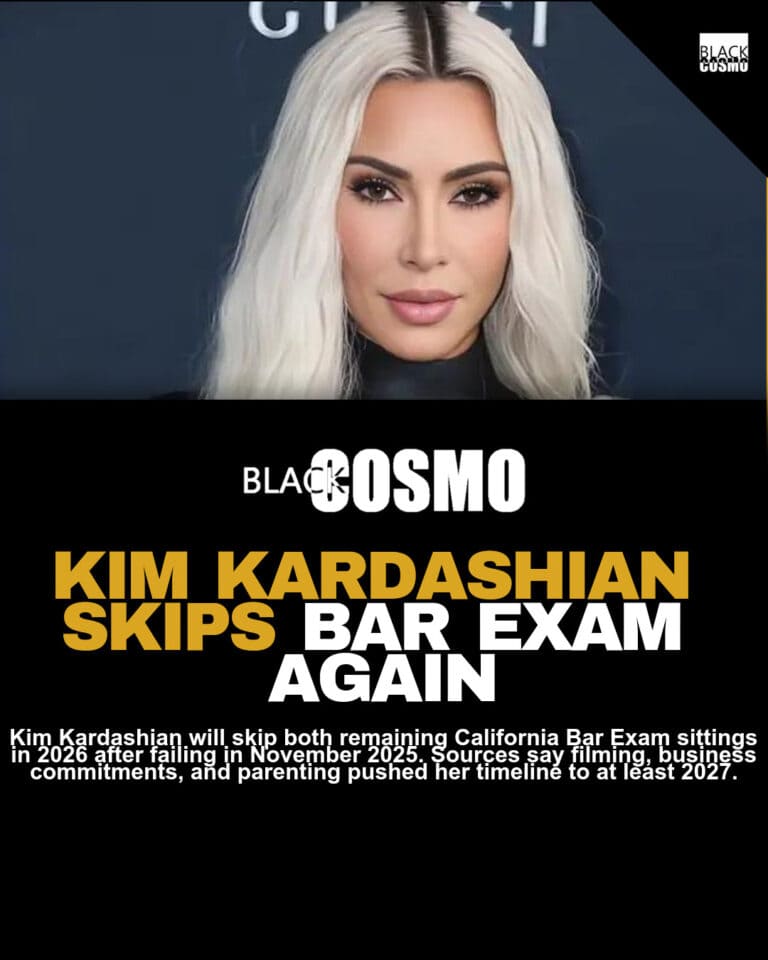
Kim Kardashian is officially stepping back from the California Bar Exam for the remainder of 2026, trading a rushed timeline for deliberate preparation. After confirming a failed attempt in late 2025, the mogul is choosing to protect her study schedule rather than face the testing center unequipped.

For Black Cosmopolitans watching her transition from reality television to legal advocacy, this pause feels deeply relatable. The decision means she already skipped the brutal February sitting and will pass on the upcoming July test. Insiders point to a potential 2027 return to the testing room. Passing the bar in California requires a punishing level of commitment. Between steering global business ventures, managing production schedules, and raising four children, finding the isolated hours necessary to conquer contracts and torts proved impossible over the last six months.

The Weight of a Public Pursuit

Sources close to the billionaire make it clear that stepping away is an act of preservation, not surrender. Her legal ambitions play out under the harsh glare of millions of spectators. Every minor stumble makes international headlines. People in her immediate circle note she wants to walk into her next attempt armed with absolute confidence. The goal is to master the material rather than just cross her fingers and hope for a passing grade after investing years into her legal apprenticeship.

Choosing Reality Over Performative Grind

What commands attention here is how Kim Kardashian handles the public pressure to perform. In a culture that routinely pushes the narrative of endless hustle, hitting the brakes requires a specific kind of nerve. She refuses to treat a grueling professional milestone like an accessory or a quick photo op.

Taking a gap year to study behind closed doors strips away the spectacle and leaves only the work itself. “She is determined to get this right on her own terms,” one confidant noted recently. When she finally returns to that testing facility in 2027, the cameras will stay outside. She is leaving the public narrative behind for the quiet, unglamorous isolation of an open law book.