Home Blog Page 165

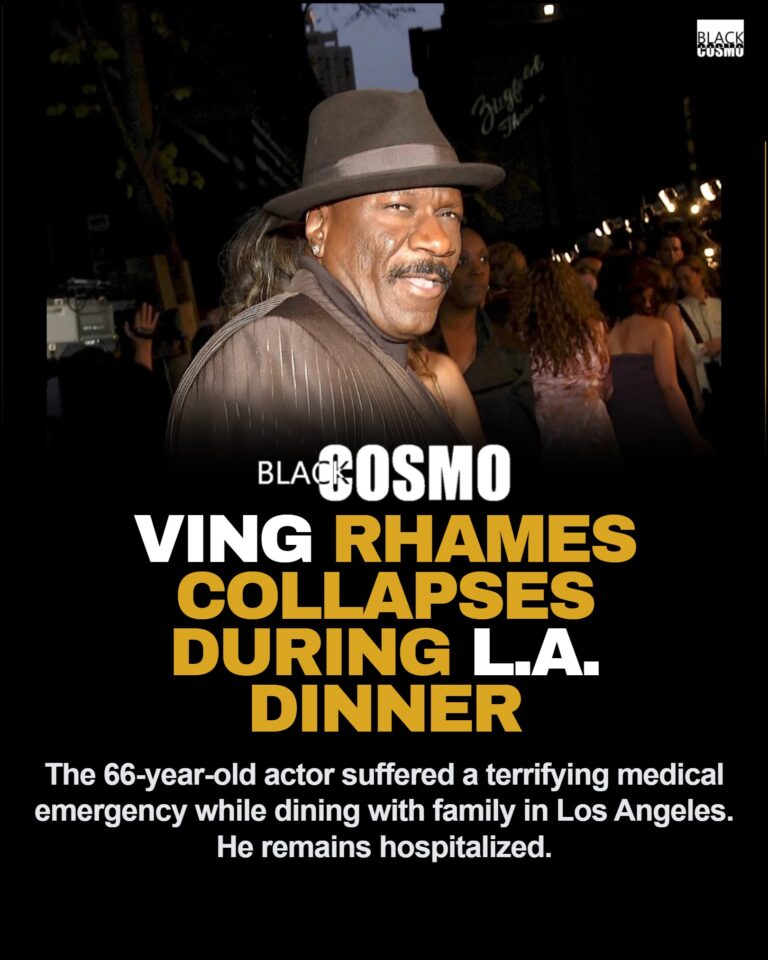
Ving Rhames Collapses at LA Restaurant, Rushed

0

Scary moment for Hollywood veteran Ving Rhames after he reportedly collapsed while dining with family in Los Angeles. According to eyewitnesses, the Mission: Impossible star suddenly went down at his table and appeared to drift in and out of consciousness.

Emergency responders were quickly called to the scene and transported the 66-year-old actor to a nearby hospital. Officials confirmed a medical aid call was placed around 1:40 PM for a man in his 60s, who was then taken in for treatment. For more on Ving Rhames, check out what folks are saying.

Thankfully, the situation appears less severe than initially feared. A representative for Rhames later shared that the incident was likely caused by overheating, and he was hospitalized out of caution for observation.

Fans can breathe a sigh of relief—Rhames has since been released and is already back home, reportedly in good spirits and even cracking jokes on his way out.

Best known for his role as Luther Stickell in the Mission: Impossible franchise, Rhames has also delivered unforgettable performances in classics like Pulp Fiction and Jacob’s Ladder.

While the scare had folks worried, it looks like the legendary actor is doing just fine. 🙏

[efb_feed fanpage_id=”BlackCosmopolitan” words_limit=”25″ post_limit=”1″ skin_id=”115759″ cache_unit=”1″ cache_duration=”days” live_stream_only=”0″ load_more=”0″ links_new_tab=”1″ show_like_box=”0″]


ioe

Porsha and K Michelle Fight Over Dating R Kelly

0

Porsha And K. Michelle Blow Up Over R. Kelly On New Season Of RHOA! (EXCLUSIVE)

BlkCosmo has the exclusive tea on the upcoming season of the Real Housewives of Atlanta, and honey, the cameras are catching a level of tension we haven’t seen in years. While fans were excited to see Porsha Williams return and K. Michelle finally join the cast, nobody expected the shadow of R. Kelly to loom over the 2026 season.

Our trusted production insiders are telling us that a massive, season-defining storyline centers on a shocking discovery: both Porsha and K. Michelle were reportedly involved with the incarcerated R&B singer at the exact same time.


The Overlap: “Used” vs. “Loved”

The drama reportedly exploded during a group trip when the conversation turned to past industry relationships. While it’s been public knowledge that Porsha spoke to authorities about her experiences, and K. Michelle has often referred to him as a “mentor,” the ladies realized their timelines were practically identical.

  • Porsha’s Trauma: Porsha, who was barely out of her teens at the time, reportedly gets emotional on camera, describing how she felt “used” and “exploited” by the singer. She views herself as a survivor of his predatory behavior.
  • K. Michelle’s Defense: In a twist that left the rest of the cast speechless, K. Michelle allegedly doubled down on her positive memories. Sources say she insists she felt “love” and felt “protected” by Kelly, and she still holds his musical legacy in high regard.

The Blowup: Fighting Over A Convict?

The conversation turned into a full-blown argument (which producers had to break up!) when the realization hit that Kelly was seeing both of them—while he was married—at the same time.

“It turned into this weird, toxic jealousy,” a source whispered to Media Take Out. “K. Michelle seemed visibly upset that Porsha was ‘in the mix’ back then. It was wild to see two beautiful, successful women nearly come to blows over a man who is currently serving LIFE in prison for the most heinous crimes imaginable.”


A New Level Of “Messy”

The cast is reportedly divided on the storyline. Some think it’s “important” to show the different ways women process grooming and abuse, while others, like Phaedra Parks, reportedly think the show is getting “too dark.”

  • The FBI Factor: Don’t forget, Porsha has already been on the FBI’s radar for other incidents this year (including that viral Delta flight bodycam footage), so having her past with a federal convict brought back to the forefront is the last thing her legal team wanted.
  • K. Michelle’s “Villain Era”: Fans are already calling out K. Michelle for “bringing Love & Hip Hop vibes” to the more “polished” RHOA world.

Is K. Michelle “out of pocket” for defending R. Kelly in 2026, or is Porsha just “playing victim” for a storyline? Let us know in the comments!

Taraji P. Henson x Dujour: Ultimate Glam Moment

0

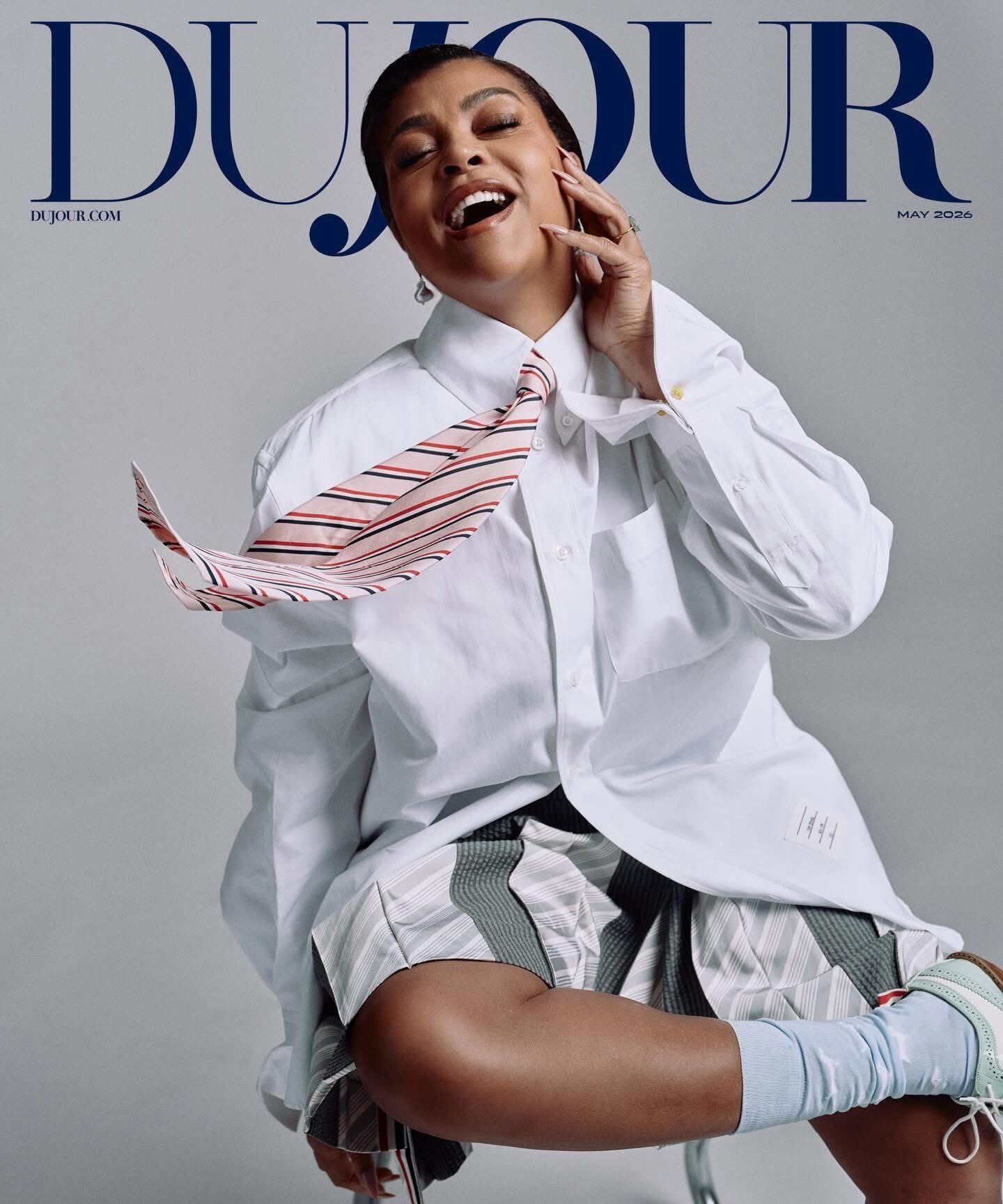
Taraji P. Henson x Dujour (May 2026) is a full‑power, high‑glam fashion moment caught in a single spread.

Photographed by Emmanuel “Emilio” Madrid, Taraji commands the frame in a bold, editorial‑driven lineup styled by Tiffany Reid, who layers luxe fabrics and sharp silhouettes to mirror Taraji’s no‑filter confidence. The story, written by @mhmakesithappen, frames her as both actress and architect of her own legacy — equal parts vulnerability and unshakable Black glamour.

Under the vision of Editor‑in‑Chief Natasha Wolff and Creative Director Trent Farmer, the shoot feels like a modern Black Hollywood portrait gallery: elevated, intentional, and deeply cinematic. Ursula Stephen shapes the look with sculpted hair that feels regal yet effortless, while Kilprity’s makeup highlights Taraji’s bone structure without hiding a single lived‑in line. The finishing touch comes from tailor Jacqui Bennett for Carol.ai Studio, who ensures every piece drapes like a second skin.

This isn’t just a cover — it’s a statement that Taraji P. Henson still owns the room, even when she’s not saying a word.

Jay‑Z on Songwriting and Legacy in The New York Times Magazine (May 2026)

0

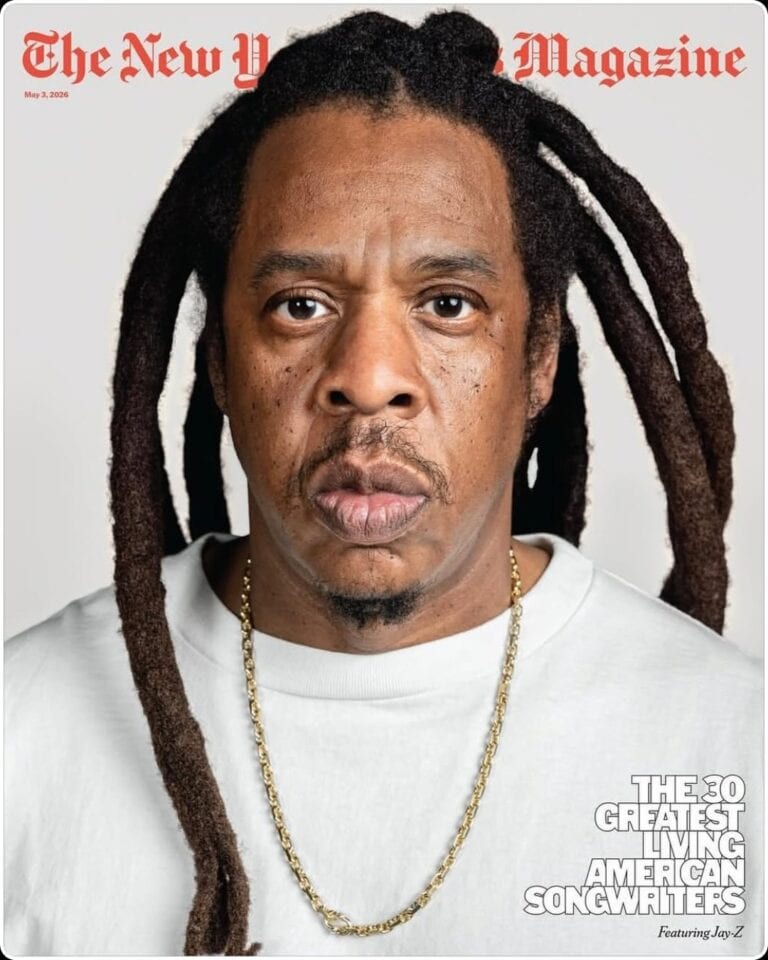
Today’s story in The New York Times Magazine puts a spotlight on Jay‑Z in a way that feels like a quiet recalibration of his legacy — and of hip‑hop’s place in American culture.

What the feature is

Jay‑Z’s interview is the centerpiece of the New York Times Magazine issue dated May 1, 2026. The article, referred to in circulation as “The Jay‑Z Interview,” was published online on April 28, 2026.

It’s a long‑form Q&A conducted by music critic Jody Rosen and recorded in Los Angeles. The piece is framed around Jay‑Z’s recent inclusion on the Times’ list of the 30 Greatest Living American Songwriters, which positions him alongside creators from rock, country, jazz, and other genres.

What Jay‑Z talks about

In the conversation, he breaks down his songwriting process, describing how he builds songs almost like a boxer builds a fight — focusing on form, timing, punchlines, and “rounds.” He explains why he places rhythm above pure confessionalism in rap, treating cadence and delivery as the core of the craft.

On the topic of “young music,” Jay‑Z argues that older artists who try to sound like teenagers often come across as inauthentic. He is quoted as saying, “If you’re trying to make young music and you’re not young, it’s gonna be inauthentic.” This line has become one of the most discussed takeaways from the profile.

The piece also touches on his legacy, empire, and cultural impact. The interview looks at how he views his catalog now, the shifts in hip‑hop culture over the past three decades, and his role in building a portfolio that extends beyond music into sports, streaming, fashion, and business.

Visuals and extras around the story

The magazine rollout is built around a new cover image of Jay‑Z for the Times Magazine, circulating with the date “May 1, 2026.” The cover emphasizes his status as a songwriter rather than just a rapper or mogul.

Social‑media snippets, including Instagram clips and reels, show Jay‑Z talking about the “art of writing in its purest form,” with captions highlighting rhythm, intention, and the way he situates himself in the broader conversation about American songwriting.

A short behind‑the‑scenes post from the magazine’s creative team credits the story as a directed interview / multimedia package within the larger “30 Greatest Living American Songwriters” feature, confirming that this is not just a text piece but a curated visual and audio narrative.

Why this story matters for you

For Black Cosmopolitan readers, the piece is notable because The New York Times Magazine is framing Jay‑Z not only as a rapper or business figure but as a canonical American songwriter. That placement puts Black hip‑hop songwriting on the same playing field as classic rock, country, and jazz in the official cultural record.

The story gives you solid hooks to work with:

  • How Jay‑Z is redefining what “old‑school” versus “new‑school” really means in hip‑hop.
  • His blunt take on aging in the music business and the authenticity of “young music.”
  • The way the interview both celebrates and quietly re‑frames his legacy, especially as he continues to expand his empire.

Aleshea Harris on Hattie Magazine April 2026 Cover | BlkCosmo

0

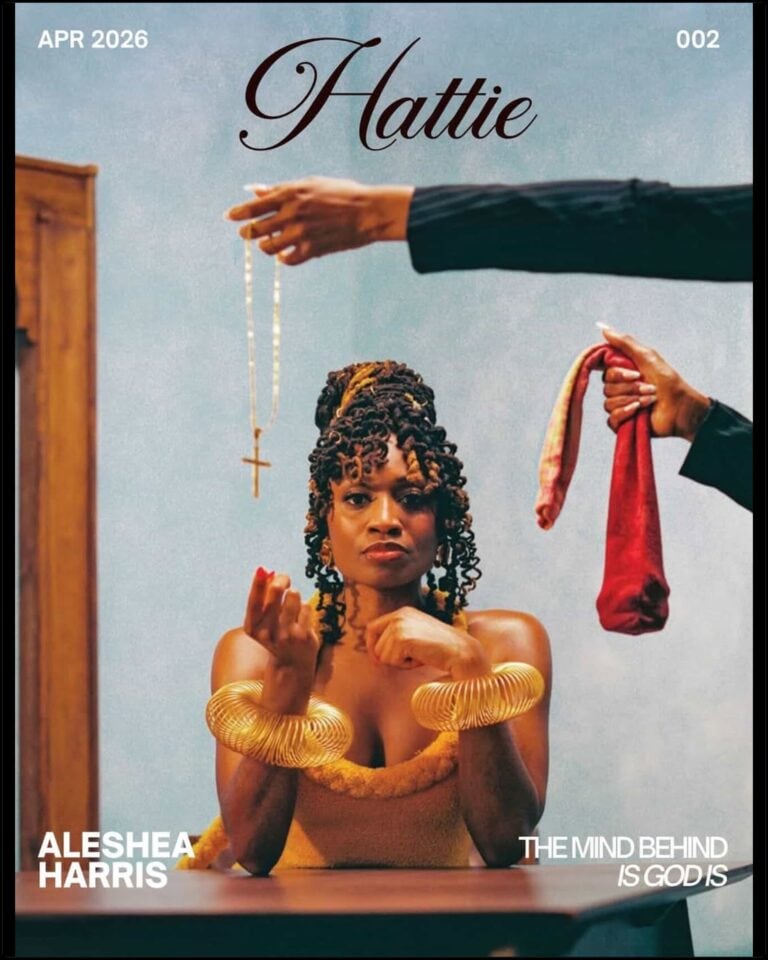
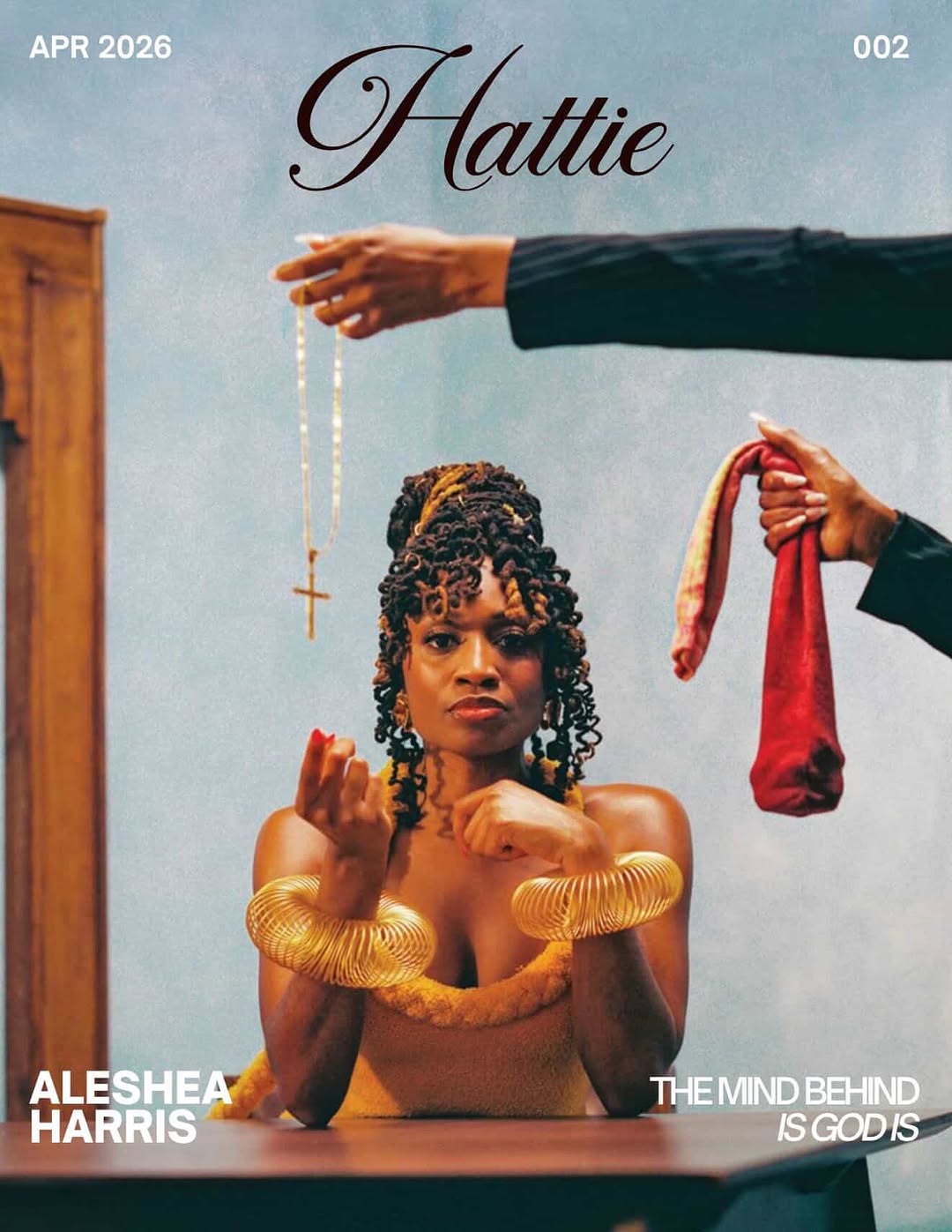
Let us talk about the weight of inheritance. Not the financial kind, but the spiritual luggage passed down from grandmothers to mothers, sitting heavy on our own shoulders. The April 2026 cover of Hattie Magazine puts that exact unspoken tension front and center. Fronting Issue 002 is none other than the acclaimed playwright Aleshea Harris. She sits entirely anchored in the frame, her gaze slicing straight through the lens. It isn’t a passive portrait. It is an active standoff.

The creative direction here operates as a lesson in subtlety and confrontation. We see Harris positioned centrally, wearing an ochre-toned garment that feels less like high-fashion drapery and more like a vestment of her own making. Heavy golden bangles encircle her wrists and décolletage. The gold does not just suggest wealth. It screams ancestral reclamation. It demands to be seen as a birthright rather than a borrowed aesthetic.

But the true narrative friction lies in the periphery. Two disembodied hands reach into the frame, offering opposing spiritual anchors. From the left, a hand extends a thick gold chain bearing a crucifix. It acts as a heavy, recognizable symbol of Western Christianity and the complicated religious inheritance of the Black diaspora. From the right, another hand presents red and yellow cloths, deeply coded markers of indigenous African spiritual practices and ritualistic reverence.

She does not reach for either.

Her hands remain open, poised over her lap in a gesture of reception, yet her unblinking expression refuses the ultimatum. She is not choosing a side to appease the viewer. She is holding space for the complexity of being a modern Black woman navigating a post-colonial religious landscape. She is questioning the divine, asking what it means to be sacred without being subservient.

This visual thesis makes perfect sense when you remember exactly who Aleshea Harris is. The Hattie masthead teases “THE MIND BEHIND IS GOD IS,” nodding to her groundbreaking, award-winning play that flipped the script on divine retribution, family trauma, and the limits of forgiveness. In her written work, she crafts worlds where Black people, particularly Black women, refuse to be polite victims. They claim their fury. They question the very nature of godhood. The Hattie cover operates on the exact same frequency.

For a long time, the editorial spaces occupied by Black talent relied on proximity to white validation. We smiled. We wore the clothes they told us to wear. We softened our edges so mainstream audiences would not feel intimidated. That era is dead. What we see on this cover is the pulse of our current culture. Black adults living in major urban hubs are actively dismantling the rigid dogma they grew up with. We are questioning the pulpit. We are researching our lineages. We are synthesizing our own belief systems, wearing the gold cross and lighting the sage at the same time, or tossing both aside entirely.

The team behind this shoot understood the assignment down to the smallest detail. Editor-in-Chief and Creative Director Cleopatra’s Daughter constructed a deeply intentional set, working alongside producers Sherean Jones and Eva. The lighting, courtesy of Jacques Ketchens, casts a shadowless, unapologetic clarity over the subject. Hair by Rashida Shabazz and makeup by All In A Days Werk give Harris an elevated, regally unbothered finish. The wardrobe styling by Brooklyne uses that ochre palette to ground the gold accessories, turning the playwright into a monument. And the story inside, penned by Danielle Young, promises to match the visual gravity with equally sharp prose.

There is no desperation to be liked in this image. No pleading for an audience to understand. It sits quietly in its power, daring anyone to project their own insecurities onto it. It forces a pause. When you scroll past the noise of daily content, a cover like this arrests your momentum. It asks you what you are inheriting, what you are discarding, and what you are brave enough to build for yourself. This isn’t just an editorial spread. It is a mirror held up to a generation currently mid-stride in defining their own salvation.

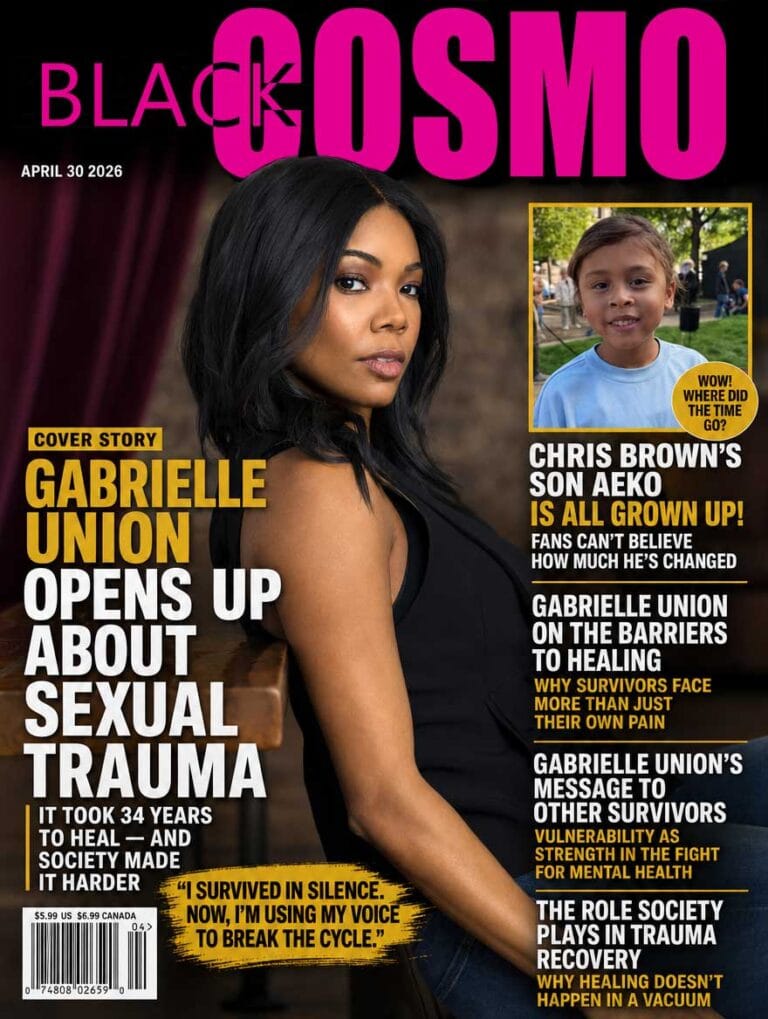
Gabrielle Union On Her 34-Year Journey To Heal From Sexual Trauma

For 34 years, Gabrielle Union carried something most people could not see. On the outside, she was every definition of a woman who had made it — a thriving Hollywood career, a high-profile marriage to NBA star Dwyane Wade, four children, a bestselling memoir, and a platform that millions listened to. Inside, her nervous system had never left a Payless shoe store in Los Angeles, where at 19 years old, she was raped at gunpoint during a summer shift.

She did everything right. She started therapy three days after the attack. She kept going back, year after year, couch after couch. She told her story publicly. She put her trauma into words in her own book. By every measure of what we tell survivors to do, Gabrielle Union did it. And still, for over three decades, she could not fully heal.

Now 53, she is finally naming why — and what she wants other women to understand before another 34 years slip by.


The Backyard That Broke the Silence

It was not a dramatic moment that brought Union to her breaking point. It was a sunny afternoon and a little girl doing cartwheels in the backyard.

Union’s youngest daughter, Kaavia, was playing outside — the kind of ordinary, golden childhood moment a mother should be able to hold and enjoy. Instead, Union’s mind was already three steps ahead, running through catastrophic scenarios, bracing for a fictitious threat to break through the gates and destroy everything she had built.

“I can’t watch you do cartwheels if I’m thinking about a fictitious criminal mastermind who somehow thwarts security and comes through the back gate,” she said during a recent conversation with Lashauna Cutts, a licensed clinical social worker and senior clinical director at Nema Health. “I can’t parent. I can’t be present like that.”

That is what untreated PTSD actually looks like — not always crisis, not always visible, but a mind that is permanently locked in a state of emergency. A body that never fully came home from the worst day of its life.

What she discovered, after beginning a specialized trauma treatment program through Nema Health in October, was a version of herself she had not met before. The hypervigilance quieted. The heaviness that had settled into the walls of her home — so normalized she had stopped noticing it — began to lift.

“It’s created a peace in our home, in our marriage that everyone is appreciative of,” she said. “I clearly was not as aware of the heaviness that existed in our house. Now I’m just watching cartwheels. I can be present enough to actually hear what she’s saying.”


What 34 Years Actually Means

Sit with that number for a moment. Thirty-four years.

This is a woman with the financial resources to access any therapist, any program, any level of care that exists. She had the vocabulary, the willingness, and the courage to be open about her experience. She had every advantage a survivor could hope to have — and she still spent over three decades in an active trauma response because the right, specialized treatment was never made clear or accessible to her.

“I lived with PTSD for 34 years after being sexually assaulted at 19. I did everything I was supposed to do — all the therapy, year after year — and recovery still felt out of reach,” Union wrote in a recent post sharing her story. “What I didn’t know, and what most people don’t know, is that there’s a treatment designed specifically for trauma. It took me 34 years to find it. I wouldn’t wish 34 years of suffering on anyone.”

That gap in awareness is not accidental. It is systemic. The medical establishment has a long, documented history of dismissing Black women’s pain, underserving their emotional wounds, and assuming that strength means they require less care — not more. What looks like resilience from the outside is often simply a woman who was never given another option.


The Numbers Behind the Silence

Union’s story is deeply personal. It is also devastatingly common.

Research shows that roughly eight out of ten Black women will experience some form of trauma in their lifetimes. Nearly one in five Black women are survivors of rape. Forty-one percent have experienced sexual coercion or other forms of unwanted sexual contact. Black girls face disproportionately higher rates of childhood sexual and physical abuse, and as they grow older, Black women are more likely to encounter intimate partner violence and other forms of sexual harm.

Despite these numbers, roughly 58% of Black adults who need mental health support will never seek it.

The reasons are not simply personal reluctance. They are cultural, historical, and structural. Black women have been socially conditioned from birth to carry pain without complaint — to be strong, to be steady, to push through. The “strong Black woman” stereotype is not a compliment. It is a cage. It pressures women to suppress their emotions, resist help, and place everyone else’s needs above their own healing. It teaches survival as a substitute for living.

Unhealed trauma does not stay neatly contained. It surfaces as chronic anxiety, emotional dysregulation, physical pain, inflammation, autoimmune disruption, and strained relationships. It sits in the body long after the mind has tried to move on. It changes how a woman loves, how she parents, how safe she feels in her own skin on an ordinary Tuesday afternoon.


There Is More Than Talk Therapy

One of the most critical points Union is making is one that does not get nearly enough attention: talk therapy alone is not always enough, and it was never designed to be the only tool.

For 34 years, she processed her trauma verbally — returning again and again to the events and the feelings, which is valuable work. But she did not know that treatments specifically engineered to target the neurological and physiological roots of post-traumatic stress disorder existed. She did not know because no one told her, which is itself a systemic failure.

Her work with Nema Health involves brief, focused sessions — often just 10 to 15 minutes — paired with assigned exercises that can extend to nearly an hour. The work is so engaging that Union often completes multiple sessions in a single day. Cutts, her therapist, noted that the transformation she witnessed in Union was nothing short of radical. Union was so moved by her progress that she became an investor and strategic advisor for the company.

The point is not that one platform or one treatment is a universal answer. The point is that options exist. Specialized, evidence-based, trauma-informed care is available — and far too many women, especially Black women, have never been told it is there for them.


What She Wants You to Know

Union is not sharing her story for sympathy. She is sharing it as a map — an imperfect, hard-won map for the women who are still lost in the same fog she lived in for more than three decades.

“No two traumas are the same,” she wrote. “But if yours has changed how you live, how you love, how you feel safe in your own body — you deserve real care.”

That sentence is doing a great deal of work. It is dismantling the idea that you have to have suffered enough, or waited long enough, or proven your pain loudly enough to deserve real healing. It is a direct challenge to the silence that kills — the kind of quiet suffering that looks functional from the outside while something essential is dying on the inside.

If you have been managing rather than healing, surviving rather than living, protecting yourself from invisible threats in the middle of the most beautiful moments of your life — her words are for you.

You are not too strong to need help. You are not too far along to start over with better tools. And you should not have to spend 34 years finding the care you deserved from the very beginning.


The Conversation Starts Here

April is Sexual Assault Awareness Month, but the conversation Gabrielle Union is opening does not belong to a single month. It belongs to every Black woman who has been handed the cape of resilience and told that wearing it with grace was the same thing as healing.

It is not. And more of us need to say that out loud.

If her story resonates — if you recognized yourself in the backyard, bracing instead of breathing, managing instead of present — talk about it. Tell a friend. Tell a therapist. Tell your doctor and, if they dismiss you, tell another one. Ask specifically about trauma-informed care. Ask what treatments exist beyond talk therapy. Push for the specialized support you deserve.

Healing is not a luxury reserved for the lucky few. It is something every survivor is owed. And it should never, under any circumstances, take 34 years.


If you or someone you know needs support, the RAINN National Sexual Assault Hotline is available 24/7 at 1-800-656-HOPE (4673) or online at rainn.org. For Black women seeking culturally affirming mental health care, Therapy for Black Girls offers a therapist directory and community resources.


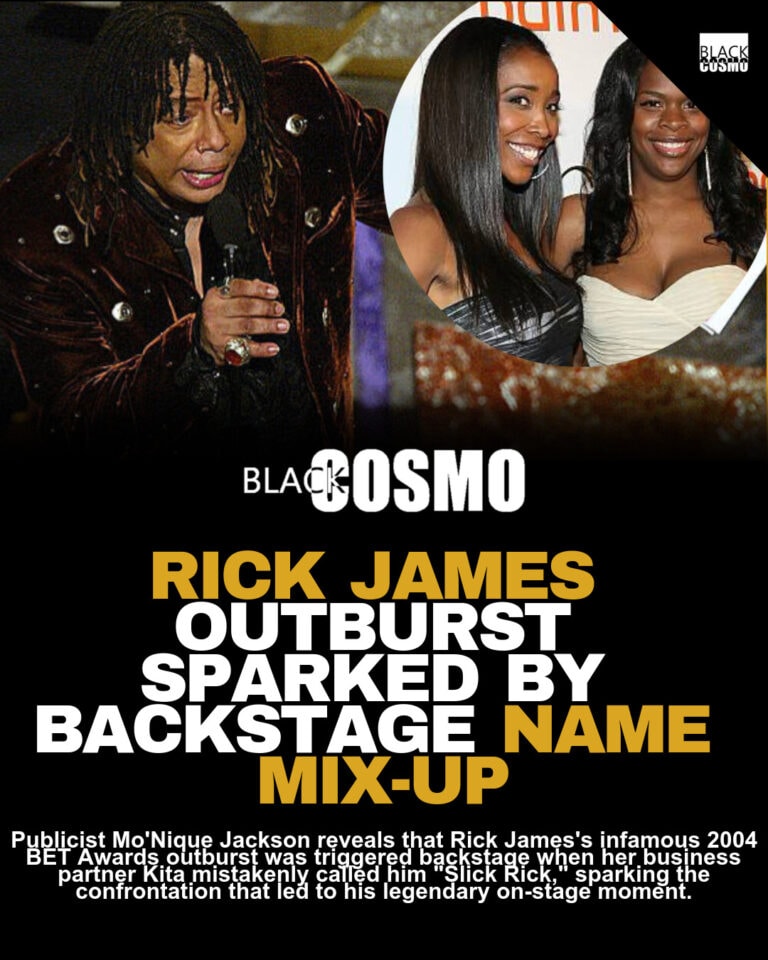
Rick James 2004 BET Awards Woman Identity Revealed

0

That legendary “I’m Rick James, b*tch!” moment just got a whole new layer—and it’s not what fans thought.

During a recent sit-down on the TSU Podcast, celebrity publicist Mo’Nique Jackson spilled the tea behind the iconic outburst from Rick James at the BET Awards 2004.

According to Mo, the chaos actually started backstage—and it involved her longtime business partner Kita. The duo, known for working with stars like Terrell Owens and other major celebrities, were behind the scenes when things went left.

Mo claims Kita accidentally called Rick James “Slick Rick”—but here’s where it got messy. Rick allegedly thought she was referring to Slick Rick, not just mixing up names. That misunderstanding reportedly set him off… leading to the unforgettable moment that would go down in pop culture history.

What fans saw on stage was just the aftermath—but now, over 20 years later, the real backstory is finally coming to light.

From a simple mix-up to one of the most quoted lines ever… talk about a moment that lived way longer than expected 😳

[efb_feed fanpage_id=”BlackCosmopolitan” words_limit=”25″ post_limit=”1″ skin_id=”115759″ cache_unit=”1″ cache_duration=”days” live_stream_only=”0″ load_more=”0″ links_new_tab=”1″ show_like_box=”0″]


ioe

Future Accuses Baby Mama of Leaking to Press

0

The legal drama between Future and his ex Brittni Mealy just turned up another notch. According to new court filings, the rapper is asking a judge to hold Brittni in both civil and criminal contempt, claiming she violated court orders by allegedly leaking private information about him to the media.

While much of the filing is redacted, it reportedly ties back to earlier accusations from Future‘s side that Brittni has been feeding details about their ongoing legal battle to the press. This all stems from Brittni’s lawsuit against the rapper, where she accused him of failing to secure a $500,000 life insurance policy for their 13-year-old son, Prince. Future has denied those claims.

Now he’s firing back—asking the court not only to sanction Brittni but also to order her to cover his legal fees. The situation has been messy on both sides. Brittni previously claimed Future hasn’t seen their son in over 16 months, while also denying accusations that she leaked anything to the media.

Adding another layer to the drama, Brittni is being represented by attorney Michael Sterling, who is also the partner of Eva Marcille from The Real Housewives of Atlanta.

With both sides making serious claims, this co-parenting situation is now fully in the courtroom—and it doesn’t look like things are cooling off anytime soon.

[efb_feed fanpage_id=”BlackCosmopolitan” words_limit=”25″ post_limit=”1″ skin_id=”115759″ cache_unit=”1″ cache_duration=”days” live_stream_only=”0″ load_more=”0″ links_new_tab=”1″ show_like_box=”0″]


ioe

Ving Rhames Collapses at Los Angeles Restaurant: Health Update

0

The internet hit a sudden standstill Wednesday afternoon when the news alert “Ving Rhames collapses at a Los Angeles restaurant” started flashing across social media. When you think of Ving Rhames, you think of absolute, unshakable strength. He is the imposing bedrock of billion-dollar spy franchises and undisputed Black cinema classics. So when reports broke that the 66-year-old actor suffered a sudden medical emergency while trying to enjoy a quiet family dinner, the culture immediately went on high alert.

The details from the restaurant scene paint a frightening and chaotic picture. Diners were caught completely off guard. According to witness accounts, Ving Rhames was simply sharing a meal with his loved ones when he suddenly slumped at his table. Witnesses noted that he appeared to drift in and out of consciousness, unable to fully respond to those frantically trying to assist him. The terror of watching a loved one lose control of their body in a very public setting cannot be overstated. The Los Angeles Fire Department confirmed they received a medical aid call for a man in his 60s right around 1:40 p.m. First responders arrived swiftly, loaded him into an ambulance, and immediately transported him to a nearby hospital for emergency evaluation. Hearing the exact phrase “Ving Rhames collapses” attached to a routine lunch outing is an unsettling reminder of human fragility, especially for an actor whose physical stature has always felt invincible.

Naturally, PR teams quickly stepped in to manage the narrative and lower the temperature. His representative, Bradley Kramer, spoke to outlets late Wednesday to assure everyone that the actor is fully expected to recover. The official explanation being passed to the press? They believe he simply became “overheated.” Now, we can give a little side-eye to the idea of a veteran Hollywood star randomly overheating in a climate-controlled LA dining room in late April, but we will gladly take the good news. He remains hospitalized for observation, just to make sure nothing more serious is hiding beneath the surface.

For the Black Cosmopolitan reader, Rhames is far more than Tom Cruise’s tech guy in the van. Yes, playing Luther Stickell across eight Mission: Impossible films pays the bills and secures the legacy. But in our spaces, his resume runs much deeper. He is Marsellus Wallace from Pulp Fiction. He is the intimidating but deeply grounded Melvin in Baby Boy, delivering harsh life lessons over the breakfast table. He gave a masterclass in raw, unfiltered grit playing the title role in Don King: Only in America. Let’s not forget his haunting, quietly devastating work in Rosewood. Rhames doesn’t just act, he commands the frame. He is the man who famously refused to keep his 1998 Golden Globe, calling Jack Lemmon to the stage to hand it over because he believed true artistry meant honoring the elders. He moves with an old-school honor that you simply do not see in the current entertainment ecosystem.

When a headline like “Ving Rhames collapses” hits the news cycle, it forces everyone to pause and give the man his flowers while he can still smell them. Fans immediately flooded X (formerly Twitter) with their concerns and protective energy. One user summed up the collective mood perfectly, stating: “Collapsing at dinner is no joke at any age. Legend in every sense from Marsellus Wallace to Luther Stickell. Hoping it’s minor and he’s back strong soon.” Others echoed the sentiment, demanding that the universe leave our cinematic legends alone. “Wishing Ving a swift and full recovery,” another fan wrote. “A powerhouse actor who’s delivered unforgettable performances for decades.”

Right now, the focus is entirely on his rest and recovery. The Hollywood machine will keep spinning—rumors of a ninth Mission: Impossible movie are already bubbling in the trades—but none of that matters if the people anchoring those films aren’t healthy. We are keeping a close watch on the situation and waiting for his actual discharge from the hospital. For a man who has given so much weight, dignity, and unapologetic Blackness to the screen for over three decades, he deserves all the peace, privacy, and healing he needs right now.

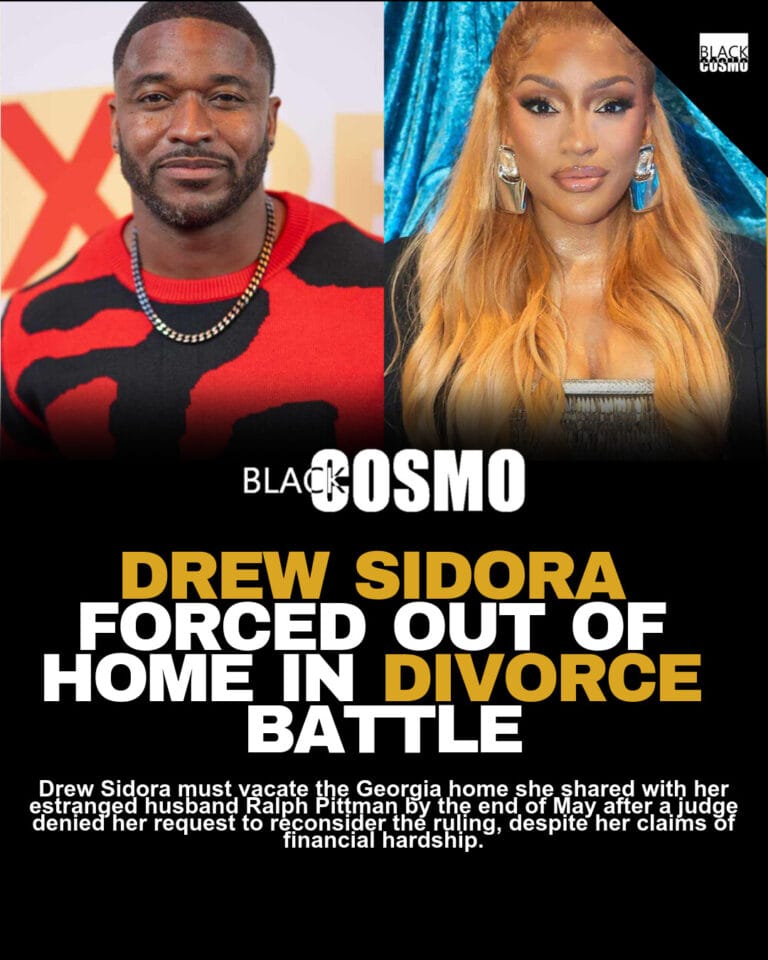
Judge Orders Drew Sidora Out of House in Divorce

0

Things just took another tough turn for Drew Sidora in her ongoing split from Ralph Pittman.

According to court documents, the The Real Housewives of Atlanta star has officially lost her bid to stay in the Georgia home she once shared with her estranged husband. A judge denied Drew’s request to reconsider a previous ruling—meaning she now has to move out by the end of May. Check out more on Drew Sidora as this situation develops.

Drew and Ralph have been living under the same roof since their 2023 split, with Ralph reportedly staying in the basement while their divorce plays out. But with tensions high and the legal battle dragging on, the court is now forcing a clean break—at least when it comes to their living situation.

During a recent hearing, Drew pleaded her case, telling the judge she didn’t have a new place lined up and lacked the financial resources to relocate on such short notice. Still, the judge wasn’t convinced and upheld the original order.

The divorce, filed back in March 2023, is still not finalized—meaning more drama could be on the way.

For now, Drew is facing a major transition as she prepares to leave the home… and fans are watching it all unfold in real time.

[efb_feed fanpage_id=”BlackCosmopolitan” words_limit=”25″ post_limit=”1″ skin_id=”115759″ cache_unit=”1″ cache_duration=”days” live_stream_only=”0″ load_more=”0″ links_new_tab=”1″ show_like_box=”0″]


ioe