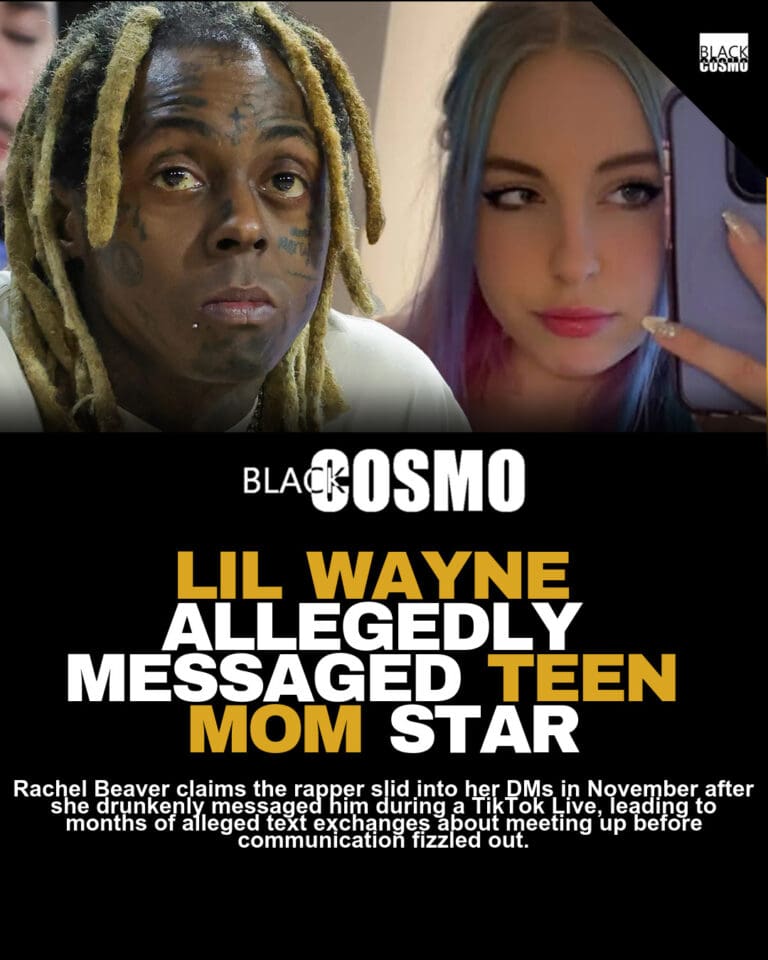
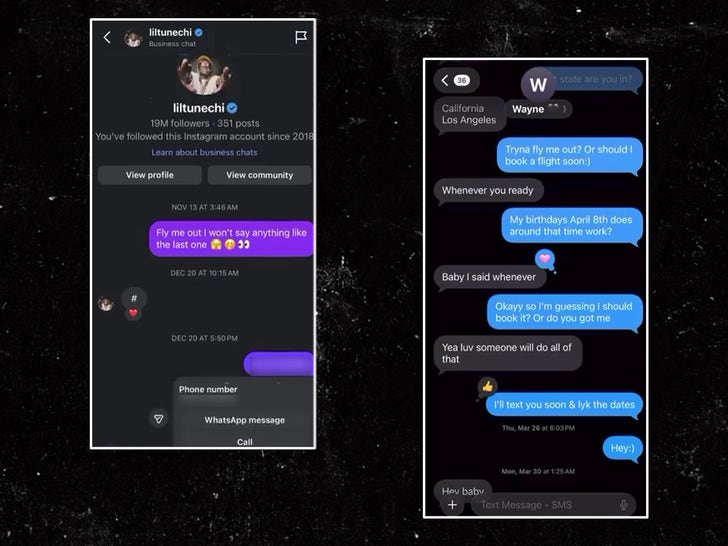
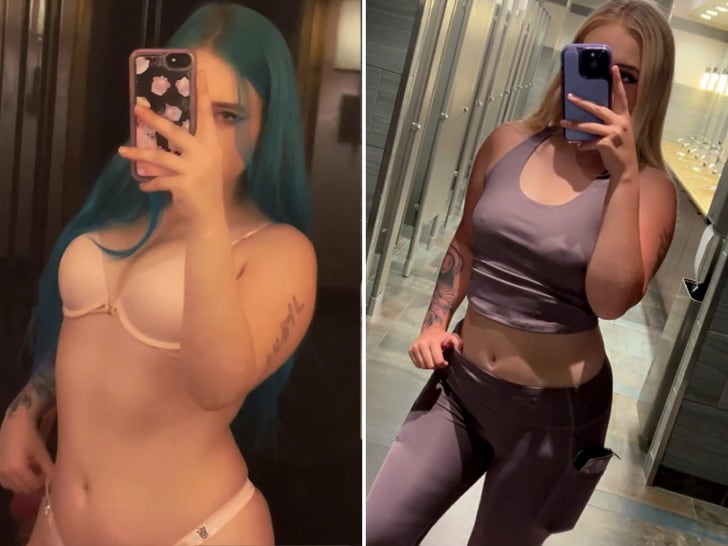
Lil Wayne appears to have been planning to meet up with Rachel Beaver, a former “Teen Mom: Young + Pregnant” star, based on a series of direct messages and text conversations obtained by BlkCosmo. The alleged exchange between the rapper and the now-23-year-old reality TV personality spans several months and includes discussions of travel arrangements.
The conversation reportedly kicked off on November 13 when Rachel slid into Wayne’s DMs with a straightforward proposition: “Fly me out I won’t say anything like the last one.” Wayne then asked for her phone number, and the discussion moved to text.
Rachel suggested waiting until after Christmas to meet, saying she’d need time to arrange a babysitter for her children. On January 3 at around 5 AM, Wayne reignited the conversation with a simple message: “want u.”
The texts continued sporadically over the following weeks, with the two discussing travel logistics. Lil Wayne repeatedly told Rachel he’d cover all expenses for the trip, and she asked if they could time it around her birthday on April 8.
In late March, Wayne texted “hey baby” around 1:30 AM. Rachel didn’t respond until April, when she explained she needed to reschedule because she was dealing with an ID issue that prevented her from flying.
After that, communication fizzled out. Rachel sent another message that appeared as a green text on her end, leading her to believe she’d been blocked. She says she hasn’t heard from Wayne since.
Rachel believes the trip never materialized because she couldn’t get a new ID in time. “It wasn’t unusual for him to take a while to respond sometimes,” she explained.
She later tried reaching out again after BlkCosmo reported Wayne’s engagement in May, which caught her off guard. Wayne eventually clarified he was single and no longer engaged at that time.
According to Rachel, the whole thing started as a joke during a late-night TikTok Live. Viewers were discussing a rumored Jenelle and Lil Wayne situation and encouraged her to slide into his DMs. “I texted him one night while drunk,” Rachel said. “Everyone in my live was talking about it, so I was like, ‘Should I text him, guys?’ Everyone said yes, so I did… and he messaged me back about a month later.”
We reached out to Lil Wayne for comment but haven’t heard back.
Naomi Osaka frequently celebrates her Haitian and Japanese heritage through her fashion choices, and she continued that with her Wimbledon attire.
Published on
Wimbledon is more than one of the biggest tennis tournaments of the year. It’s widely considered one of the most significant fashion events of the summer, where spectators showcase major style statements. It’s also a place where athletes have begun expressing themselves with major fashion moments before taking the court.
On July 5, Osaka defeated world No. 1 Aryna Sabalenka to reach the quarterfinals. But it wasn’t just their match that made headlines. Osaka also had people talking about her latest cultural fashion statement. She’s been captivating fans and creating buzz with her creative outfits at recent Grand Slam tournaments, and Naomi Osaka did not disappoint at Wimbledon.
Nick Ede is a U.K.-based brand and culture expert and public relations specialist with over 20 years of experience in fashion and entertainment. He is a regular commentator on television and in the press. Alongside his media work, Ede runs a PR agency and is a dedicated charity campaigner. He was once close friends with Meghan Markle and is now offering his take on Osaka’s Japanese-inspired walk-on outfit.
Osaka dazzles in Kimono before victory against world No. 1
“She’s helping to redefine what a modern tennis player can look like. Even with the stringent rules at Wimbledon on attire, she’s creating a center court couture catwalk moment every time she steps out.”
Ede added, “We’ve already seen players like Serena Williams and Venus Williams use fashion to make powerful statements, but Naomi is bringing a younger, more fashion-forward and social media-savvy perspective. With statement pieces and bold design choices, I think brands will become much bolder, and we’ll see more players embracing individual style within the rules of the sport because audiences now expect athletes to have a distinctive personal brand.”
What Osaka could wear for her next match
Ede also weighed in on what we could see Osaka wearing for her next match.
“I’d expect Naomi to continue leaning into her signature blend of high-performance sportswear with elevated fashion detailing,” he shared. “Wimbledon will always demand respect for its traditions, so the look will almost certainly remain predominantly white, but she’ll likely add subtle design touches that mean a lot to her and her heritage. Think sculptural silhouettes, textured fabrics, and perhaps Tom Ford sunglasses paired with elegant gold hoop earrings or lace-inspired detailing that make it uniquely hers.”
“She knows every appearance is photographed around the world, so her outfit will be carefully considered to strike the perfect balance between respecting Wimbledon heritage and showcasing her own creative identity. It’s that combination of confidence, fashion credibility and athletic excellence that makes her such a compelling figure both on and off the court.”
When someone you care about opens up about chronic illness, it can leave you searching for the right response. Whether it’s diabetes, cancer, sickle cell disease, or another ongoing condition, these diagnoses shape the daily lives of countless Black families. But here’s what often gets overlooked: how you respond matters just as much as the diagnosis itself.
The impulse to help is natural. But certain comments, even well-intentioned ones, can accidentally minimize someone’s experience or pile on stress they don’t need. If you’re trying to support a loved one dealing with chronic illness, here are the phrases to skip—and what to say instead.
Don’t Start Crying. Keep Your Composure
Anger young woman at home.
Don’t say: “Oh my God! Are you serious?” or “I can’t believe this is happening!”
Your loved one is already managing their own emotions. Responding with panic or visible fear only adds to their burden. Hold steady. Let them share what they need to say without your fear steering the conversation.
Try instead: “I know this may be rough for you” or “I’m here for you if you need anything.” Sometimes just being a steady presence is more valuable than the perfect words.
Don’t Pry Into Their Medical Details
African woman hiding her face with hands.
Don’t say: “What stage are you in?” or “Has it spread?”
Nobody owes you the specifics of their diagnosis. Questions about progression, severity, or medical details can feel invasive and force someone to share information they’re not ready to discuss.
Try instead: “I’m listening. Call or text me anytime. And what you don’t want to tell me, I won’t ask.”
Don’t Share Their Diagnosis Without Permission
Young adult man talking and gesturing with psychologist during therapy session on a sofa in a modern office.
Don’t say: “I only told a few people, what’s the big deal? Everyone will know soon.”
If someone trusts you with their diagnosis, that information isn’t yours to distribute. Even when your heart is in the right place—updating concerned family, church members, or coworkers—sharing without permission strips them of their right to control their own narrative.
Try instead: “Who, if anyone, would you like me to tell?” or “I’ll keep this between us unless you say otherwise.”
Don’t Question Why They Didn’t Tell You Sooner
Patient sitting on a sofa, engaging in conversation with psychologist during an insightful therapy session focused on emotional well-being
Don’t say: “Why didn’t you tell me?” or “I can’t believe you kept this from me.”
People don’t owe anyone a breakdown of every appointment or diagnosis. Sometimes managing the condition itself requires all their energy. Sometimes they need time to process before sharing. Respect their timeline.
Try instead: “Thank you for trusting me with this. I want you to know you’re not alone.”
Don’t Compare It to Someone Else’s Tragedy
A woman in a vibrant green dress shares a joyful conversation with a man in a cafe, their drinks and a flower vase on the table creating an intimate atmosphere.
Don’t say: “My aunt had that…and she died.”
Medicine evolves. Conditions once considered terminal can now be managed. Every person’s health journey is unique. Bringing up worst-case scenarios—especially deaths—shifts the focus to fear instead of hope and healing.
Try instead: “How are you feeling about your treatments?”
Don’t Judge Their Health by Their Appearance
Young woman smiling while relaxing on green grass with crossed arms during summer.
Don’t say: “But you don’t look sick.”
Many chronic illnesses are invisible. Someone might be managing daily pain, appointments, and emotional weight while looking fine on the surface. Appearing healthy doesn’t mean they are. Don’t let appearances determine what you believe about someone’s experience.
Try instead: “You look good and sound so positive. I’m proud of how you’re handling everything, though I can’t imagine how tough this is.”
Don’t Offer Unsolicited Medical Advice
Two young men enjoying cold beers and engaging in lively conversation at an outdoor party.
Don’t say: “Have you tried this diet, tea, or supplement? It’s sure to do the trick!”
Even well-meaning suggestions can feel dismissive of the care they’re already receiving from their medical team. If you want to help, ask first.
Try instead: “Is there anything I can do to support this journey?”
Don’t Force Positivity When They’re Struggling
Two friends sit on the couch.
Don’t say: “You got this” or “Just be positive” or “You’re a trooper.”
Constant cheerleading can make people feel like they have to hide their real emotions. They deserve space to feel scared, frustrated, exhausted, or uncertain without judgment.
Try instead: “I’m here for you, regardless of what you’re feeling.”
Don’t Question Their Medical Decisions
Young black male and female friend drinking coffee and talking in a sidewalk café indoors.
Don’t say: “Why is it taking your doctors so long to get answers?”
Unless you’re a medical professional, questioning their care plan adds unnecessary stress. Your loved one has likely spent months or years navigating appointments and difficult decisions. Trust their medical team. If they have concerns, support them in raising those concerns directly with their doctors.
Try instead: “Feel free to ask your medical team any questions that come up.”
Don’t Tell Them to Stop Taking Medication
African American man pouring medications out of a bottle into his hand.
Don’t say: “Go natural. You should get off that medication!”
For many people, medication is essential to quality of life—not a shortcut. Telling someone to abandon prescribed treatment is dangerous and dismissive of their medical reality.
Try instead: “I’m happy to support whatever approach feels right for you.”
Don’t Claim You Fully Understand
Full length of women talking with each other while sitting on sofa in living room. Mother and daughter enjoying coffee at home.
Don’t say: “I know exactly what you’re going through.”
Even if you’ve faced illness yourself, their experience is unique. Empathy works better than comparison, and it definitely shouldn’t become about your own story.
Try instead: “I can’t fully know how this feels, but I’m here to support you through it.”
Don’t Make Their Illness the Only Topic
Two friends run in the park.
Don’t say: “So, how’s your illness?” every time you see them.
People are more than their diagnosis. Centering their condition in every conversation can strip away their sense of identity. They need normalcy, too.
Try instead: “What’s new with you?” or “Want to grab brunch and walk around the city Saturday? I could use the exercise and some good gossip.”
Don’t Doubt Their Symptoms
Medium shot of father and son in discussion while relaxing by pool at all inclusive tropical resort during family vacation.
Don’t say: “Are you sure that’s from your illness?”
Doubting someone’s experience is especially harmful for those with invisible illnesses who already struggle to be taken seriously. Calling them dramatic or dismissing their concerns adds another layer of frustration on top of their diagnosis.
Try instead: “I believe you.” Take them seriously the first time.
Don’t Treat It Like a Death Sentence
Black women comforting one another.
Don’t say: “I’m worried this won’t end well.”
Leading with fear makes someone feel defined by their illness instead of seen as a whole person. If doctors say they’re doing well, believe them. Taking each moment as it comes creates clarity and a clearer path forward.
Try instead: “How are you feeling today?” or “What support would feel helpful right now?”
Support Starts With Listening
Black men discuss important topics.
When someone shares that they’re living with a chronic illness, they’re often looking for understanding more than answers. You don’t need perfect words or solutions. Sometimes the most meaningful thing you can offer is believing them, respecting their choices, and reminding them they’re not navigating this alone.
ICE has largely faded from headlines in recent months, but the agency’s operations have only expanded. The reach now extends far beyond traditional enforcement zones. From Ohio neighborhoods to university campuses, airports, and tax databases, ICE has woven itself into the daily fabric of American life in ways that remain largely under the radar. What’s less clear is where this expanded authority ends up, and what comes next.
Haitian Immigrants in Springfield Placed on Ankle Monitors
NEWARK, NEW JERSEY – OCTOBER 22: Haitian community leaders, immigrant community members, and their supporters gather at the Newark Immigration and Customs Enforcement field office to demand that President Biden’s administration stop deportations and restore the right to asylum on October 22, 2021 in Newark, New Jersey. (Photo by Spencer Platt/Getty Images)
Immigrant advocates report that Haitian residents in Springfield, Ohio are experiencing intensified pressure from enforcement actions. According to WCMH, some Haitian immigrants have been fitted with ankle monitors while awaiting immigration proceedings, marking a visible escalation in monitoring tactics within the community.
ICE and the IRS Battle Over Taxpayer Information
CHARLOTTE, USA – JUNE 5: Concerned citizens gather in front of the Federal Court House to protest against ICE detention centers to be built in the state in Charlotte, NC, United States on June 5, 2026. (Photo by Peter Zay/Anadolu via Getty Images)
A legal battle erupted over data access after ICE sought IRS information for enforcement purposes. The Associated Press reported that both agencies reached an agreement in May, yet serious concerns have emerged since. Advocates warn the data-sharing arrangement jeopardizes taxpayer privacy and could discourage immigrant communities from filing taxes. Immigration enforcement officials maintain they need access to help enforce federal law.
HBCU Student-Athlete Arrested on Campus
Johan Sandoval, a Dominican national and baseball player at Savannah State University, was detained after questions surfaced about his immigration status. His attorney explained the detention stemmed from administrative paperwork errors rather than willful violations. “It’s a bureaucratic mistake that has resulted in catastrophic consequences,” the attorney told The Current GA.
Investigation Finds Racial Slurs Were Used by ICE Agents
People concerned about the treatment of detainees protest ICE, Immigration and Customs Enforcement, outside the George Fallon Federal Building in Baltimore. (Kim Hairston/The Baltimore Sun/Tribune News Service via Getty Images)
Court documents filed in a civil rights lawsuit reveal troubling allegations. According to the Guardian, ICE and Border Patrol agents allegedly used racial slurs while discussing Latino immigrants during 2025 enforcement operations in Los Angeles. The filings cite text messages and body camera footage as evidence of racial profiling and discriminatory stops.
Fake ICE Agents Allegedly Targeting Immigrants
US Customs and Border Protection agents arrest a man after not providing documents proving he’s a citizen of the United States while patrolling a neighborhood during immigration enforcement activity in Minneapolis in Minneapolis, Minnesota, on January 11, 2026. (Photo by Octavio JONES / AFP via Getty Images)
An emerging threat has surfaced across multiple states. NBC News reported that individuals are impersonating immigration agents to intimidate, threaten and exploit immigrant communities. Advocates say this is particularly dangerous because many immigrants remain reluctant to report crimes or seek help due to concerns about their own immigration status.
Advocates Issue ICE Travel Advisories
ATLANTA, GEORGIA, UNITED STATES – MARCH 23: Immigration and Customs Enforcement Agents are seen working alongside TSA agents as passengers wait in long lines inside of Hartsfield-Jackson Atlanta International Airport in Atlanta, Georgia on March 23, 2026. (Photo by Nathan Posner/Anadolu via Getty Images)
Legal advocates including the Coalition for Humane Immigrant Rights (CHIRLA) have released guidance for people with unresolved immigration cases. FOX 11 News reported that these advisories stress the importance of understanding legal rights before traveling, carrying necessary documentation, and knowing how to respond if approached by immigration officers.
Salvadoran Man Dies in Delaney Detention Center
NEWARK, NEW JERSEY – JUNE 7: Immigration and Customs Enforcement (ICE) agents watch protestors outside of Delaney Hall Immigration Detention Center as they protect vehicles during a shift change on June 7, 2026 in Newark, New Jersey. (Photo by Adam Gray/Getty Images)
Edwin Lopez-Cornejo, a 41-year-old Salvadoran man, died while in ICE custody at Delaney Hall detention center in Newark, New Jersey, after suffering a medical emergency. ABC News reported that ICE said Lopez-Cornejo received appropriate medical care, though the cause of death remains under investigation.
Judge Blocks Parts of New York Mask Ban
NEWARK, NEW JERSEY – MAY 26: ICE agents stand guard in front of protesters outside Delaney Hall which is being used as an Immigration and Customs Enforcement detention centeron May 26, 2026 in Newark, New Jersey. The protests, which have become tense over the holiday weekend, come amid reports of an ongoing hunger strike by detainees. (Photo by Spencer Platt/Getty Images)
A federal judge temporarily blocked sections of a New York state law designed to restrict ICE agents from wearing masks and require visible identification during operations, according to Fox News. The court determined the federal government will likely succeed in its argument that states cannot regulate how federal immigration officers conduct their duties.
Contaminated Drinking Water Alleged in ICE Facility
Residents protest plans to move the local immigration office to the federal building downtown. In addition to offices, plans include adding an ICE detention center in a wing that once housed a post office. “No Kings” and antiwar messages are also part of the demonstration (Photo by John Whitney/NurPhoto via Getty Images).
Attorneys for a detainee at California’s Adelanto ICE Processing Center released footage showing what appeared to be worm-like organisms in the facility’s drinking water. The Guardian reported the video emerged just days after a federal judge ordered ICE to provide detainees with round-the-clock access to clean water. The Department of Homeland Security said the facility meets water safety standards, while advocates question compliance with the court order.
University of Maryland Professor Detained by ICE
Dr. Berhanu Kibret, an instructor at the University of Maryland School of Pharmacy who had recently won a Teacher of the Year award, was detained by ICE at Dallas-Fort Worth International Airport following a work conference. CBS News reported the university asserts he maintains valid work authorization, while DHS alleges he overstayed his visa and is in the U.S. unlawfully pending immigration proceedings.
ICE Expands Private Prison Contracts
NEW YORK, NEW YORK – JULY 31: Immigration and Customs Enforcement (ICE) agents stand guard at the New York ICE field office at the Jacob K. Javits Federal Building on July 31, 2026 in New York City. (Photo by Michael M. Santiago/Getty Images)
The Trump administration is leaning heavily on private prison operators to rapidly scale ICE detention as it pursues mass deportation. TIME Magazine reported that rather than constructing new facilities, ICE is acquiring or reopening privately operated detention centers nationwide. Supporters of the approach argue it accelerates enforcement operations, while critics contend it deepens governmental reliance on for-profit incarceration.
Pennsylvania Community Becomes Enforcement Flashpoint
Romulus, Michigan, USA, 23 February 2026, Hundreds rallied at Romulus City Hall to oppose the opening of an ICE detention center in the Detroit suburb. During the rally, the City Council unanimously passed a resolution opposing the detention center. (Photo by Jim West/UCG/Universal Images Group via Getty Images)
Public Source found that Springdale, Pennsylvania has emerged as a contested terrain over immigration enforcement after local police entered a 287(g) partnership with ICE. Combined with a controversial data center project, the arrangement has sparked protests and mounting concerns about policing, transparency, and the treatment of immigrant residents in the Pittsburgh suburb.
Trump Administration Pursues Conspiracy Charges Against Immigrants
US President Donald Trump speaks during a Cabinet meeting at Camp David in Maryland, on July 31, 2026. (Photo by Aaron Schwartz / AFP via Getty Images)
NPR found that prosecutors are increasingly filing conspiracy charges against immigrants accused of helping others enter or remain in the U.S. illegally. The strategy allows prosecutors to pursue harsher penalties, though defense attorneys warn it expands criminal liability and risks catching people with marginal involvement in wider legal nets.
Our students are not running from. Our students are running toward.
They are running toward Historically Black Colleges and Universities (HBCUs) to belong — before defending their belonging in the larger world becomes a daily test. That is the story of HBCU enrollment surging, and it’s a story that deserves to be told without a foil. I say that as a man who holds no HBCU degree at all. Two of mine come from a predominantly white university — a campus that once made me prove I belonged — and one from a minority-serving institution in the heart of New York. At both, teachers, Black and white alike, bet on my promise before the proof. I am grateful to everyone and everything that shaped my academic journey.
What follows is not tribalism. It is testimony.
Let’s begin with the record because the affirmative action policy this country buried in 2023, with the Supreme Court decisions in Students for Fair Admission (SFFA) v. President and Fellows of Harvard College and SFFA v. University of North Carolina, was slandered at its own funeral. In Regents of the University of California v. Bakke (1978), the Supreme Court struck down racial quotas and ordered Allan Bakke admitted to medical school. But Justice Lewis Powell’s controlling opinion held something the 2023 eulogies forgot: race, Powell wrote, “may be deemed a ‘plus’ in a particular applicant’s file” — and in the very same sentence, it “does not insulate the individual from comparison with all other candidates.” Read it twice. The ‘plus’ accompanied the qualified. It did not preempt qualifications. Powell described the “otherwise qualified” student whose “ethnic, geographic, culturally advantaged or disadvantaged” background enriches a community. There was never a lesser-than clause. For forty-five years, reaffirmed in Grutter v. Bollinger (2003), that was the law: individualized review among equally capable candidates for the benefit of the whole.
Affirmative action was only ever decisive at a selective sliver of schools. A majority of America’s roughly 3,000 four-year colleges admit most of those who apply; when the Court ended the practice, Black enrollment shifted at those few campuses and barely registered anywhere else.
Getty Images stock photo
Generations who won those seats fair and square carried the burden of a false accusation into every seminar room: you didn’t earn your place here. My answer has always been direct: given the enduring homogeneity of those institutions — by wealth, by geography, by legacy, by everything but merit — neither did you.
Our schools, meanwhile, were proving the story more powerfully. Historically Black Colleges and Universities, according to the United Negro College Fund (UNCF), are the primary engine moving Black Americans from poverty into the middle class, at double the national rate. The crown of the Black middle class was forged on HBCU campuses. My colleague Dr. Melissa Harrington, a Stanford-trained neuroscientist who chose to build her career at an HBCU, and I recently completed research using U.S. Department of Education data. It shows that the doctoral record is just as stark. HBCUs award barely one percent of the nation’s research doctorates; however, in the disciplines for which we offer those programs, HBCUs produce nearly 20 percent of the Black doctoral graduates. For example, one small forestry program accounts for nearly 80 percent of Black PhDs in its field, and more than a third of Black veterinarians finish at an HBCU. The National Science Foundation reports that eight of the ten colleges most likely to have granted a Black PhD holder their bachelor’s degree are HBCUs. They started with us. They finished anywhere they pleased. And now, they anchor Black leadership in laboratories and courtrooms, within classrooms and operating rooms, on the biggest screens and the smallest stages.
And now the children of that record are voting with their futures. While American college enrollment shrank over the past decade, HBCU enrollment grew seven percent in just three years — a surge the National Center for Education Statistics measures against fourteen percent across the entire previous half-century. Applications across our sister institutions have climbed by a third and more; record-breaking incoming classes have become an annual ritual from one campus to the next; and admission to several of our schools is now more competitive than at most colleges in America. At Delaware State, we have set new student records in four of the last five years — 6,623 students strong, drawn from 44 states and more than 30 countries.
Understand who is coming: valedictorians carrying acceptance letters to some of the most prestigious schools in one hand and tickets to HBCU belonging in the other; under-resourced or first-generation students who still need a door opened to a system that may otherwise lock them out; future engineers, physicians, founders, and poets all electing the path that validates their worth. They are not settling for us; they are selecting us. They have watched this country turn their belonging into a debate, and they are declining to spend four years as the subject of it. At an HBCU, no one asks them to justify the seat. Every ounce of genius once spent proving goes, instead, to becoming. That is the surge. Not an escape from America’s argument but four years of freedom from it, building strength for the fights surely to follow.
And now the proof has caught up with the testimony. Days ago, the Thurgood Marshall College Fund’s Payne Research Center and Gallup released the largest study of HBCU alumni ever conducted, and its central finding is the one our students already knew: 83 percent of recent HBCU graduates felt they belonged at their institution, nearly twenty points above the national average. That belonging holds steady across income, gender, field of study, and first-generation status. As the study itself puts it, belonging at HBCUs “is not a privilege for the few. It is the culture.” And belonging compounds. Seven in ten HBCU alumni are thriving in their everyday lives, against 48 percent of American adults and 46 percent of Black adults nationally, and nearly three in four would send the next generation back to the source. The study’s title says it plainly: Proof of Promise.
This generation knows that record, and it is demanding that we meet the next generation even more decisively. Our students emerge now at the front of a second industrial revolution, powered by artificial intelligence. Delaware State was chartered in 1891, and thus, the first industrial revolution was built without us. This time, we are ready. Amazon Web Services named our university one of five national lead institutions for its Machine Learning University, and three of the five are HBCUs. This year, Malcolm Coley became our first doctoral student in data science and artificial intelligence, pursuing the degree that defines the second industrial revolution at the university chartered in answer to the first. And through eHBCU.edu, the first national online HBCU learning consortium, sister institutions now teach together, so that any student, anywhere, can claim this inheritance.
Ours is a legacy and an inheritance — a story still being written. At our university, Razia Khan Sharme, a graduate student in applied optics, took first place in physics at a national research conference for work she is doing with NASA in Dover, Delaware, at a public HBCU. She is the newest name in an old book. Du Bois sharpened his mind at Fisk. Bethune built a college on faith and a dollar and change. And the line runs unbroken: Katherine Johnson calculated spaceflight out of West Virginia State; Ronald McNair carried North Carolina A&T into orbit; Patricia Bath, Howard-trained, restored sight to the blind with a patented laser; David Satcher went from Morehouse to Surgeon General of the United States; Rosalind Brewer advanced from Spelman to the chief executive’s chair; Janice Bryant Howroyd excelled from North Carolina A&T to building the first billion-dollar business founded by a Black woman; Toni Morrison wrote her way from Howard to the Nobel and the Pulitzer; Thurgood Marshall graduated from Lincoln and Howard before serving on the U.S. Supreme Court; and Ruth Simmons, a daughter of Dillard, proceeded to the presidency of an Ivy League university. To name just a few.
All of our students know exactly what they are choosing: a place that has never asked them to prove they belong. They get straight to the work of becoming.
Let the record reflect. They earned it. So did we.
Tony Allen, Ph.D., is the 12th President of Delaware State University, the nation’s most diverse contemporary HBCU. He also chairs eHBCU.edu, the first national online HBCU learning consortium.
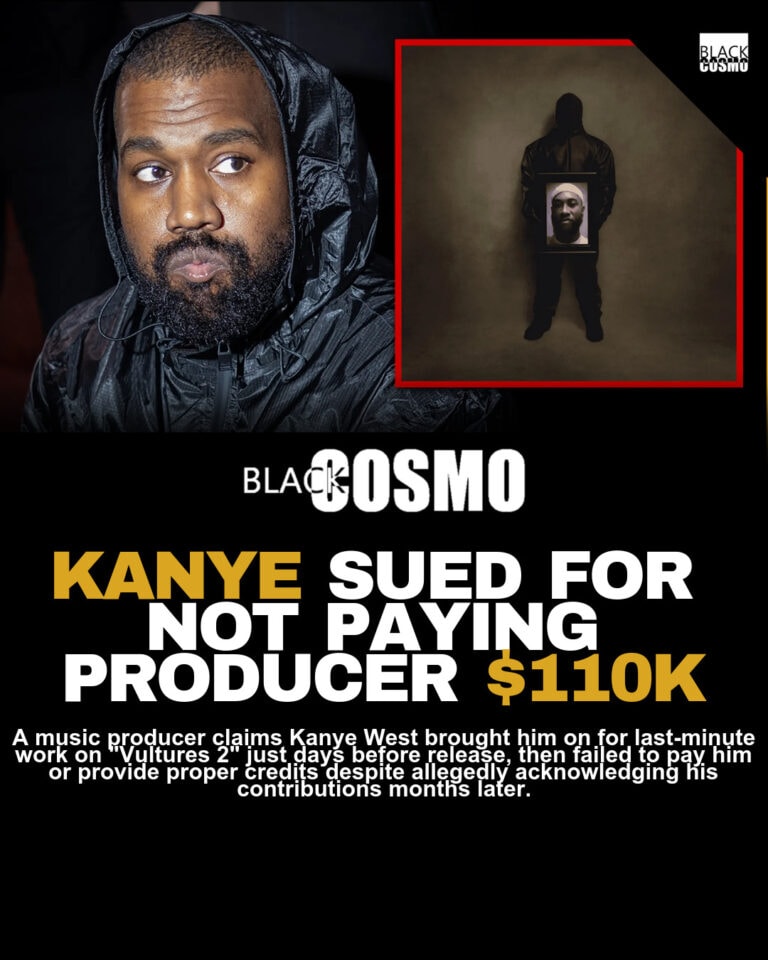
Kanye West is being dragged to court by a music producer who claims Ye put him to work on “Vultures 2” under a tight deadline, then never paid him a dime.
According to a new lawsuit obtained by BlkCosmo, the producer—who filed anonymously as John Doe—says he was brought aboard August 1, 2024, just two days before the album’s release.
The producer claims Kanye West personally directed the recording sessions as he cranked out more than 400 vocal generations and created at least 13 custom A.I. voice models.
He says he was tasked with reconstructing vocals, converting performances into other artists’ modeled voices, and using his own recordings as source material and in some of the finished masters.
The producer claims his contributions landed on five “Vultures 2” tracks. He says he later worked on two released tracks from Ye’s “Bully” project, along with several unreleased songs.
According to Doe, Ye’s team acknowledged his work in late 2024, discussed updating his credits on digital streaming platforms and even offered him a master buyout. But he says the money and credits never came through.
Doe says he repeatedly went after Ye’s business managers—including Milo Yiannopoulos—for payment, but claims he still hasn’t been compensated.
He’s seeking at least $110,000 for the seven released tracks: $80K for “Vultures 2” and $30K for “Bully,” plus additional damages for his unreleased work.
He also wants a judge to force Ye’s companies to properly credit him on streaming platforms.
We reached out to Kanye for comment. So far, no response.
The Real Math Behind Diddy’s Projected Low-Key Freedom Plans Next Month—And The “Spend Dat” Remix Rumors Fueling His Summer Comeback!
Honey, dust off the white linen outfits and fire up the studio boards, because the ultimate institutional math is officially adding up to the biggest, most shocking summer return in hip hop biography history! BlkCosmo has been tracking the absolute, hyper-ventilating whispers taking over the entertainment industry as sources snitched to us that disgraced music mogul Sean “Diddy” Combs is quietly preparing to walk away from FCI Fort Dix next month!
MIAMI – OCTOBER 28: Sean “P Diddy” Combs at a “Vote or Die” rally at Miami Dade Community College North Campus on October 28, 2004 in Miami. (Photo by Alberto Tamargo/Getty Images)
While standard internet commentators are staring at the generic, unadjusted dates listed on the main Federal Bureau of Prisons portal, true legal sleuths and industry insiders know that the system’s baseline calendar never reflects the true back-end math. Behind closed doors, the 56-year-old Bad Boy Records architect has already calculated his administrative eligibility—and we learn he has officially informed his family, close friends, and his former flame Yung Miami (Caresha Brownlee) that his projected release date lands on August 7, 2026. The hip hop biography of this moment will be studied for years to come.
The Institutional Math: How the August Date Actually Clears
Let’s look at how the federal credit system actually operates directly like a supportive peer, not a rigid lecturer: Honey, a lot of people see the static dates on the public BOP website and think a sentence is locked in stone. But baby, the public database notoriously excludes the massive chunks of time shaved off through advanced back-end programming and community custody transitions!
Diddy’s legal team has been working overtime behind the scenes to maximize every single administrative loophole available. By maintaining pristine behavior, working in the chapel library, and successfully completing the intensive Residential Drug Abuse Program (RDAP), Diddy has locked in eligibility for a full 12-month reduction. Think of it like meal prep containers—everything needs to be organized and stacked perfectly for maximum impact.
When you stack those programming credits on top of his standard First Step Act good-conduct time, pre-trial credits, and his mandatory eligibility to spend the final 10% of his remaining sentence in a residential halfway house or home confinement, the real-world calendar completely shifts. The actual mathematical calculations bring his active prison exit right to the first week of August, clearing the runway for him to transition back to the real world way sooner than the general public ever anticipated!
The “Spend Dat” Comeback: Mastering the Summer Remix From the Inside
But baby, Diddy isn’t just planning on sitting around and relaxing the second he touches down back home this summer. He is already plotting his grand creative reentry into the music marketplace, channeling that classic statement piece energy that made Bad Boy Records legendary!
NEW YORK, NEW YORK – MAY 01: (L-R) Yung Miami and Sean ‘Diddy’ Combs depart The 2023 Met Gala Celebrating “Karl Lagerfeld: A Line Of Beauty” at Metropolitan Museum of Art on May 01, 2023 in New York City. (Photo by Mike Coppola/Getty Images)
Insiders close to the Bad Boy camp snitched to us that Diddy has been keeping his ears heavily locked into the radio charts during his time away, and he is completely, utterly obsessed with Yung Miami’s viral solo smash single, “Spend Dat.” The track has been completely dominating the club circuits and radio waves, and Diddy reportedly wants to use its massive momentum for his official post-custody musical launch.
Our source snitched that Diddy has already discussed plans to jump straight into the studio to orchestrate an official “Spend Dat” Bad Boy Remix the second his home confinement or halfway house parameters allow it. He’s reportedly ready to bring back those classic, iconic 90s-style Bad Boy ad-libs and production flourishes to give Caresha’s summer anthem an even bigger, high-roller club energy—like adding gold hoop earrings to complete the perfect outfit.
The Timelines Face an Absolute Melt Down!
The second the news of the August 7th projections and the “Spend Dat” remix planning leaked out to the inner urban circles, the digital space completely violently exploded into absolute shock and anticipation!
While traditional onlookers are still debating the legal logistics, the culture is already preparing for the absolute chaos of a summer return. “If Diddy actually walks out next month and his first move is dropping an official remix intro for Yung Miami’s ‘Spend Dat,’ the internet is going to collapse under its own weight! Say what you want about the man’s legal troubles, but his musical timing is always pure theater, honey!” one viral user yelled on X, instantly racking up thousands of intense engagements.
With August just right around the corner, the clock is officially ticking down on Fort Dix. We are keeping our eyes permanently locked right on the arrival gates to see the exact moment the moving trucks pull up, so stay completely locked into BlkCosmo, honey! The summer is about to get wild!
FROM THE BRINK OF THE GOVERNOR’S MANSION TO AN ALABAMA JAIL CELL! Andrew Gillum Arrested On Heavy Felony “Dangerous Drugs” Charges In Deep South Bust!
Honey, pull the political archives out of the vault and brace yourselves, because one of the most dizzying, tragic falls from grace in modern political history just took a devastatingly dark turn! BlkCosmo has confirmed that former Florida Democratic gubernatorial superstar and rising national icon Andrew Gillum was abruptly arrested and thrown behind bars after a shocking police encounter in Daphne, Alabama!
The 46-year-old former Tallahassee mayor—who famously came within a razor-thin 34,000 votes of defeating Ron DeSantis to become the first Black governor in Florida history back in 2018—was taken into custody by the Daphne Police Department. He was officially booked into the Baldwin County Jail on three separate narcotics offenses: possession of dangerous drugs, possession of drug paraphernalia, and possession of marijuana. While his combined bond was set at a relatively low $6,500 and he was released after spending about 12 hours locked up, the specific legal classification of his charges has the internet completely hyperventilating. The implications of these charges within conversations about Andrew Gillum speak to larger struggles with mass incarceration in America.
The Legal Breakdown: What Is A “Dangerous Drugs” Charge?
Let’s look at the strict Deep South legal statutes directly like a grounded peer, not a rigid lecturer: Honey, a lot of casual onlookers saw the word “marijuana” in the initial local jail alerts and assumed this was just a minor, standard roadside traffic stop. But baby, Alabama narcotics laws do not play!
Under Alabama criminal codes, a charge of possession of “dangerous drugs” is automatically classified as a heavy felony that carries a looming penalty of up to five years in federal or state prison, plus hefty $7,500 fines. In order for local prosecutors to apply the “dangerous” label to a narcotics citation, an individual has to be caught in physical possession of controlled substances far more severe and strictly regulated than cannabis—think hard, illicit street narcotics like crystal meth, cocaine, heroin, or illicit prescription codeine syrups!
Because weed has its own separate misdemeanor classification on his docket, the felony charge sends a booming, unmistakable signal that Andrew has allegedly fallen right back into the clutches of the hard stuff. According to local reports, Andrew had some meth and two straws—suggesting that he was on his way to rendezvous with a male partner. This revelation adds another layer to conversations about queer identity and the pressures facing public figures.
Deja Vu: Remembering the Infamous 2020 Miami Beach Overdose Scandal
For anyone tracking the former politician’s personal trajectory, this latest Southern bust triggers a terrifying sense of deja vu. Back in March 2020, just two short years after his historic gubernatorial campaign concluded, Gillum’s clean-cut public image completely shattered overnight. Miami Beach police units were frantically called to respond to a late-night cardiac arrest call inside a luxury hotel suite at the Mondrian South Beach.
When officers arrived, they discovered three naked or semi-nude men inside the room—including a heavily inebriated, incoherent Gillum—allegedly engaging in explicit group activities. The official police report vividly detailed that the room was completely littered with small clear bags containing suspected crystal methamphetamine. While Gillum fiercely denied ingesting the meth at the time, claiming he had simply consumed way too much alcohol at a wedding celebration, he immediately checked himself into an intensive rehabilitation facility for substance abuse while his loyal wife publicly vowed to take him back and stand by his side.
A Wild Journey Through The Federal Court System
The Alabama felony arrest comes as an absolute, crushing blow to a man who had just barely managed to salvage his personal freedom following a massive, multi-year war against the federal government. In 2022, the Department of Justice hit Gillum with a sweeping, 21-count federal indictment charging him with wire fraud, conspiracy, and making false statements to the FBI over allegations that he illegally funneled tens of thousands of dollars in campaign contributions into his private bank accounts for personal luxury expenses. Following a grueling, high-profile corruption trial in May 2023, a federal jury found Gillum not guilty of lying to the FBI and remained completely deadlocked on the wire fraud counts. Prosecutors ultimately made the calculated decision to dismiss all remaining charges, allowing Gillum to walk out of the courthouse completely victorious and completely free.
The Timelines React In Total Disbelief: “Protect This Man’s Soul, Honey!”
The second the high-definition booking photo from the Baldwin County Sheriff’s Office hit the algorithmic news feeds, a massive, overwhelming wave of heartbreak, shock, and profound sadness completely consumed social media. While political rivals ran to the comments to gloat, the overwhelming majority of the culture is simply mourning the tragic unraveling of a brilliant mind. “Say what you want about his politics, but seeing Andrew Gillum go from nearly running the entire state of Florida to being booked in an Alabama jail for dangerous drugs is deeply, deeply tragic. Addiction is a horrific, relentless monster that does not care about your pedigree or your ancestral roots. Praying for his family, honey,” one viral user wrote on X, instantly securing tens of thousands of somber agreements.
The Daphne Police Department has not yet released the full, comprehensive arrest narrative detailing what led to the vehicle or residential stop, but the legal wheels are officially turning in the Yellowhammer State. We are keeping our notifications locked around the clock to see what his legal defense team says next, so stay completely tuned to BlkCosmo, honey. Keep his family in your thoughts! Stay tuned.
A rare video from inside FCI Fort Dix showing Sean “Diddy” Combs walking the federal prison grounds for hours at a time has leaked online. The footage offers a glimpse into the daily life of the hip hop biography that’s become impossible to ignore.
In footage obtained by TMZ, the disgraced Bad Boy founder is seen outside the New Jersey facility Monday afternoon wearing a light T-shirt, shorts, sneakers, and a hat. The clip was reportedly recorded around 2 p.m. on Tuesday, during what sources described as his “regular outdoor routine.” This moment captures a stark contrast to his former life—a meditation on how far someone can fall. You can find more context on hip hop biography to understand the broader cultural impact.
Sources with direct knowledge told the outlet that Combs walks around the compound for about two hours each day, typically between 1 p.m. and 3 p.m., “as long as the weather cooperates.”
The 56-year-old music mogul also reportedly wears his hat daily, listens to music on a tablet, and has been working in the prison chapel. It’s a routine that speaks to resilience, even in confinement.
Diddy has been incarcerated since his September 2024 arrest. He was later convicted on two counts of transportation to engage in prostitution and sentenced to four years in prison. A jury acquitted him of racketeering conspiracy and sex trafficking charges. The case has drawn parallels to mass incarceration conversations happening across the nation.
His projected release date has since moved forward more than once. It is now listed as Feb. 23, 2028, after previously being scheduled for April 2028 and, before that, June 2028. These shifts remind us of the uncertain nature of the freedom struggle within the justice system.
The footage arrives amid reports that President Donald Trump has considered granting Diddy a pardon, though TMZ noted there has been “no indication one is imminent.”
For now, his days include music, chapel work and long afternoon walks through the compound. It’s a narrative that few expected to unfold.
As questions continue surrounding the death of 18-year-old Nolan Wells, a false narrative has spread across social media with startling speed. Users have been claiming that Wells was a descendant of Ida B. Wells, the legendary journalist and anti-lynching activist. The theory gained traction quickly, with many suggesting the connection would make the case symbolically profound given Mississippi’s documented history of racial violence.
There’s a significant problem: it isn’t true. Ida B. Wells‘ great-granddaughter Michelle Duster learned about the rumor the same way most people did—through her social media feeds. “My cousin was like, ‘Is this true?'” Duster told PEOPLE. Within hours, friends, relatives, and strangers began flooding her with messages asking whether Nolan belonged to their family.
The answer, definitively, is no.
Duster explained the genealogy clearly. After Ida B. Wells married attorney Ferdinand Barnett, the family took the Wells-Barnett surname, and their descendants carry the Barnett name. Extensive family records show no connection between Nolan Wells and her lineage.
“I understand why people are really, really keeping close track of everything, and my heart goes out to the family,” Duster said. “It’s hard to imagine the level of pain that they all must be going through.”
The fixation makes sense within context. Mississippi’s history—from the lynching campaigns that Ida B. Wells spent her life documenting to contemporary conversations about racial justice—has made many Black communities cautious when young Black people die under unclear circumstances. Unanswered questions invite speculation.
But Duster pushed back on using history as justification for fabrication. “It’s really easy to find that information,” she pointed out. In today’s social media environment, emotionally resonant narratives often outpace actual facts.
Michelle Duster, great-granddaughter of Ida B. Wells, at the White House during the signing of the Emmett Till Anti-lynching Act in March 2022.
“I strongly feel that this situation connecting Ida to Nolan without any fact behind it is not only about that,” Duster said. “It’s about the lack of regulation on social media to ensure that what people are putting out there is true.” She emphasized that too many users share information without bothering to verify it first.
The Ida B. Wells rumor isn’t isolated. The Wells case has accumulated layers of misinformation since his disappearance during a July 4 trip to Mississippi’s Horn Island. Another unfounded claim accused his teammates of involvement in his death. Rumors about what he was wearing when discovered and conspiracies surrounding autopsy results have further muddied the waters.
The actual investigation remains unsolved. Officials initially concluded he drowned, but his family rejected that conclusion as premature and continues demanding answers. Investigators are still working to determine what happened during those final hours.
Misinformation has real consequences. False claims distract from facts, pull resources away from actual investigations, and create new victims. As Wells’ case continues, Duster’s message cuts through the noise: honor the truth, not the algorithm.