Lil Durk‘s legal situation just got more complicated. Federal prosecutors are pushing to keep his entire case together, arguing that splitting it into two separate trials would just repeat evidence and put witnesses through the same difficult experience twice.
The government filed a 30-page response on July 6 after the rapper requested that a newly added murder charge be separated from the original murder-for-hire case—or that all charges be dismissed altogether. Lil Durk‘s legal team argues that combining everything could delay his trial even further, especially after nearly 22 months already spent behind bars. But prosecutors aren’t budging. They say the six counts share witnesses, records, and a connected chain of events that makes a joint trial necessary.
The stakes feel high here. According to the filing, people have even photographed the courtroom and posted images online. Witnesses and relatives have allegedly received threats—a serious concern that speaks to the pressure surrounding this case. It’s the kind of testimony and witness protection issue you’d see in a hip hop biography or true crime account of the freedom struggle surrounding how the system operates.
“Requiring these witnesses to repeat their testimony in multiple trials strongly militates in favor of a joint trial,” prosecutors wrote in their response.
The government also explained why the Chicago killing of Stephon Mack was added back into the prosecution. Two men pleaded guilty in April and May 2026 and admitted under oath that they killed Mack for a cash payment. Prosecutors cited messages discussing money and a recorded jailhouse confession as newly usable evidence. They also included a text Lil Durk allegedly sent in July 2023 after the group learned police were asking questions: “delete thread and start new one.”
That kind of communication pattern—alleged burner phones, coded language, and efforts to erase conversations—made the investigation significantly more difficult for authorities. It’s a detail that underscores how complex these cases become when there’s an attempt to cover tracks.
Lil Durk‘s attorneys have maintained that these delays threaten his constitutional right to a speedy trial. Prosecutors countered that he approved the first postponement and that his co-defendants requested the others—shifting responsibility around the courtroom.
Judge Michael Fitzgerald will consider the dispute on July 27, with trial currently scheduled for August 20. This next hearing could be pivotal.
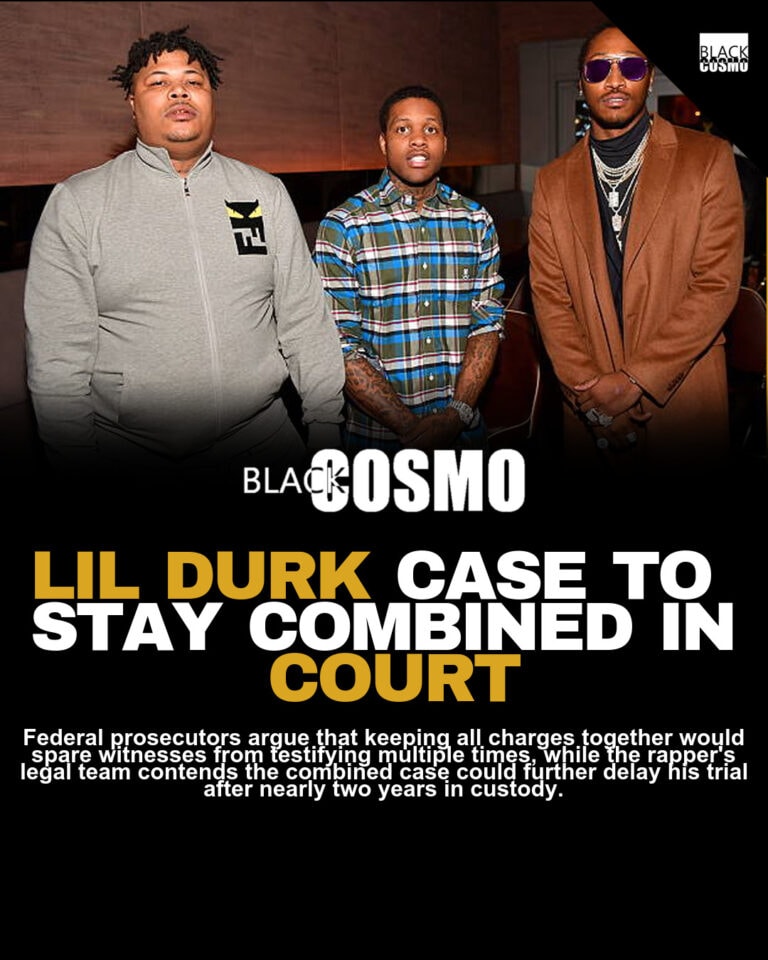
ATLANTA, GA – JANUARY 19 : Rapper Casino, Lil Durk and Future are spotted at the Gold Room on January 19, 2017 in Atlanta, Georgia. Photo By Prince Williams/Wireimage)
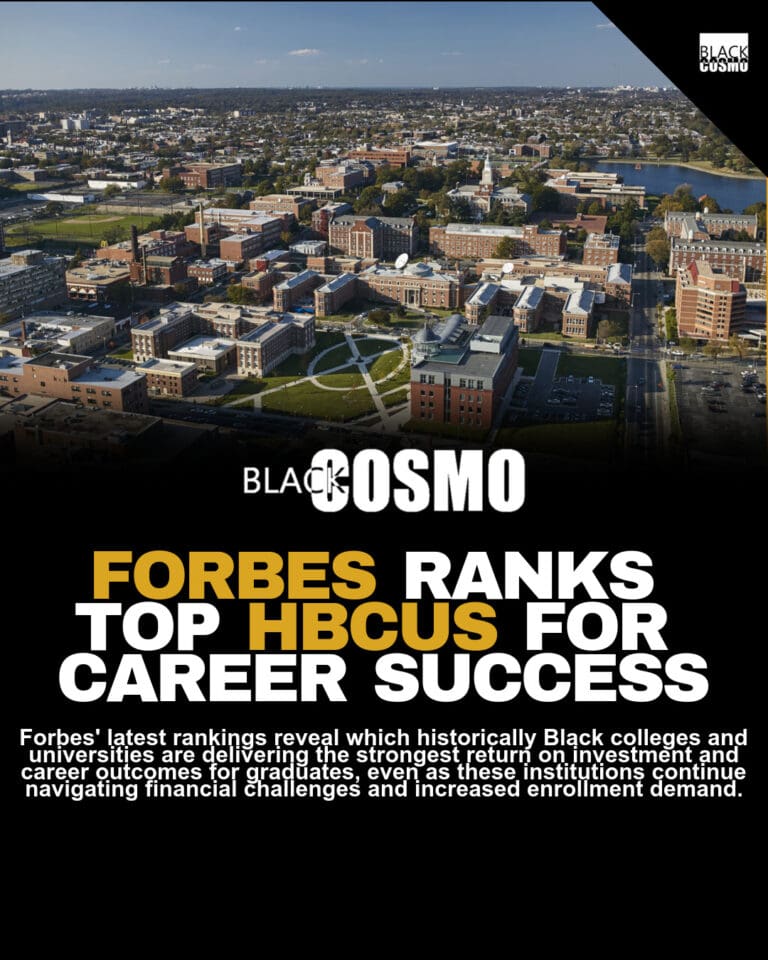
USA, Washington, D.C., Aerial photograph of Howard University campus (Photo: Getty Images) | Graduates of Morehouse College arrive for their graduation ceremony ahead of US President Joe Biden’s commencement address, on the campus of Morehouse College in Atlanta, Georgia on May 19, 2024. (Photo by ANDREW CABALLERO-REYNOLDS / AFP)
Forbes just released its top HBCU rankings, highlighting the public and private institutions delivering the highest return on investment, graduation rates, and mid-career median pay. The recognition comes as demand for the Black college experience reaches record highs, even as campuses navigate real challenges like financial aid constraints and Howard University’s recent unenrollments over unpaid balances. Despite those systemic hurdles, the culture on these campuses remains undeniably rooted in history, pride, hustle, and community.
Here’s a look at which schools led the ranking and what the metrics reveal about HBCU graduate outcomes.
Top Private HBCUs
1. Howard University
Howard University (Photo: Getty Images)
Forbes named Howard the #1 private HBCU in the nation, a ranking that carries weight despite the institution’s well-documented struggles. A 2018 audit exposed nearly $1 million in embezzled financial aid, and the campus erupted in a historic 34-day sit-in at Blackburn Center in 2021 over unlivable housing conditions and mold.
The university earned the top spot based on its impressive 69% six-year graduation rate, 90% retention rate, and star power alumni including Kamala Harris, Thurgood Marshall, Toni Morrison, and Taraji P. Henson. Howard graduates command an early-career median pay of $70,600, with mid-career salaries exceeding $123,000.
2. Spelman College
Claiming the #2 spot is Spelman College, founded in 1881 and the country’s first HBCU for women. The Atlanta institution boasts a 91% retention rate, legendary alumni including Alice Walker and Stacey Abrams, and $102,000 mid-career median pay. Spelman is also known for strong programs in biology, biochemistry, psychology, and education.
Related: The Rising HBCU Enrollment: 15 Largest Black Schools Ranked by Size
3. Morehouse College
Graduates of Morehouse College arrive for their graduation ceremony ahead of US President Joe Biden’s commencement address, on the campus of Morehouse College in Atlanta, Georgia on May 19, 2024. (Photo by ANDREW CABALLERO-REYNOLDS/AFP via Getty Images)
Morehouse’s pipeline of Black male talent to Wall Street and Silicon Valley remains unrivaled. According to Forbes, Morehouse graduates boast a median mid-career salary of $126,700, the highest among the top three private HBCUs.
The roster of distinguished alumni includes Dr. Martin Luther King Jr., Spike Lee, Samuel L. Jackson, and Maynard Jackson, the first African American mayor of Atlanta. Morehouse continues to stand on a tradition of brotherhood and a century-long mandate to cultivate transformative leaders.
4. Xavier University of Louisiana
When it comes to producing Black doctors, Xavier University of Louisiana operates in a league of its own. The nation’s only historically Catholic HBCU has more Black students who go on to graduate from medical school than any other college in the country, outpacing even Ivy League campuses and major state universities.
Driven by elite programs in pre-med, pharmacy, and neuroscience, XULA turns undergraduate ambition into success well beyond the classroom with mid-career alumni salaries soaring past $104,000.
5. Hampton University
HAMPTON, VIRGINIA – OCTOBER 22: Sherene Lewis, Doug E. Fresh, and Derek Lewis attend Hampton Homecoming Historically Better: powered by Pepsi Stronger Together and Doritos SOLID BLACK at Hampton University on October 22, 2022 in Hampton, Virginia. (Photo by Tasos Katopodis/Getty Images for Pepsi Stronger Together)
Hampton boasts premiere programs in journalism, business, and STEM, with a mid-career median pay of $112,900. The school sends a steady pipeline of talent directly into Fortune 500 companies and top-tier law schools.
Its alumni class is equally impressive. Two-time Oscar-winning costume designer Ruth E. Carter and healthcare pioneer Dr. Sylvia Trent-Adams, the first Black nurse to serve as acting U.S. surgeon general, exemplify Hampton’s track record of producing defining leaders who drive its high Forbes ranking for exceptional post-grad career success.
6. Tuskegee University
Co-founded in 1881 by Booker T. Washington, Lewis Adams, and George W. Campbell, Tuskegee University continues its storied tradition as a leader in agriculture and biotechnology. It’s the only HBCU in the country with a fully accredited College of Veterinary Medicine, producing over 75% of the nation’s Black veterinarians. It’s also the only HBCU to offer ROTC programs for all branches of the U.S. military, including the Space Force.
Tuskegee is the largest producer of African Americans with baccalaureate degrees in math, science, and engineering in Alabama, and the top producer of Black aerospace science engineers in America.
7. Fisk University
NASHVILLE, TENNESSEE – JUNE 29: A general view of atmosphere as the Fisk Jubilee Singers unveil “HERITAGE & HONOR: 150 YEAR STORY OF THE FISK JUBILEE SINGERS” at Fisk University on June 29, 2022 in Nashville, Tennessee. (Photo by Jason Davis/Getty Images for Marushka Media)
Nashville’s historic liberal arts school, Fisk University, has historically produced more Black graduates who go on to earn PhDs in scientific disciplines than almost any other institution in the country.
National Science Foundation data consistently highlights Fisk’s outsized impact in STEM fields despite its small undergraduate population of 1,015. From legendary alumni including W.E.B. Du Bois and Ida B. Wells to intensive undergraduate and graduate scientific training, Fisk remains a top launching pad for Black PhDs in physics, chemistry, and biology.
Top Public HBCUs
1. North Carolina A&T State University
GREENSBORO, NC – MAY 12: U.S. First Lady Michelle Obama speaks to graduates at the North Carolina Agricultural and Technical State University (NCA&T) Commencement, May 12, 2012, in Greensboro, NC. Michelle Obama was honored with a Doctorate in Humanities. (Photo by Sara D. Davis/Getty Images)
Forbes crowned North Carolina A&T the #1 public HBCU in the nation. Based in Greensboro, NC A&T reigns as the country’s largest HBCU and the single largest producer of Black engineers at both the undergraduate and graduate levels.
With civil rights leadership like the late Jesse Jackson and modern breakthroughs in aerospace and biomedical engineering, NC A&T’s graduate earning power is unbeatable.
2. Florida A&M University
Tallahassee’s Florida A&M University continues to set the benchmark for academic excellence with premiere research programs in journalism, law, and engineering. The Sunshine State’s only public HBCU boasts an 88% student retention rate and has become a quiet giant in healthcare, single-handedly producing 20% of the nation’s Black pharmacists.
Its alumni network includes tennis pioneer Althea Gibson, Tony Award-winner Anika Noni Rose, and former Atlanta mayor Keisha Lance Bottoms. FAMU’s degree hits different.
3. Prairie View A&M University
JACKSON, MISSISSIPPI – DECEMBER 06: Prairie View A&M Panthers fans reacts against the Jackson State Tigers during the game of the 2025 SWAC Championship at Mississippi Veterans Memorial Stadium on December 06, 2025 in Jackson, Mississippi. (Photo by Justin Ford/Getty Images)
Established in 1876 as the second-oldest public university in Texas and the oldest public HBCU in Texas, Prairie View A&M University has a 74% retention rate, an early-career median pay of $72,300, and mid-career median pay of $117,900.
Known for elite engineering and agriculture programs, a world-class nursing school, and vibrant campus culture, PVAMU shines on national rankings for high graduate earning potential and an unrivaled network of leaders across Texas and beyond.
4. Morgan State University
Originally founded in 1867 as the Centenary Biblical Institute, Morgan State continues its rapid ascent toward R1 doctoral status, a prestigious designation reserved for the nation’s top-tier research universities with the highest level of research activity and grant funding.
Morgan State also stands out for cutting-edge majors, offering specialized degrees in artificial intelligence, cybersecurity, applied neuroscience, and screenwriting and animation. The school is a top national producer of Black engineers and STEM graduates, with nearly 17% of its alumni employed in STEM fields.
5. University of the Virgin Islands
Standing in a class of its own is the University of the Virgin Islands, the only HBCU located in a U.S. territory. Founded in 1962, UVI has become a pipeline for regional leadership and marine science research in Caribbean coral ecosystems.
The territory’s public land-grant institution has built a strong reputation across its St. Thomas and St. Croix campuses, expanding career opportunities through affordable online and on-campus degree programs. They also offer an accelerated path into medical school through Boston University.
6. Tennessee State University
Nashville’s only public land-grant university serves as a major engine for workforce development. With 77 total major and degree programs and dedicated initiatives like its Pathway to Completion program for non-traditional learners, TSU provides accessible, career-focused degrees with strong returns in growing industries.
The alma mater of billionaire Oprah Winfrey is celebrated for its SMART Tech Center that pioneers artificial intelligence coursework and is home to one of the largest health sciences programs among HBCUs.
7. Bowie State University
Maryland’s oldest HBCU, Bowie State University, punches above its weight as a leader in STEM, computer science, and cybersecurity. The university holds an elite designation from the National Security Agency as a National Center of Academic Excellence in Cyber Defense.
Qualified undergraduates can earn specialized Core Knowledge Units and Focus Area certificates leading to a $100,700 mid-career median pay after graduation and high-earning, future-proof credentials.
Philadelphia became the first—and only—American city to drop a bomb on its own residents. The target was MOVE, a Black liberation organization that had spent years clashing with city officials. What followed would become one of the most devastating and controversial chapters in modern American history.
As America reflects on 250 years of its history, the tragic MOVE bombing of 1985 stands as a painful reminder that some of the nation’s darkest chapters aren’t buried in the distant past. We’ve gathered 13 facts that trace the events of that day, the lives forever changed by it, and the legacy that continues to shape the discussion more than four decades later.
What Was MOVE?
MOVE was a Black liberation organization founded in Philadelphia in 1972 by John Africa, born Vincent Leaphart. The group advocated for Black liberation, environmentalism, animal rights and a back-to-nature lifestyle. They were deeply committed revolutionaries, largely associated with the Black Power movement.
Why Was MOVE So Controversial?
Relatives and supporters of MOVE conduct an anniversary march through the Osage street neighborhood, one year after police bombed the group’s house, destroying 61 homes and killing 11 members.
MOVE’s outspoken advocacy for Black liberation and its rejection of many modern societal norms often put the group at odds with West Philadelphia neighbors and law enforcement. Their anti-technology philosophy, confrontational activism and years of clashes with city officials fueled escalating tensions that ultimately culminated in the 1985 bombing of the organization’s West Philadelphia headquarters.
The Decision Makers Behind the Tragedy
Philadelphia Mayor W. Wilson Goode at a press conference discussing the aftermath of the bomb and fire that destroyed the MOVE house.
The bombing happened on May 13, 1985, during President Ronald Reagan’s second term in office and while W. Wilson Goode served as Philadelphia’s first Black mayor. Goode later acknowledged the decision to use an explosive was one of the greatest regrets of his administration.
The Day Everything Changed
On the morning of May 13, hundreds of police officers surrounded MOVE’s row house at 6221 Osage Ave. in West Philadelphia to serve arrest warrants and evict members after negotiations broke down. What began as a standoff would soon become one of the darkest days in the city’s history.
The Bombing That Shocked the City
Rubble and debris lines the 6200 block of Osage Street after the MOVE house bombing and resulting six-alarm fire destroyed the home and 60 other homes in the neighborhood.
After a lengthy exchange of gunfire during a violent standoff, Philadelphia police dropped a military-grade explosive from a helicopter onto MOVE’s row house. City officials then allowed the resulting fire to burn, believing it would destroy the home’s fortified bunker and force those inside to surrender.
A Neighborhood Engulfed in Flames
The fire quickly spread beyond the MOVE house, consuming dozens of nearby homes despite desperate pleas from residents and firefighters. By the time the flames were extinguished, 65 homes had been destroyed and an entire city block had been reduced to rubble.
The Lives Lost
Eleven people were killed in the fire, including MOVE founder John Africa and five children reportedly ranging in age from 7 to 13. Only two people inside the house escaped alive: Ramona Africa and 13-year-old Birdie Africa, whose legal name was Michael Moses Ward.
Families Were Left With Nothing
Police officers outside the MOVE house during a 1978 shootout in the Powelton Village neighborhood, which resulted in one death, injuries, and arrests of nine members. Seven years later, the city authorized the aerial bombing of the group’s headquarters.
The bombing displaced more than 250 residents who had nothing to do with MOVE, many losing homes, treasured belongings and generations of family history overnight. For neighbors, the tragedy became a painful reminder that entire communities often bear the cost of government decisions.
The Fight for Accountability
A Philadelphia firefighter hoses down the shells of homes engulfed in the six-alarm fire that resulted from the MOVE confrontation.
In the months that followed, a special investigative commission concluded the city’s decision to drop the bomb and allow the fire to burn was “unconscionable.” Despite the criticism, no city officials or police officers were criminally charged for the deaths.
The Survivor Who Refused to Be Silent
Survivor Ramona Africa, one of the two people who escaped the fire, has spent decades speaking about the tragedy and demanding accountability. “I don’t care what they said, there was no justification for what they did,” she told Vice. “I never imagined that the government would drop a bomb on a row house in Philadelphia. I was there when police dropped a bomb on me and my family on May 13, 1985, and killed 11 of my family members.”
A Long-Overdue Apology Comes 35 Years Later
Former Mayor Frank Rizzo and W. Wilson Goode, frontrunner in the bid to become Philadelphia’s first Black mayor, during the 1983 mayoral campaign debate.
Thirty-five years after the MOVE bombing, former Philadelphia Mayor W. Wilson Goode publicly apologized for the city’s role in the tragedy. “The decision to drop explosives on a house filled with people was indefensible,” Goode stated, acknowledging that the event would remain on his conscience for the rest of his life.
“Today I would like to apologize again and extend that apology to all who experienced, and in many cases continue to experience, pain and distress from the government actions that day,” he added.
Why the MOVE Bombing Still Matters Today
The MOVE house on 33rd Street in the Powelton Village section of Philadelphia.
More than 40 years later, the MOVE bombing remains a painful reminder of how race, power and government accountability continue to shape conversations in America. As the nation reflects on 250 years of its history, the tragedy challenges us to confront the parts of the past that still echo today—from racial injustice to the ongoing fight for equal treatment and accountability.
Remembering the Full Story
The MOVE bombing challenges the nation to remember not only its triumphs but also the moments that tested its values. Reckoning with tragedies like MOVE helps ensure the lives lost, the families forever changed and the lessons of May 13, 1985, are not forgotten.
Streamer Sneako controversy is taking over social media after he made inflammatory remarks during a World Cup celebration in New York City. The incident has sparked major backlash and drawn millions of views across platforms.
Sneako, whose real name is Nicolas Kenn De Balinthazy, was broadcasting on Kick Friday night as Egypt fans celebrated their national team’s victory over Australia. Surrounded by drums, horns, and waving Egyptian flags, he made comments about Islam that quickly went viral. Check out more on Sneako controversy to understand the full context.
“This is the Islamic Republic of New York-istan,” he said during the stream. “Islam will be in every household. Inshallah the whole world will be Muslim.” He then referenced Zohran Mamdani, New York City’s first Muslim mayor, saying “Welcome to Mamdani’s New York” while gesturing to the celebrating crowd.
The clips spread fast across Instagram and X, drawing tens of millions of views and heavy criticism from all corners. Conspiracy theorist Alex Jones responded with “Deport him NOW!!!” and Elon Musk replied, “Yes.”
Sneako fired back at Musk on Monday with “Go back to Africa,” before adding, “This is my country.” For context, Musk was born in South Africa, making the comment feel like a pointed jab.
The streamer, who reportedly converted to Islam in 2023, addressed the controversy Sunday with a post reading: “Every knee will bow. Every tongue confess.” His response kept things cryptic without directly apologizing for the heated statements.
What makes this moment interesting is how it reflects broader conversations about freedom struggle and queer identity within online spaces. Sneako has built an online following of more than 1 million and has previously had support from several far-right influencers, which adds layers to how people are interpreting his words.
In another post, he seemed to critique the irony of the situation, writing: “The same ‘right wing’ who spent a decade calling people snowflakes over censorship are now begging a trillionaire migrant to deport Americans for using said free speech. Sounds pretty woke to me.”
Deport him NOW!! https://t.co/UIAGEPaNpf
— Alex Jones (@RealAlexJones) July 5, 2026
The same “right wing” who spent a decade calling people snowflakes over censorship are now begging a trillionaire migrant to deport Americans for using said free speech.
Free speech rights are at the center of an intense debate after online personality Sneako faced calls for deportation from political figures including Alex Jones and Elon Musk. The streamer is standing firm on his right to express himself publicly.
Sneako, born Nicolas Kenn De Balinthazy, made headlines when he proclaimed during a New York City livestream that “the whole world will be Muslim.” His comments sparked fierce backlash, but he’s not backing down. “I’m exercising my right to my free speech, my right for free speech, my right to practice my religion,” he said, defending his constitutional protections.
The streamer called out what he sees as hypocrisy from his critics. “He doesn’t want democracy. He doesn’t want Western values. He doesn’t want discourse,” Sneako said of Jones. “He wants me deported out of my own country.” He challenged Jones specifically on contradicting his past positions by supporting anti-Muslim messaging, noting that demonizing any religious group has historically been used for war propaganda.
Sneako also turned his criticism toward Elon Musk, accusing him of selective support for free expression principles. He referenced disputed allegations surrounding the Epstein files and suggested that some personalities align with powerful figures out of financial incentive rather than genuine principle. “They want to be part of that cabal because it’s tempting financially,” he explained.
Beyond the immediate controversy, Sneako shifted focus to broader concerns facing younger generations. He highlighted the real economic struggles Gen Z faces compared to baby boomers, particularly around homeownership and building stable lives. “The American dream today is owning a home and being married at 30,” Sneako observed. “There’s a problem in this country.”
His willingness to tackle these intersecting issues—from religious freedom to economic inequality—resonates with audiences tired of surface-level discourse on complex social problems.
Lil Durk is getting real support from unexpected quarters as his federal case intensifies. Big Meech, the BMF co-founder, just went live on Kick to call out the rap community for going silent on one of their own.
“Free Durk. Real n—a, real stand-up dude,” Meech said during the livestream. “Ain’t enough muthaf–kas shouting him out. Free him, fast.” It’s the kind of public backing that matters when you’re fighting serious charges—and Meech’s words hit different coming from someone who understands the weight of the system. You can find more on Lil Durk and his ongoing legal battle across major outlets.
The Chicago rapper has been held without bond since October 2024 on federal murder-for-hire charges. Prosecutors allege he arranged a retaliatory attack aimed at Quando Rondo that instead killed Rondo’s cousin, Saviay’a Robinson. Durk has denied the claims and continues fighting from behind bars.
What’s wild is that his attorney Drew Findling claimed law enforcement officers have privately approached him with “Free Durk” messages—though he didn’t identify them or provide specifics. It’s a reminder of how mass incarceration affects not just individuals but entire communities and the people around them.
Right now, Durk’s defense team is pushing back hard on newly filed racketeering allegations. They’re arguing that prosecutors sat on evidence for months before bringing charges in June, and now reviewers are drowning in terabytes of material just weeks before trial. His lawyers say it’s impossible to prepare properly and could violate his right to a speedy trial.
A hearing on the dispute is set for July 27, with trial scheduled to begin August 27. The coming weeks will be crucial as the legal proceedings heat up and more voices—hopefully—join Meech in standing up for Durk.
$1.3 billion. Ten locations across North and South Carolina. One historic merger. Two notable southern banks, Optus and M&F Bank, just combined forces to build America’s largest Black-owned bank. To understand what this shift means for Black wealth, The Root spoke with banking pioneer Walter L. Davis, whose track record building financial institutions from the ground up makes him uniquely positioned to assess the moment.
North Carolina’s oldest minority-owned financial institution, M&F Bank, is merging with Optus Financial Corp., parent company of Columbia, South Carolina-based Optus Bank. The deal, announced July 22, values M&F Bancorp—one of the most influential African American businesses in North Carolina in the 20th century and the second oldest Black-owned bank in the United States—at more than $105 million. Once merged, the combined entity will hold $1.3 billion in assets and operate ten locations across the Carolinas.
For context, this isn’t just another corporate consolidation. Optus was founded in 1921 with an explicit mission: economic empowerment and closing wealth gaps. That DNA matters when you’re evaluating a merger of this scale.
Davis, who previously served as Chief Executive Officer of CertusBank and oversaw its growth into a $2 billion financial institution, said he’s impressed by what’s taking shape. “More consolidation has been needed for a while because economies of scale are important,” Davis told The Root. “In order to be really profitable, you have to have those economies of scale these days in banking.”
But scale alone doesn’t guarantee impact. The real question—especially for communities that depend on these institutions—is whether building a bigger bank actually translates to better service and real wealth-building for the people it serves.
Davis addressed that tension directly. “Most of the customers they serve are Black customers today,” he explained. “The more profitable they are the better they can invest in systems and great people. All of those things will be a net positive for the businesses and consumers that bank with these folks.”
What distinguishes this merger from the megabank consolidations we’re used to hearing about is purpose. Chase and PNC have long been accused of extracting wealth from neighborhoods. This institution was designed to reinvest it back.
“Community banking is the lifeblood of small business in this country,” Davis said. “When you start talking about the big banks, it benefits big business and capital markets. But there’s room for community banks to expand their services for small businesses and consumers. This is much different. You can have a more hands-on approach.”
Five to ten years from now, how will we know if this merger actually worked? Davis frames the timeline differently. The real proof arrives much sooner—within three to four years.
“My hope is that it’s an accretive merger, meaning that for what Optus paid, it becomes accretive for their shareholders in a short period of time and profitable for them. I think that hopefully it’s foundational for them to continue to grow,” Davis said.
Beyond the balance sheet, he pointed to the tangibles: lending, business investments, expanded loans to scale emerging enterprises. And accessibility matters. “You see it in ATMs, branches, and how easily customers can reach the bank,” Davis continued. “Mega banks like Bank of America and PNC built a philosophy of having a bank on every corner. You won’t accomplish that here. But there’s an opportunity for mobile banking and greater technology—and that’s real service to the community.”
(Photo: Getty Images)
Black-owned banks have historically filled gaps that traditional financial systems ignored—providing capital for homes, small businesses, and community development when other doors stayed shut. This M&F Bank and Optus merger represents something rare: two institutions with that same founding ethos consolidating to strengthen their collective reach.
Pending final shareholder and regulatory approvals, the merger is expected to close in the fourth quarter of 2026.
Hip hop biography moments just keep coming. Funk Flex turned his Hot 97 microphone toward Charlamagne Tha God yesterday, accusing the Breakfast Club host of getting too close to Jay-Z.
During a recent airing of his show, Flex launched into a lengthy rant about the Roc Nation founder ahead of Jay-Z’s three-night Yankee Stadium residency. He then claimed that Charlamagne had underrated the Brooklyn rapper’s business instincts. This is the kind of hip hop biography drama that keeps the culture talking.
“You ain’t smarter than him,” Flex said. “He’s a hustler from Brooklyn. You ain’t never going to outsmart him ever.”
Flex then mocked Charlamagne’s public support for Roc Nation, recalling how Charlamagne constantly wore one of the company’s hats—a detail that sparked conversation across independent press outlets and cultural commentary spaces.
INGLEWOOD, CALIFORNIA: (FOR EDITORIAL USE ONLY) In this image released on August 2, (L-R) Charlamagne Tha God, Jess Hilarious and DJ Envy pose backstage during a taping of iHeartRadio’s Living Black 2023 Block Party in Inglewood, California. (Photo by Kevin Winter/Getty Images for iHeartRadio )
“You was wearing that dirty Roc Nation hat I don’t know how many days in a row,” he continued. “I thought it was a uniform.”
The longtime DJ later called Charlamagne a “groupie” and claimed Jay-Z had used their relationship to soften his commentary, much like how a statement piece can shift an entire look.
“He was neutralizing your opinion, turning you into a parrot and making you regurgitate what he wanted to get out there,” Flex alleged. “Welcome to the club. You’ve been riding another man’s machine.”
The rant brings up real questions about allegiances in the industry and how business relationships shape public personas.
DJ Akademiks accused Akaash Singh’s wife of isolating the comedian from Andrew Schulz and other longtime friends. He claimed Singh now appears unhappy after leaving the Flagrant podcast. This kind of situation hits different when you’re watching someone’s whole vibe shift.
During a recent livestream, Akademiks reacted to Akaash unfollowing Schulz, Charlamagne Tha God and Akademiks on social media. The internet has been buzzing about Flagrant podcast drama for a minute now, and this unfollowing move had people talking.
“Right now, you got no male friends,” Akademiks said. “That’s classic manipulation 101.”
Akaash had been missing from Flagrant for months before the show announced that he was stepping away. He didn’t appear for an on-air farewell, leaving fans to speculate about his relationship with Schulz and the rest of the team. That kind of silence speaks volumes, you know?
Akademiks said he was not asking Akaash to return to the podcast or repair every friendship. Sometimes a curated reading list of life lessons is what we all need when navigating complicated relationships.
“Don’t cut people off and look unhappy,” he said, speaking directly to Akaash. “You either cut shorty off and find some happiness, or if you say you’re going to pick her and cut the homies off, at least look happy, bro.”
Akademiks also addressed Akaash directly after realizing he had been unfollowed. The comment felt like it came from a place of genuine care, even if it was aired out publicly.
“Kaash, I love you. I’m not going to unfollow you,” he said, later adding, “You don’t got to get back cool with Schulz. I just want to see you look like you’re happy, bro. That’s it.” Real ones know when to speak up about what they see, especially when it comes to freedom struggle within your own circle—the freedom to be yourself and live authentically without losing the people who matter.
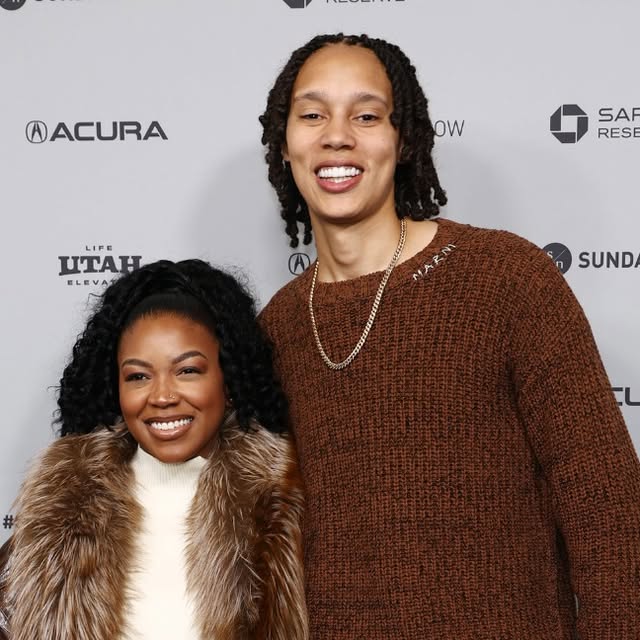
WNBA star Brittney Griner has filed for divorce from her wife, Cherelle Griner, after eight years of marriage. The filing, submitted in Fulton County, Georgia, on Thursday, July 30, 2026, cites that the marriage is irretrievably broken. According to court records, the two separated on July 24, 2026. This sudden split comes as a surprise to many who followed their highly public journey, which has been marked by intense trials, national advocacy, and the recent joy of starting a family.
The couple first met during their undergraduate years at Baylor University in Waco, Texas, where Brittney was a standout basketball star and Cherelle was pursuing her education. Over the years, their bond grew into a visible partnership that endured the transition from collegiate athletics to professional leagues. They tied the knot in June 2018. While earlier media reports often cited a 2019 wedding date, the current divorce filing establishes June 2018 as their official marriage date. For nearly a decade, Brittney Griner and Cherelle navigated the extreme pressures of professional sports, public scrutiny, and a deeply harrowing international crisis.
Cherelle, who is a practicing attorney, became a household name during Brittney’s 10-month imprisonment in Russia in 2022. When the basketball star was wrongfully detained at a Moscow airport for possessing vape cartridges with cannabis oil, Cherelle stepped into the spotlight. She led a relentless campaign, working with the State Department and directly appealing to President Joe Biden to secure her wife’s release. Her advocacy was central to the prisoner swap that eventually brought Brittney home in December 2022. That reunion was a deeply emotional moment for the public, who watched Cherelle touch her wife’s face in disbelief and express her profound relief to finally exhale after months of terror.
In her recent memoir, Brittney recounted the psychological toll of her time in Russian custody, outlining the isolation and despair she felt while being held in a penal colony. Cherelle, working from the outside, bore a different kind of trauma—the weight of public speaking, political lobbying, and constant anxiety for her wife’s safety. When they reunited, both women had been fundamentally altered by the experience. While they tried to build a normal life, the quiet work of healing from state-sponsored captivity is a heavy burden that exists far away from the cameras.
The couple welcomed their first child, a son named Bash, in July 2024. Just weeks before the separation, Brittney celebrated Cherelle’s 33rd birthday on Instagram, praising her as a wonderful mother and spouse. Yet, the pressure of moving forward from traumatic experiences can create deep, unseen fractures. Experiencing international captivity and the subsequent media frenzy changes people. The transition back to normalcy, combined with the demands of an athletic career and new parenthood, often places immense strain on a relationship.
Brittney is currently playing for the Connecticut Sun, maintaining her position as a dominant presence on the court. In her petition, she is seeking joint legal and physical custody of their two-year-old son, Bash. She is also asking for an equitable division of marital assets. Her attorney, Randall Kessler, released a statement expressing hope that the parties can resolve the matter privately, with no further comment planned.
This dissolution of their marriage marks the end of a partnership that lived at the intersection of sports, politics, and civil rights. As Black queer women, their love story was highly visible and deeply analyzed by the public. For many in the Black LGBTQ+ community, their relationship was a rare representation of commitment and mutual defense under extreme global pressure. The quiet filing of this divorce reveals that even the most visible partnerships face the quiet, difficult realities of personal healing and restructuring.
Transitioning from a crisis mode to daily life is a challenge few couples ever have to face. Cherelle’s tireless effort to bring Brittney home was a rare display of dedication, but the aftermath of trauma often takes time to settle. While fans process this sudden development, the focus remains on the well-being of their young son. The process of dividing a shared life after eight years is never simple, especially when the eyes of the public remain fixed on your every move.
1 of 1
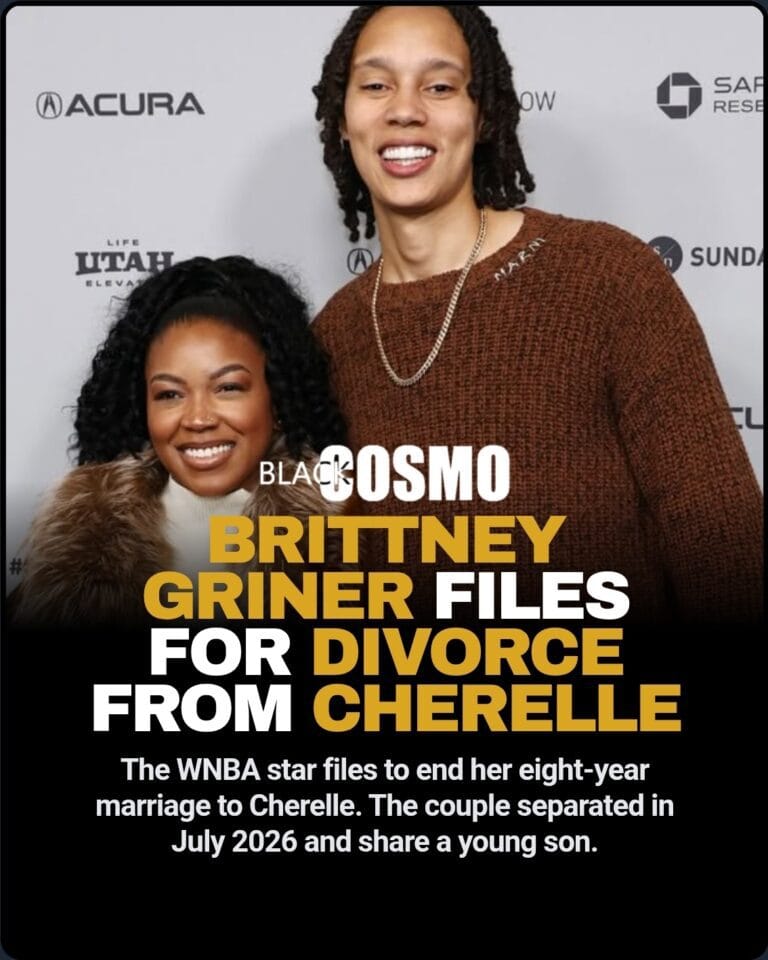
Brittney Griner and Cherelle Griner during a public appearance.