
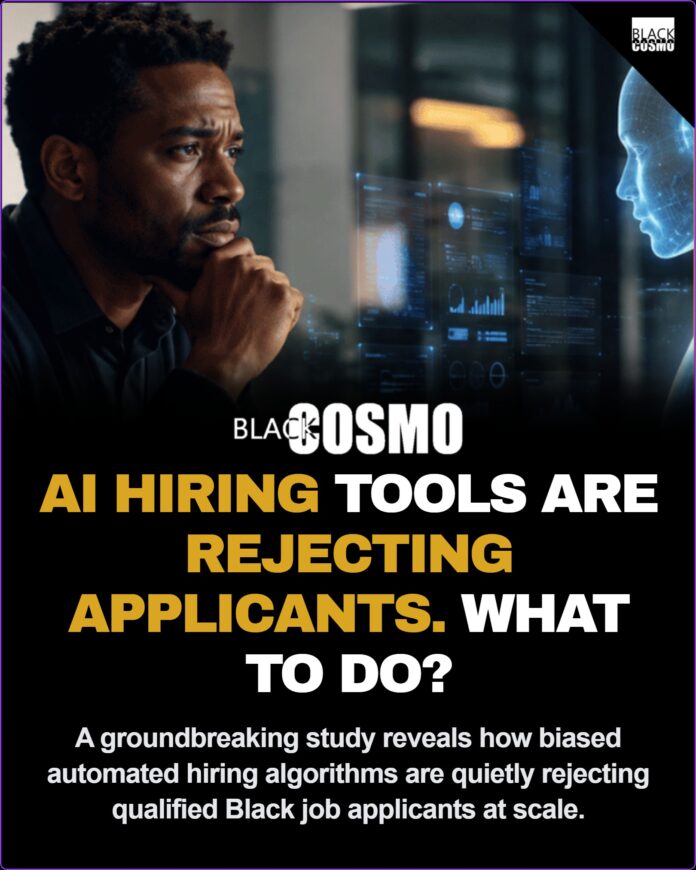
The Silent Gatekeepers: How AI is Keeping Black Excellence Out of the Boardroom
While Black professionals continue to level up, perfect their resumes, and secure top-tier credentials, an invisible barrier may be quietly locking them out of the job market before a human manager even gets a glance. A groundbreaking new study from Stanford Human-Centered Artificial Intelligence (HAI) reveals that automated recruiting tools are disproportionately rejecting Black and Asian applicants at alarming rates.
Inside the Algorithmic Black Box
We often think of technology as an objective tool, but algorithms are only as unbiased as the data used to train them. Researchers at Stanford analyzed a massive dataset of 3.4 million applicants submitting 4 million applications across 150 companies. The results were stark: 26% of Black applicants faced systemic discrimination from the AI hiring software used to screen resumes. If these candidates had been evaluated fairly and recommended at the same rate as their white peers, an estimated 40,000 more applications from qualified Black and Asian professionals would have moved forward in the hiring process.
The Danger of the Algorithmic Monoculture
The danger goes beyond a single rejection letter. Because many corporations rely on the same third-party AI vendors to filter applications, job seekers face what researchers call an “algorithmic monoculture.” If one AI program flags your resume as “do not recommend,” you could be automatically blacklisted across hundreds of different employers using that same software. For the Class of 2026 and seasoned professionals navigating an already tight job market, this invisible blockade turns job hunting into an uphill battle against a machine that has already decided your worth.
A Legal and Cultural Reckoning
This issue is moving from academic papers to federal courtrooms. Tech giant Workday is currently facing a massive class-action lawsuit in California, with plaintiffs alleging its HR screening software unlawfully discriminates against applicants. Meanwhile, the Equal Employment Opportunity Commission (EEOC) has issued stern warnings that automated tools frequently mask and perpetuate deep-seated biases. As we push for economic empowerment, we must demand transparency and accountability from the tech companies building the gateways to our careers.