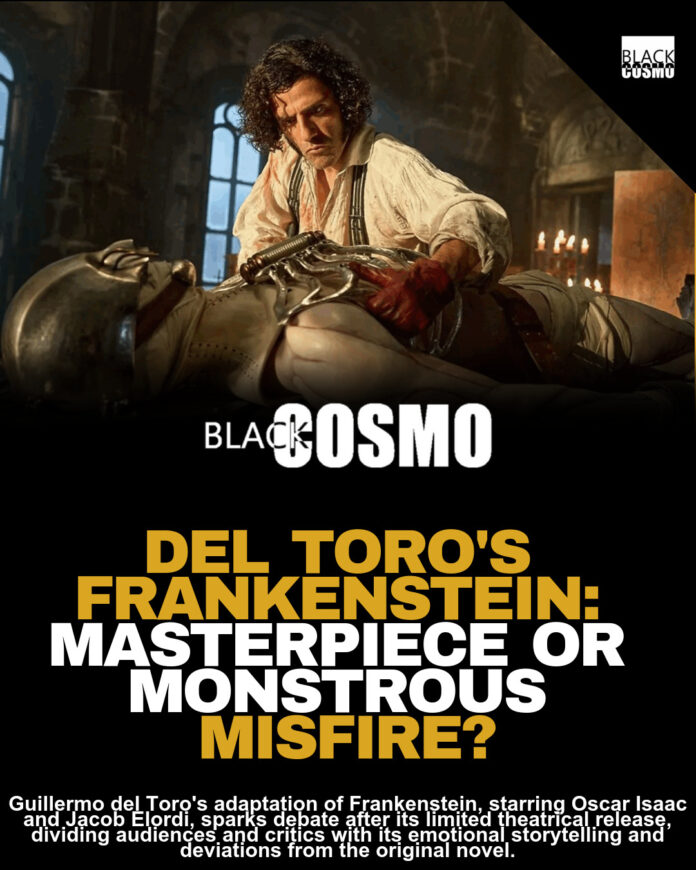
When Guillermo del Toro’s long-awaited adaptation of Frankenstein finally hit screens in late 2025, the reaction across social media was electrifying and, let’s be real, divisive. What started as a celebration of the director’s ultimate passion project quickly became a cultural talking point, splitting folks over artistic vision, faithfulness to the source material, and that blurry line between horror and real human feels.
Del Toro, a brother who clearly gets monsters and melancholy beauty, reportedly dreamed about this film for years. And with a cast boasting Oscar Isaac, Jacob Elordi, and Mia Goth, Frankenstein was primed to be a definitive statement from the Oscar-winning filmmaker – a fusion of gothic horror, raw emotion, and maybe even a little compassion. But when it dropped in select theaters before hitting Netflix, the fam was split down the middle: was it a masterpiece of emotional storytelling or a swing and a miss weighed down by ambition?
A lot of fans and critics championed Frankenstein as one of Guillermo del Toro’s most heartfelt pieces. The film’s lush production, haunting score, and emotional storytelling echo the director’s signature style – think The Shape of Water, but with extra existential dread. Early reactions praised its visual poetry and those truly heartbreaking performances. Others lauded del Toro for crafting a film that speaks to the loneliness of being misunderstood, portraying the Creature not as a monster, but as a mirror reflecting our own deep need to connect.
Del Toro himself called the film “an incredibly emotional movie,” stepping away from the jump scares and gore often associated with the Frankenstein name. For his day-one followers, this approach is the culmination of everything he’s explored – a love letter to outsiders, dreamers, and those of us who find beauty in the grotesque.
But those same qualities that some found amazing left others feeling… nothing. Some critics online called Frankenstein “lethargic,” “bloated,” and “too self-serious.” If you came looking for a horror show, the film’s understated tone and introspective pacing might have been a letdown.
Others criticized how the film strayed from Mary Shelley’s original text. Longtime fans of the book argued that del Toro’s adaptation sacrificed key philosophical and scientific themes for personal feelings. The director’s choice to focus on fatherhood and emotional reconciliation, instead of moral responsibility, rubbed some purists the wrong way.
Even the film’s release stirred up drama. With a limited theatrical run before landing on Netflix, a lot of fans felt cheated out of seeing del Toro’s grand vision on the big screen.
The polarized reaction to Frankenstein is about more than just one film. It highlights the push-and-pull between artistic freedom and fan expectations, especially when a beloved director tackles a sacred text. Del Toro’s name carries weight; folks expect certain vibes, like fairy-tale horror, ornate craftsmanship, and poetic sadness. When those boxes aren’t checked, the backlash can be loud.
It also shows how fandom is changing in the age of social media. What used to be critic and film journal talk now plays out in real time across platforms, where praise and shade go back and forth. Some threads dissect del Toro’s take with the precision of an academic, while others dismiss it with a meme. Frankenstein got people talking, and that’s not something every film can do these days.
Whether you found it profound or pretentious, del Toro’s Frankenstein demands you pay attention. It makes us rethink what we want from our monsters, and from the filmmakers who dare to bring them back. For some, it’s a masterpiece of mood and meaning; for others, a gorgeous misstep that wanders too far from Shelley’s soul. But maybe that split is fitting. Like its creature, Frankenstein is stitched together from passion, imperfections, and a burning desire to be understood.
Love it or not, Guillermo del Toro’s latest is a reminder that the best art doesn’t always bring us together, it challenges us. And in a world where online chatter can decide a film’s fate overnight, that might be its most radical move.
Frankenstein is streaming on Netflix.
Like this:
Loading…
Jamie Broadnax is the creator of the online publication and multimedia space for Black women called BlkCosmo Blerds. Jamie has appeared on MSNBC’s The Melissa Harris-Perry Show and The Grio’s Top 100. Her Twitter personality has been recognized by Shonda Rhimes as one of her favorites to follow. She is a member of the Critics Choice Association and executive producer of the BlkCosmo Blerds Podcast.