
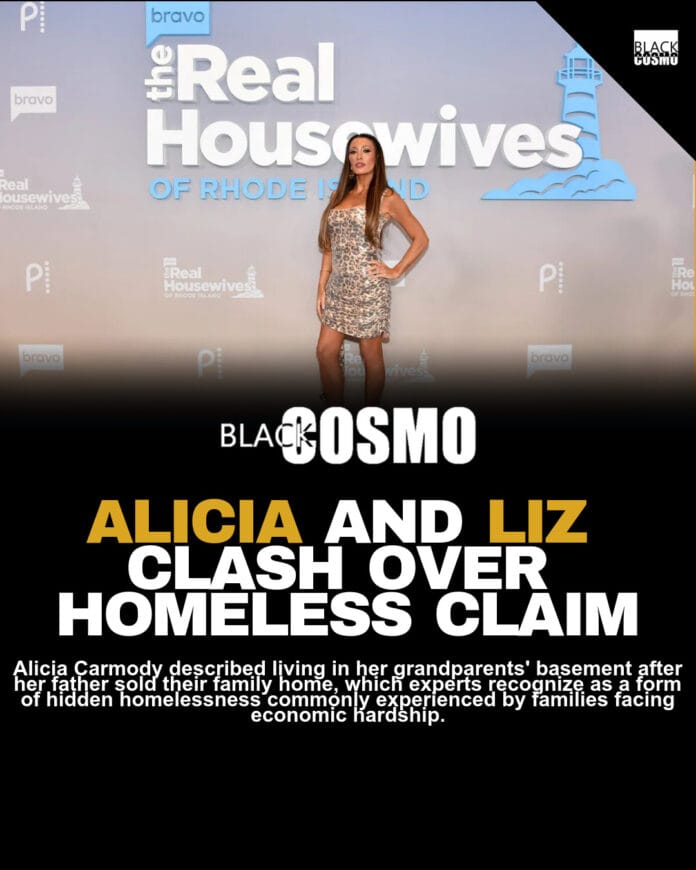
On RHORI, hidden homelessness has become the unexpected centerpiece of a heated debate between Alicia Carmody and Liz McGraw. During a dinner scene, Carmody opens up about her childhood experience—her father left and sold their family home, forcing her and her family to move into her grandmother’s basement. McGraw pushes back hard, claiming Carmody wasn’t truly homeless because she had family support. But here’s the thing: what Carmody experienced is actually more common than most people realize.
Liz has battled Alicia on ‘RHORI’ over her claim she was homeless during childhood
This season of The Real Housewives of Rhode Island has turned Carmody and McGraw’s clash into a major storyline. Carmody explained that her father walked out on their family and sold their family home from under them. She and her mother ended up moving into her grandparents’ house—a situation that shaped her entire childhood perspective on hidden homelessness.
“I kind of feel like he took my home,” Carmody said on an episode. “That’s considered homeless. I had to go back with my grandparents in a basement.”
Despite this, McGraw has repeatedly pushed back. She’s known Carmody for years and argues that because Carmody had family to rely on, she can’t describe herself as homeless. But McGraw might be missing something important here.
‘RHORI’ star Alicia is describing hidden homelessness
While Carmody never slept on the streets, her experience fits the definition of “hidden homelessness” perfectly. This type of homelessness typically goes unreported and is actually the most common way people experience housing insecurity in the United States.
According to the Chicago Coalition to End Homelessness, “temporarily staying with others due to economic hardship or housing loss is the way that most people—particularly families with children—experience homelessness in the United States. Also known as ‘doubling up,’ this form of homelessness is a precarious means of survival, associated with the same risk factors and negative outcomes as those staying in shelters or outdoor locations.”
She told Liz to stop bringing up her family
On a recent episode of Watch What Happens Live!, McGraw attempted to defend her reaction to Carmody.
“For everything I’ve ever known about Alicia, she was always, you know, had love around her, she was always clad in the best designer handbags and pieces,” McGraw said. “So for me to hear the word homeless … it was a knee-jerk reaction.”
McGraw claimed she wanted to protect Carmody from “local backlash” to her description of her childhood. She insisted her reaction wasn’t meant to be malicious, just protective.
“I didn’t know where she was going, I didn’t know how far she was going with it, and I never meant to downplay her feelings,” McGraw said. “I always only wanted to protect Alicia.”
After this conversation, Carmody took to Instagram to set a boundary with McGraw.
“I’m joining the conversation of my life story funny. I got to tell it,” she wrote, adding, “I think Liz needs to worry about her story and leave me and my family’s name out of her mouth now, it’s getting obsessive.”
McGraw responded by accusing Carmody of dragging the storyline on herself. The back-and-forth continues to dominate the season’s narrative.
★m★