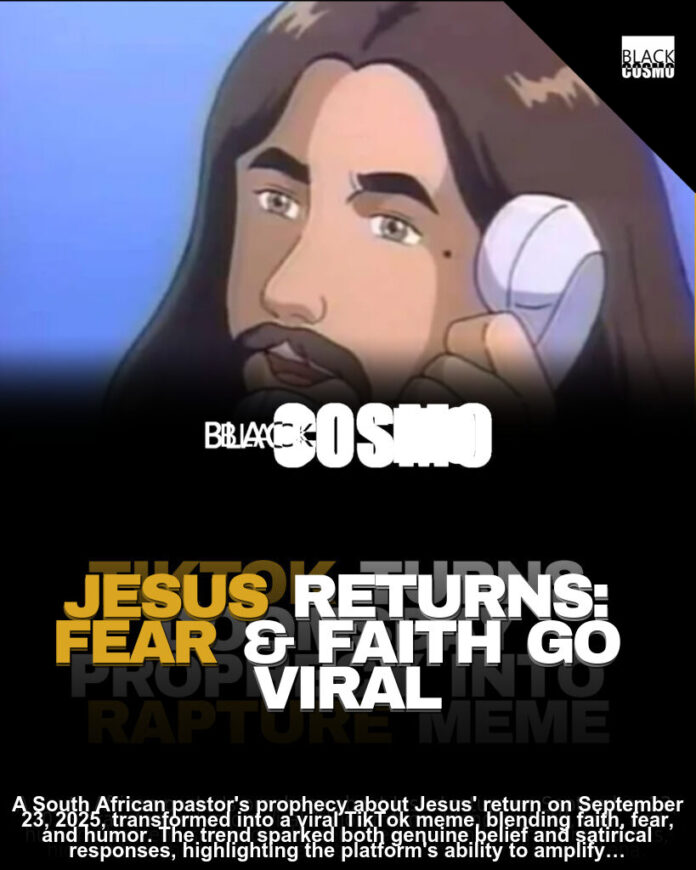
TikTok has a knack for turning anything into a viral sensation, and 2025 is no exception. What began as a prophecy from a South African pastor, claiming Jesus would return on September 23, 2025, quickly transformed into a cultural phenomenon: the 2025 Rapture meme. While end-times speculation has been around for centuries, TikTok’s algorithm amplified this particular prophecy into a sprawling meme ecosystem where belief, fear, humor, and skepticism collided in real time. This 2025 Rapture meme became a cultural moment where fear, faith, and playful skepticism commingled in a gloriously chaotic fashion.
Before diving into the trend, it’s important to understand the concept of the Rapture itself. It’s a Christian belief, prevalent in evangelical and fundamentalist traditions, that describes an end-times event where believers in Jesus Christ will be suddenly “caught up” from Earth to meet Him in the air. This popular depiction often involves faithful Christians vanishing mid-activity, leaving behind their possessions, and those remaining must endure the Tribulation period leading up to the final judgment. We’ve seen this narrative explored in popular culture, from the “Left Behind” film series to HBO’s “The Leftovers.”
The spark for this particular trend originated from a South African pastor’s prophecy about Jesus’ return on September 23, 2025. This urgent message spread like wildfire across TikTok, being stitched and duetted until it evolved into a full-blown internet event. The original clip, with its dramatic delivery, was remixed with ominous text overlays like “It’s happening. Midnight. Be ready.” Creators responded with a spectrum of reactions, from fervent prayers in the comments to skeptical side-eyes reminiscent of past predicted doomsday dates. TikTok transformed this specific content into a multi-genre saga, as is its unique talent.
Following the initial prophecy, a wave of “dream diaries” emerged. Users shared their visions of trumpets, cracking skies, and vanishing neighbors, often accompanied by spooky audio and glowing captions, blurring the lines between sincerity and horror movie trailers. For believers, these videos served as fuel for their faith. For others, it was a curious mix of intrigue and the slightly overwhelming nature of the content for a casual scroll. Some users even claimed to have dream confirmations of the Rapture occurring on September 23rd.
As the trend matured, the “countdown montages” appeared, featuring ticking digital clocks, city skylines, and Bible verses, all set to dramatic voiceovers asking, “If you’re still here tomorrow, what will you do?” Some clips played the prophecy straight, while others embraced a more campy, Armageddon-esque aesthetic with the flair of a dramatic television finale.
Of course, internet humor inevitably found its way into the mix. The satire brigade arrived, with users, particularly on Threads, finding amusement in the trend. The playful side also extended to referencing Anita Baker’s iconic 1986 album Rapture, and its hit ballad “Caught Up In The Rapture,” highlighting how cultural touchstones can be reinterpreted through the lens of current events and memes.
On the flip side, the prophecy also galvanized a surge of faith-based content. Hashtags like #raptureready and #jesusiscoming saw creators sharing scripture, leading prayers, and urging followers to repent. While not traditional memes, they became part of the platform’s ecosystem. This rapid shift from heartfelt sermons to parody skits within a single scroll contributed to the meme’s surreal charm.
However, not everyone was amused. Many users, on Threads and elsewhere, admitted that the sheer saturation of Rapture content triggered “end-times anxiety.” This is precisely what makes the 2025 Rapture meme so fascinating. It wasn’t just a joke or a sermon; it was both simultaneously. A pastor’s vision became a cultural artifact, and a countdown video served as a punchline. Faith, fear, and fandom intermingled in the same algorithmic soup, reinforcing TikTok’s role as a chaotic public square where the sacred and the silly coexist.
Ultimately, this trend raises profound questions, especially given the biblical adage that “no one knows the day or the hour.” It’s a powerful reminder of social media’s influence and the importance of using it wisely.
https://www.facebook.com/100063965143458/posts/1255555196586640
[efb_feed fanpage_id=”BlackCosmopolitan” words_limit=”25″ post_limit=”1″ skin_id=”115758″ cache_unit=”1″ cache_duration=”days” live_stream_only=”0″ load_more=”0″ links_new_tab=”1″ show_like_box=”0″]
Disclaimer:
For Education and discussion purposes. Please note no copyright infringement is intended, was recorded on BlkCosmo’s own equipment, and we do not own nor claim to own any of the original recordings used in this video and intend to use this as ‘fair use’.